


WOVEN GEOTEXTILE
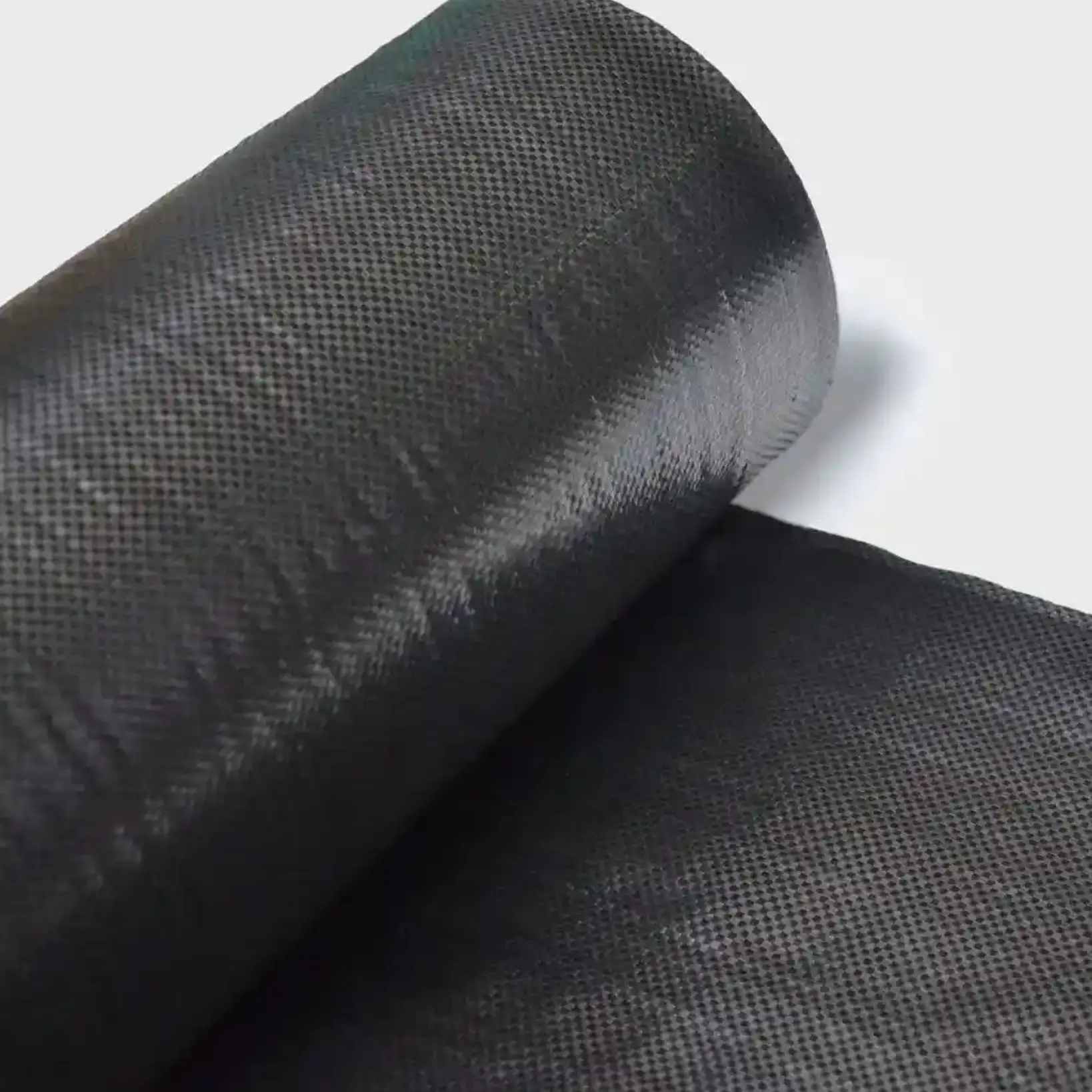
Woven geotextile is a synthetic fabric sheet with a woven structure, made from polypropylene (PP) or polyester (PET). It is manufactured using industrial weaving (interlocking) techniques, similar to plastic sack weaving but with much higher density, UV resistance and tensile strength.
Because its structure is stiff and does not stretch easily (low elongation), the material has very high tensile strength. This makes it suitable for heavy-duty applications such as soil reinforcement, slope stabilization and separation between different fill materials.

Functions
FUNCTIONS OF WOVEN GEOTEXTILE
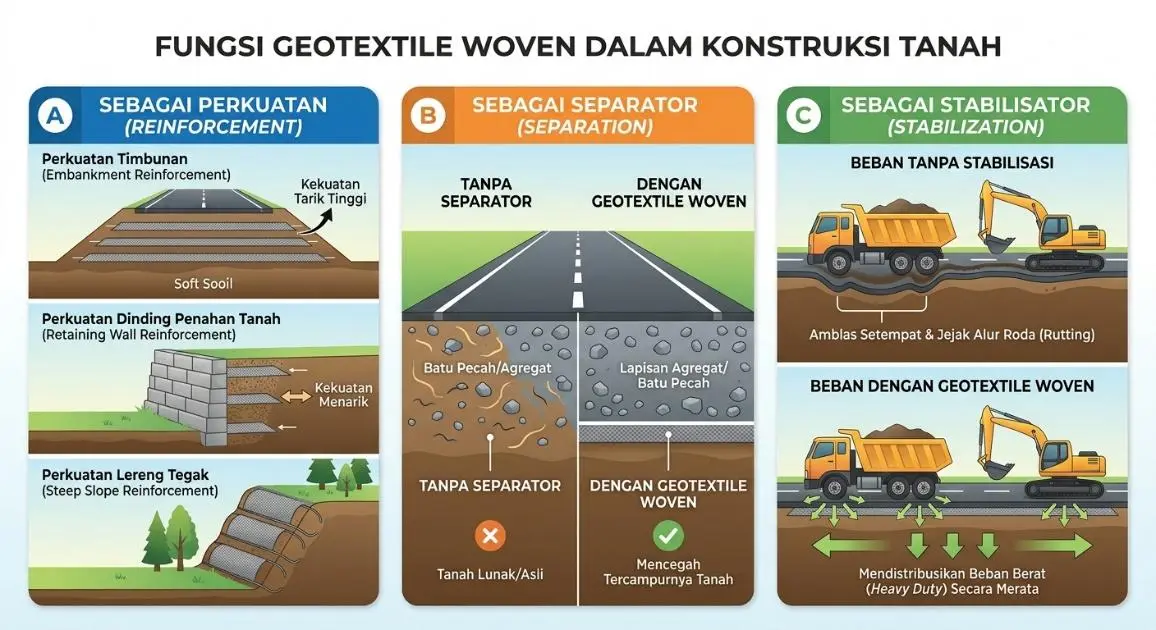
Woven geotextile functions include:
- Reinforcement (its high tensile strength allows it to reinforce embankments, retaining walls and vertical slopes)
- Separation (prevents different fill layers, such as subgrade and aggregate, from mixing)
- Stabilization (the material distributes heavy-duty loads evenly to prevent local settlement and wheel rutting)
Applications
WOVEN GEOTEXTILE APPLICATIONS
In Indonesia, this material is widely used in many types of infrastructure projects, including:
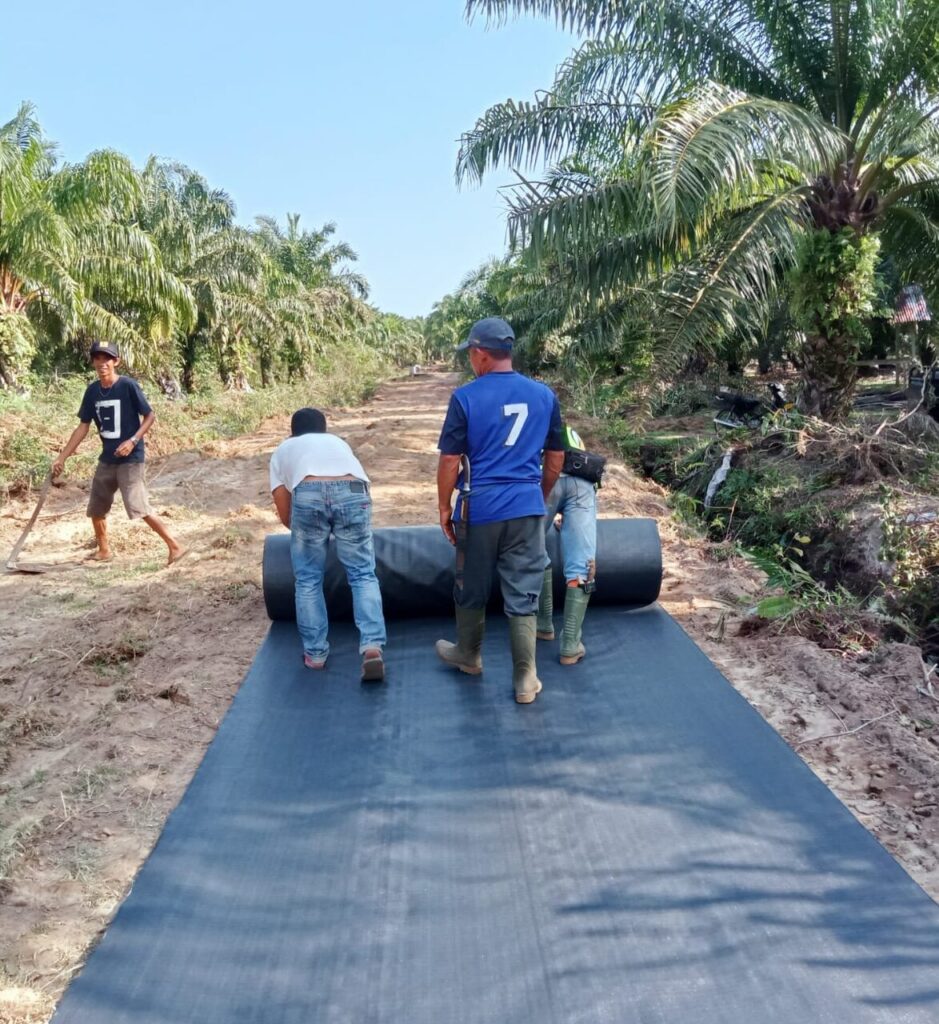
- Palm oil plantation access roads and mining haul roads.
- Toll roads and airport runways.
- Railway track foundations.
- Slope, embankment and retaining wall reinforcement.
- Coastal reclamation.
Types
TYPES OF WOVEN GEOTEXTILE
Petra Nusa Elshada supplies two types of woven geotextile based on the main material:
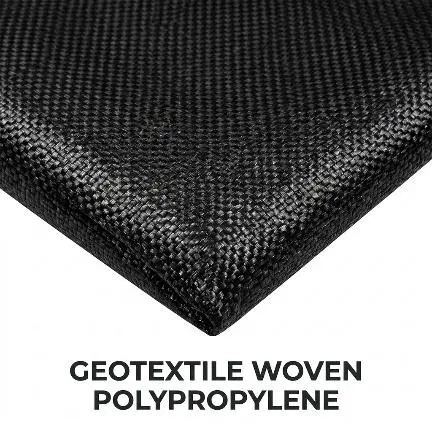
- Polypropylene Woven Geotextile
The most popular woven geotextile in Indonesia, with good resistance to acids, alkalis and microorganisms. It is a popular choice because it is more economical while offering reliable tensile strength. - Polyester Woven Geotextile
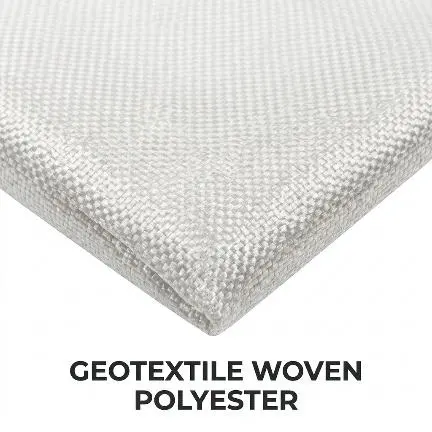
A premium woven geotextile designed for extreme loads. It does not deform or stretch easily under continuous loading. Its tensile strength, far higher than the polypropylene type, makes polyester woven geotextile the first choice for reinforcing high slopes.
Specifications
WOVEN GEOTEXTILE SPECIFICATIONS
| Brand | Virotex |
| Material | Polyester and Polypropylene |
| Weight | 150 gsm; 200 gsm; 250 gsm; 300 gsm ; 500 gsm |
| Tensile Strength | 25 kN; 50 kN; 100 kN; 1000 kN ; customizable |
| Size | 4m x 100 m; 4m x 150 m; 5.2 m x 100 m |
| Standard | SNI; ASTM |
Project Portfolio
PROJECT PORTFOLIO


FAQ
WOVEN GEOTEXTILE FAQ
What is the main difference between woven and non-woven geotextile?
The most fundamental difference lies in how they are made and what they are mainly used for. Woven geotextile is woven, very high in tensile strength, stiff and has low water permeability — ideal for carrying heavy loads and stabilizing road subgrades. Non-woven geotextile looks like felt, is highly flexible and very porous — ideal for drainage and water filtration systems.
When should I use Class 1, 2 or 3 woven geotextile?
The class is based on Bina Marga (Indonesian Directorate General of Highways) and AASHTO M288 standards, according to the site conditions during installation (survivability):
- Class 1 (Strong): For extreme subgrade conditions (such as swamps or muddy peatland) that will be covered with sharp crushed stone using large heavy equipment.
- Class 2 (Medium): For public roads or toll roads on moderate soil conditions.
- Class 3 (Light): For relatively stable subgrades, such as residential roads or small car parks.
How is woven geotextile joined on site?
There are two main methods for joining it on site:
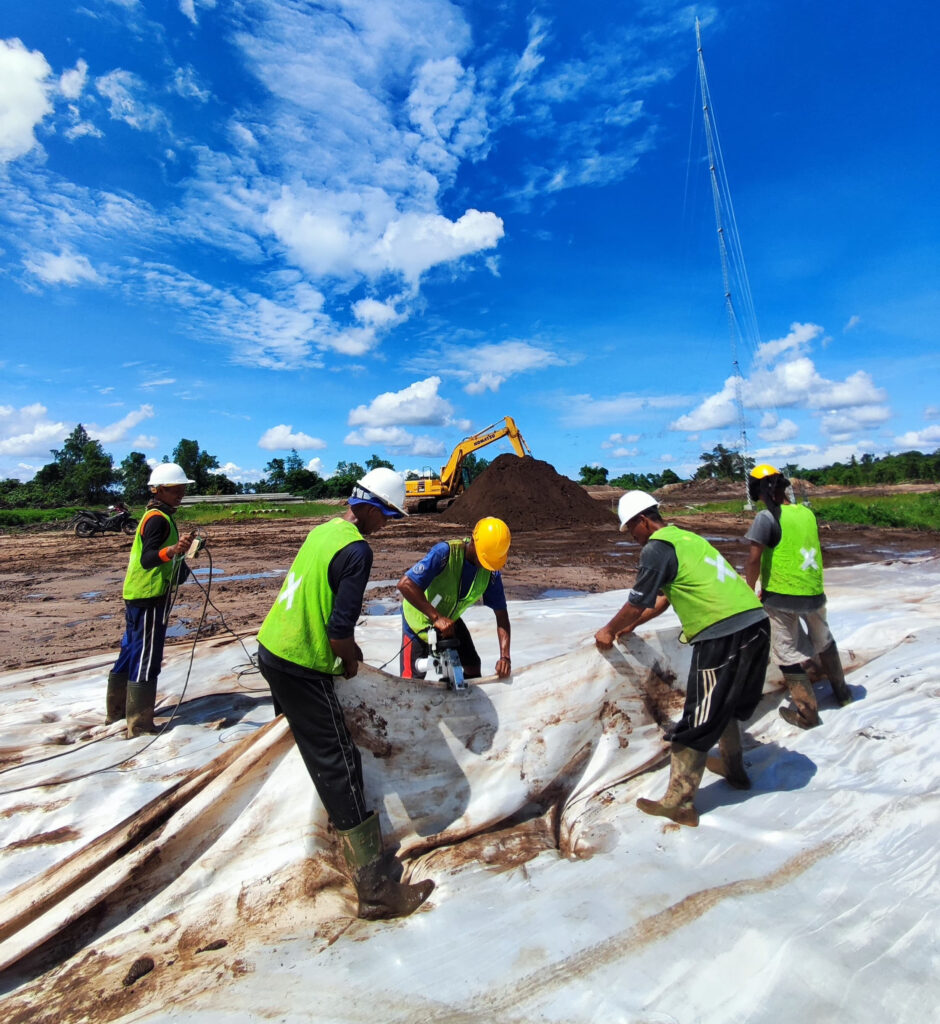
- Overlap Method: The sheets are laid overlapping by at least 30 cm up to 1 meter, depending on how soft the subgrade is.
- Sewing Method: The fabric edges are sewn with a portable field sewing machine using a type 101 or 401 stitch and special tex 400 thread (high-strength thread). Sewing is highly recommended because it prevents the material from shifting and saves material that would otherwise be lost to overly wide overlaps.
Visit our complete catalog
for more detailed product descriptions!
