


GEOSYNTHETIC CLAY LINER
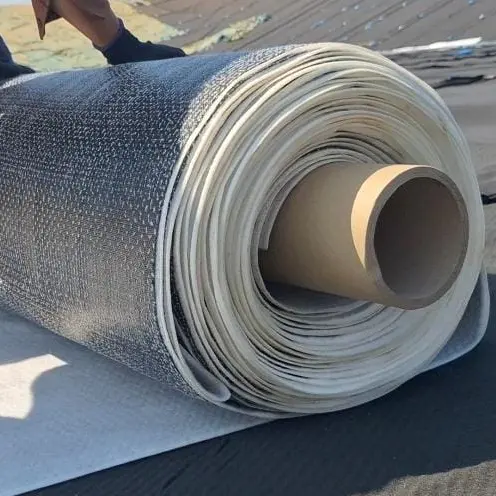
A geosynthetic clay liner is a hydraulic barrier or waterproof liner consisting of a thin layer of sodium bentonite between a woven and a non-woven geotextile. The key property of sodium bentonite is that it swells significantly on contact with water, forming a dense layer that blocks seepage precisely. The material is designed as a modern, more efficient alternative to conventional compacted clay liners.

Applications
GEOSYNTHETIC CLAY LINER APPLICATIONS
In Indonesia, this material can be used in many types of infrastructure projects, including:
- Landfill Liner Systems: Isolates solid waste and leachate so they do not contaminate groundwater around the disposal area.
- Industrial and Mining Waste Containment: Prevents hazardous chemicals or liquid mining waste from leaking into the surrounding ecosystem.
- Water Infrastructure and Dams: A waterproof layer for canals, retention ponds, reservoirs and irrigation channels to minimize water loss through infiltration.
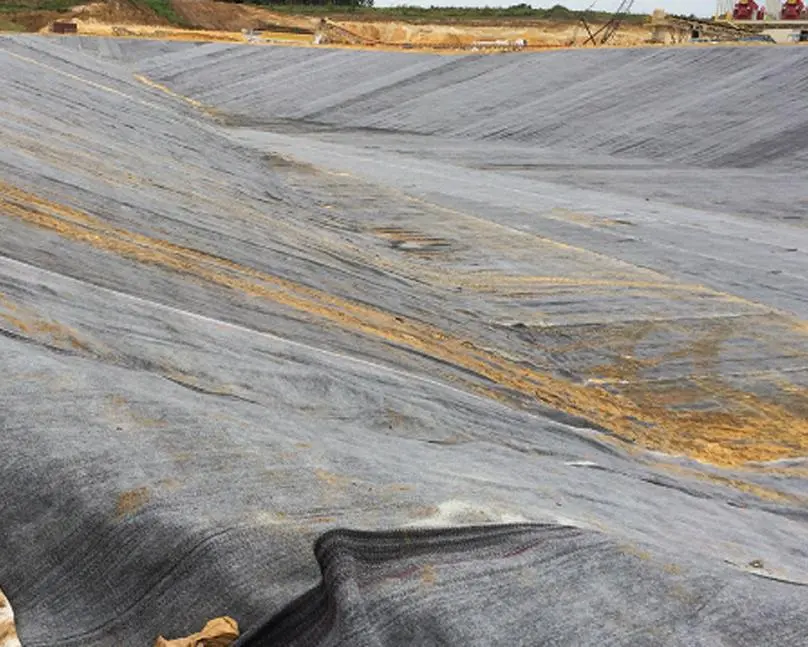
Storage Pond
Types
TYPES OF GEOSYNTHETIC CLAY LINER
Based on the carrier layer used to hold or cover the bentonite, geosynthetic clay liners (GCL) fall into several main types:
- Geotextile-Backed GCL
Geotextile-backed GCL uses a combination of woven and non-woven geotextile that sandwiches the bentonite layer in the middle. Mechanical bonding by special needle punching or strong stitching keeps the bentonite evenly distributed and in place, making it ideal for landfill caps, dams and slopes that need flexibility and high shear strength. - Geomembrane-Backed GCL
Geomembrane-backed GCL combines the bentonite layer with an impermeable polymer membrane for double protection. This creates a composite hydrogeological barrier that is very effective at blocking hazardous liquids and toxic gases, so it is often used for industrial waste containment and chemical storage ponds.
The performance of a geosynthetic clay liner (GCL) depends largely on the type of bentonite clay used as its core. By bentonite type, GCL falls into three main types:
- Natural Sodium Bentonite GCL
Sodium bentonite GCL uses natural sodium bentonite, which absorbs water and swells to many times its original volume. This high swelling capacity lets the material form a dense gel layer that seals gaps by itself, making it the first choice for groundwater protection and seepage barriers in underground structures. - Calcium Bentonite GCL
Calcium bentonite GCL uses calcium bentonite, which swells less than the sodium type, but its performance can be improved through sodium carbonate activation. This type offers adequate stability and cost efficiency for general construction, irrigation channels and soil caps with a moderate contamination risk. - Polymer-Modified Bentonite GCL
Polymer-modified bentonite GCL is produced by mixing special polymers into the bentonite to improve resistance to aggressive liquids. This chemical modification keeps the bentonite stable and able to swell in direct contact with saltwater, acidic water or high-salinity leachate, which would normally damage standard bentonite.
Specifications
GEOSYNTHETIC CLAY LINER SPECIFICATIONS
| Properties | Test Method | Units | VCL-NP |
| Dried Clay Mass Per Unit Area (granule or powder) | ASTM D5993 | gsm | 3600 gsm or above |
| Swell Index | ASTM D5890 | ≥24 | |
| Moisture Content | ASTM D4643 | % | ≤12 |
| Peel Strength Between Non-woven and Woven | ASTM D6496 | N/cm | ≥65N/10cm |
| Fluid Loss | ASTM D5891 | ml | ≤18 |
| Permeability | ASTM D5887 | m/s | ≤5 x 10⁻¹¹ |
| Internal Shear Strength (@10kPa Normal Stress) | ASTM D6243 | kPa | 35 |
| CBR Static Puncture | ASTM D6496 | kN | ≥1.5 |
| Tensile Strength | |||
| Warp | ASTM D6768 | kN/m | ≥10 |
| Weft | ASTM D6768 | kN/m | ≥10 |
| Oxidation – Strength Retention | EN ISO13438 | % | ≥65 |
FAQ
GEOSYNTHETIC CLAY LINER FAQ
What is the difference between a geosynthetic clay liner (GCL) and a compacted clay liner (CCL)?
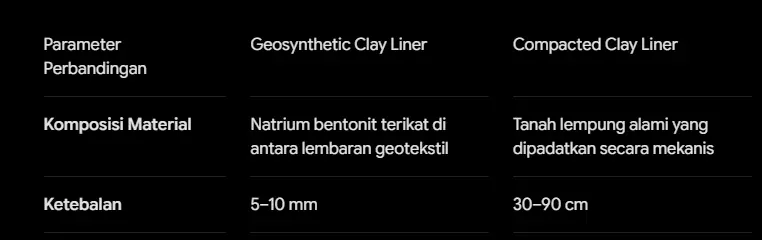
A GCL uses a thin layer of sodium bentonite sandwiched between geotextiles, with a minimum thickness of 6 mm. A CCL uses conventional compacted clay with a minimum thickness of 30 cm. A GCL needs far less excavation space, is more efficient to transport and has a consistent density.
Is a geosynthetic clay liner self-healing?
Yes. The key property of the sodium bentonite in a GCL is that it swells to several times its original volume when it absorbs water. This swelling automatically seals gaps, small tears or punctures that occur during installation.
How should GCL rolls be handled and stored before installation?
GCL rolls must be stored on flat, dry ground, out of direct sunlight, and tightly covered with a waterproof tarpaulin. This prevents the bentonite from swelling prematurely due to rain before it is installed on site.
Visit our complete catalog
for more detailed product descriptions!
