


DRAINAGE SHEET
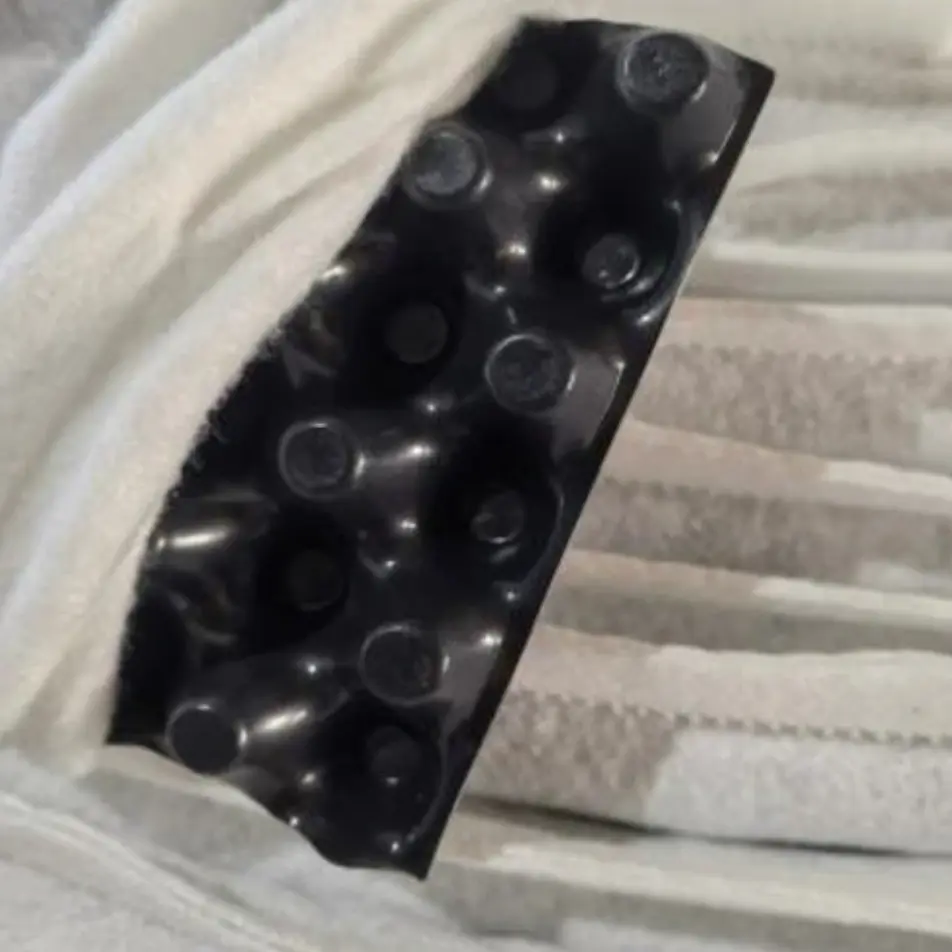
A drainage sheet is a High-Density Polyethylene (HDPE) drainage board with small studs (dimples) across its whole surface. The dimples form voids that act as water channels, so seepage water from the soil can flow straight to the drain without pressing on or seeping into the building structure.
Drainage sheets usually come with a non-woven geotextile layer as a filter, so the voids are not clogged by soil particles. Because it is lightweight, strong under soil loads and chemical resistant, drainage sheet is now widely chosen to replace conventional gravel drainage layers in basements, roof gardens and retaining walls.

Functions
FUNCTIONS OF DRAINAGE SHEET
Drainage sheet functions include:
- Drainage: carries seepage water quickly to the drain or subdrain.
- Reduces water pressure: stops water building up and pressing on basement walls, retaining walls and floor slabs.
- Waterproofing protection: protects the waterproof layer from damage during backfilling.
- Water storage: on roof gardens, the dimples can store some water for the plants.
Applications
DRAINAGE SHEET APPLICATIONS
Drainage sheet can be used for many needs, including:
- Basement Walls and Underground Structures
The drainage sheet is installed on the outside of basement walls as a vertical drainage path that also protects the waterproofing layer. - Roof Gardens
The drainage sheet is laid on the concrete deck under the planting medium so rainwater drains quickly and does not pond. - Podiums, Plazas and Planter Boxes
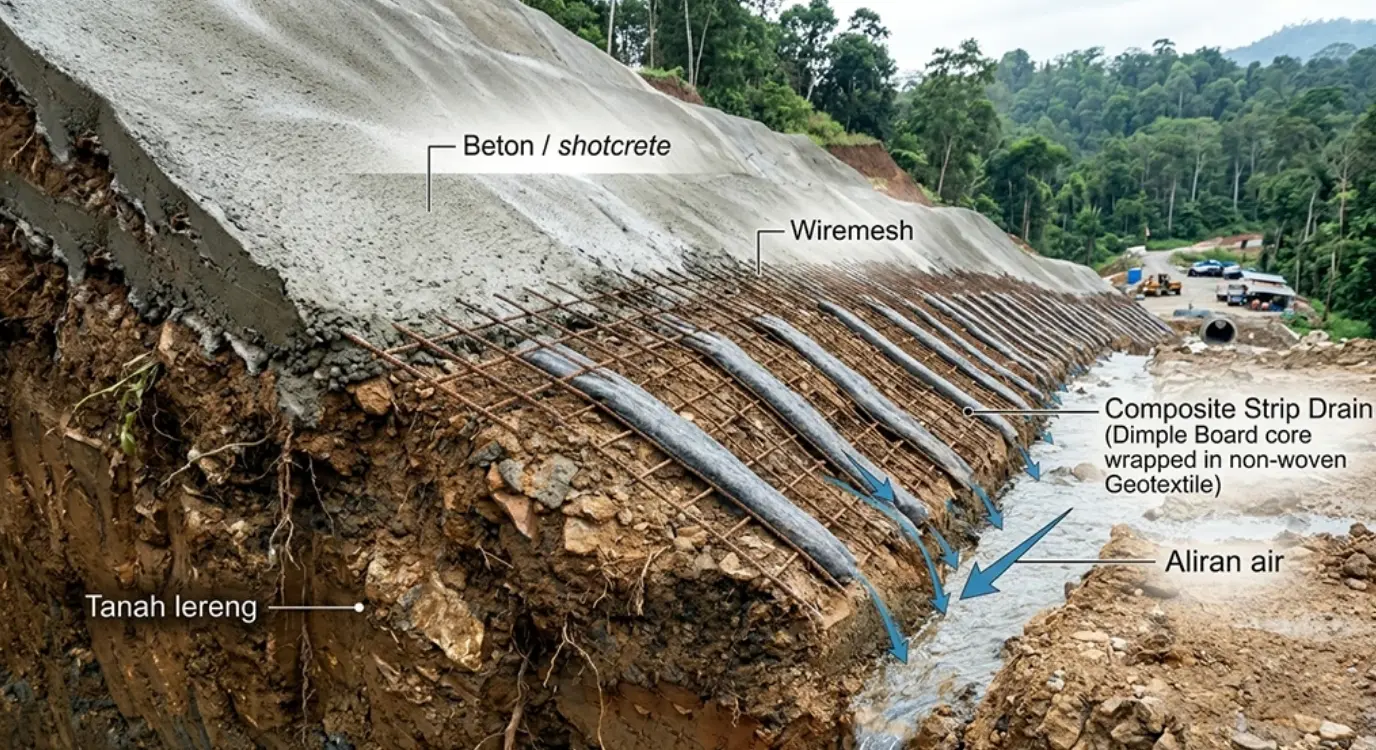
A drainage layer under green areas and gardens on multi-storey buildings. - Shotcrete Walls
The drainage sheet reduces water pressure behind the concrete structure so it does not carry extra load from excess water pressure. - Tunnels and Underpasses
The drainage sheet carries seepage from the surrounding soil to the drain.
Types
TYPES OF DRAINAGE SHEET
To meet the needs of different projects, Petra Nusa supplies several drainage sheet variants:
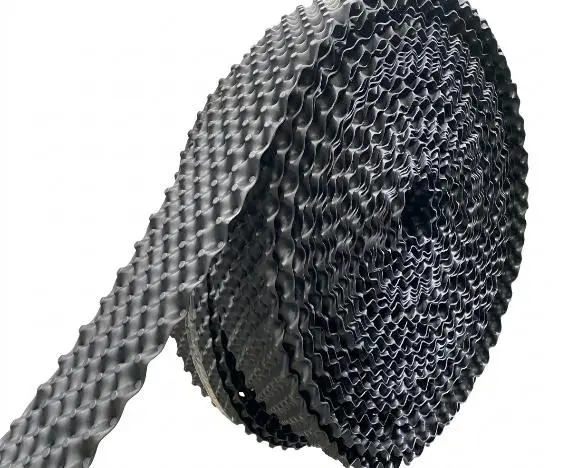
- Plain Drainage Sheet — HDPE dimple sheet with no extra layer, suitable as a floor damp-proof layer, wall ventilation and waterproofing protection.
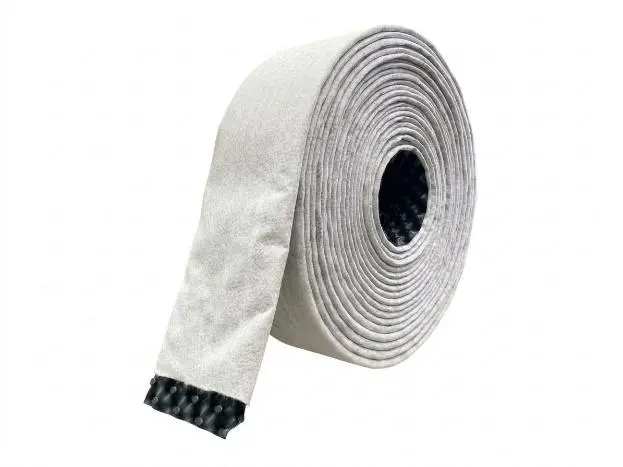
- Drainage Sheet + Geotextile — HDPE dimple sheet with non-woven geotextile on one side, ideal for areas in direct contact with soil such as basements, retaining walls and roof gardens.
Specifications
DRAINAGE SHEET SPECIFICATIONS
We understand that material quality determines the service life of your building’s drainage system. That is why the drainage sheet we supply has passed quality tests and meets international ASTM standards.
| Properties | Value |
| Product thickness | 18 mm |
| Product width | 100 / 200 / 300 mm |
| Length per roll | 50 m |
| Geotextile | |
| Polymer | PET (polyester) |
| Mass per unit area | 200 g/m² |
| Tear strength, machine direction | 270 N |
| Tear strength, cross direction | 230 N |
| Permeability | 3.6 × 10⁻² cm/s |
| Drainage Sheet Core | |
| Polymer | HDPE |
| Compressive strength | 250 kPa |
| Flow rate (ASTM D4716) | 9.9 L/s per meter width |
FAQ
DRAINAGE SHEET FAQ
Can a drainage sheet replace waterproofing?
No. A drainage sheet is not the main waterproof layer but a complement that drains water and protects the waterproofing layer from damage.
How is a drainage sheet installed?
On basement walls, the dimples usually face the wall with the geotextile side facing the soil. On roof gardens, the dimples face up so they can hold some water. Rolls are overlapped by at least one row of dimples so the studs interlock.
How long does a drainage sheet last?
HDPE is chemical resistant and does not rot or rust, so a drainage sheet can work for the long term when covered with soil and protected from UV light.
Visit our complete catalog
for more detailed product descriptions!
