


NON-WOVEN GEOTEXTILE
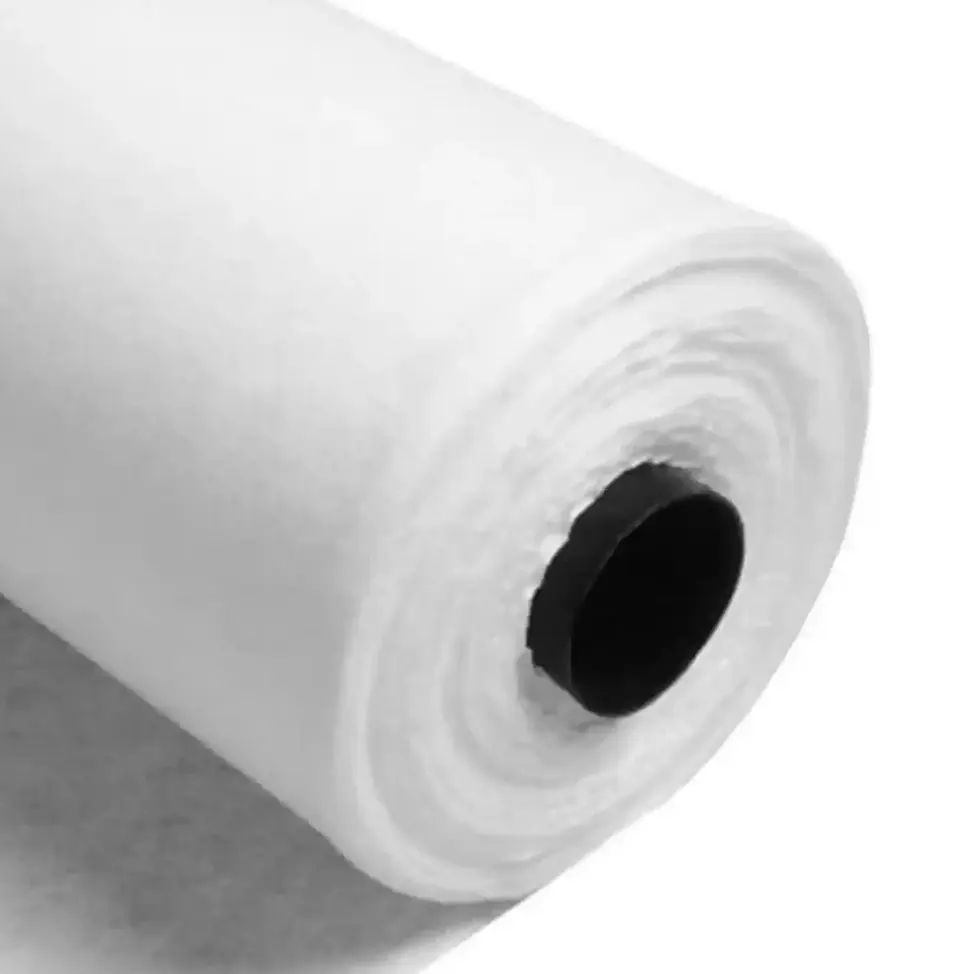
Non-woven geotextile is a porous (water-permeable) geosynthetic made from synthetic polypropylene (PP) or polyester (PET) fibers. The fibers are not woven but bonded mechanically through a needle punch process, forming a flexible felt-like layer that lets water pass through.
Its permeability makes non-woven geotextile very effective as a filter, holding back soil particles while still letting water flow. That is why the material is used in many road construction, drainage and environmental projects.

Functions
FUNCTIONS OF NON-WOVEN GEOTEXTILE
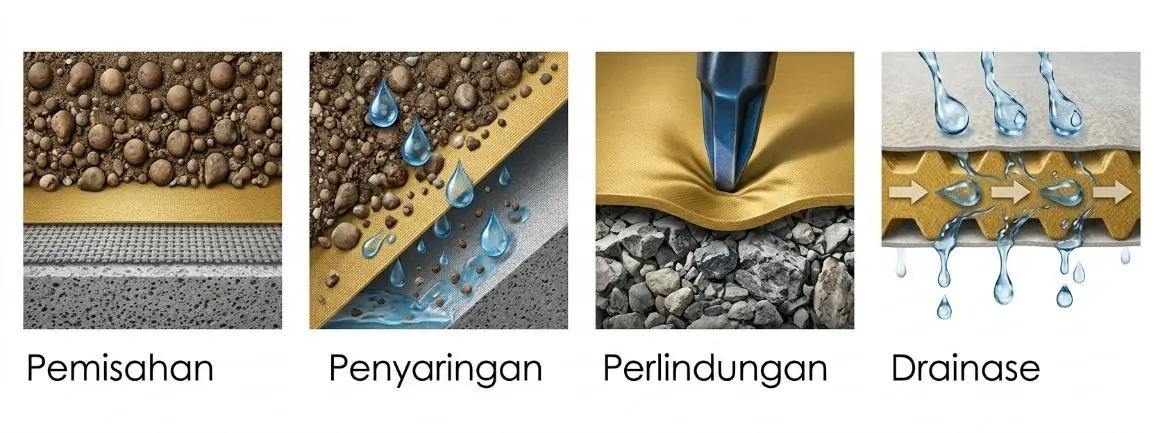
Non-woven geotextile functions include:
- Separation: the geotextile separates soft subgrade from fill material so the aggregate does not mix in. This preserves the strength and service life of the pavement structure.
- Filtration: the geotextile acts as a filter that holds back fine soil particles while letting water flow, preventing drainage systems from clogging.
- Drainage: the geotextile carries water along the plane of the sheet.
- Protection: geotextile of certain specifications can protect geomembrane from punctures by sharp stones or coarse material.
- Erosion control: the geotextile can also stabilize slope surfaces and riverbanks so the soil is not easily washed away.
Applications
NON-WOVEN GEOTEXTILE APPLICATIONS
Non-woven geotextile is very common and versatile across construction sectors, including:
- Road and Pavement Construction
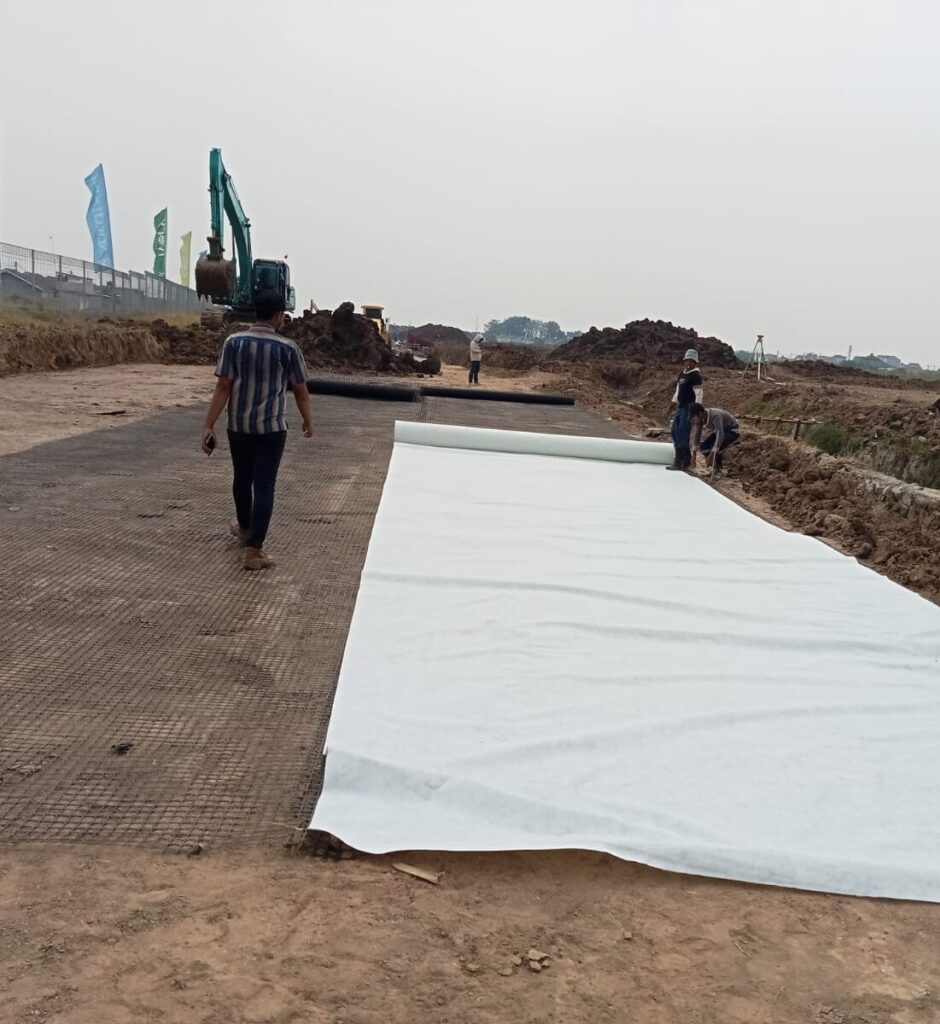
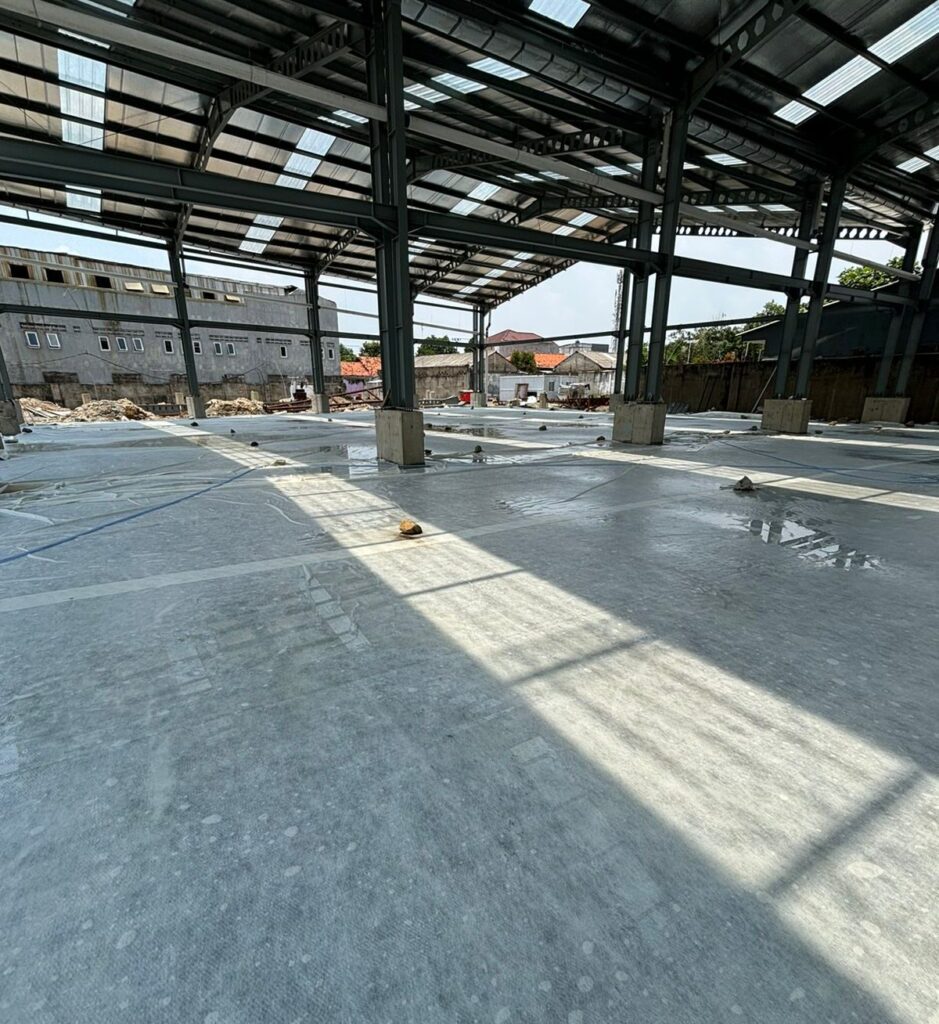
Non-woven geotextile is used as a separation and filter layer between the subgrade and the aggregate layer on highways, access roads, car parks, embankments and paved areas. - Drainage Systems
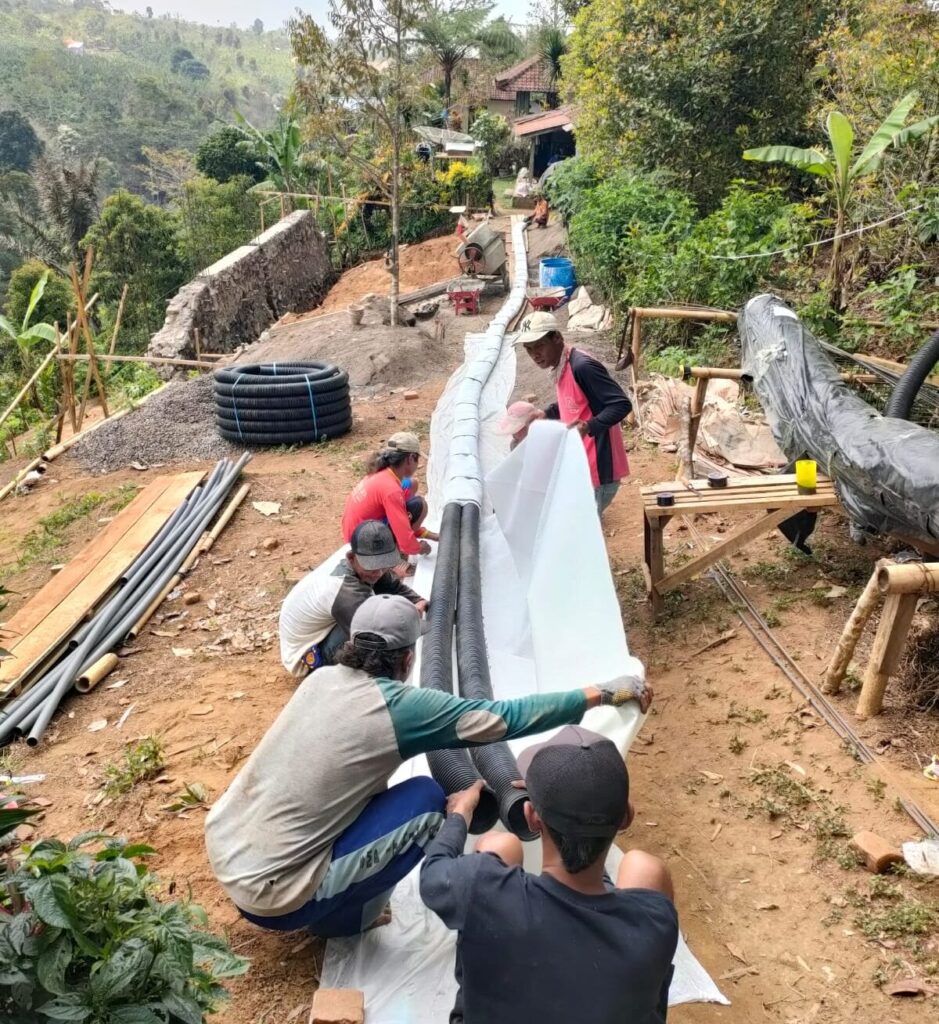
Non-woven geotextile is used to wrap subdrain pipes and as a filter layer behind retaining walls. - Embankments, Revetments and Riverbank Protection
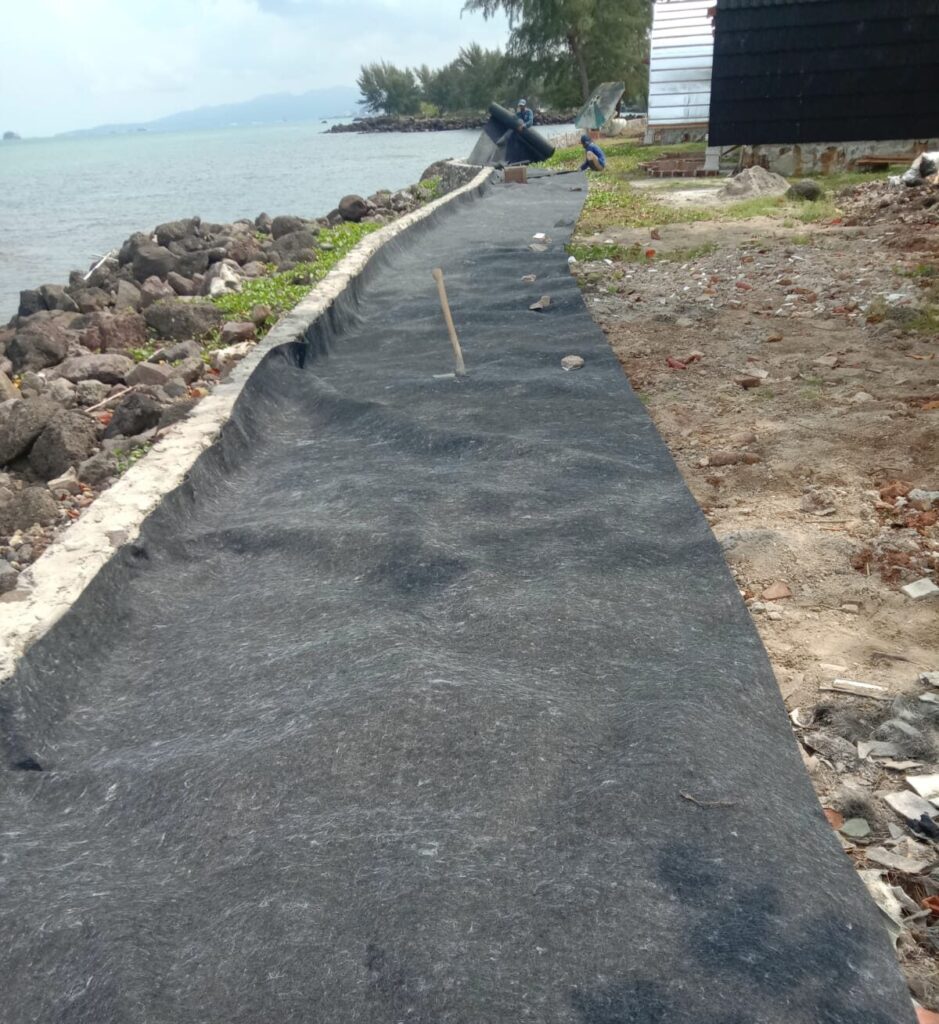
The geotextile is placed under riprap or rock so the subgrade is not scoured by water. - Geomembrane Protection
The geotextile is usually placed under the geomembrane in ponds, reservoirs and landfills to prevent puncture damage. - Retaining Walls, Landscaping and Sports Fields
The geotextile is combined with geopipe as a filter and separator so fill material is not carried away by the water flow.
Types
TYPES OF NON-WOVEN GEOTEXTILE
Non-woven geotextile comes in two fiber types.
- Staple Fibre (Short Fiber)
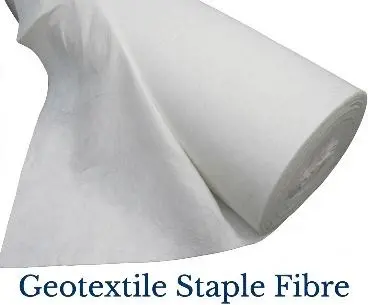
The geotextile is made of short fibers that are needle punched. It has good filtration capacity and is suitable in combination with drainage systems and concrete curing. - Continuous Filament (Long Fiber)
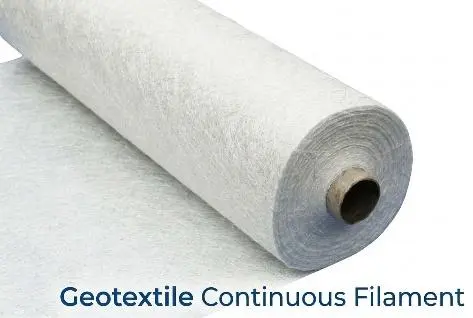
The geotextile is made of long, unbroken fibers, giving it higher tensile and tear strength. Suitable for road embankments.
Specifications
NON-WOVEN GEOTEXTILE SPECIFICATIONS
| Brand | Virofelt |
| Material | Polyester and Polypropylene |
| Weight | 150 gsm; 200 gsm; 350 gsm; 400 gsm; 600 gsm; 1200 gsm; Customizable |
| Type | Staple Fibre and Continuous Filament |
| Width | 4.00 m; Customizable |
| Length | 50 m; 100 m; Customizable |
| Standard | SNI ; ASTM |
Project Portfolio
PROJECT PORTFOLIO



FAQ
NON-WOVEN GEOTEXTILE FAQ
Which non-woven geotextile weight should I choose?
In general, 150–200 gsm for landscaping, garden filters and light drainage wrapping; 250–300 gsm for road separation, car parks and light embankments; and 400 gsm and above for heavy-duty, revetment, embankment, riprap and marine applications. For detailed advice, consult our team.
Is non-woven geotextile UV resistant?
Yes. In general, non-woven geotextile has good UV resistance, especially polypropylene non-woven geotextile. The material is specially designed for exposed applications.
What is the difference between woven and non-woven geotextile?
Woven geotextile is woven and has high tensile strength, so it is better suited to soil reinforcement. Non-woven geotextile is felt-like with high permeability, so it is better suited to filtration, drainage, separation and protection.
Visit our complete catalog
for more detailed product descriptions!
