


GEOTEXTILE TUBE
A geotextile tube (often called a geotube) is a large cylindrical bag made from high-strength woven geotextile. It is filled hydraulically by pumping in slurry material such as mud, sand or sediment.
As it fills, the geotextile pores hold the solid particles inside while water drains out through the tube wall. The result is a solid structure that can work as a dewatering unit to dry sludge, or as a coastal and marine protection structure such as a dike, groin or breakwater.
Geotextile tubes are designed with high tensile strength and UV resistance, and can be made in custom sizes to suit the project. They are faster to install and more cost-effective than conventional solutions.

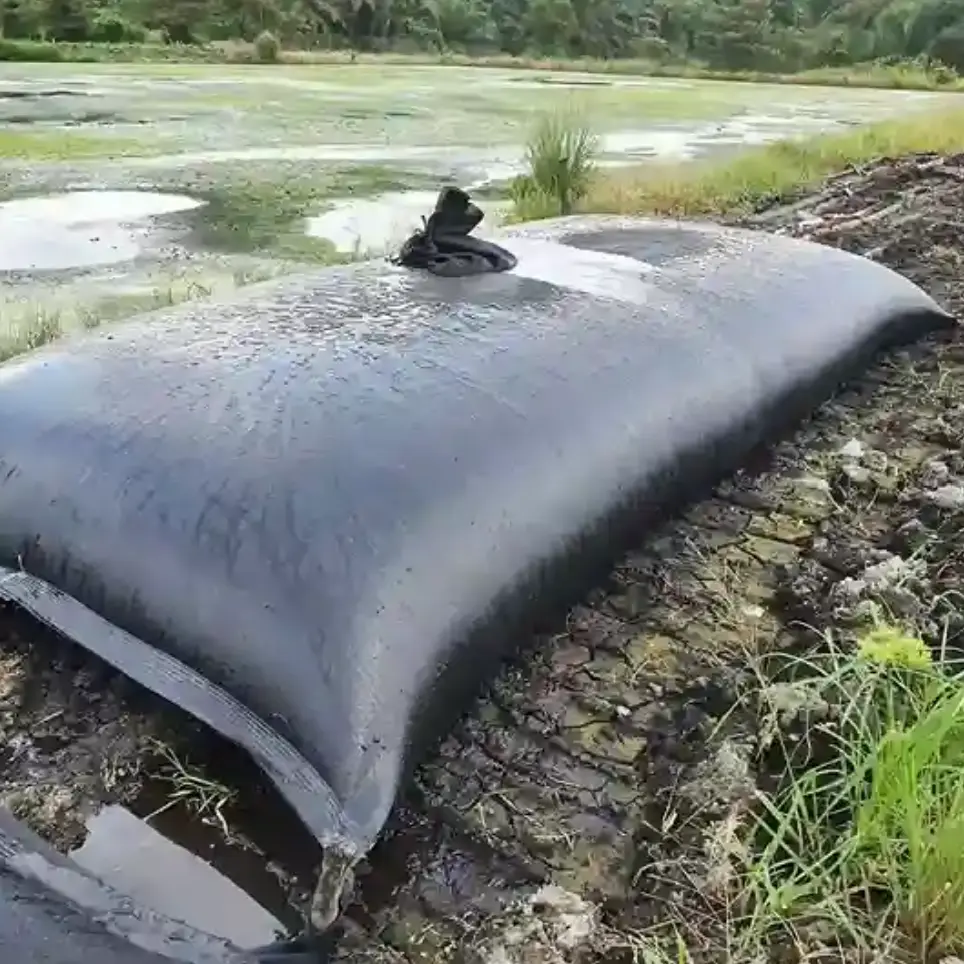
Functions
FUNCTIONS OF GEOTEXTILE TUBE

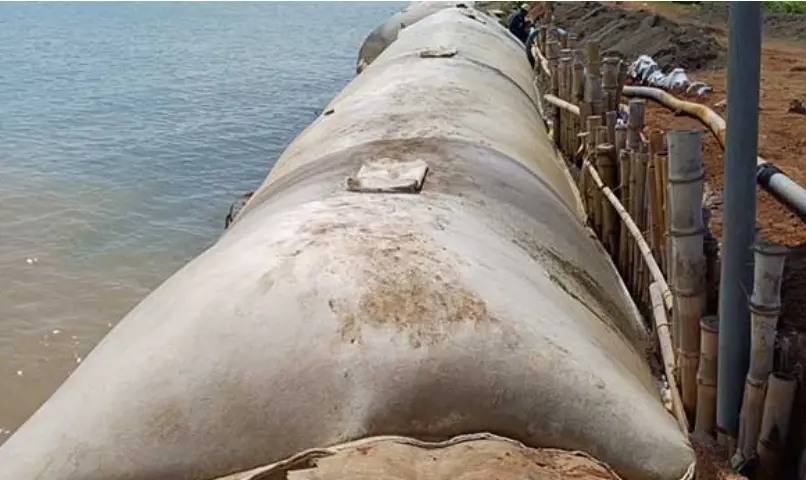
Dewatering Geotextile Tube | Marine Geotextile Tube
Functions of geotextile tube:
- Dewatering (sludge drying): separates water from slurry, drastically reducing sludge volume so it is easy to transport or dispose of.
- Filtration: retains solids and contaminants inside the tube, so the water that drains out is cleaner (more effective with added flocculants/polymers).
- Coastal and erosion protection: forms a structure that holds back waves and currents, protecting shorelines, riverbanks and fish ponds.
- Dike construction and reclamation: works as a dike core, retaining wall or reclamation boundary using local sand and sediment.
- Material containment: contains dredged sediment so it does not spread and pollute the surrounding environment.
Applications
GEOTEXTILE TUBE APPLICATIONS
Dewatering Applications
- Sludge drying for industrial wastewater treatment plants (WWTP) and water treatment plants (WTP)
- Tailings and mining sludge management
- Desilting ponds, reservoirs, lakes and irrigation channels
- Dewatering of river and port dredging material
- Sludge from palm oil mill effluent (POME), paper mills and food processing
- Sludge from livestock waste ponds and fish ponds
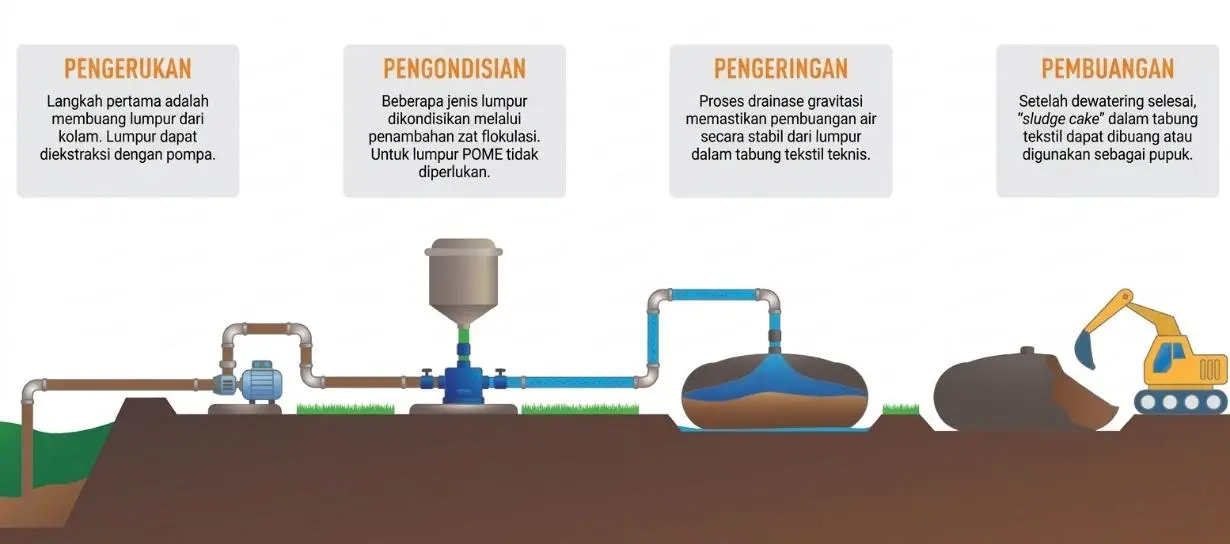
Geotextile Tube Dewatering Process
Marine and Coastal Applications
- Coastal protection dikes (revetments) and erosion barriers
- Groins and breakwaters to dampen waves
- Reclamation dike cores and artificial island construction
- Riverbank and estuary protection
- Sediment barriers in fish pond and coastal areas
- Base foundations for structures in shallow water
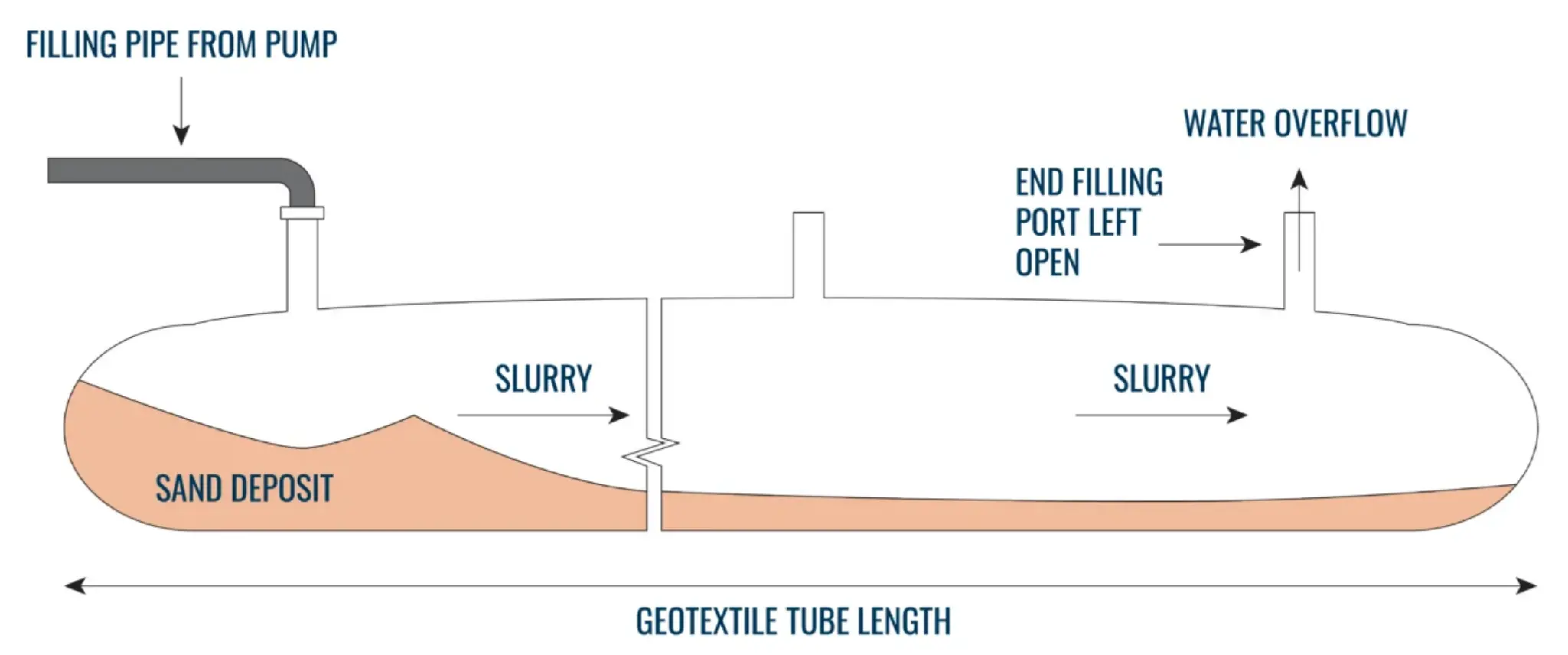
Geotextile Tube Marine Process
Types
TYPES OF GEOTEXTILE TUBE
Petra Nusa Elshada supplies two main types of geotextile tube, distinguished by function and material characteristics.
| Aspect | Dewatering Geotextile Tube | Marine Geotextile Tube |
| Main function | Dries sludge and reduces its volume | Coastal protection, dikes and marine structures |
| Fill material | Mud, sludge, waste slurry, tailings | Sand and dredged sediment |
| Fabric characteristics | Small pore openings to retain fine particles, high permeability | Very high tensile strength, abrasion and UV resistant for long-term exposure |
| Service life | Temporary, until the sludge is dry and removed | Permanent / long term |
| Common form | Long tube or bag/container | Long tube, can be stacked in tiers |
Specifications
GEOTEXTILE TUBE SPECIFICATIONS
| Parameter | Value |
| Brand | C-Tube |
| Material | Polypropylene |
| Size | 4.4m x 30.6 m ; 5m x 30 m ; Custom Size |
| Tensile Strength | 50 kN/m ; 70 kN/m ; 90 kN/m ; 120 kN/m ; 180 kN/m ; 200 kN/m |
| Flow Rate | 20 – 35 l/m2/s (Typical) |
| Standard | ISO/ASTM |
Project Portfolio
PROJECT PORTFOLIO
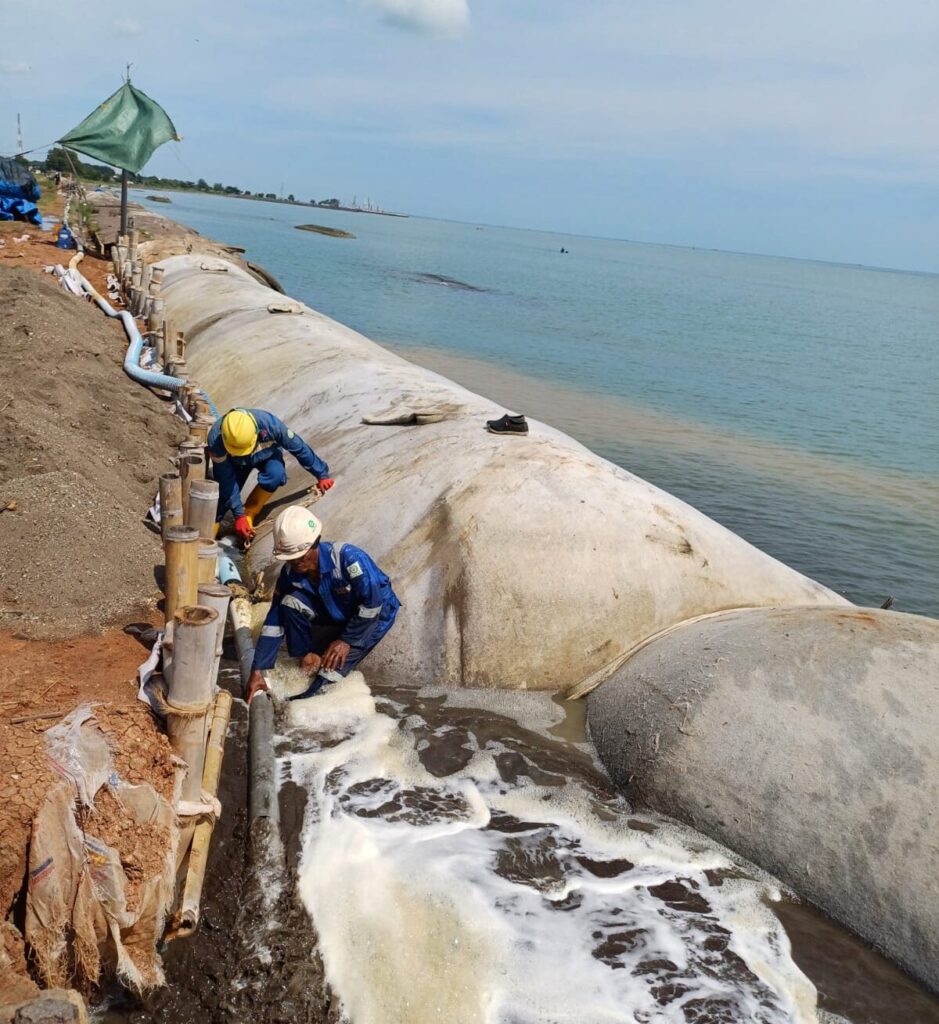


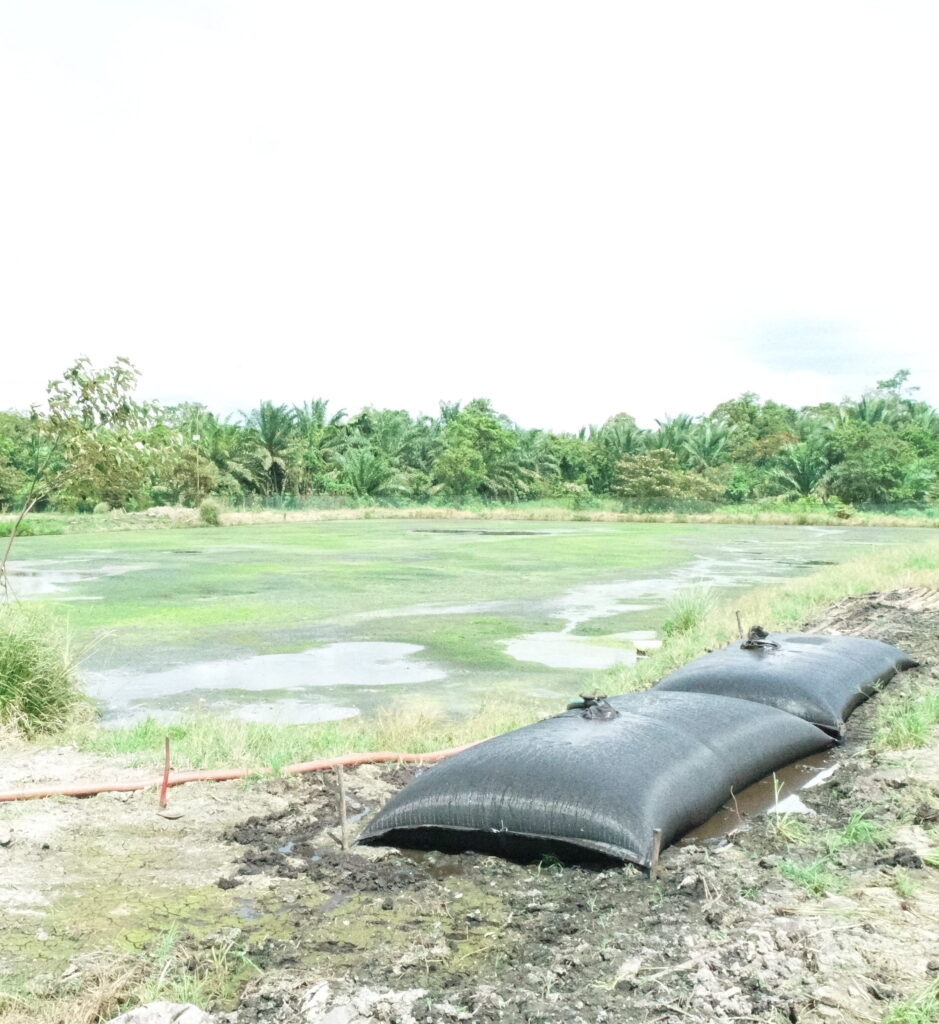

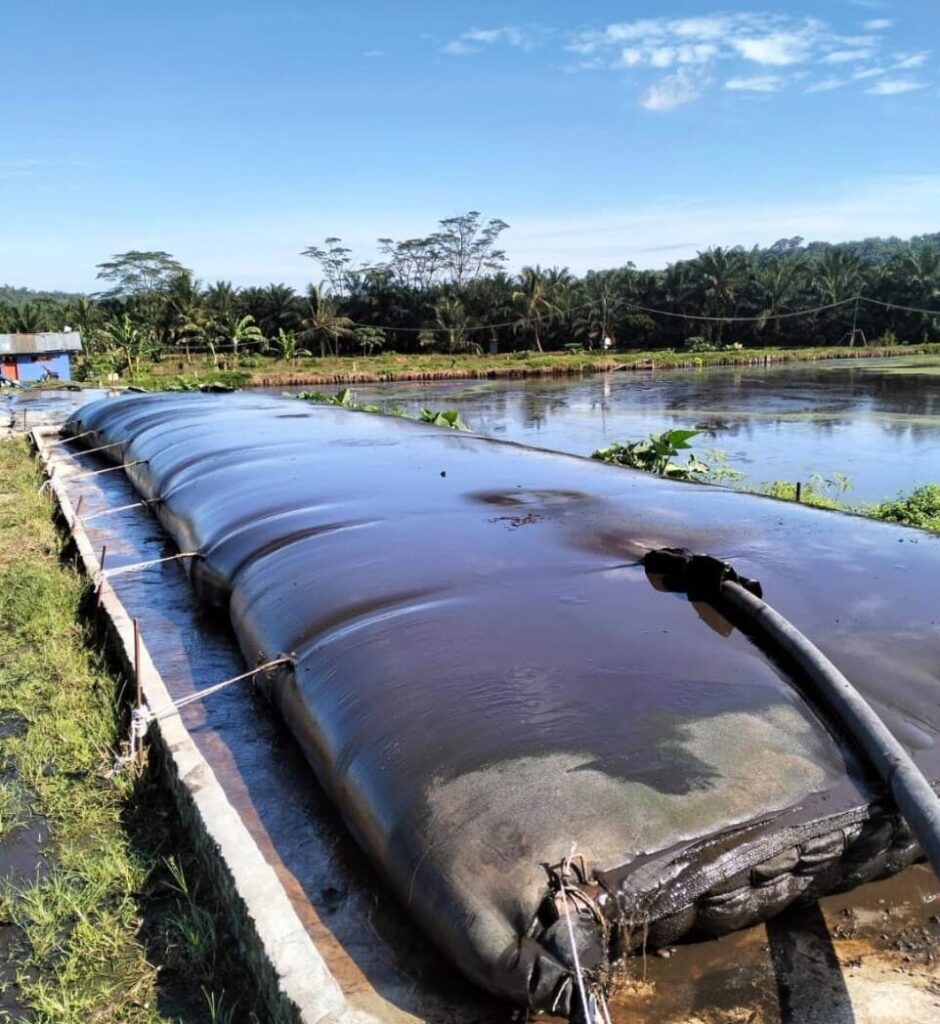
FAQ
GEOTEXTILE TUBE FAQ
What is the difference between a geotextile tube and a geobag?
A geotextile tube is a long cylinder filled hydraulically (by pumping), while a geobag is a small bag that is usually filled by hand or with heavy equipment.
How long does dewatering with a geotextile tube take?
Water starts draining out as soon as filling begins. Drying until the sludge is solid enough to transport usually takes a few weeks, depending on the type of sludge, the weather and whether flocculants are used.
Do dewatering geotextile tubes need flocculants or polymers?
For very fine-grained sludge, flocculants are strongly recommended. They bind the particles together, so dewatering is faster and the discharged water is cleaner.
How long do marine geotextile tubes last?
With UV-resistant material and correct installation, marine geotextile tubes can last for many years. Their service life can be extended with a protective layer such as rock, sandbags or a scour apron.
What material can be used to fill marine geotextile tubes?
Usually sand or dredged sediment from the surrounding area. Using local material saves cost and speeds up the work.
How much does a geotextile tube cost?
The price depends on the type, size, tensile strength and order quantity. Contact our team for a quote and technical recommendations for your project.
Visit our complete catalog
for more detailed product descriptions!
