


CONCRETE MATTRESS
A concrete mattress (also called a fabric form) is an erosion protection system made of double-layer geotextile bags filled with concrete (mortar/grout) directly on site. The bags are made from woven polyester (PET) or polypropylene (PP) fabric sewn into a set pattern, then pumped full of concrete that hardens into a concrete layer covering the ground surface.
Because the fabric lets some water escape from the mix, the concrete is denser and hardens faster. A concrete mattress can also be installed directly underwater without dewatering the site and without formwork, so the work is faster and more cost-effective than conventional stone masonry or concrete.

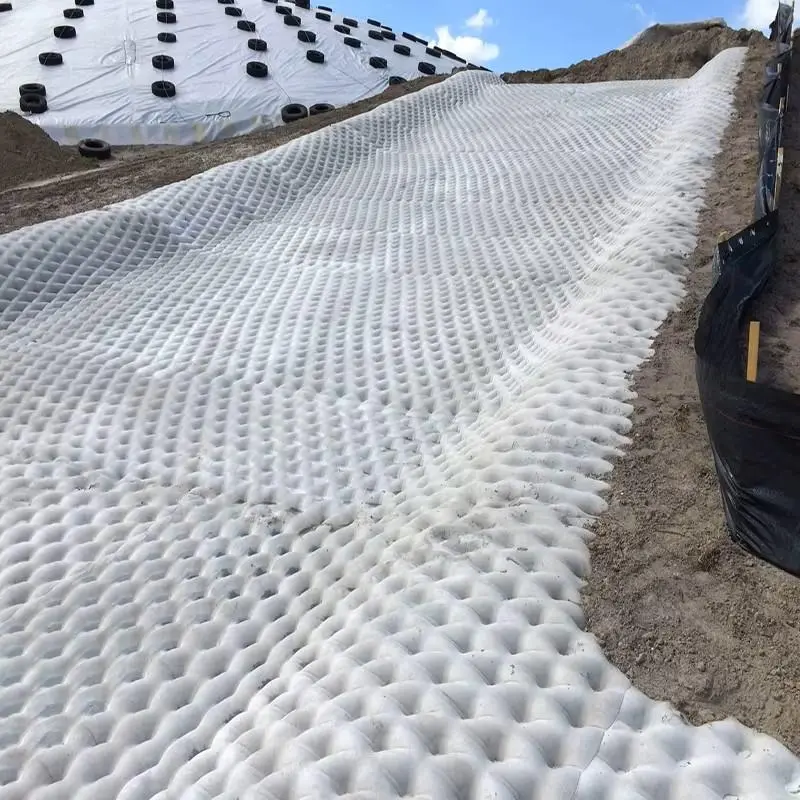
Functions
FUNCTIONS OF CONCRETE MATTRESS
Concrete mattress functions include:
- Erosion protection: a concrete mattress protects riverbanks, channels and coastlines from scouring by currents and waves.
- Besides erosion protection, a concrete mattress works as an impermeable or semi-impermeable lining that reduces water seepage in channels and ponds.
Applications
CONCRETE MATTRESS APPLICATIONS
Concrete mattress from Petra Nusa can be used for many needs, including:
- Riverbank Protection and River Normalization: lines riverbanks and riverbeds so they are not scoured by the current, especially on river bends.
- Irrigation Channels, Canals and Drainage: a strong channel lining that reduces water loss through seepage.
- Coastal Protection and Revetments: protects shorelines and sea dikes from wave erosion.
- Dikes, Dams and Spillways: lines the upstream slopes of dikes and spillways against water scouring.
- Underwater Pipes and Cables: covers and protects subsea or river-crossing pipes from scouring and impact.
- Retention Ponds and Mining Ponds: lines pond slopes so they stay stable and do not slide easily.
Whatever your project needs, we are ready to help you choose the most suitable concrete mattress type and specification.
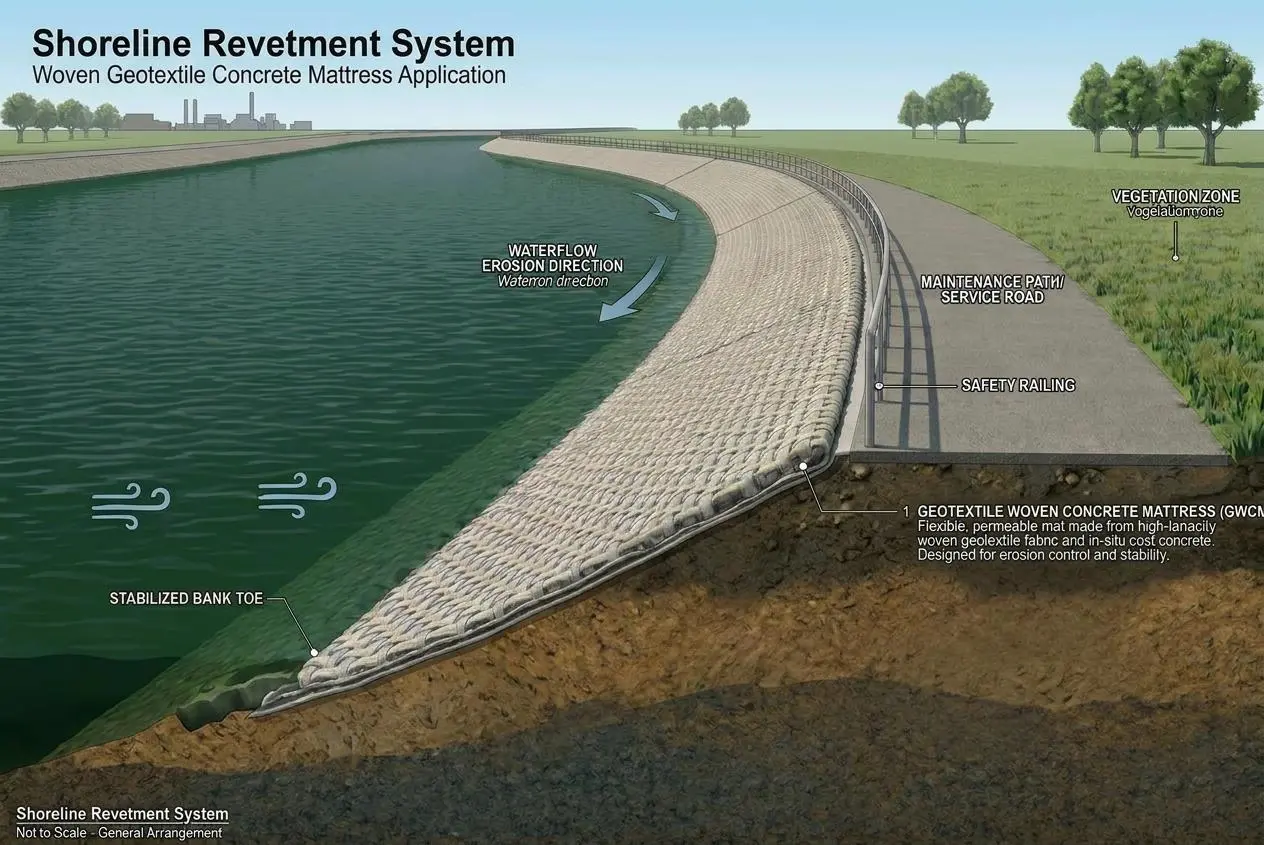
Types
TYPES OF CONCRETE MATTRESS
To meet the needs of different projects, Petra Nusa supplies several types of concrete mattress based on the stitching pattern:
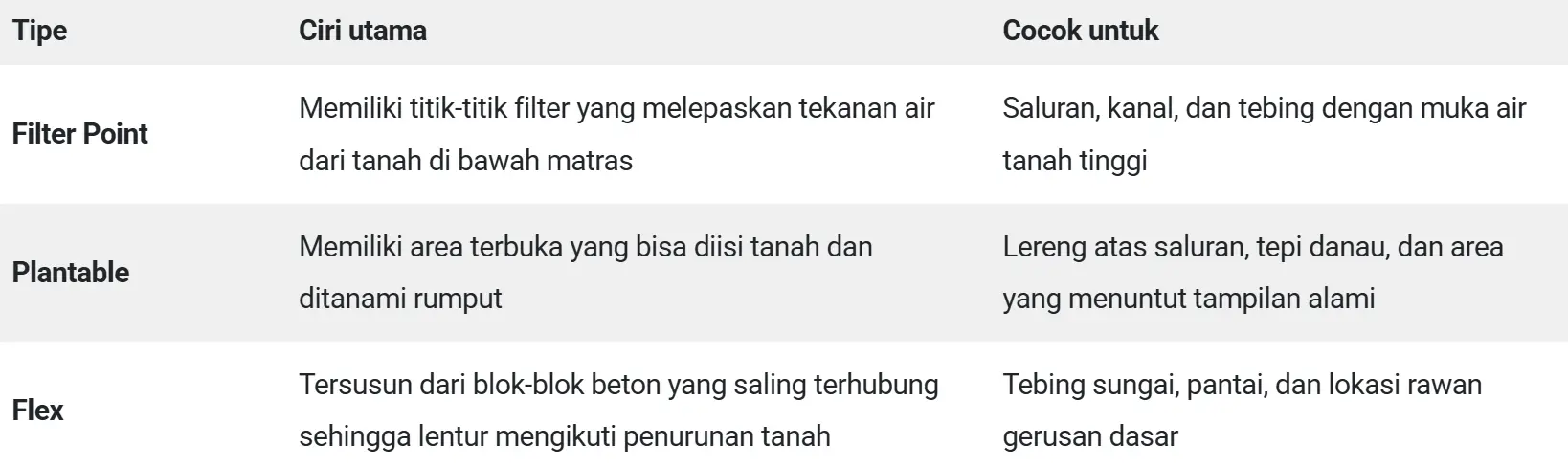
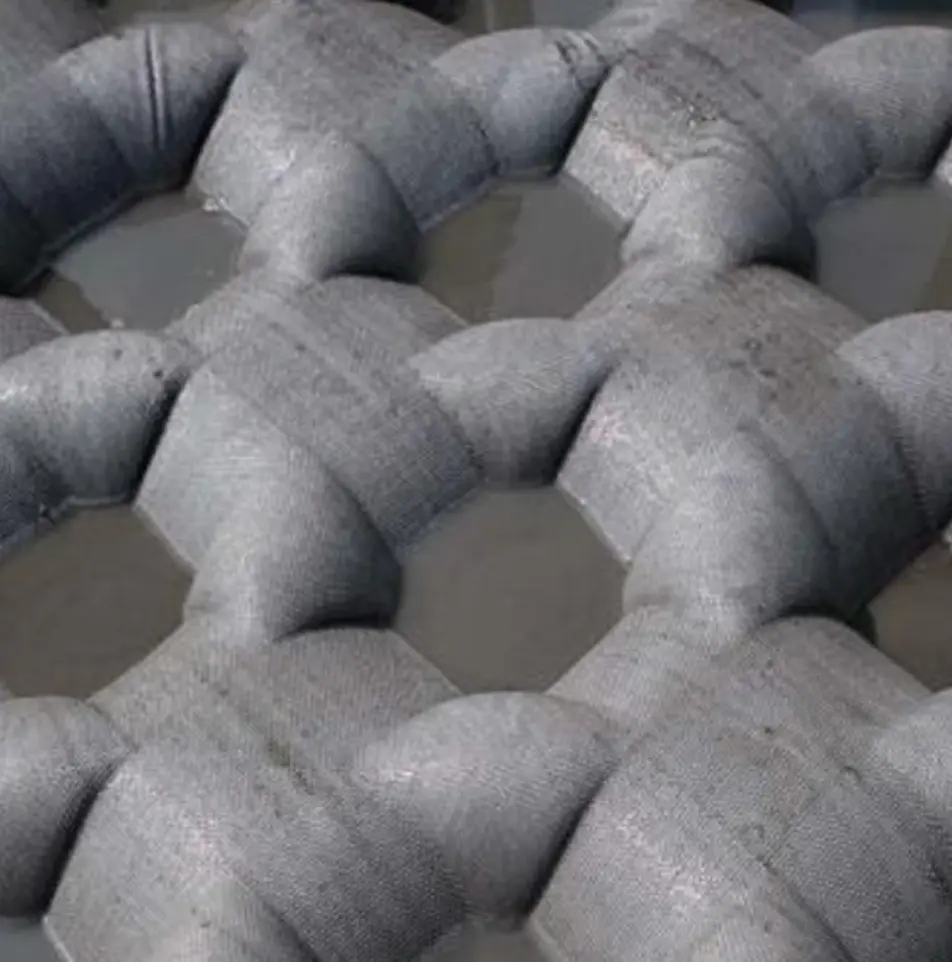
Filter Point

Plantable
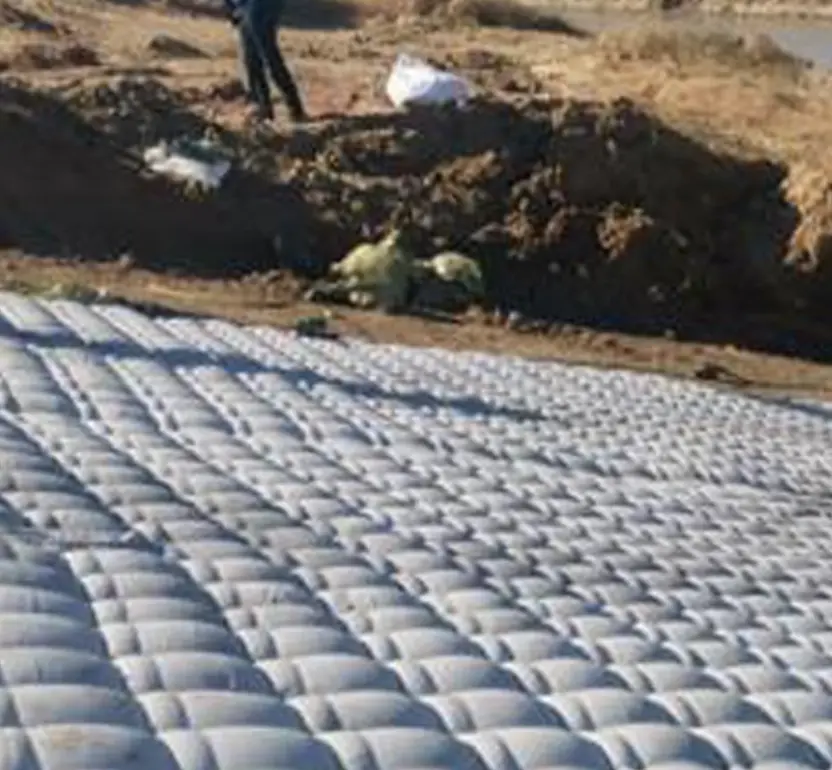
Flex
By thickness, concrete mattress comes in several sizes:
| Thickness | Common Applications |
| 100 mm | Irrigation and drainage channels with light flow |
| 150 mm | Riverbanks, canals and retention ponds |
| 200 – 300 mm | Coastlines, dikes, docks and areas with strong currents or waves |
Specifications
CONCRETE MATTRESS SPECIFICATIONS
We understand that material quality determines the service life of your erosion protection structure. That is why the concrete mattress we supply has passed quality tests and meets international ASTM standards.
| Properties | Value |
| Material | Polyester (PET) and polypropylene (PP) |
| Mattress thickness | 10 cm – 50 cm |
| Width per unit | 1 m – 5 m |
| Product type | Filter Point, Plantable, Flex |
| Customization | Size and pattern can be tailored to project needs |
| Minimum tensile strength (Tult) | >50 kN/m |
| Nominal elongation | < 20% |
FAQ
CONCRETE MATTRESS FAQ
What is the difference between a concrete mattress, gabions and stone masonry?
All three are used for erosion protection, but they work and are installed differently.
| Factor | Concrete Mattress | Gabion | Stone Masonry |
| Material | Geotextile bag + concrete | Wire + stone | Stone + mortar |
| Underwater installation | Possible, without dewatering | Limited | Difficult, needs dewatering |
| Installation speed | Fast | Medium | Slow |
| Surface | Neat and uniform | Open voids | Depends on workmanship |
| Common applications | Channels, rivers, coastlines, scour protection | Riverbanks, retaining walls | Channels and small banks |
Can a concrete mattress be installed underwater?
Yes. The bag is spread out and secured in position, then concrete is pumped into it. The concrete pushes the water out, so installation does not require dewatering the site.
How is a concrete mattress installed?
The ground surface is leveled to the design, then the bag is spread out and anchored at the top of the slope. Concrete is pumped in through the filling inlets in stages from the bottom up until the bag is full. Once the concrete has hardened, the edges are buried in an anchor trench.
Visit our complete catalog
for more detailed product descriptions!
