


HDPE SPIRAL PIPE & FLAP GATE
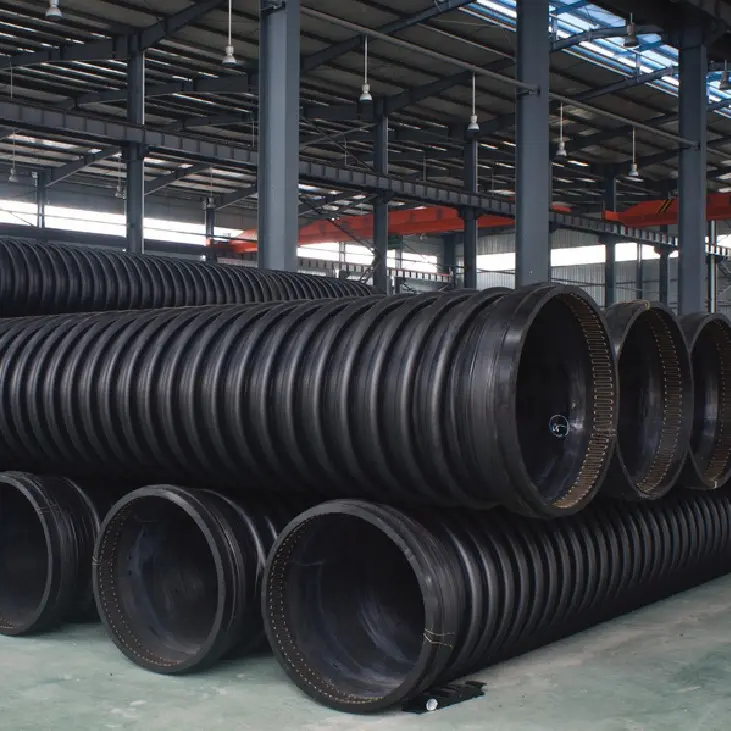
HDPE spiral pipe is an HDPE pipe made with spiral winding technology. The outer wall is designed with hollow sections or corrugations to give high ring stiffness while staying lightweight. It is made from high-density polyethylene (HDPE), which is highly resistant to corrosion, abrasion and chemicals.
HDPE Flap Gate
An HDPE flap gate is a one-way check valve gate made from high-density polyethylene (HDPE) that works on water pressure differences. It opens when water pressure from inside the pipe pushes it and closes tightly as soon as there is back pressure from outside. Its light weight and resistance to corrosive environments make it an ideal alternative to cast iron or metal flap gates.


Functions
FUNCTIONS OF HDPE SPIRAL PIPE & FLAP GATE
HDPE spiral pipe functions include:
- Carrying large volumes of stormwater, wastewater and industrial liquids smoothly.
- Withstanding heavy loads from the soil layers and vehicles above the buried pipe.
- Preventing leaks that could pollute the soil and environment around the installation.
HDPE FLAP GATE
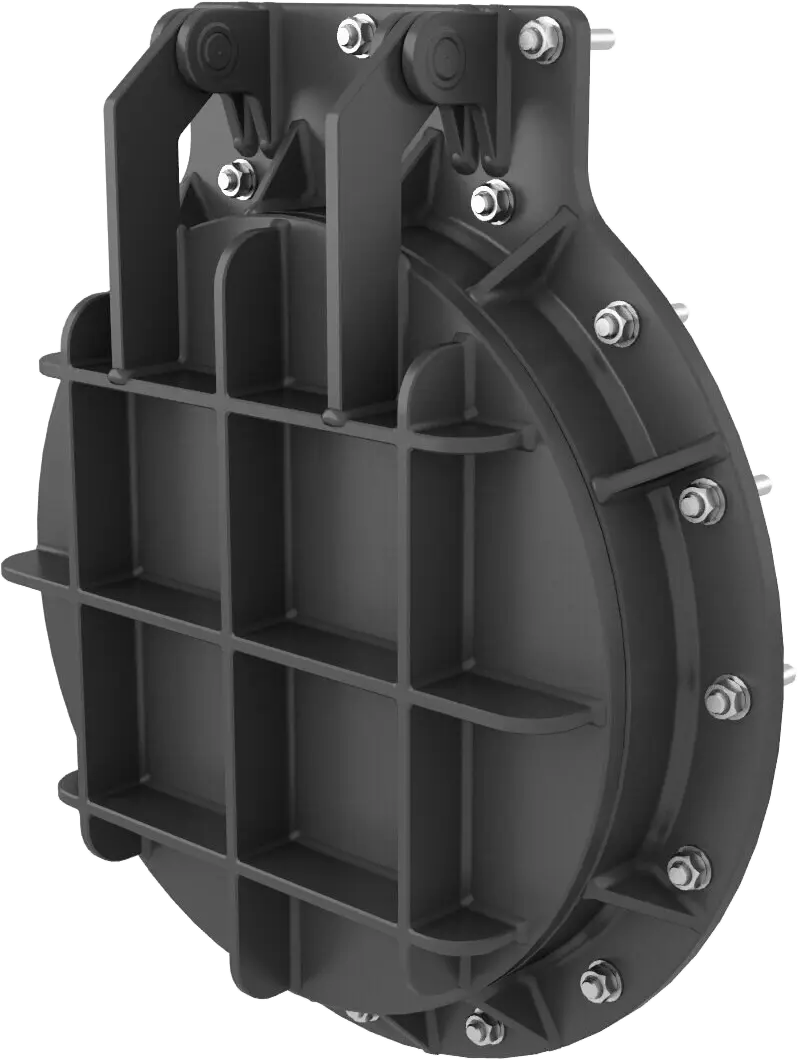
HDPE flap gate functions include:
- Preventing seawater, river water or floodwater from flowing back into the drainage network.
- Regulating water discharge automatically without electric power or manual operation.
- Keeping rubbish, sludge and animals out of the water channel.
Applications
HDPE SPIRAL PIPE & FLAP GATE APPLICATIONS
In Indonesia, this material can be used in many types of infrastructure projects, including:
- Main drainage channels for toll roads, airports and industrial estates.
- Culverts under roads or railway lines.
- Collection and discharge lines in wastewater treatment plants.
- River diversion channels and urban stormwater infiltration systems.
Types
TYPES OF HDPE SPIRAL PIPE & FLAP GATE
Types of HDPE spiral pipe:
- Steel reinforced HDPE spiral pipe combines the mechanical strength of steel with the flexibility of HDPE. A steel strip or special profile is embedded in the spiral structure of the pipe and fully coated with HDPE. The steel gives a very high ring stiffness. This type is the first choice for large-diameter water channels buried under main roads, railway crossings or very deep fill.
- Full HDPE spiral pipe is made entirely from high-density polyethylene (HDPE) with no metal components. Its strength comes purely from the hollow or solid spiral wall structure. Being fully thermoplastic, it offers excellent flexibility and complete resistance to corrosion and corrosive chemicals. This type is ideal for unstable soil, swamp areas and liquid industrial waste lines.
Specifications
HDPE SPIRAL PIPE & FLAP GATE SPECIFICATIONS
| Properties | HDPE Spiral Pipe |
| Material | HDPE |
| ID (mm) | 800; 1000; 1200; 1400; 1500; 1600; 1800; 2000; |
| SN/Ring Stiffness (kN/m²) | SN4; SN8; SN12.5; SN16 |
| Properties | HDPE Flap Gate |
| Material | HDPE |
| ID (mm) | 800; 1000; 1200; 1500; 1800; |
Project Portfolio
PROJECT PORTFOLIO
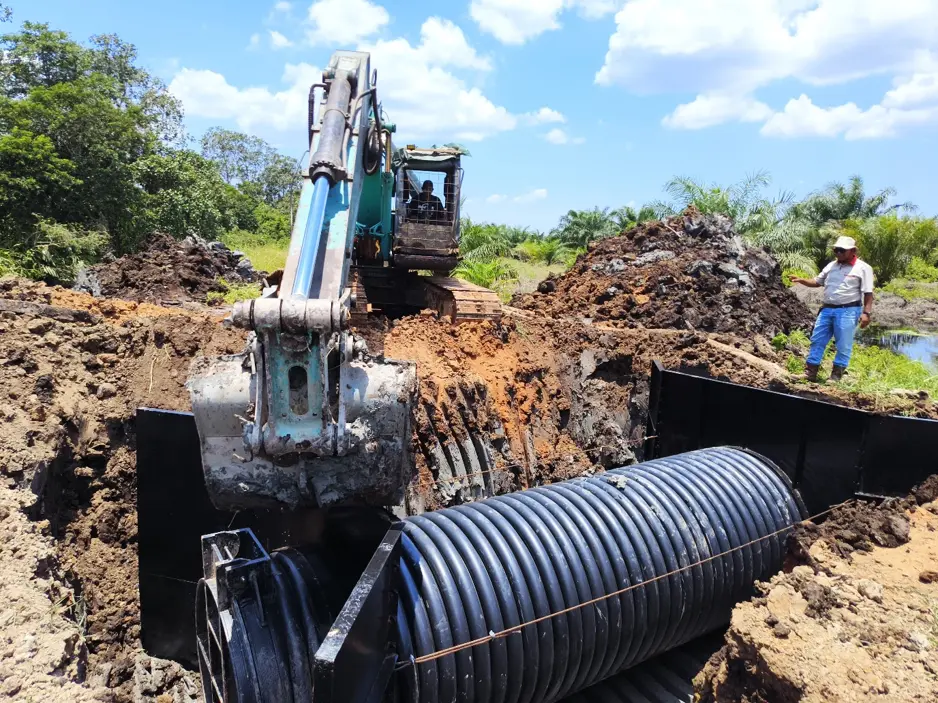
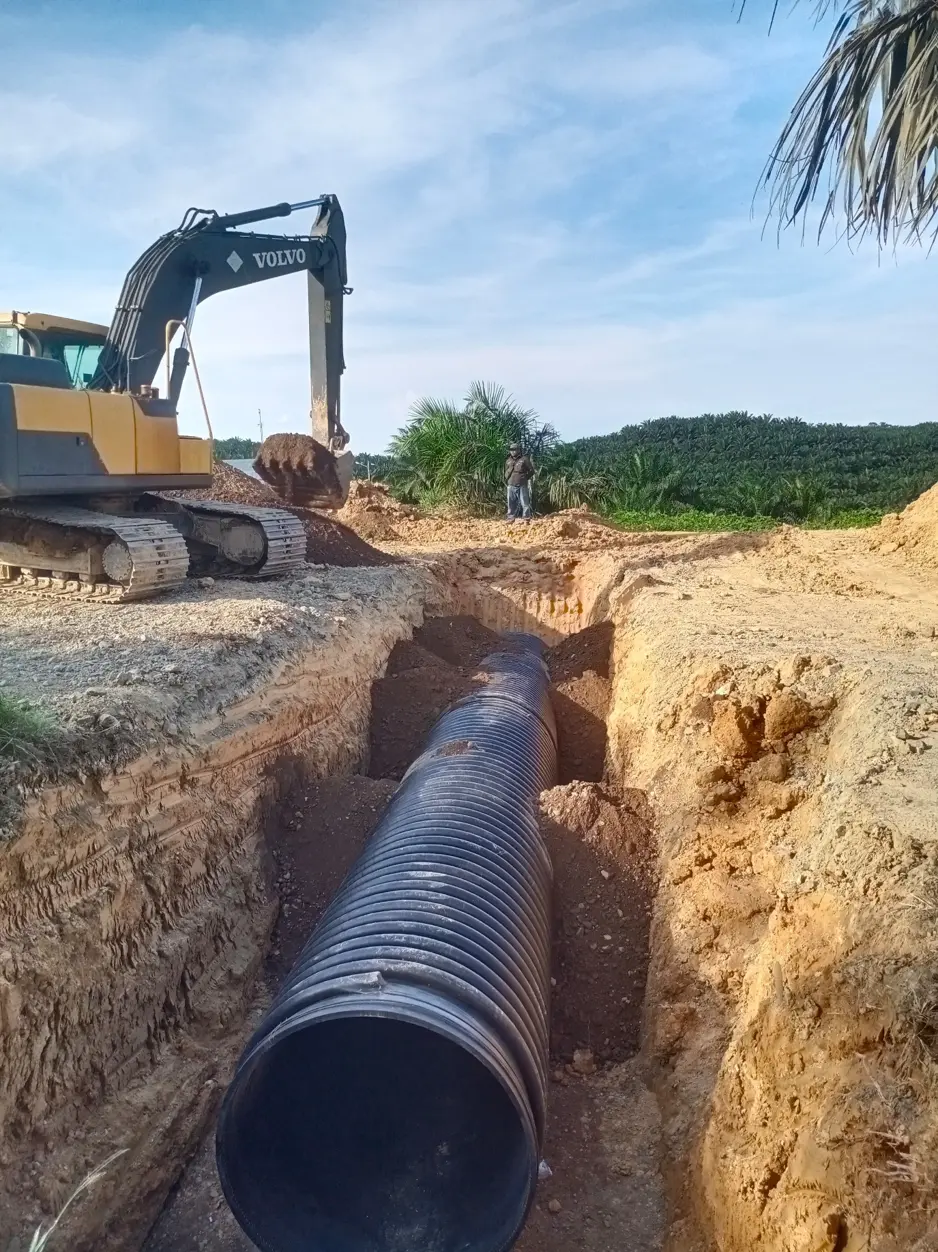
HDPE Spiral Pipe and HDPE Flap Gate – Morowali, Central Sulawesi
FAQ
HDPE SPIRAL PIPE & FLAP GATE FAQ
What are the advantages of HDPE spiral pipe and HDPE flap gates over conventional materials?
Both are made from high-density polyethylene (HDPE), which does not corrode, resists aggressive chemicals and is much lighter than concrete or iron. This makes transport and on-site installation more efficient, with very low maintenance costs.
How does an HDPE flap gate prevent flooding?
An HDPE flap gate works automatically using differences in hydrostatic water pressure. The flap is pushed open when the flow from inside the channel is greater, and closes tightly when the water level at the outlet rises or at high tide, preventing backflow.
When should I choose steel reinforced over full HDPE spiral pipe?
Use steel reinforced pipe for drainage under main roads, railway lines or very deep fill, where extra-high ring stiffness is needed. Use full HDPE pipe for swamps, very unstable soil, chemical waste lines or seawater environments.
How is HDPE spiral pipe joined?
Steps for joining HDPE spiral pipe by electrofusion
- Clean the Joint Area
Make sure the male and female ends are completely free of mud, stones and sand. Use a clean cloth or brush to remove foreign matter so it does not affect the fusion quality of the HDPE. - Align the Pipes
Push the male end slowly and precisely into the female end, keeping them aligned. Use a chain block, lever or machine power so both pipe ends join straight and symmetrically. - Clamp the Pipes
Fit a clamp or locking belt around the outside of the spiral pipe. This keeps the pipe from shifting, minimizes movement and keeps the line straight during welding. - Operate the Electrofusion Machine
Connect the electrofusion machine cable to the terminal on the female end, which has a built-in heating element. The heat melts the inner and outer pipe walls until they fuse tightly. - Automatic Fusion
Let the machine run until the plastic melts and fuses completely. The electrofusion machine stops automatically once the fusion time is complete. - Cooling Time
Keep the joint firmly clamped while it cools. Do not move, shift or put any mechanical load on the joint before the cooling time is fully complete.
Visit our complete catalog
for more detailed product descriptions!
