


GEOBAG
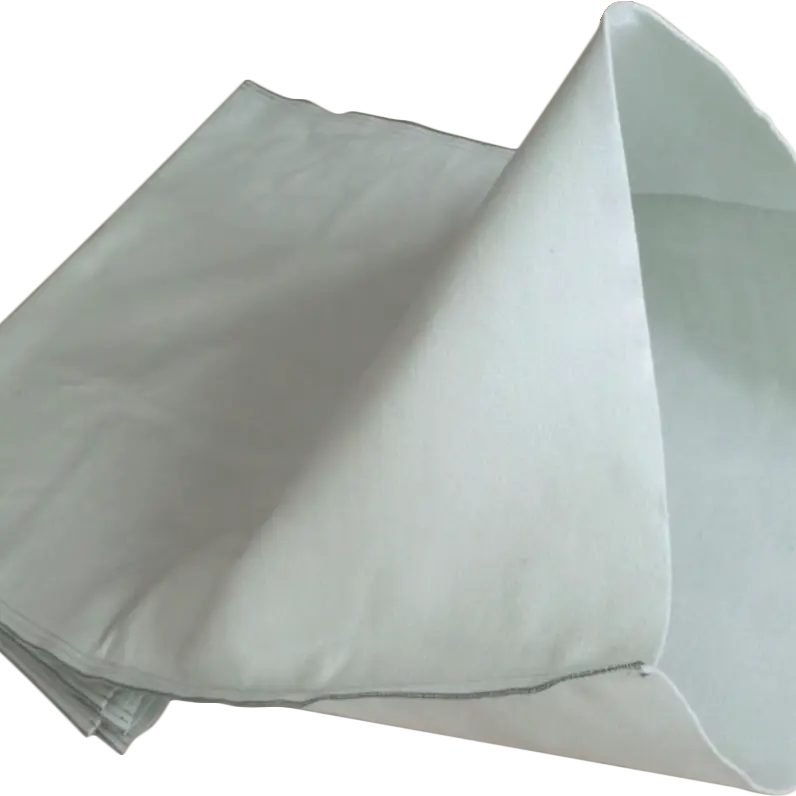
A geobag (or geotextile bag) is a bag or sack in various sizes (custom sizes) made from geotextile. It is specially designed to be filled with local material such as sand, soil or an aggregate mix, then sewn shut firmly so it can work as a solid retaining structure.

Functions
FUNCTIONS OF GEOBAG
As a flexible structural element, a geobag is used to:
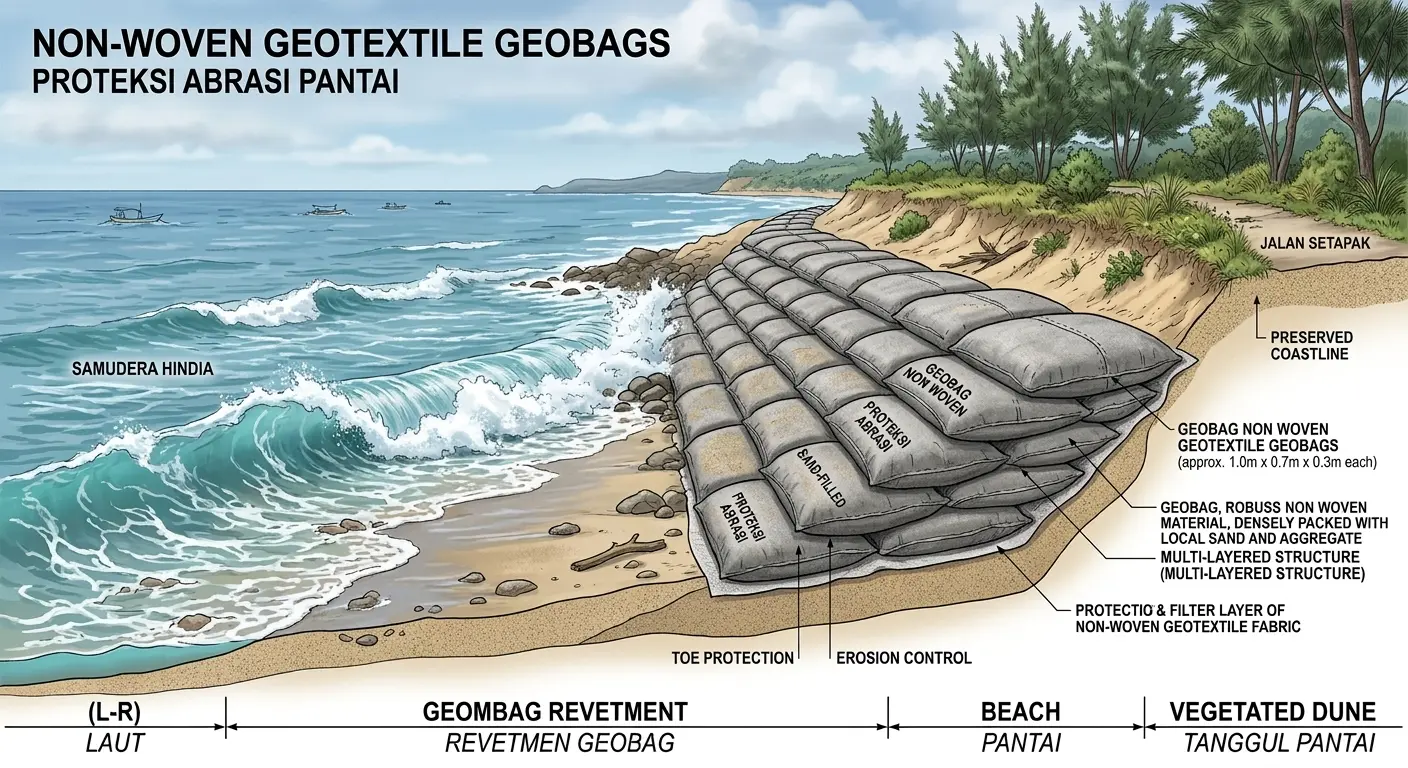
- dampen wave energy,
- prevent coastal erosion,
- stabilize landslide-prone slopes, and
- protect the soil surface from scouring by water currents without harming the surrounding ecosystem.
Advantages
ADVANTAGES OF GEOBAG
Compared with conventional structures such as solid concrete or stacked river stone (gabions), geobags offer several advantages:
- Environmentally Friendly: The geotextile blends in with nature and allows vegetation to grow between the bags over time, so the landscape stays attractive.
- Flexible and Adaptive: As flexible bags, geobags can follow ground movement or settlement underneath without cracking or breaking like rigid (concrete) structures.
- Cost-Efficient and Easy to Install: Geobags can be filled directly with local material from around the project site (such as local sand), saving the cost of hauling material in. Installation is also relatively fast and does not require large heavy equipment.
- UV and Chemical Resistant: High-quality geobags usually contain anti-UV additives and resist biological and chemical degradation in both freshwater and saltwater environments.
Applications
GEOBAG APPLICATIONS
Thanks to their flexibility and durability, geobags are widely used in many construction projects, including:
- Coastal Erosion Control & Wave Protection (Breakwaters/Seawalls): Geobags are often placed along the shoreline to break wave energy, prevent erosion and protect the land from the sea.
- River Normalization and Riverbank Protection: Used to reinforce riverbanks so they are not easily eroded by strong currents, especially on landslide-prone river bends.
- Emergency Flood Defense: Because they are easy to fill and quick to install at disaster sites, geobags are often used as emergency levees to hold back floodwater.
- Land Reclamation and Artificial Islands: Used as perimeter bunds or containment walls for sand filling in shallow waters.
- Slope Stabilization & Roadside Landslides: Used on highway projects or steep slopes to hold back falling landslide material.
Types
TYPES OF GEOBAG
Geobag material generally falls into two main types, which are often combined or chosen according to the specific needs of the project:
- Woven Geotextile: Made from synthetic polypropylene (PP) or polyester (PET) fibers woven to give very high tensile strength. The woven type is ideal for withstanding heavy loads, high pressure and mechanical pulling on site.
- Non-Woven Geotextile: Made from synthetic polypropylene (PP) or polyester (PET) fibers bonded mechanically (through a needle punch process) or thermally. The non-woven type has excellent permeability and filtration, and absorbs wave impact more flexibly.
Specifications
GEOBAG SPECIFICATIONS
| Brand | Virobag |
| Material | Woven geotextile and non-woven geotextile |
| Weight | 500 gsm; 600 gsm; 800 gsm; 1200 gsm; Customizable |
| Size | 0.7 x 0.5 m; 1.2 x 0.8 m; 1.5 x 1.0 m 2.1 x 1.4 m; Customizable |
| Standard | SNI ; ASTM |
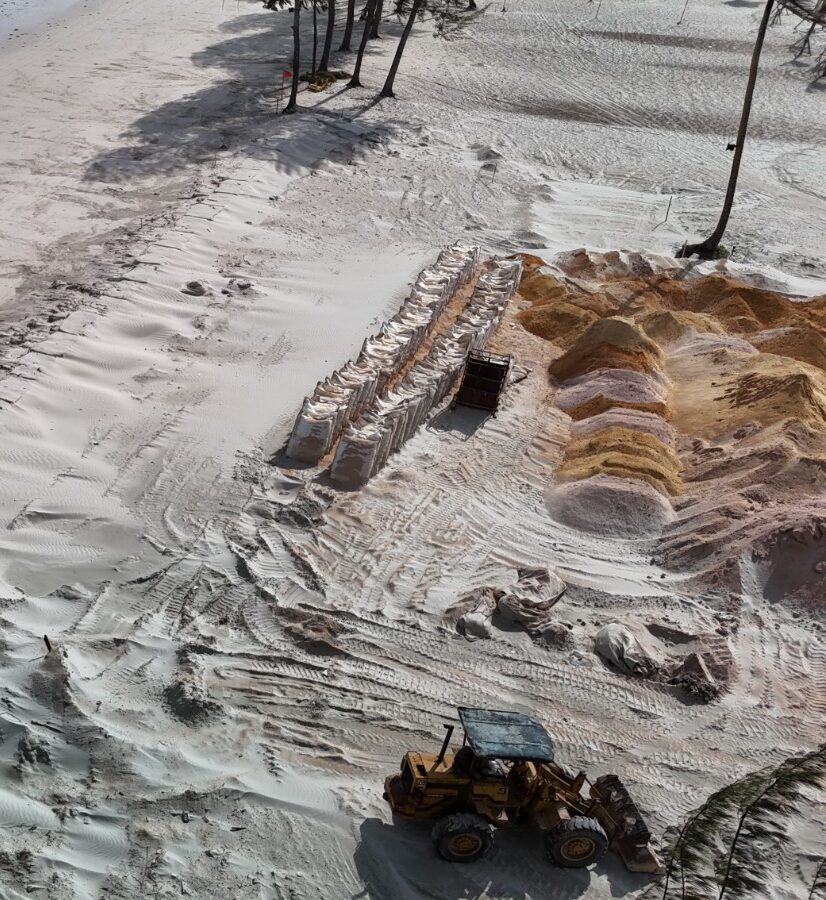
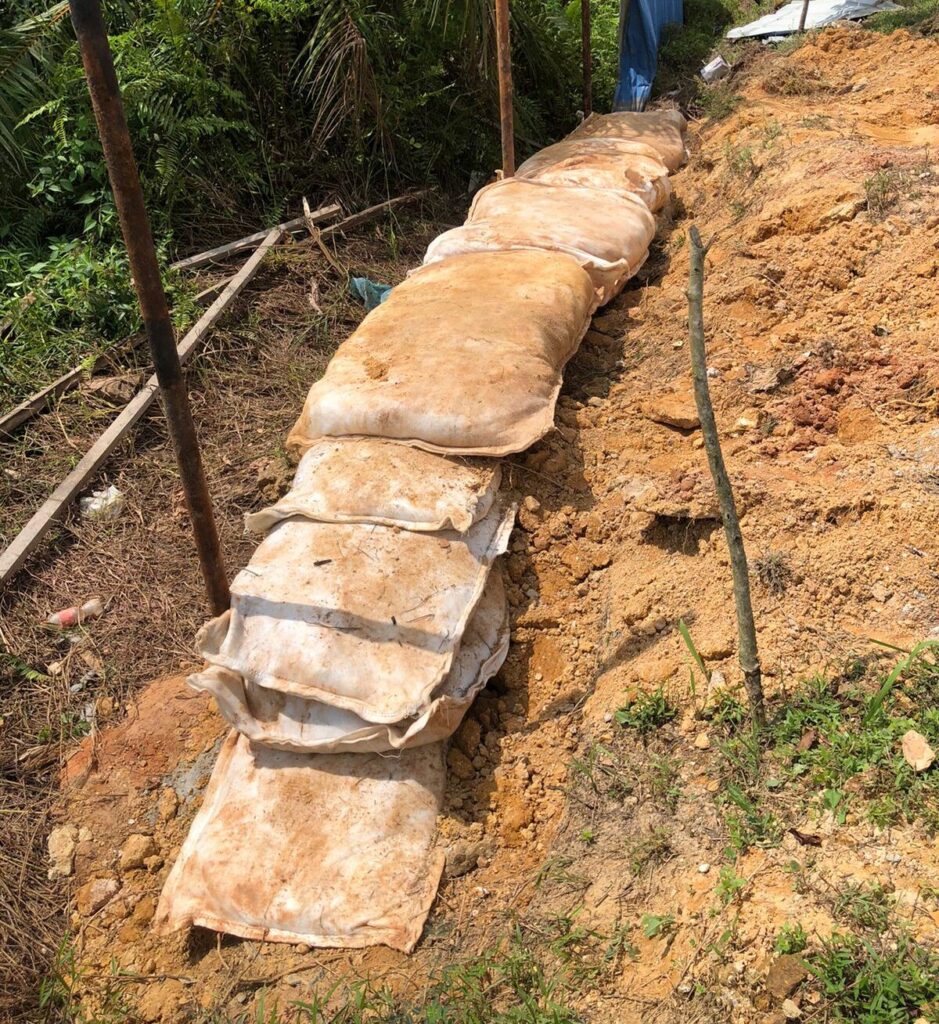
Project Portfolio
PROJECT PORTFOLIO


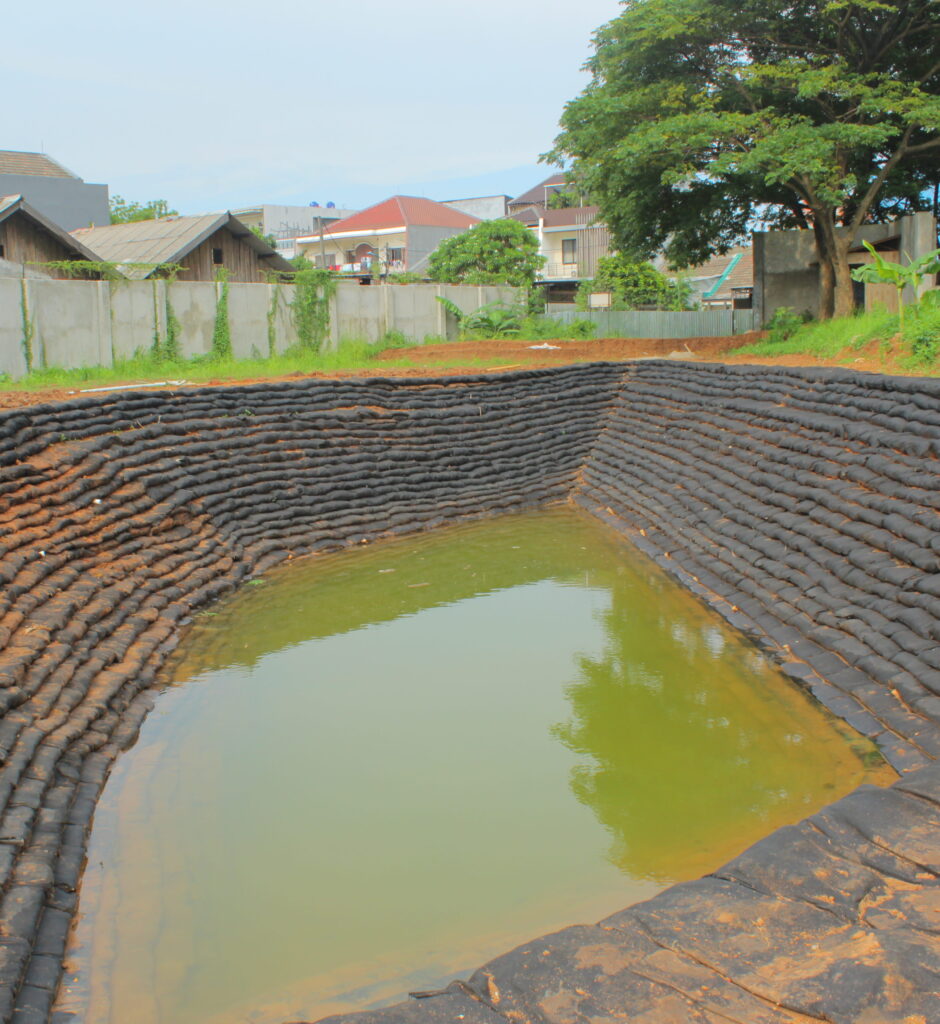
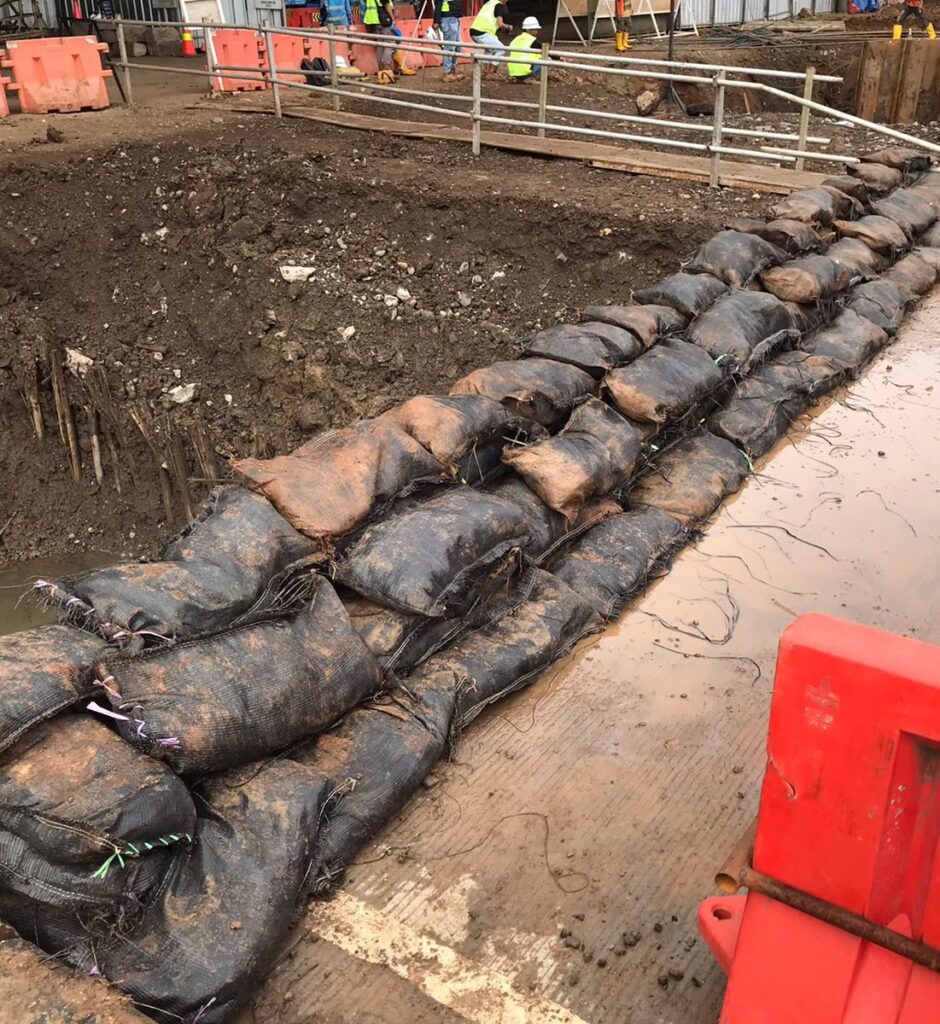
FAQ
GEOBAG FAQ
How do I choose the right geobag size and weight?
Small geobags (e.g. 0.7 x 0.5 m or 1.2 x 0.8 m) can use 500 gsm, while medium to large geobags (e.g. 1.5 x 1.0 m up to 2.1 x 1.4 m) should use geotextile of at least 800 gsm.
Does geobag placement require heavy equipment?
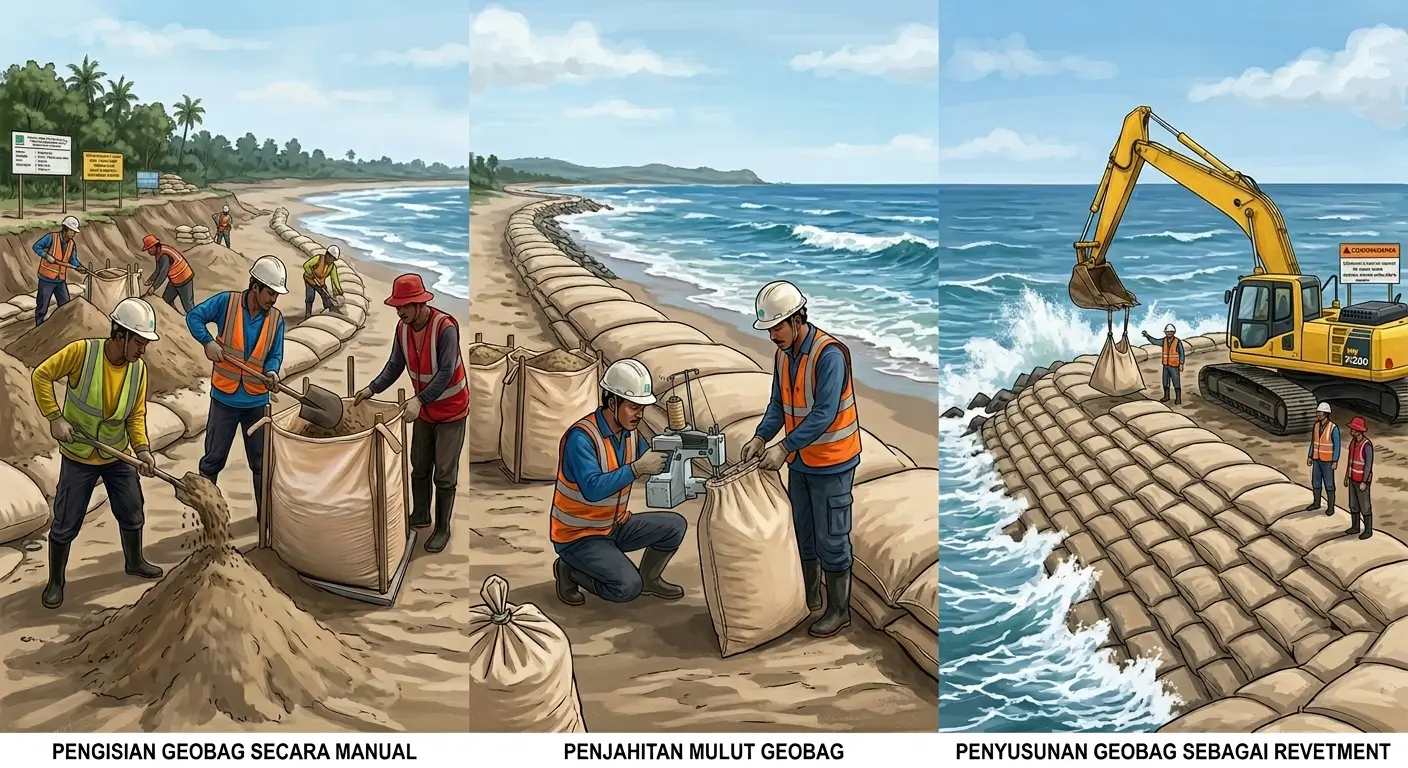
Small geobags can be placed by hand without heavy equipment, while medium to large geobags must be placed with heavy equipment. We recommend using heavy equipment to make placement easier and the result neater.
Is a special sewing machine needed?
Yes. A portable sewing machine and special thread are used for geobag work on site.
Visit our complete catalog
for more detailed product descriptions!
