


GEOGRID
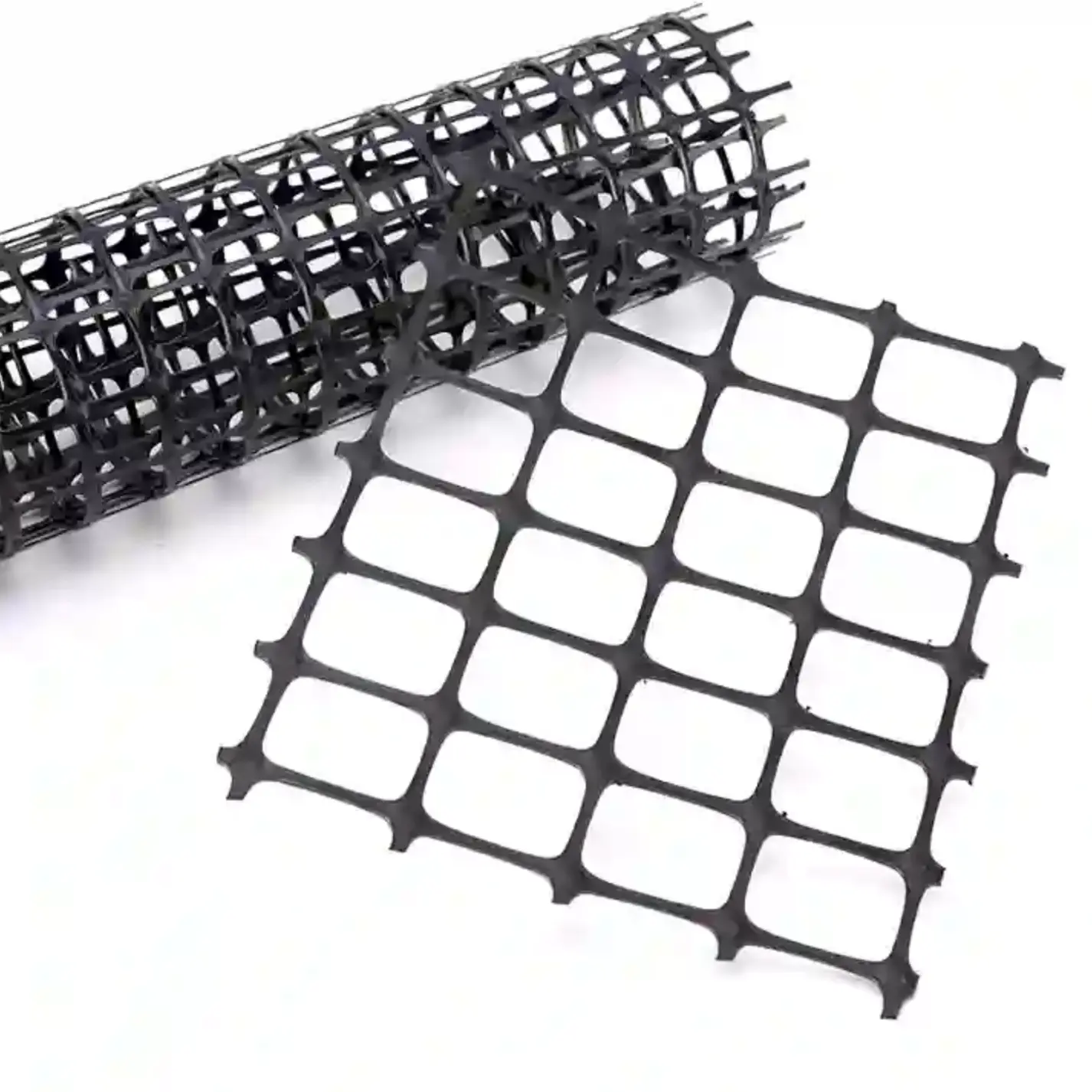
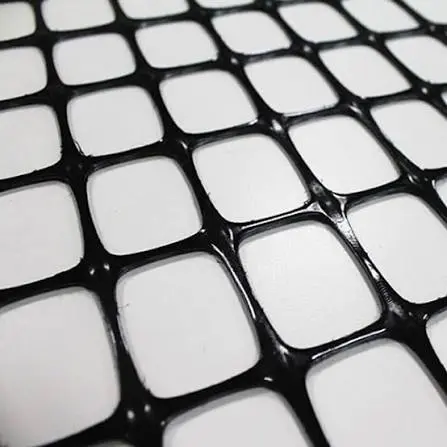
Geogrid is a polymer geosynthetic in the form of an open grid, made of interconnected tensile elements (ribs) with apertures large enough for soil or rock aggregate to interlock through them.
Unlike geotextile, which generally works as a separator, filter or drainage layer, the main function of geogrid is reinforcement. It is specially designed to withstand high tensile loads, spread loads evenly, and prevent lateral deformation in embankment structures.

How It Works
HOW GEOGRID WORKS
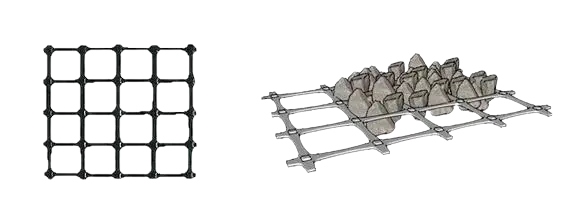
The key to geogrid’s performance lies in how it interacts with the fill material (such as crushed stone aggregate or granular soil). Its main mechanism is called interlocking:
- When aggregate or crushed stone is pressed from above (for example by passing vehicles), the aggregate particles try to shift or spread sideways.
- The geogrid apertures are designed so that aggregate particles can enter and be locked inside them.
- The geogrid ribs hold the aggregate in place so it cannot move laterally. Thanks to this interlock, the soil or aggregate layer is firmly confined, forming a single stiff, stable composite that spreads vertical loads over a wider area.
Applications
GEOGRID APPLICATIONS
Because it stabilizes soil so effectively, geogrid is widely used in heavy infrastructure projects, including:
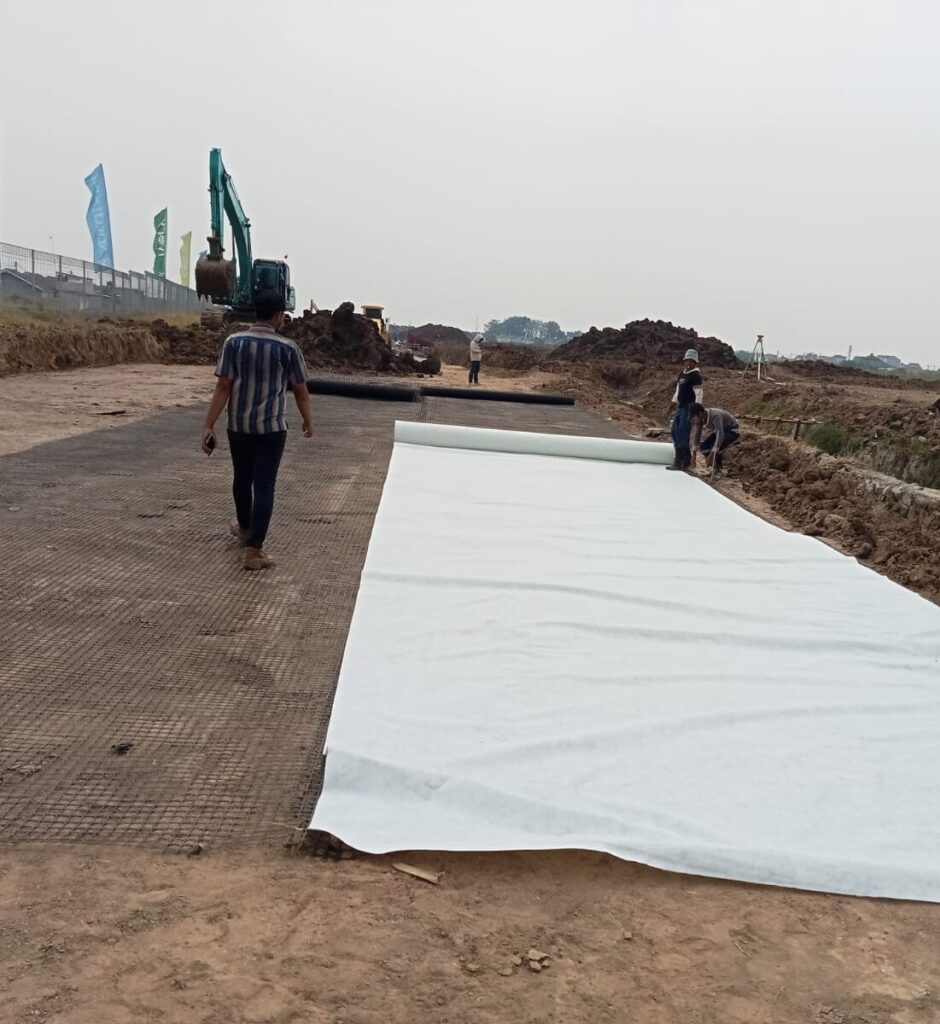
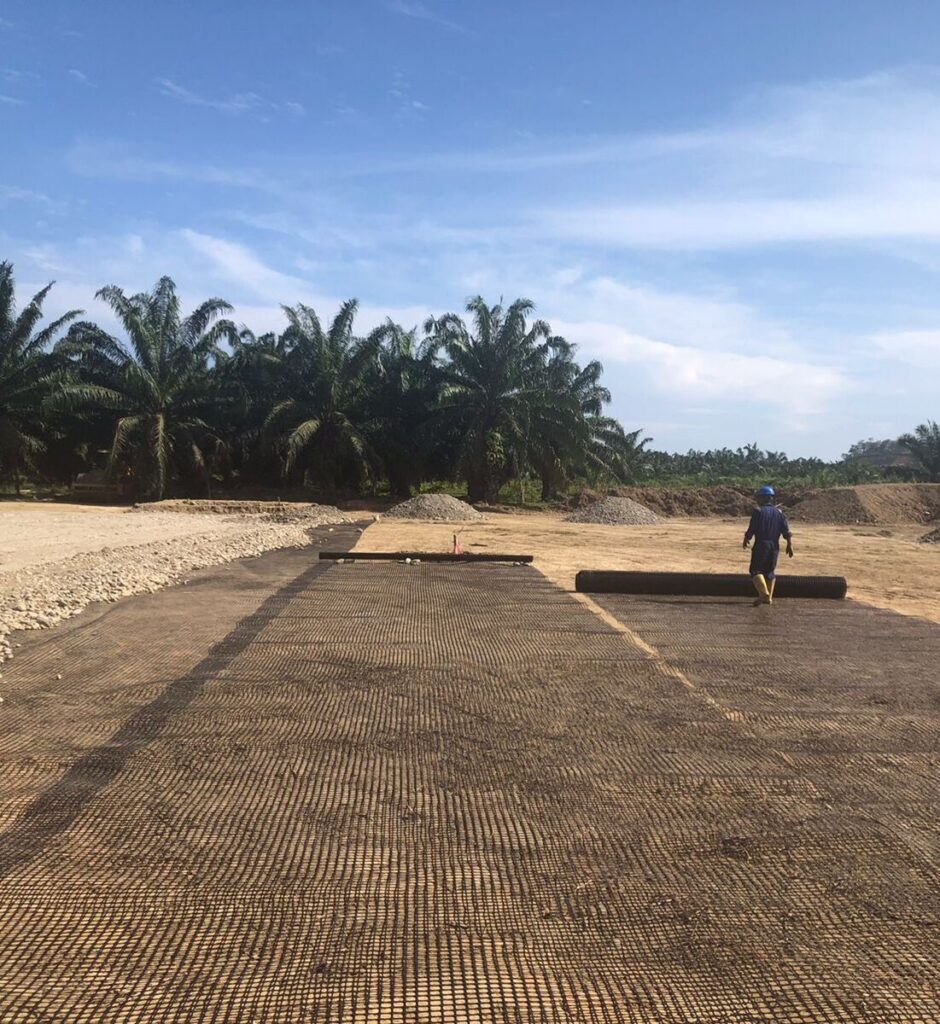
- Pavement Reinforcement: Installed under the road foundation (base/sub-base) to reduce deformation and spread loads over a wider area.
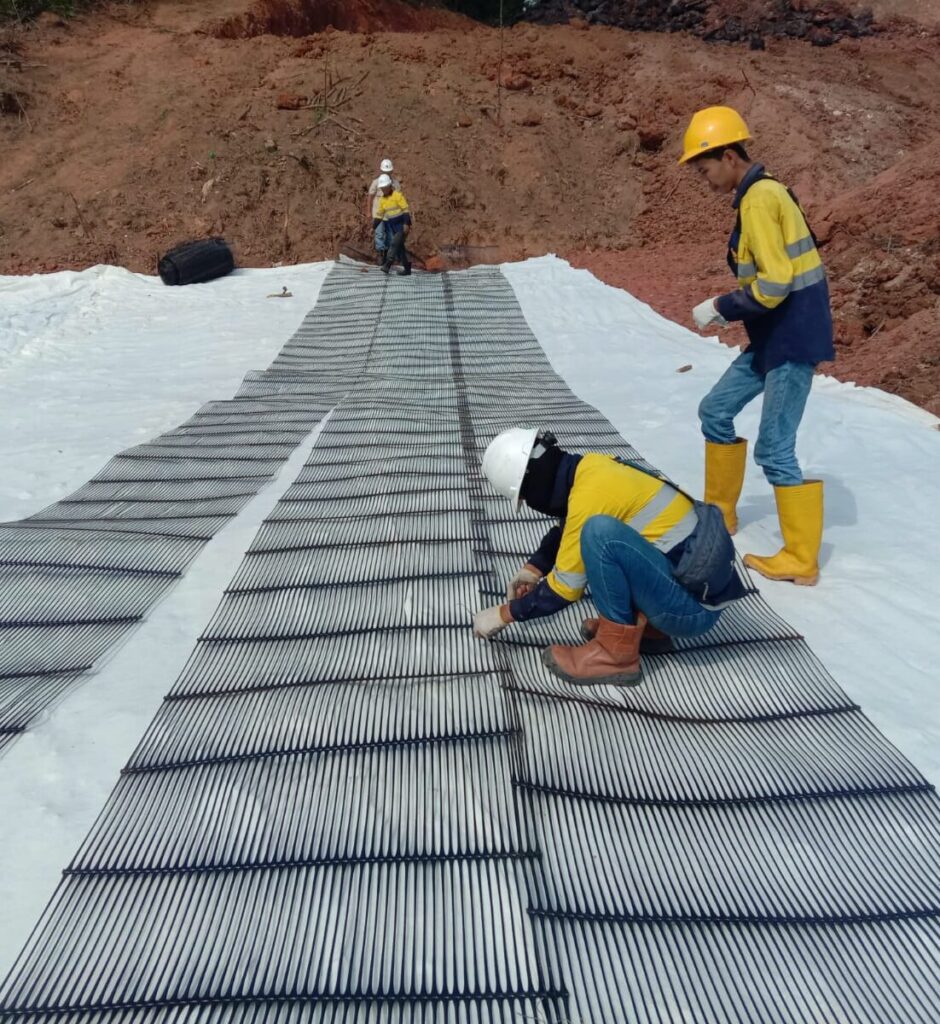
- Slope Stabilization and Retaining Walls (MSE Walls): Used as reinforcement between layers of granular fill to build high, stable retaining walls.
- Embankments on Soft Soil: Prevents collapse and lateral deformation when building roads on subgrade with very low bearing capacity.
Video
GEOGRID VIDEO
Types
TYPES OF GEOGRID
Geogrid is classified by the direction of its tensile strength and its structure into three main types:
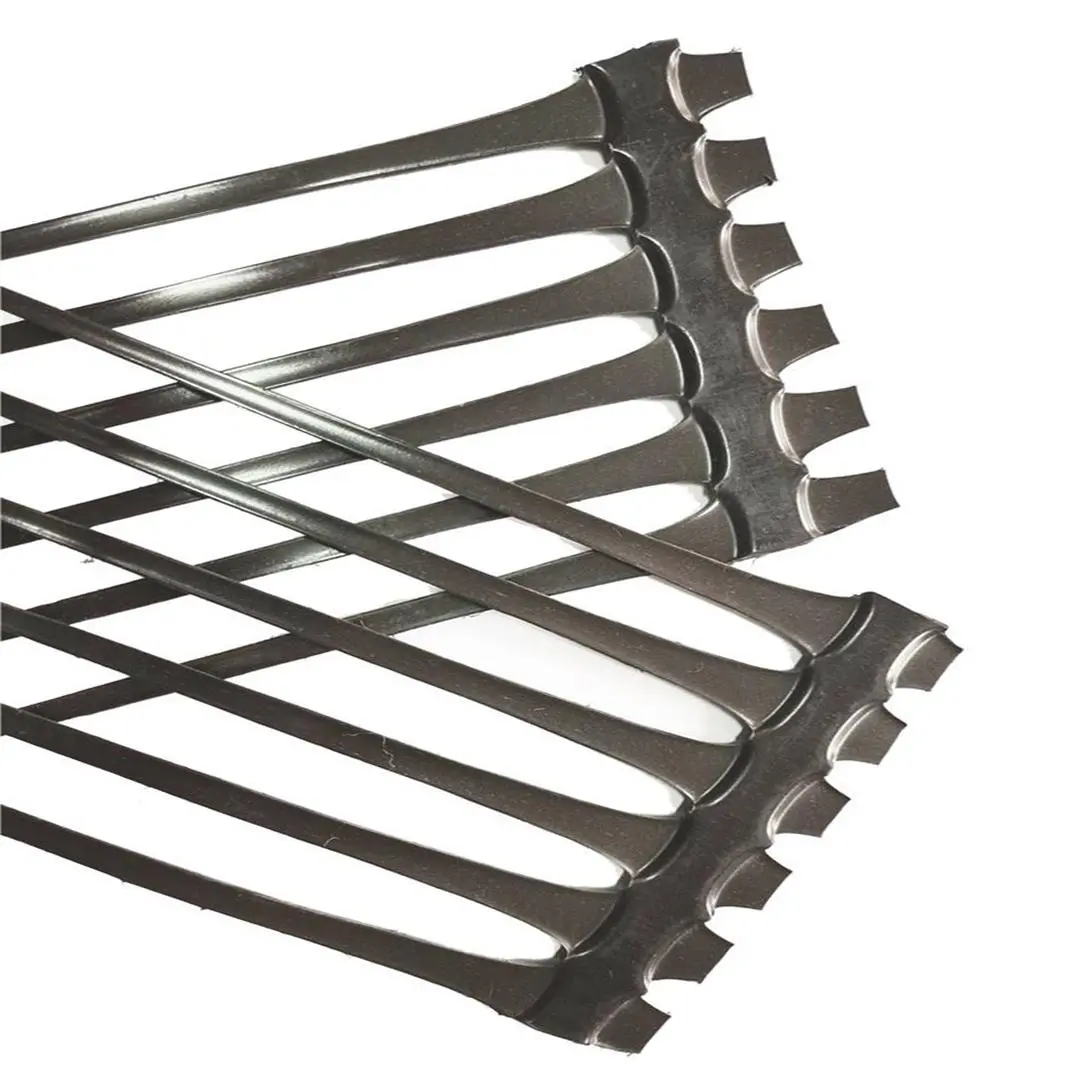
- Uniaxial Geogrid: High tensile strength in one main direction (longitudinal or machine direction). This type is specially designed to carry long-term tensile loads in one direction, making it ideal for retaining wall structures (MSE walls) and steep slope stabilization.
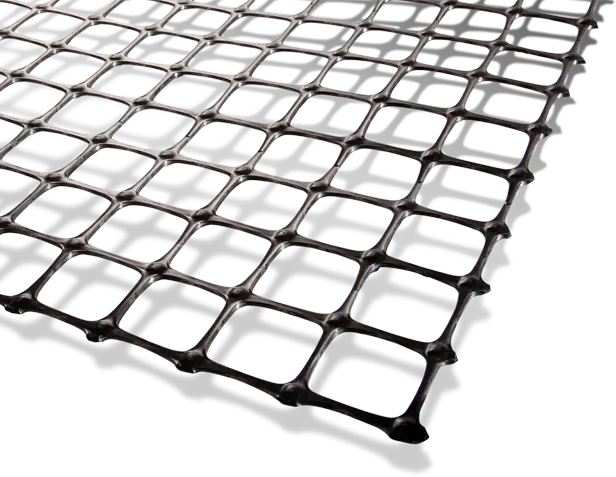
- Biaxial Geogrid: Equal or balanced tensile strength in two perpendicular directions (longitudinal and transverse). Biaxial geogrid is designed to spread loads in all directions, making it very effective for reinforcing highway foundations, car parks and runways on soft soil.
- Triaxial Geogrid: A further innovation with triangular apertures. The triangular geometry provides stiffness and a much more even load distribution in all directions (360 degrees) than conventional square patterns, giving optimal reinforcement performance in road pavement layers.

By material, geogrid is classified into two main types:
- Polyester (PET) Geogrid: PET geogrid is made from polyester fibers with high strength and resistance to deformation. Polyester resists UV light, chemicals and moisture, so it is suitable for many environmental conditions. PET geogrid has a high modulus of elasticity, meaning it can carry heavy loads without significant deformation.

- Polypropylene (PP) Geogrid: PP geogrid is made from polypropylene, a thermoplastic material. Polypropylene is lighter than polyester and also has good resistance to chemicals and moisture. PP geogrid has good tensile strength, though not as high as PET geogrid, and is more flexible in some applications.

Specifications
GEOGRID SPECIFICATIONS
| Brand | Virogrid |
| Material | Polyester (PET) and Polypropylene (PP) |
| Tensile Strength | 20 kN; 30 kN; 40 kN; 50 kN; 100 kN |
| Type | Uniaxial; Biaxial |
| Width | 3.95 m; Customizable |
| Length | 50 m; Customizable |
| Standard | ASTM / ISO |
Project Portfolio
PROJECT PORTFOLIO


FAQ
GEOGRID FAQ
How is geogrid joined?
Geogrid is simply overlapped and joined with cable ties, a sewn seam, or washers and pins. The recommended overlap is at least 30 cm, and it can be more depending on site conditions and requirements.
When should I use uniaxial or biaxial geogrid?
Use uniaxial geogrid when the tensile force acts mainly in one direction, such as in vertical structures or slopes (tensile force resisting landslides). Use biaxial geogrid when the structure receives loads from several directions or for stabilizing horizontal surfaces (such as road foundations, heavy equipment platforms or car parks).
Does geogrid come in sheets, panels or rolls?
Geogrid usually comes in rolls of 3.95 m x 50 m.
How do I determine the minimum geogrid tensile strength needed for a project?
The required geogrid tensile strength must be calculated through engineering design. The calculation considers key variables such as the applied load and the bearing capacity of the subgrade (subgrade CBR).
Visit our complete catalog
for more detailed product descriptions!
