


Types of Geocomposite and Their Uses

Geocomposite is a further development of geosynthetics: a combination of two or more geosynthetic materials. Combining geosynthetics speeds up installation and reduces the risk of damage that comes with installing several layers separately. Geocomposites serve as filtration, drainage, reinforcement and waterproof layers, depending on which geosynthetics are combined. Below are the types of geocomposite most commonly used:
Geotextile and Geogrid
This geocomposite is a geosynthetic product combining geotextile with geogrid. The geogrid can be polypropylene (PP), polyester (PET) or fiberglass. The product provides filtration (geotextile) and reinforcement (geogrid). Geogrid Composite is generally used to reinforce and stabilize road structures.

Geotextile and Geomembrane
This geocomposite is a geosynthetic product combining geotextile with geomembrane. It provides filtration (geotextile), puncture resistance (geotextile) and a waterproof layer (geomembrane). Geomembrane Composite is generally used in containment areas such as embung (small retention reservoirs) and landfills.

Geotextile and Geonet
This is a geosynthetic product combining geotextile with geonet. It provides filtration (geotextile) and drainage (geonet). Geonet Composite is generally used in projects that require a drainage system.

The choice among these types of geocomposite must match the function and specifications required by the site design. Every composite includes a geotextile, but the main function comes from the geosynthetic it is combined with: geogrid, geomembrane or geonet. Each type of composite has different capabilities, so it must be selected to suit the project. The specifications of the geosynthetic material also need attention.
The technical specifications of the product must be matched to reduce the risk of design failure. Make sure the safety factor is ≥ 1. If possible, use a safety factor of ≥ 1.5 to allow for unexpected conditions, especially when there are no clear parameters for the soil and materials in the design.
Other Articles

Non-Woven Geotextile: Functions and Applications
Non-Woven Geotextile Non-woven geotextile is a type of geosynthetic material widely used in construction, drainage and civil engineering projects. Unlike the woven type, this geotextile is made without weaving or interlacing yarns. So how is it made, and what are its main functions on site? How Is Non-Woven Geotextile Made? While woven geotextile is made […]
Class A and Class B Geotextile Specifications
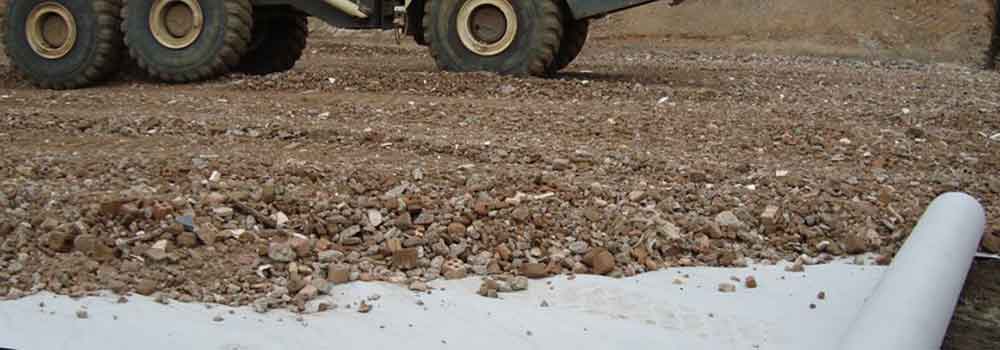
Class A geotextile is used as a separation layer beneath 1 m of aggregate/rock fill, while Class B geotextile is used as a filtration layer placed beneath dikes. Class A and Class B geotextiles can be woven or non-woven, made of UV-resistant polypropylene or polyester. Class A and Class B geotextiles must be protected against […]
