


Geogrid Distributor in Indonesia
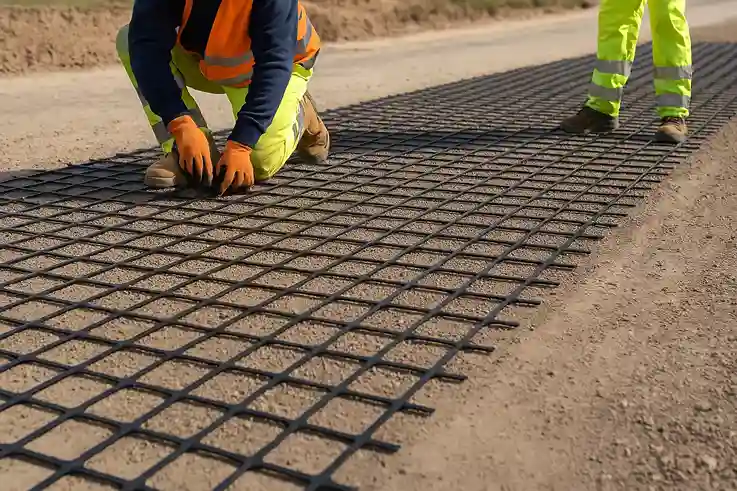
Geogrid Distributor – Geogrid is a geosynthetic material used in construction to reinforce soil and other structures. This product is essential in infrastructure projects such as highways, embankments, retaining walls, and reclaimed land. Geogrid increases soil bearing capacity and helps prevent settlement or structural damage caused by unstable soil conditions.
As demand for this civil engineering material continues to grow, the presence of a trusted geogrid distributor has become increasingly important. An experienced distributor not only supplies quality products but also provides technical solutions, fast delivery, and after-sales support. These services improve convenience and efficiency when implementing construction projects across various sectors.
Geogrid Distributor in Indonesia
Petra Geosynthetic is one of Indonesia’s leading geogrid distributors and has supplied numerous nationwide construction projects. Known for its commitment to quality and customer service, Petra Geosynthetic provides various geogrid types, including biaxial, uniaxial, and triaxial, with specifications suited to diverse civil engineering requirements.
In addition to supplying high-quality products, Petra Geosynthetic provides technical consultation covering everything from selecting the right geogrid type to field installation methods. Supported by a professional technical team and extensive geosynthetics experience, Petra Geosynthetic is a trusted partner for contractors, consultants, and government agencies.
Petra Geosynthetic is also known for an efficient, responsive distribution system that reaches regions throughout Indonesia. Its products have undergone quality testing and are certified, ensuring optimal long-term performance. A commitment to innovation and service makes Petra Geosynthetic a preferred choice for construction professionals requiring quality geogrid at competitive prices.
Some Indonesian geogrid distributors also provide technical consultation and field measurement services to ensure that each product suits the project’s conditions and requirements. This makes the distributor not only a product supplier but also a strategic technical partner in the success of a construction project.
Geogrid for Sale at Competitive Prices
Many distributors offer geogrid at a range of prices, but it is important to select one that provides an economical price without compromising quality. Competitive pricing is often a primary consideration, particularly for projects with limited budgets. A trusted distributor can usually offer the best price because it has a direct distribution channel from the manufacturer.
Large-volume purchases generally receive significant discounts. However, make sure a low-priced product is also supported by quality certification, technical testing, and a product warranty. These safeguards are important to ensure the geogrid maintains durability and performance that meet applicable standards.
Types of Geogrid
Geogrid is generally divided into three main types: biaxial, uniaxial, and triaxial geogrid. Biaxial geogrid has equal tensile strength in two directions, making it highly suitable for reinforcing road base layers and foundations. Uniaxial geogrid has predominant strength in one direction and is typically used for retaining walls or slopes.
Biaxial Geogrid
Biaxial geogrid has balanced tensile strength in two directions—longitudinal and transverse. This type is designed to distribute loads evenly across the ground surface, making it ideal for road pavements, parking areas, airport runways, and subgrade stabilization projects.
The grid structure of biaxial geogrid allows granular materials such as crushed stone or sand to interlock within its apertures, improving interaction between the soil and geogrid. As a result, soil bearing capacity increases significantly while the risk of deformation or settlement is minimized.
Uniaxial Geogrid
Uniaxial geogrid is designed with predominant tensile strength in only one direction, usually longitudinally. This geogrid type is used in applications requiring significant vertical or lateral reinforcement, such as retaining walls, steep slopes (slope reinforcement), and embankments.
High tensile strength in one direction enables uniaxial geogrid to withstand lateral soil pressure and prevent retaining structure failure. It is also generally installed in layers, adjusted to the height of the wall or embankment being constructed.
Triaxial Geogrid
Triaxial geogrid is a recent development in geogrid technology. It has a triangular aperture structure and provides tensile strength in three directions (multi-axial), allowing more efficient and uniform load distribution than biaxial or uniaxial geogrid.
The advantage of triaxial geogrid lies in its ability to interlock aggregate more effectively in every direction, making it highly suitable for projects involving soft soil, high dynamic loads, or terrain with uneven load distribution. Triaxial geogrid is also widely used for roads, airports, and heavy-traffic areas.
How to Install Geogrid
Geogrid installation must follow the correct technical procedure to ensure effective performance. First, the ground surface must be leveled and cleared of sharp objects that could damage the geogrid. The geogrid is then unrolled in the direction required for tensile strength. Biaxial geogrid offers flexible installation direction, while uniaxial geogrid must follow the direction of the primary stress.
After being unrolled, the geogrid must overlap according to the technical specifications and then be secured using U-shaped pins or other anchors. The next stage involves placing granular fill and compacting it gradually. An experienced technician should supervise the entire process to ensure the geogrid performs optimally.
Geogrid Installation
Geogrid installation is a critical step that determines its successful performance in a project. The process covers site preparation, material placement, filling, and compaction. Large-scale projects require heavy equipment and an experienced technical team to ensure precise installation.
It is also important to follow the technical instructions provided by the geogrid manufacturer because each type has different characteristics and thickness. Some projects even require field testing, such as a CBR test or bearing capacity test, before and after installation to confirm that the geogrid performs as expected.
Latest Geogrid Prices for 2025
In 2025, geogrid prices in the Indonesian market are expected to remain competitive, although they may fluctuate depending on exchange rates, import costs, and market demand. Geogrid generally costs between IDR 20,000 and IDR 75,000 per square meter, depending on its type, size, and technical specifications.
A geogrid distributor will generally provide an up-to-date price list tailored to project requirements for both retail and wholesale purchases. To obtain the best price in 2025, consider surveying several authorized distributors and comparing their offers, including delivery services and available technical support.
Other Articles


HDPE Pipe: Advantages and How to Choose the Right Type
HDPE Pipe HDPE (High Density Polyethylene) pipe is made from virgin plastic resin, commonly called PE 100, and is used as water pipe. Pipe made of high-density polyethylene is the best pipe material compared with other pipes, and its HDPE pipe advantages start with high elasticity: it is very easy to install and join, and […]

Geotube Dewatering: Advantages and Process Steps
Construction projects and waste management often call for a special method known as geotube dewatering. This process effectively helps dry out sludge or sludge overflow coming from wastewater treatment plants. A geotube is a technology used to prevent severe coastal erosion. Put simply, a geotube is a fabric tube made of woven or non-woven geotextile. […]