


Geotextile Materials: Polyester and Polypropylene

Understanding geotextile materials is an important step for anyone who wants to know this product well, from construction professionals to academics. Geotextile is a synthetic material used for drainage systems, soil reinforcement, environmental protection and many other civil engineering applications. In this article, we take a broad look at the most commonly used geotextile materials: polyester and polypropylene.
Each material has different characteristics, advantages and drawbacks, so choosing the right one greatly affects project success. Through this complete discussion, readers can gain an in-depth understanding of the technical aspects, performance and applications of both materials.
History and Development of Geotextile Materials
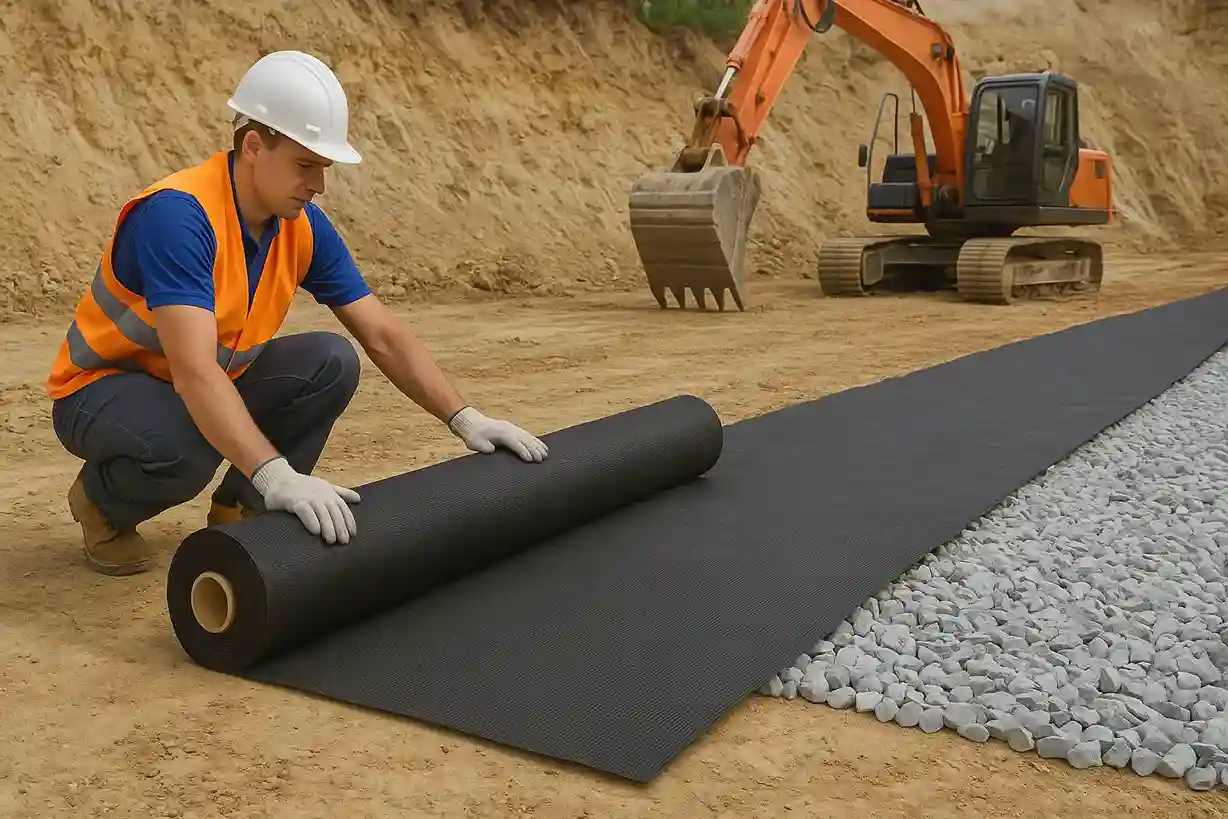
Geotextile materials
The use of geotextile materials began in the 1950s and has continued to grow with the increasing need for effective solutions in soil construction and infrastructure. Initially, the material was used in military and mining projects, but it later spread widely to civil and environmental engineering.
Advances in synthetic materials such as polyester and polypropylene have made it possible to produce geotextiles with a wide range of strength, flexibility and resistance to environmental conditions. Today, geotextile is a key component in the construction of bridges, roads and dams, as well as in environmental restoration.
While it was originally produced by hand, geotextile is now manufactured with modern machines that deliver products with high precision. Polyester and polypropylene offer different advantages, depending on project needs.
Manufacturing technology and the classification of geotextile continue to evolve, including innovations such as non-woven and woven geotextile that offer different options for different applications. Today, these materials are assessed not only from a technical standpoint, but also in terms of sustainability and environmental impact.
Advantages of Polyester and Polypropylene
The choice of geotextile materials depends heavily on the technical characteristics and the environment in which the material will be used. Polyester and polypropylene each have their own key advantages, but also drawbacks that must be weighed against project needs.
The main advantages of polyester are its resistance to high temperatures and its high tensile strength. Polyester is known for its ability to carry heavy loads and its resistance to tearing. It also resists degradation from ultraviolet light, making it an ideal choice for applications that require a long service life.
Polypropylene, on the other hand, stands out for its light weight, chemical resistance and relatively low production cost. It is usually used in projects that need efficient and economical separation of soil layers. However, its strength and resistance to high temperatures are relatively lower than those of polyester.
| Influencing factor | PP | PET | PE | PA |
| Ultraviolet light (unstabilized) | Medium | High | Low | Medium |
| Ultraviolet light (stabilized) | High | High | High | Medium |
| Alkali | High | Low | High | High |
| Acid | High | Low | High | Low |
| Salt | High | High | High | High |
| Detergent | High | High | High | High |
| Dry heat (100° C) | Medium | High | Low | Medium |
| Steam (up to 100° C) | Low | Low | Low | Medium |
| Hydrolysis (reaction with water) | High | High | High | High |
| Microorganisms | High | High | High | Medium |
| Creep | Low | High | Low | Medium |
Applications and Advantages of Polyester Geotextile
Polyester geotextile is known for its success in many engineering applications thanks to advantages that should not be underestimated. It is widely chosen for construction and environmental projects because of its durability and strength.
In highway projects, polyester is used as a soil reinforcement layer in road foundations so they can withstand heavy traffic loads. Tensile strength and tear resistance are essential for the road structure to last without deforming. Polyester is also used as a filter layer to prevent soil erosion and to keep mineral deposits at mine sites stable.
In environmental applications, polyester geotextile is often used for erosion control in landslide-prone areas. Its resistance to UV light and chemicals makes it ideal for extreme environments. It is also used as a liner in waste disposal systems and settling ponds.
Another advantage of polyester is that it can be produced in a range of thicknesses and textures to suit project needs. The manufacturing process gives it a uniform thickness, making installation easier and the result more precise.
Advantages and Industrial Uses of Polypropylene

Geotextile materials
As a geotextile material, polypropylene has its own strengths that make it a favorite for many industrial applications, mainly because it is lightweight and chemically resistant. These advantages make polypropylene stand out in applications that require cost efficiency and resistance to extreme conditions.
In land reclamation projects, polypropylene is often used because it withstands wet and corrosive environments. Without degrading from chemicals in the soil or water, it continues to perform its filtration and soil reinforcement functions.
Polypropylene also has adequate impact and tear resistance, although it is not as strong as polyester. This makes it suitable for drainage and erosion protection in areas with harsh and variable natural conditions.
Polypropylene is also widely used to make geogrid and geonet, which provide structural support in infrastructure such as dams and bridges. With its lower cost, polypropylene is an economical choice that still delivers adequate results.
Its uses do not stop there. Environmentally, polypropylene is known for its high resistance to chemicals, including fuels and industrial solvents, making it suitable for environments rich in hazardous chemicals.
Make sure you use high-quality geotextile products from Petra Nusa Elshada. Petra Nusa Elshada offers a wide range of high-quality geosynthetic materials at affordable prices. Contact Petra Nusa Elshada today for consultation and orders.
Conclusion
An in-depth understanding of geotextile materials (polyester and polypropylene) is essential for the success of construction and environmental projects. Each material has advantages and drawbacks that must be understood so it is used correctly and to its full potential. Polyester offers durability and high tensile strength suited to heavy-duty, long-term applications, while polypropylene provides an economical, chemically resistant solution.
The choice between polyester and polypropylene should be based on the specific needs of the project, environmental conditions and the available budget. By understanding the characteristics of each material, users can maximize their benefits and ensure successful construction and environmental protection.
As material technology and industrial innovation advance, we will see more innovation in geotextile materials that are more environmentally friendly and higher performing. It is important for everyone involved to keep their knowledge up to date and follow the latest trends to apply these materials effectively and responsibly.
Other Articles

Latest Woven and Non-Woven Geotextile Price List 2026
Geotextile has long been known in Indonesia, and today’s geotextile price is competitive. Many construction applications already use this material. Geotextile is easy to use in construction projects, and it is also cheap and affordable from suppliers and online stores compared with concrete or similar materials, which is why many people choose geotextile as a […]

Geomembrane Tips for Small Reservoirs (Embung)
Geomembrane is a geosynthetic product that is impermeable. Geomembrane is generally used to line storage facilities so that liquids do not seep into embankment fill and the like, which makes geomembrane for small reservoirs (embung) a common application. In general, geomembrane for storage facilities such as an embung (small retention reservoir) should be ≥ 1 […]