


Corrugated HDPE Pipe: The Best Cable Protection
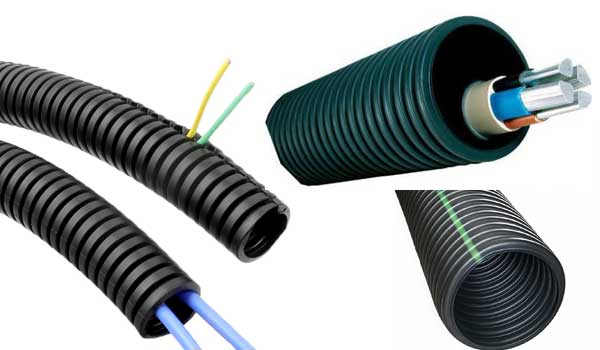
Hello to all professionals in construction, telecommunications and energy!
In modern infrastructure development, the reliability and safety of cable networks are non-negotiable. Power, fiber optic and telecommunication cables are the arteries that connect us, and protecting them properly is a must.
Are you looking for a cable protection solution that is durable, flexible and cost-effective? If so, you are in the right place. We will take an in-depth look at corrugated high-density polyethylene (HDPE) pipe, an innovation that has revolutionized the way we protect valuable cable assets.
Let us dive deeper into why corrugated HDPE pipe has become the first choice of engineers and contractors around the world.

Corrugated pipe used as cable protection
1. A Closer Look at Corrugated HDPE Pipe
Corrugated HDPE pipe, often also called HDPE corrugated conduit, is a pipe made of high-density polyethylene (HDPE) plastic designed with a corrugated (ribbed or profiled) wall structure.

Corrugated HDPE pipe
What is HDPE?
High-density polyethylene (HDPE) is a thermoplastic polymer known for its high strength-to-density ratio. The material is very popular in piping applications because of its outstanding properties:
- Strength: Resists impact and pressure from the surrounding soil.
- Chemical Resistance: Does not react with most chemicals, making it ideal for installation in a wide range of soil conditions.
- Long Service Life: Has a very long service life, often reaching 50 to 100 years.
Corrugated Structure
The main difference between this pipe and ordinary HDPE pipe is its wall structure. The corrugated or ribbed structure is designed not only for strength, but also for:
- Increased Stiffness: The corrugations provide a higher ring stiffness than a smooth-walled pipe with the same amount of material. This allows it to carry the soil and traffic loads above it.
- Flexibility: Although stiff, the pipe is flexible enough to follow the terrain without needing many joints or complicated angled fittings.
Corrugated HDPE pipe is available in two main types: single wall (single wall) and double wall (double wall). For cable protection, the double wall type (Double Wall Corrugated, DWC) is often the favorite because it offers superior mechanical protection and a smooth inner wall that makes cable pulling easier.
2. Main Functions of Corrugated HDPE Pipe as Cable Protection
When used in a cable protection system, this pipe is called a conduit or ducting. Its main function goes far beyond being an outer “wrapper”; it is a comprehensive protection system.
1. Maximum Mechanical Protection
This is the most obvious function. Corrugated HDPE pipe protects cables from a range of underground conditions:
- External Loads: For example, corrugated HDPE pipe can prevent cable damage caused by soil pressure, vibration or traffic loads above it (for example, under highways).
- Sharp Objects: Corrugated pipe also protects cables from stones, gravel or heavy equipment during earthworks.
- Rodents: The dense, strong HDPE material acts as a barrier against rodent bites.
2. Insulation and Safety
Because HDPE is non-conductive, it acts as an insulator, protecting high-voltage power cables from direct contact with soil that may be damp or contain conductive minerals. In addition, if a short circuit or cable failure occurs, the HDPE pipe can help isolate the problem, minimizing the risk of fire or current leakage into the surroundings.
3.Environmental Protection
Cables are highly vulnerable to damage from environmental factors such as moisture and corrosion:
- Moisture: Corrugated HDPE pipe offers watertight joints (using a rubber gasket or welding), preventing water ingress that could corrode the cable’s protective sheath.
- Chemical Corrosion: Because it is inert (non-reactive), HDPE resists a wide range of chemical compounds, including the acids, bases and alkalis found in soil.
4.Easy Maintenance and Network Extension
The ducting makes cable pulling (cable pulling) and future replacement easier. If a cable needs to be replaced or repaired, it can be pulled out of the pipe without major excavation along the installation route. This saves repair time and cost
3. Competitive Advantages of Corrugated HDPE Pipe & Its Specifications
Why choose corrugated HDPE over pipes made of other materials such as steel or PVC?
| Advantage | Description |
| Flexibility | Allows smooth bends without many fittings, speeding up installation and reducing weak points in the system. |
| Lightweight | Much lighter than concrete or steel, making transport and installation easier. |
| Corrosion and Abrasion Resistant | HDPE is a compound that withstands a wide range of environmental conditions. |
| Practical Installation | Available in coils (for small to medium sizes), reducing the number of joints needed. |
| Compressive Strength | The corrugated structure provides high ring stiffness, making it ideal for underground installation. |
Corrugated HDPE pipe comes in a wide range of sizes at affordable prices to protect your cables. The size is chosen according to the size of the cable to be protected.

Corrugated HDPE pipe: the best cable protection for future infrastructure
4. Quick Guide to Installing Corrugated HDPE Pipe
Correct installation is the key to maximizing the life and protective function of your cable system. Here are the general installation steps for direct burial:
Stage 1: Trench Route Preparation
- Survey and Permits: Determine the right route, make sure there are no other underground utilities, and obtain the necessary permits.
- Trench Excavation: Dig a trench of the standard depth and width (depending on the cable type and installation location, for example deeper under roads).
Stage 2: Trench Bed Preparation (Bedding)
- Clearing the Base: Make sure the trench base is free of stones, sharp objects or tree roots that could damage the pipe.
- Placing the Bedding: Lay a compacted layer of sand or fine granular material (at least 10-15 cm) on the trench base as a cushion for the pipe.
Stage 3: Pipe Placement and Jointing
- Placement: Lay the pipe on the bedding.
- Jointing:
Coupler Method: For corrugated pipe, join the pipe segments using a special coupler. Make sure the rubber gasket is correctly fitted at the pipe end before connecting the coupler to ensure a watertight joint.

Coupler jointing method for corrugated pipe
Stage 4: Cable Pulling (Cable Pulling)
- Cleaning: Make sure the inside of the pipe is free of dirt.
- Installing the Pulling Wire: Insert a pull rope or wire (pulling wire/rope) into the pipe.
- Pulling: Tie the cable to the pull rope and pull it carefully. Use a special cable lubricant to reduce friction, especially on long bends. Important: Make sure the pulling tension does not exceed the limit allowed by the cable manufacturer.
Stage 5: Backfilling (Backfilling)
- Initial Layer: Cover the pipe with sand or fine granular material (15-30 cm above the pipe) and compact it carefully (without heavy equipment) to provide even support around the pipe.
- Marker / Warning Tape: Lay a warning tape above the initial backfill layer to alert future workers that there are cables below.
- Final Backfill: Continue backfilling with the original excavated material, free of large stones. Compact it layer by layer up to ground level.

Corrugated HDPE pipe: the best cable protection for future infrastructure
Conclusion
Corrugated HDPE pipe is not just a temporary solution, but a long-term investment in the integrity of your infrastructure. With its unique combination of structural strength from the corrugated design and the durability of HDPE, the pipe provides unmatched underground cable protection.

Corrugated HDPE pipe: the best cable protection for future infrastructure
Choosing corrugated HDPE pipe means choosing reliability, installation efficiency and lower maintenance costs for decades to come. Always use quality products and follow correct installation procedures to keep your cable assets optimally protected.
Ready to secure your cable network with the best solution?
Petra Nusa Elshada offers a range of types and experience across many projects to secure your cables. Contact our team for further consultation
Other Articles

Subdrain System: Definition, Materials and Installation
What is a subdrain? Many people may not know the term yet. A subdrain system is a drainage system located below the ground surface. Its function is to speed up the flow of surface water so it does not pool. This type of drainage is commonly found in road construction projects. Subsurface drainage is also […]

HDPE Pipe: Advantages, Types and Prices
HDPE pipe is a type of pipe recognisable by its black colour with blue stripes. With that appearance, you can be sure the pipe is HDPE, and it is widely used for water distribution. This article explains the HDPE pipe advantages, types and prices. When choosing a pipe for clean water at high pressure, this […]
