


Woven Geotextile 101: A Complete Project Guide
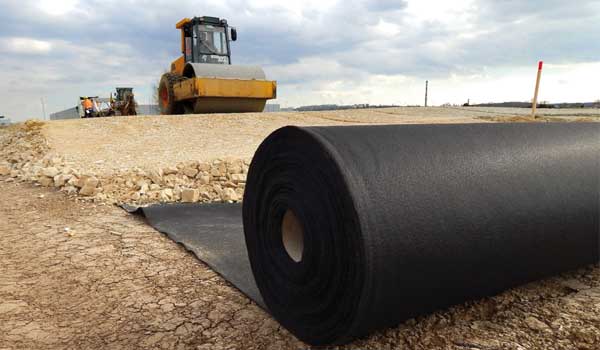
Have you ever seen a toll road or pier project with a base covered by what looks like an extremely wide black plastic sack? If you thought it was just an ordinary tarpaulin, think again! It is Woven Geotextile.
In modern civil engineering, this material is like a “superhero” that often works quietly underground. It bears loads, separates soil layers, and helps prevent the roads you travel on from sinking.

But did you know that Woven Geotextile comes in more than one type? Choosing the wrong type can waste your project budget or even cause structural failure. Let us examine everything about Woven Geotextile, from weave types and polymer materials to its vital functions.
What Is Woven Geotextile? (Back to Basics)
Before exploring the technical details, let us establish a common understanding. Woven Geotextile is a type of geosynthetic manufactured by weaving fibers. Imagine a mat or rice sack, but made with advanced technology and synthetic polymer materials.
Its defining feature is its very high Tensile Strength . Because the interwoven strands lock together, the material can withstand heavy loads without stretching easily. This differs greatly from its counterpart, Non-Woven Geotextile, which resembles a felt carpet and focuses more on filtration.
If Non-Woven is like a “sponge,” Woven is like “lightweight steel” in fabric form. That makes the distinction clear.
Classification by Weave Type (Yarn Type)
This is where people are often confused. On the market, Woven Geotextile is classified by the shape of its constituent yarn or fiber. Different yarn shapes deliver different field performance.
- Woven Geotextile Slit Film (Flat Tape)
This is the most common type and the one most frequently found on the market. As its name suggests, its yarn is shaped like flat tape. It is usually made from Polypropylene (PP).

woven slit film
Characteristics:
- Form: A flat, even weave resembling a plastic sack, but much thicker and stronger.
- Advantages: The most economical option. Its tensile strength is adequate for standard requirements.
- Disadvantages: Its pores are small and irregular. Water flow, or permeability, is relatively poor. If you need a material that drains water rapidly, this is not the primary choice.
- Suitable applications: Standard road projects, soil-layer separation, and reinforcement beneath embankments that are not excessively wet.
- Woven Geotextile Monofilament (Fishing-Line Type)
Have you seen fishing line? Imagine it woven into fabric. That is Woven Monofilament. Its yarn is round like wire or fishing line.

Characteristics:
- Form: A rigid weave of round yarn. The pores are clearly visible and uniform, much like insect screen made from thick plastic.
- Advantages: Outstanding water flow. Because the yarn is round, the openings between strands have a highly consistent opening size. Water passes through readily while soil particles remain retained, reducing clogging.
- Disadvantages: It usually costs more than Slit Film.
- Suitable applications: Wetlands, coastal riprap, subsurface drainage, and areas requiring both high filtration and reinforcement.
- Woven Geotextile Multifilament (Bundled-Fiber Type)
In this type, numerous fine fibers are twisted into one exceptionally strong yarn. It is usually made from Polyester (PET) or High-Tenacity Polypropylene.

Characteristics:
- Form: More flexible than monofilament, yet very dense.
- Advantages: It has exceptionally hightensile strength. This is the top tier for sustaining long-term loads.
- Suitable applications: Heavy construction such as dams, large dikes, or deep-sea reclamation requiring exceptional strength specifications.
To make the woven geotextile types above easier to understand and select, here is a Woven Geotextile Specification Comparison Table
| Parameter | Woven Slit Film (Standard) | Woven Monofilament | Woven Multifilament |
| Base Material | Polypropylene (PP) | Polypropylene (PP) | Polyester /Polypropylene |
| Yarn Shape | Flat Tape | Round (Like Fishing Line) | Fiber Bundle (Multifilament) |
| Tensile Strength | Medium (15 – 50 kN/m) | Medium (20 – 50 kN/m) | Very High (50 – 1000+ kN/m) |
| Elongation | High (15% – 25%)
(Stretches easily under tension) |
Medium (10% – 20%) | Low (< 10% – 12%)
(Rigid & stable) |
| Creep Behavior | High
(Strength decreases under prolonged loads) |
Medium | Very Low (Low Creep)
(Strength remains stable for decades) |
| Water Flow (Permeability) | Low
(Small & irregular pores) |
Very High
(Large & consistent pores) |
Medium |
| UV Resistance | Fairly Good (usually black) | Very Good | Good (usually white, requires coating) |
| Relative Price | ⭐ (Least Expensive) | ⭐⭐⭐ (Midrange – Expensive) | ⭐⭐⭐⭐ (Premium) |
| Best Applications | Soil separation, Haul roads, Light embankments | Drainage, Coastal riprap, Wetland areas | Toll roads over peat, High dikes, Reclamation |
Understanding the Technical Terms
To help you understand the table, let us break down its technical terms in straightforward language:
- Tensile Strength
Think of it as “muscle strength.” The higher the value in kN/m, the more load the fabric can sustain without breaking.
- Woven PP (Slit Film): Adequate for standard construction-truck loads.
- Woven PET: This is in another league. It can support a hill-high soil embankment without breaking.
- Elongation
This is the difference between a “rubber band” and a “rope.”
- High Elongation: Under a heavy load, it stretches before resisting. On an asphalt road, this can be dangerous because the road may settle and form a depression as the geotextile stretches.
- Low Elongation: It is rigid. Under a heavy load, it resists immediately without first stretching. This is excellent for keeping a road level.

- Creep
This is a hidden threat. Creep is a material’s tendency to become “fatigued” under continuous loading.
- High Creep: It is strong when first installed. After 1-2 years beneath embankment soil, however, it weakens and stretches by itself. The result? The structure may gradually settle.
- Low Creep: This is why Multifilament is expensive. It is highly resilient. Even under 50 years of loading, its strength does not decrease substantially. It is essential for long-term projects such as toll roads.
- Permeability (Pore Structure)
- If water must pass quickly, such as behind a retaining wall where water pressure could cause failure, use Monofilament. Its distinct openings let water flow freely while retaining the soil.
- Be careful when using Slit Film for drainage. Its flat openings can be readily clogged by mud.
When Should You “Upgrade” to High-Strength Multifilament?
Contractors often try to save money with inexpensive PP Slit Film. However, you should insist on changing to High-Strength Multifilament under these field conditions:
- Very Soft Subgrade (CBR < 2%): When the soil is slurry-like, as in deep wetlands or peat, ordinary PP is ineffective. Settlement is inevitable.
- High Embankments: If soil will be piled more than 3-4 meters high, the underlying load is substantial. PET is required to support it.
- Permanent Projects: If a road must last 10-20 years without major repairs, do not risk using a high-creepmaterial.
Material Showdown: Woven Polyester (PET) vs. Woven Polypropylene (PP)
In addition to the weave, the base material determines your project’s outcome. The two main options are PP and PET. How do they differ?
Woven Polypropylene (PP)
It is usually black and is the standard material for Slit Film.
- Advantages: Resistant to acidic and alkaline chemicals in soil. It is relatively inexpensive.
- Disadvantages: It has high creep . What is creep? It is the condition in which a material slowly lengthens under a constant load over an extended period. Its thickness can therefore decrease over time.
Woven Polyester (PET)
It is usually white and is the premium material for Multifilament or special high-strength weaves.
- Advantages: Low Creep! This is its premium feature. Even under very heavy loads for years, it does not stretch easily. Its dimensions remain stable, and its melting point is higher than that of PP.
- When should PET be used? When constructing a high embankment over soft soil, such as a toll road over peat, that requires guaranteed structural strength for decades, PET is essential.
Main Functions of Woven Geotextile
Now that you know the types, why should you purchase and install this material?
- Separation
Imagine soft, muddy subgrade covered with crushed stone aggregate to build a road. Without Geotextile, the stone will “sink” into the mud while the mud rises through it, creating a pumping effect. The result is a road that turns into slurry. Woven Geotextile acts as a separator. It prevents soft soil from mixing with hard aggregate, preserving the thickness of the road pavement layers.

- Reinforcement
This is Woven’s primary function. Soil withstands compression well but has little tensile strength. Woven Geotextile adds tensile strength to the soil. Its mechanism resembles steel reinforcement in concrete. With woven material, vehicle loads on the road are distributed evenly, preventing localized differential settlement. The soil becomes stiffer and more stable.
- Stabilization
Woven Geotextile has a highly textured surface. When it is laid over soil and covered with stone, an interlocking effect occurs. This friction prevents the fill from sliding easily, especially on slopes or steep dikes.
Field Applications of Woven Geotextile
Where can you apply this knowledge? In almost every infrastructure project.
- Road Construction over Soft Soil (Peat/Wetlands)
Indonesia has extensive peatlands, particularly in Sumatra and Kalimantan. Building roads there without woven material wastes money. Woven material, especially the High Strengthtype, is laid at the base before placing red-soil fill. It prevents the road from “disappearing” into the ground.
- Slope and Retaining Wall Reinforcement
You can build a vertical retaining wall using only soil and geotextile bags, called a Geotextile Wall. Woven material is installed layer by layer to enclose the soil in a wrap-around system. This is far more economical than constructing a concrete wall.
- Coastal and River Protection
To prevent coastal erosion, Geotextile Tubes or Geobagsare used. These are enormous sand-filled “sausages” made from High-Strength Woven material. The woven fabric must resist UV exposure and abrasion from sea waves.
- Railways
Train loads are dynamic and extremely heavy. Woven material is installed beneath railway ballast to prevent the stones from sinking into the subgrade, keeping the rails level and safe.
Conclusion: Do Not Choose the Wrong Product
You now have a clearer understanding. Selecting Woven Geotextile is not about finding the least expensive product, but the most appropriateone.
- For a local road or light separation, Woven Slit Film (PP) is adequate.
- For subsurface drainage or an area with rapid water flow, use Monofilament.
- For a toll road over peat that requires guaranteed strength for decades, invest in High-Strength Woven Multifilament.
Using the correct specification initially may cost slightly more, but it is a far better investment than rebuilding a sunken road one year later. For woven geotextile prices, specifications, and availability, contact Petra Nusa Elshada for further consultation.
Other Articles

Using 2 mm HDPE Geomembrane for Mine Tailings
As one of the key stages in today’s mining activities, tailings management has drawn great attention to environmental protection issues. In this context, a 2 mm HDPE geomembrane liner not only plays an important role as an anti-seepage and anti-leak layer but also provides a reliable solution for the sustainable development of tailings projects. Advantages […]

Part 2: Choosing Geomembrane Thickness for Survivability
When choosing geomembrane thickness, remember that a geomembrane is most vulnerable to tears, punctures and impact while it is stored, transported, handled, installed and backfilled. Such events often happen accidentally because of poor workmanship. Common situations include tools dropped on the geomembrane, vehicles driving over an unprotected liner, strong wind getting under the geomembrane during […]
