


Football Field Drainage: The Secret to Mud-Free Turf
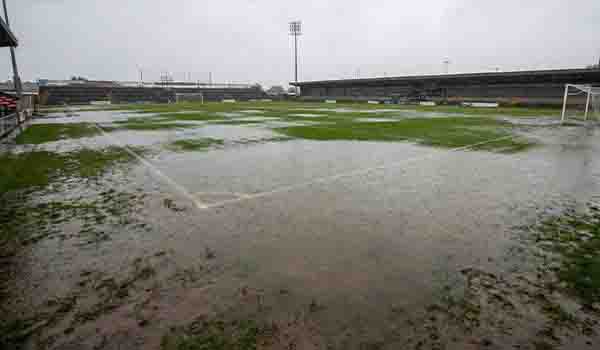
Hello, Petra friends! Have you ever watched a football or mini soccermatch when heavy rain suddenly began? Within minutes, the field turned into a fishpond. It filled with mud, the ball would not roll, and the match had to stop.
If you own a field, are a contractor, or manage a sports facility, a “flooded field” is a nightmare. It is not just about comfort; it is about business. An unusable field means lost revenue .
The key to world-class football fields like those in European leagues is not only expensive grass. The main secret lies underground, something invisible yet crucial: Sub-surface Drainage System.
In this article, our team will take you through the anatomy of football field drainage. We will discuss essential materials such as Geopipe, installation techniques, and the FIFA standards you should know. Let us begin!
Why Is Drainage the “Heart” of a Football Field?
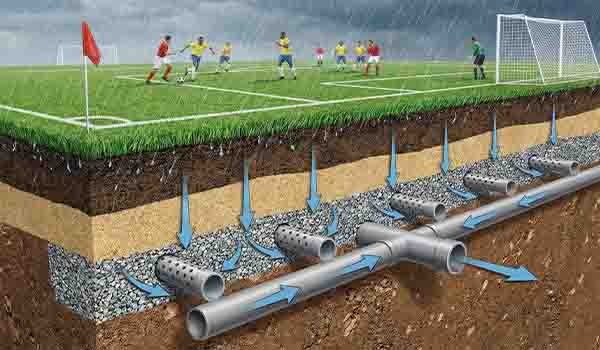
You may think, “Just slope the ground slightly, and water will flow to the edges.”
Unfortunately, for modern field standards, relying only on surface slope (surface drainage) is not enough. Why? A large football field, averaging 7,000 square meters, requires rapid water infiltration so play can continue despite rain.
Poor drainage causes serious problems:
- Waterlogging: Kills natural grass roots by depriving them of oxygen.
- Soil Compaction: Wet soil trampled by players becomes compacted, making the field hard when dry.
- Uneven Surface: Erosion from surface runoff makes the field bumpy.
- Wasted Investment: Expensive grass such as Zoysia or Bermuda dies needlessly if its roots rot in standing water.
Drainage is therefore not merely a “water channel” but a field-health management system.
Field Anatomy: What Lies Beneath the Grass?
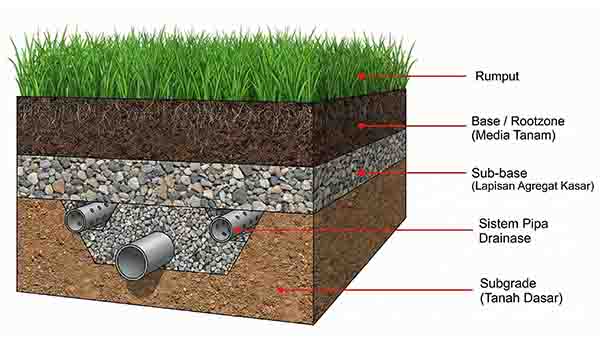
If we cut through an international-standard football field, we would not find dense clay beneath the grass. Instead, we would see engineered layers designed like a layer cake.
The general structure consists of, from bottom to top:
- Subgrade: Native soil that has been compacted and shaped to the required slope.
- Drainage Pipe System: A network of pipes laid in trenches.
- Sub-base (Coarse Aggregate Layer): Gravel or crushed stone that temporarily stores water.
- Base / Rootzone (Growing Medium): A mixture of sand and organic material where grass roots grow.
Essential Components of a Modern Drainage System
To create a fail-proofsystem, you cannot simply use ordinary PVC pipe drilled by hand. That outdated method often fails because soil blocks the holes. Here are the modern materials you should use:
1. Geopipe (HDPE Corrugated Perforated Pipe)
This is the star of field drainage systems. Geopipe is a corrugated pipe made from HDPE (High Density Polyethylene).
Why Geopipe?
- Strong yet Flexible: Its corrugations resist soil pressure and the weight of mowing equipment above while flexing with ground movement, so it does not crack easily like PVC.
- Perforated: The pipe has small, uniform holes in the corrugation valleys. This design maximizes water collection from the surrounding soil.
- Rust-Proof & Chemical-Resistant: Resists acidic soil and chemical fertilizers used on grass.
2. Non-Woven Geotextile (As a Filter)
Have you heard of drainage pipes clogged with mud? This happens when no filter is used.
Non-Woven Geotextile wraps pipes or separates layers as aseparator. It allows water to pass while preventing fine soil particles (sediment) from entering the pipe. At Petra Nusa Elshada, we always recommend quality geotextile so your drainage system lasts decades without clogging.
3. Gravel (Crushed Stone)
Crushed stone is placed around the pipe in the trench. It accelerates water flow toward the pipe and prevents the pipe from being flattened.
Installation Pattern: Herringbone vs Grid
When designing the pipe layout beneath a field, contractors commonly use two main approaches:
Herringbone Pattern
Themain lineruns longitudinally through the center or along the side of the field, whilelateral linesbranch off at 45-degree angles, resembling a fish skeleton.
- Advantages: Conveys water very quickly to the main line.
- Disadvantages: Installation is somewhat more complex at thejunctions.
Grid Pattern (Gridiron)
Lateral pipes are installed perpendicular (90 degrees) to the main pipe.
- Advantages: Easier to install and estimate materials for.
- Disadvantages: Water flows slightly more slowly than with 45-degree angles, but it remains highly effective for standard fields.
Lateral pipe spacing usually ranges from 3 meters to 6 meters, depending on local rainfall and soil type. Closer spacing makes the field dry faster.
Drainage Construction Steps
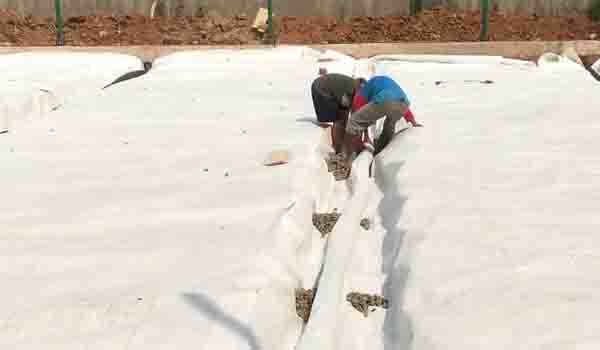
If you plan to build a field, here is an overview of the work process so you can supervise your contractor more closely:
Stage 1: Subgrade Shaping (Grading)
The base soil is shaped to the required slope. FIFA recommends a slope of approximately 0.5% – 1% from the center to the edges, like a turtle’s back, to help water flow toward perimeter drainage.
Stage 2: Trenching
Excavate pipe trenches 20-30 cm wide according to the selected Herringbone or Grid pattern. Trench depth varies but is usually 40-60 cm below the finished surface.
Stage 3: Geotextile & Geopipe InstallationLay Non-Woven Geotextile inside the trench as a base and trench-wall lining.
- Place a thin gravel layer at the bottom.
- Place the Geopipe on top. Join pipe sections using strong couplers .
- Fill the trench with gravel over the pipe.
- Fold the remaining geotextile over the top of the trench, wrapping the gravel and pipe. This is called a wrapped “French Drain” system.
Stage 4: Sand Capping
This is the secret of European fields. A 10-20 cm layer of coarse sand is spread over the subgrade and drainage trenches. Sand has large pores (macropores) that allow rainwater to “drop” directly toward the pipes instead of ponding on the surface.
Stage 5: Topsoil & Planting
The top layer is mixed with organic material such as compost or peat moss to provide grass nutrients. Planting is then performed by sodding or sprigging.
FIFA Standards: How Quickly Must Water Drain?
If you want to claim that your field meets international standards, specific technical values must be achieved.
Under the FIFA Quality Programme, the minimum water infiltration rate is 180mm per hour for new fields. This means water must not pond even during very heavy rain.
To achieve this rate, using Geopipe and Sand is essential. Ordinary red soil has an infiltration rate of only about 5-20mm per hour. That is a huge difference, right?
Common Problem: Why Is the Field Still Muddy Despite Pipes?
Many field owners, contractors, and sports-facility managers have installed pipes, yet their fields still flood. The usual causes are:
- No Geotextile: Geopipe is buried directly in soil. Over time, clay blocks its perforations.
- Wrong Backfill Material: Drainage trenches are backfilled with excavated soil instead of gravel or sand. Water struggles to pass through dense soil to reach the pipe.
- Outlet Problems: The field pipes are well installed, but the final discharge point, such as a city drain or river, is higher than the field pipes. Water flows back in (backflow). Make sure the outlet elevation is lower!
Solution for Artificial Turf Fields (Mini Soccer)
What about artificial turf? The principle is similar, but an additional component is used. Drainage Cell is usually installed beneath the artificial turf carpet.
Drainage Cell is a strong, load-bearing plastic panel with a honeycomb-like hollow structure. It creates voids beneath artificial grass so water can flow freely in all directions toward Geopipe trenches at the field edge. Petra Nusa Elshada also provides this hybrid solution.
Conclusion: Investing in Football Field Drainage
Building a proper drainage system does require an initial cost, approximately 15-25% of total field construction cost. But consider the losses if you had to cancel field bookings whenever it rained or renovate the field every year because the grass died.
Using a combination of quality Geopipe , the right Geotextile , and proper construction techniques is a smart investment. Your field will be playable in all weather, “flooding” will become a thing of the past, and players will compete to rent your field because of its excellent quality.
Selecting a Geopipe Type
Geopipe is commonly used for infiltration, drainage, and groundwater applications. Geopipe comes in three types: Single Wall, Double Wall, and Spiral Pipe. Each type is also available in Perforated and Non-Perforated versions.
SPIRAL GEOPIPE
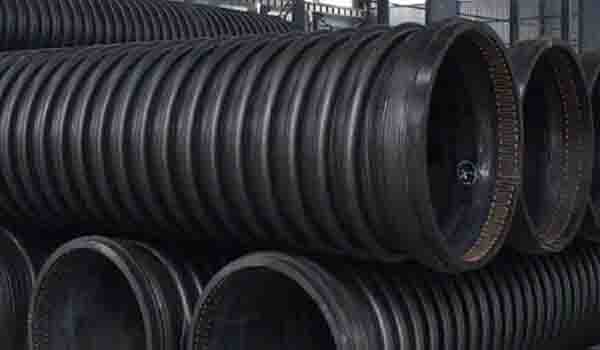
HDPE Spiral Pipe looks similar at first glance to Double Wall HDPE Corrugated Pipe. This pipe has a relatively large diameter (ID 800 mm – ID 2000 mm) and can be used as a culvert replacing concrete. It is strong enough to carry very heavy vehicles (very heavy duty load) without excessive deformation. The pipe is widely used in mining and plantation applications and is highly economical as a replacement for concrete pipe.
SINGLE WALL CORRUGATED GEOPIPE
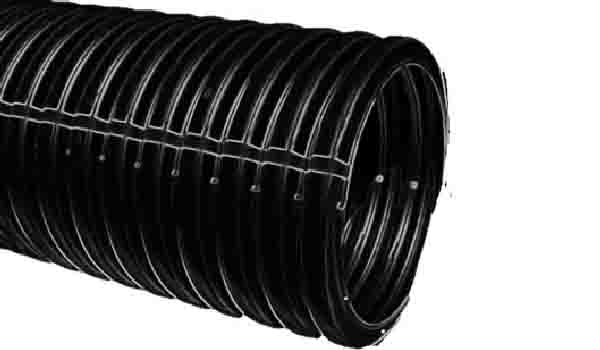
Single Wall HDPE Corrugated pipe has one wall layer. Single Wall is used for sub-surface drainage, french drains, and applications that do not carry heavy loads (heavy duty load). Single Wall is widely used for drainage lines and conduits because it is the most economical of the three types. It is also lightweight and flexible in roll form, making mobilization easy.
DOUBLE WALL CORRUGATED GEOPIPE
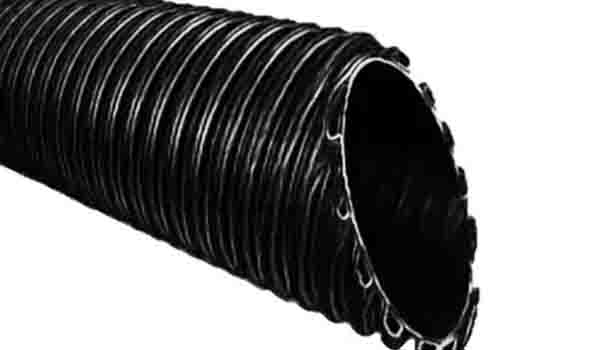
Double Wall HDPE Corrugated Pipe has two wall layers. Its profiled outer wall is very strong and supports loads above it, while its smooth inner wall increases flow capacity. The pipe is widely used for landfillapplications, heap leach, and other applications involving heavy loads (heavy duty load).
SOLID WALL GEOPIPE
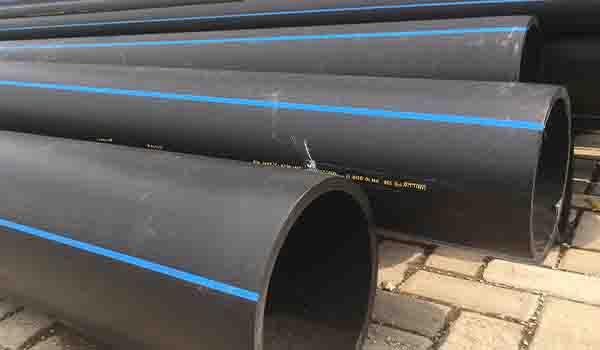
Pipe HDPE (High-Density Polyethylene) Solid Wall Pipe is a polyethylene pipe with a solid-wall structure. It is specially designed to convey water or drain water from the ground. The solid HDPE wall provides additional strength.
Need a Consultation for Your Drainage Needs?
Do not let standing water disrupt your football or mini soccer field business. Consult Petra Nusa Elshada’s experts about your drainage system, from Geopipe size and geotextile type to material-quantity calculations.
Feel free to consult the Petra Nusa Elshadateam. We supply a wide range of high-quality geosynthetics ready for delivery throughout Indonesia. Let us discuss your project needs today!
View Our Catalog: Catalog
Chat on WhatsApp Now: WhatsApp
Remember Geosynthetics, Remember Petra!
Other Articles
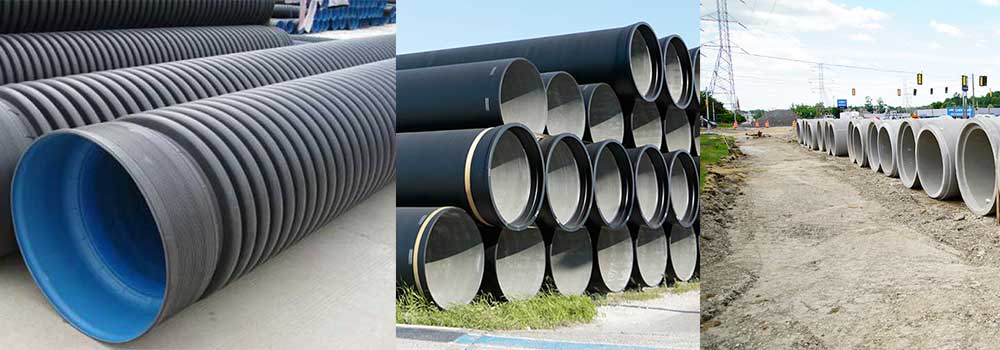
Guide to Choosing Geopipe Material
Most projects need a channel that can carry liquids such as infiltration water, wastewater, leachate and so on. Sometimes a protective layer is also needed for cables below the ground surface. These needs are usually met with pipes, which can be made from various materials such as plastic, iron and concrete. This guide to choosing […]
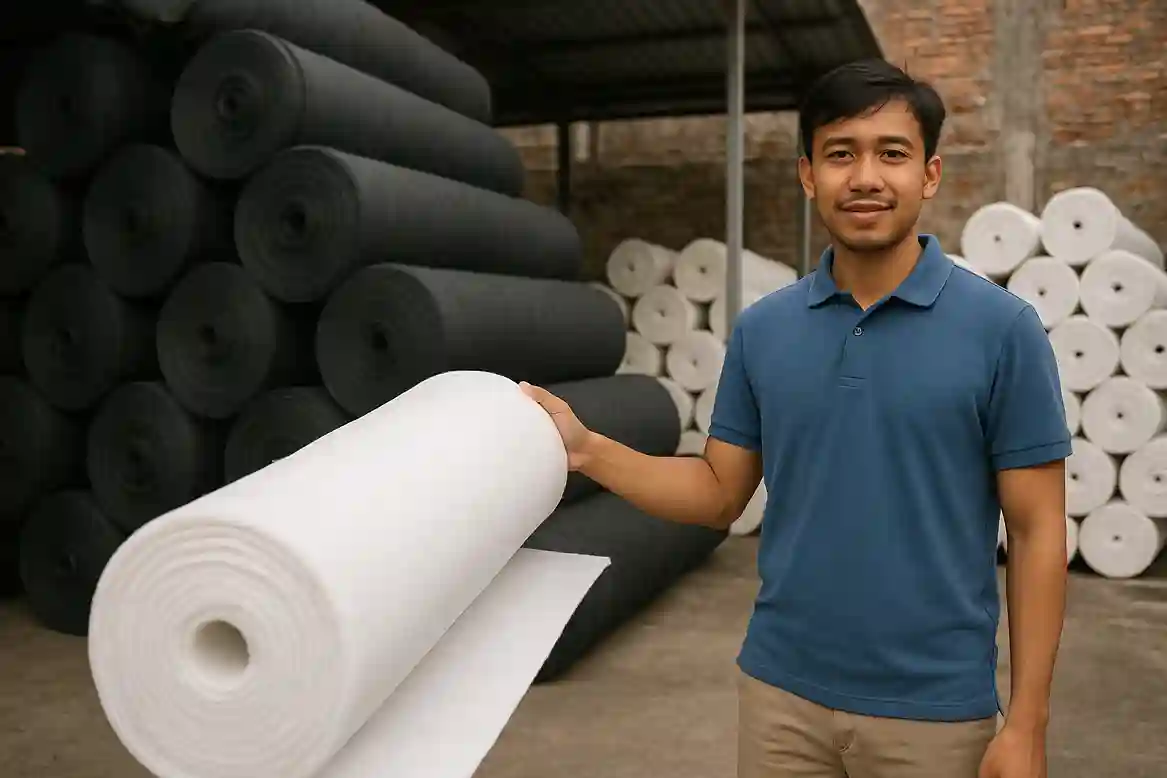

500 Micron Geomembrane and Tips for Choosing Thickness
In general, geomembrane is divided into two types: textured geomembrane and smooth geomembrane. The two can be told apart visually, as one is smooth and the other rough. So what is a 500 micron geomembrane like? As it turns out, geomembrane is further divided by thickness. The thickness is chosen based on the size of […]