


Retaining Wall: Types and Functions
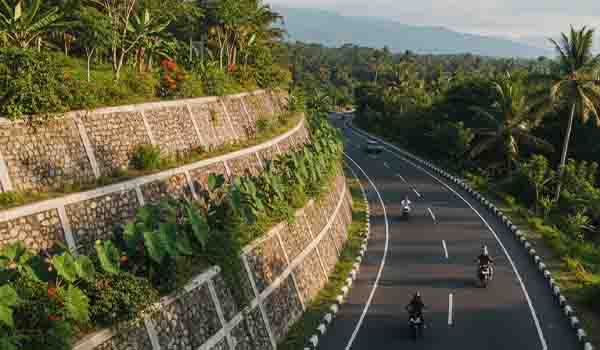
Petra friends, have you ever seen a sturdy structure standing upright beside a toll road, along a riverbank, or in a hilly residential area? Most likely, you were looking at an earth-retaining wall , commonly called a retaining wall.
Whether you work in construction or civil engineering, or are planning to build a house on sloping land, understanding this structure is essential. It is not only about aesthetics; it concerns safety and property assets. Unstable soil without proper treatment can become a ticking time bomb that triggers landslides.
In this article, we will thoroughly examine what a retaining wall is, why you need one, and its types, from conventional walls to modern systems using geosynthetictechnology.
What Is a Retaining Wall?
Simply put, a retaining wall is a structure built to hold a soil mass in place so it does not move or slide. It is designed to resist the lateral pressure of the soil behind it.
Imagine that you have sloping land but want to create a level area for a building or road. You must cut or fill the soil. At the boundary between the higher and lower ground, a retaining wall does its work. Its job is to resist gravity pulling the soil downward.
Main Functions of a Retaining Wall
Why should we bother building this thick, expensive wall? Here are some of its vital functions:
- Preventing Landslides: This is its most basic function. The wall resists soil movement, particularly during the rainy season, when water adds load to the soil.
- Land Optimization: With a retaining wall, you can transform previously unusable sloping land into level ground ready for construction.
- Erosion Protection: On riverbanks or coastlines, this wall protects land from water scour.
- Landscape Aesthetics: In modern design, retaining walls are often used as decorative garden elements with attractive terraced designs.
Types of Retaining Walls
This is the most important part. Not all retaining walls are the same. Selection depends on soil conditions, slope height, budget, and desired aesthetics. Let us examine them one by one.
1. Gravity Wall
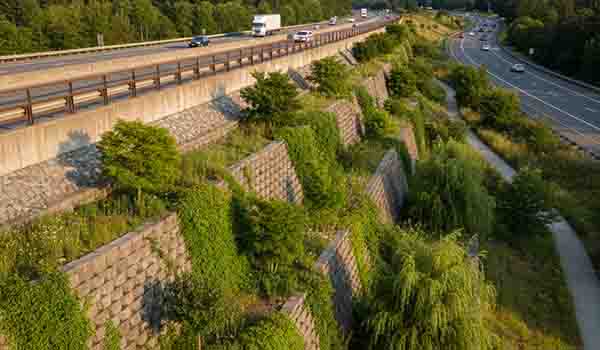
As its name suggests, this wall relies on its own weight to resist soil pressure. It is usually made from river-stone masonry or mass concrete, meaning unreinforced concrete.
- How It Works: Because it is very heavy and thick, it does not overturn or slide under the thrust of the soil behind it.
- Advantages: Construction is relatively simple, and its materials, such as river stone, are readily available.
- Disadvantages: Material-intensive and space-consuming because its base must be very wide. Less effective for very high slopes.
2. Cantilever Wall
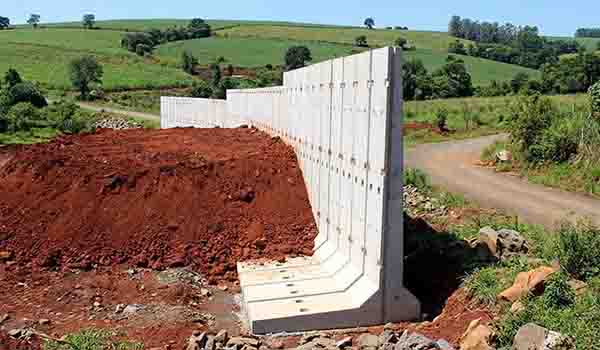
This is the most commonly used type in modern civil-engineering projects. It is shaped like an inverted “L” or a “T” and made from reinforced concrete.
- How It Works: The footing (slab) extending into the soil behind the wall uses the weight of that soil to keep the wall stable and prevent overturning.
- Advantages: Uses less concrete than a gravity wall and can be used for heights of up to 6-8 meters.
- Disadvantages: Requires thorough structural calculations and careful reinforcement work.
3. Gabion Wall
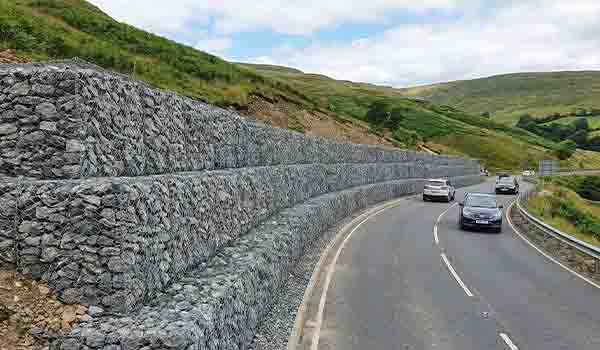
You have surely seen these along riverbanks. Gabions are zinc-coated (galvanized) or PVC-coated woven wire baskets filled with natural stones.
- How It Works: Stacked stone baskets work similarly to a gravity wall, relying on their own weight. Because they are porous, however, water can flow through them.
- Advantages: Highly flexible, able to follow ground movement without cracking, with excellent natural drainage. They are also relatively economical.
- Disadvantages: Wire can rust if inferior quality is used, and gabions may be less aesthetically suitable for luxury residential areas unless specially designed.
4. Sheet Pile
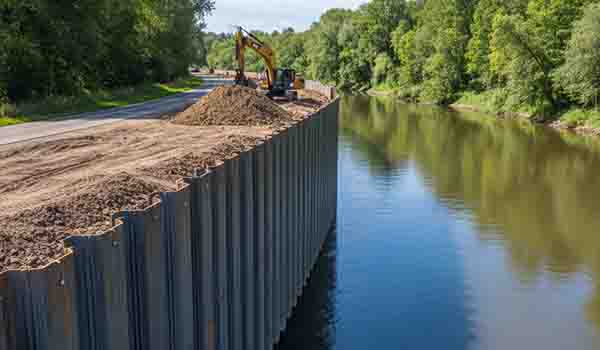
Sheet piles are usually made from steel, precast concrete, or timber. They are slender sheets driven into the ground.
- How It Works: Relies on the embedment of its lower, buried section to retain the soil above. It is often used in confined areas or in water.
- Advantages: Fast installation, no need for wide excavation, and very strong.
- Disadvantages: Requires specialized heavy equipment (pile driver) for installation, and material costs are relatively high.
5. MSE Wall (Mechanically Stabilized Earth)
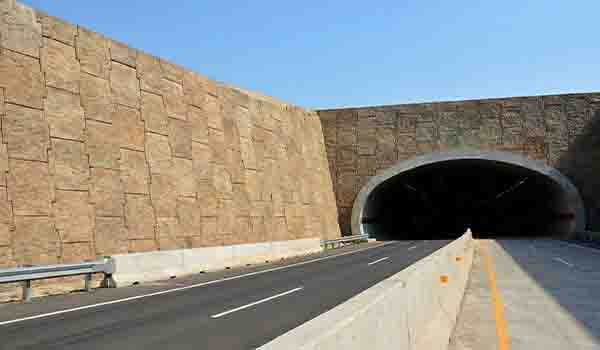
This increasingly popular technology is often a preferred solution for major infrastructure projects and upscale residential developments. An MSE Wall combines fill soil with reinforcement materials.
This is where geosynthetic materials such as Geogrid or Geotextile become very important.
- How It Works:
Soil is compacted in layers. Geogrid sheets or metal strips are placed between these soil layers. The sheets “bind” the soil into a unified mass with high tensile strength. The front is then covered with concrete facing panels for a neat finish. - Advantages:
- Highly flexible and earthquake-resistant.
- Can be built very high (more than 10 meters).
- More economical for high walls than conventional reinforced concrete.
- Aesthetic facing panels can be customized.
- Disadvantages: Requires specialized fill material and precise compaction.
Key Factors Before Building
Before deciding which type to use, you must consider several technical factors:
- Foundation Soil Conditions
Is the site soil soft, such as clay, or hard? Soft foundation soil may be unable to support a heavy gravity wall , so you may need a solution such as sheet pile or ground improvement using geotextile. - Drainage System (Water)
This is a retaining wall’s number-one enemy. If rainwater is trapped behind the wall, hydrostatic pressure increases dramatically and can break even the strongest wall. Make sure you install drainage pipes (weepholes) or drainage material behind the wall. Using Geocomposite Drain is also strongly recommended for smoother water flow. - Surcharge Load
Will there be a road carrying trucks above the slope, or merely a garden? This surcharge significantly affects the required thickness and reinforcement type.
Common Construction Mistakes
Many retaining wall failures are caused not by poor materials but by incorrect execution. Here are some common mistakes:
- Shallow Foundation: The foundation is not embedded deeply enough, causing the wall to slide.
- Neglecting Drainage: As discussed above, accumulated water is the main cause of failure.
- Careless Compaction: In an MSE Wall, if fill soil is not properly compacted in each layer, the soil settles and pulls the geogrid reinforcement until it breaks.
- Ignoring Soil Investigation: Building without soil-test data from CPT or boring is a gamble.
Which Solution Is Right for You?
Choosing a retaining-wall type cannot be done arbitrarily. For a small, low-height residential project, a river-stone or cantilever wall may be sufficient.
However, for infrastructure, roads, or high and steep slopes, switching to an MSE Wall with Geogrid or using high-quality Gabions is a smart long-term investment. In addition to being safer, its durability is proven.
Remember that geosynthetic materials such as geotextile, geogrid, and Geopipe can significantly increase a retaining-wall system’s safety factor while reducing construction costs compared with massive conventional concrete.
Need a Consultation for Your Requirements?
Building a retaining wall is serious work requiring precision. Our expert team is ready to discuss the most cost-effective structural calculations and materials for you.
Feel free to consult us about your geosynthetic-material requirements. We supply a wide range of high-quality geosynthetics ready for delivery throughout Indonesia. Let us discuss your project needs today!
View Our Catalog: Click here to view the catalog
Chat on WhatsApp Now: Click here to go directly to WhatsApp
Remember Geosynthetics, Remember Petra!
Other Articles


What Is Geogrid? How It Works and Its Uses
The construction industry uses many technologies and materials to increase the strength, stability and durability of structures. One popular innovation is geogrid. This article explains what geogrid is, how it works, its applications in construction and the benefits it offers. What Is Geogrid? Geogrid is a material made from polymer or metal in the form […]
Geobag Functions in Civil Engineering
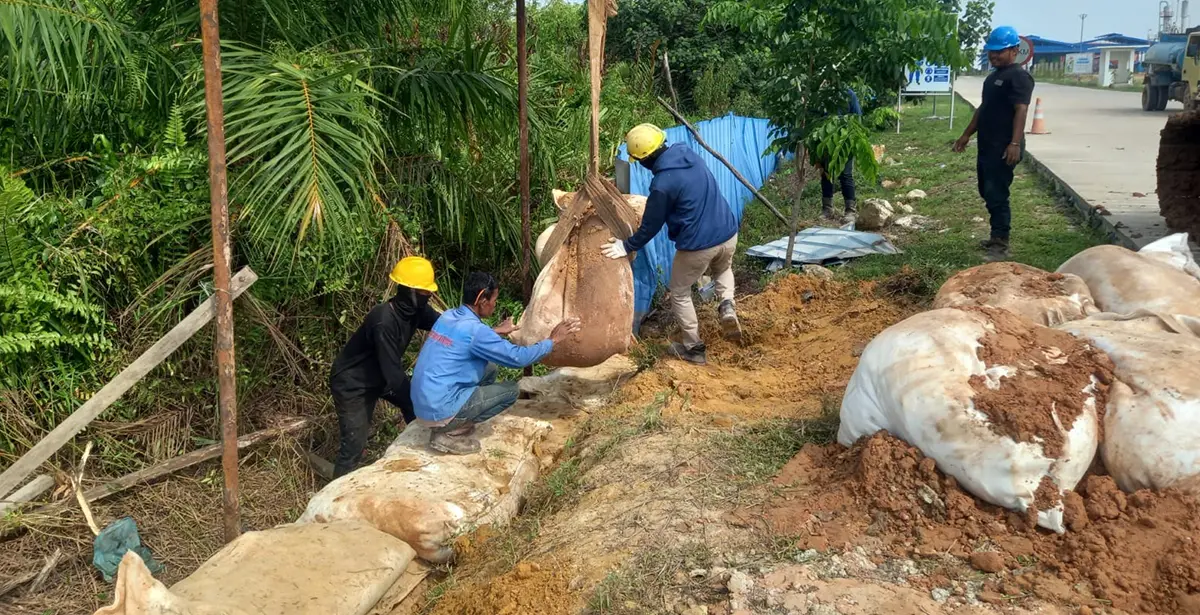
Geobags are geosynthetic products widely used in construction projects for coastal protection and river erosion control. Other geobag functions also benefit many civil engineering applications. Before examining the types, let us first understand what a geobag is. About Geobags A geobag is a pillow-shaped container made from woven or non-woven geotextile fabric. It is usually […]