


Slope Reinforcement Materials: Keeping Soil Stable
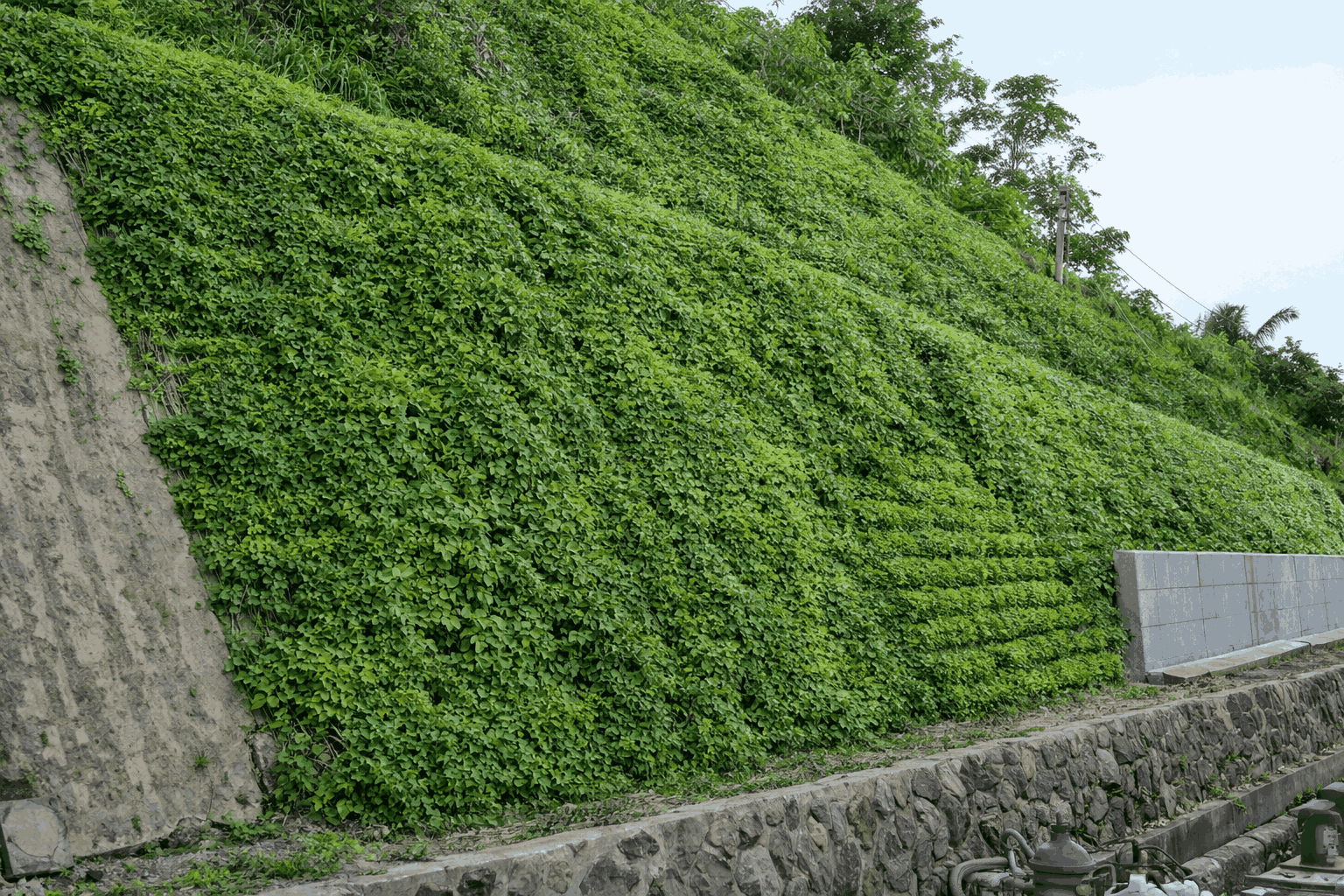
Slopes are an integral part of both natural landscapes and man-made construction. However, slopes often face stability problems caused by heavy rainfall, erosion, earthquakes, and additional loads from buildings and roads. Landslides on slopes do not only damage the environment, they also threaten human safety and infrastructure. That is why slope reinforcement materials have become the main solution for keeping soil stable and preventing disasters.
This article explains the types of slope reinforcement materials, their advantages and disadvantages, the factors to consider when choosing a material, examples of field application, and real case studies in Indonesia.
Types of Slope Reinforcement Materials
Geotextile
Geotextile is a synthetic sheet material made from polyester or polypropylene fibers. Its functions include:
- Filtration: prevents soil particles from being washed away by water.
- Separation: keeps soil layers apart so they do not mix.
- Reinforcement: increases the bearing capacity of the soil.

The advantages of geotextile are that it is lightweight, easy to install, and relatively inexpensive. Its weakness is that it does not resist UV rays over the long term if it is not covered with soil. Geotextile is widely used in drainage, road, and small slope projects.
Geomembrane
Geomembrane is a waterproof plastic sheet, usually made of HDPE. It is used to line slopes so that water does not seep excessively into the soil.

- Advantages: durable, waterproof, and suitable for areas with high rainfall.
- Disadvantages: installation requires special skills and costs are relatively higher than geotextile. Geomembrane is often used in dam projects, storage ponds, and slopes with a high infiltration risk.
Geogrid
Geogrid is a strong synthetic mesh that interlocks soil particles and thereby increases bearing capacity.

- Advantages: very effective for high embankment slopes and highways.
- Disadvantages: more expensive, and installation requires careful technical planning. Geogrid is typically used on toll roads, railways, and large earth embankments.
Gabions
Gabions are woven wire baskets filled with stones and placed at the toe of a slope.

- Advantages: environmentally friendly, easy to install, and durable.
- Disadvantages: requires a lot of stone and a fairly large amount of space. Gabions are widely used in rural areas, along rivers, and on small slopes for erosion control.
Soil Nailing
Soil nailing is a technique of driving steel bars into a slope to resist the shear forces in the soil.

Other Articles


Cocomesh Coir Net: Uses, Production and Installation
What Is Cocomesh? Cocomesh coir net is widely used to support revegetation on former mining land and deforested areas. Made of coconut fiber that can retain water, this coir net is considered very effective. As the name suggests, cocomesh is an environmentally friendly net made of coconut fiber. With this innovative product, the soil structure […]

HDPE Pipe: Advantages and How to Choose the Right Type
HDPE Pipe HDPE (High Density Polyethylene) pipe is made from virgin plastic resin, commonly called PE 100, and is used as water pipe. Pipe made of high-density polyethylene is the best pipe material compared with other pipes, and its HDPE pipe advantages start with high elasticity: it is very easy to install and join, and […]