


Geosynthetic Erosion Control: A Modern Solution

Soil erosion is one of the biggest environmental problems facing the world. This natural process occurs when soil particles are detached and carried away by rainwater, surface runoff, or wind. If left unchecked, erosion can cause loss of soil fertility, damage to farmland, environmental degradation, and threats to infrastructure such as roads, dams, and buildings.
Today, geosynthetics offer an innovative way to control erosion. Geosynthetic products do not only reinforce soil; they also act as a physical barrier that stabilizes slopes, protects the soil surface, and regulates water flow. This article takes an in-depth look at geosynthetic erosion control: the types of products available, how they work, field applications, and the advantages and challenges of using them.
What Are Geosynthetics?
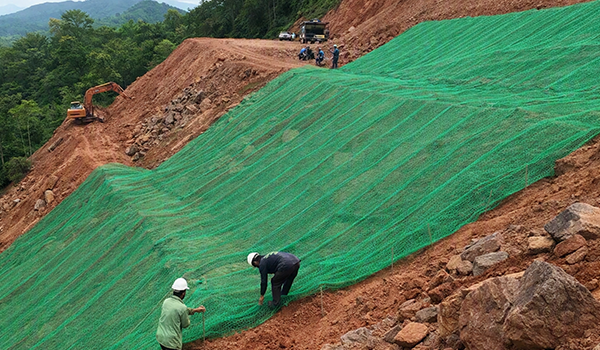
Geosynthetics are man-made polymer-based materials (such as polypropylene, polyester, or polyethylene) designed for use in geotechnical engineering. They have mechanical and hydraulic properties that can be used to reinforce, protect, or control soil and water.
The main categories of geosynthetics include:
- Geotextile → a permeable fabric that acts as a filter, separator, and protective layer.
- Geomembrane → a waterproof liner that prevents infiltration.
- Geogrid → a mesh structure that reinforces soil.
- Geocell → a three-dimensional honeycomb structure that confines soil.
- Geonet & Geocomposite → material combinations for drainage and protection.
For erosion control, the most widely used products are geotextile, geocell, and geogrid, because they stabilize the soil surface and reduce the rate of erosion.
How Geosynthetics Work to Control Erosion
Geosynthetic products work on a simple yet effective principle:
- Mechanical reinforcement → geosynthetics increase the shear strength of the soil, making it more stable against erosive forces.
- Hydrological control → the material acts as a filter that regulates water flow and prevents fine particles from being washed out.
- Surface protection → geosynthetics cover the soil, reducing direct contact with rainwater or surface runoff.
- Vegetation stabilization → some products support plant growth, which then reinforces the soil naturally.
By combining these mechanisms, geosynthetics slow down water flow, retain soil particles, and keep slopes stable.
Types of Geosynthetic Erosion Control Products
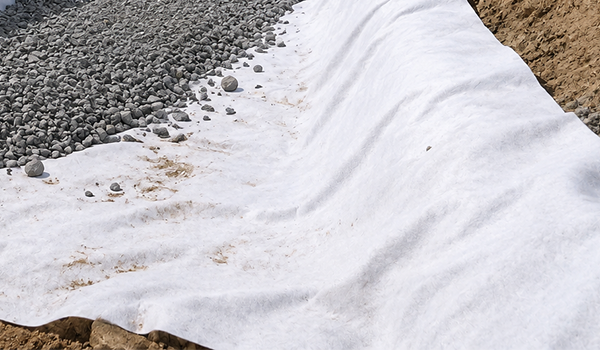
1. Geotextile
- Function: acts as a filter and protects the soil surface.
- How it works: lets water pass through the layer while holding back soil particles so they are not washed away.
- Applications: used on slopes, waterways, and riverbanks.
2. Geocell
- Function: a three-dimensional honeycomb structure that holds soil within its cells.
- How it works: soil filled into the geocell becomes more stable and is not easily washed away.
- Applications: suitable for steep slopes, unpaved roads, and landslide-prone areas.
3. Geogrid
- Function: reinforces soil with a mesh structure.
- How it works: increases the mechanical interaction between the soil and the geogrid so the soil better resists shear forces.
- Applications: used in retaining walls, slopes, and embankments.
4. Geomats (Erosion Control Mats)
- Function: geosynthetic mats laid on the soil surface to protect it from direct rainfall.
- How it works: holds soil particles in place while supporting vegetation growth.
- Applications: road slopes, irrigation channels, and land reclamation areas.
Applications of Geosynthetics in Erosion Control
Geosynthetic products have been used widely in many projects:
- Highways and toll roads → protect slopes from landslides caused by heavy rain.
- Dams and irrigation channels → prevent erosion of banks and channel beds.
- Agriculture → maintain soil fertility by reducing topsoil loss.
- Beaches and coastal areas → protect the shoreline from coastal erosion.
- Mining and land reclamation → stabilize bare soil so it does not erode.
Advantages of Geosynthetics Over Traditional Methods
| Aspect | Geosynthetics | Traditional Methods (stone, concrete, vegetation) |
| Weight | Light | Heavy, hard to move |
| Installation | Fast | Slow, labor-intensive |
| Flexibility | High | Low |
| Cost efficiency | More economical in the long term | Expensive to transport & maintain |
| Service life | Long | Can deteriorate or clog |
| Supports vegetation | Yes | Limited |
Challenges of Using Geosynthetics
Despite their advantages, there are some challenges:
- Relatively high initial cost compared with traditional methods.
- Installation quality largely determines effectiveness.
- Reliance on polymer materials, which can raise environmental concerns if not managed properly.
- Limited technical knowledge in the field, especially in regions that are not yet familiar with the technology.
Future Outlook
With the growing need for sustainable development, geosynthetics are expected to be used more and more. Eco-friendly material innovations, such as biodegradable geosynthetics, are being developed to reduce the environmental impact of polymers.
In addition, combining geosynthetics with vegetation techniques (bioengineering) will be a future trend, with man-made materials and plants working together to create stronger and more natural erosion control systems.
Conclusion
Geosynthetic products are a modern and effective solution for controlling soil erosion. With types such as geotextile, geocell, geogrid, and geomats, this technology protects soil, supports vegetation, and keeps slopes and infrastructure stable.
Although there are challenges in cost and application, the long-term benefits make geosynthetics a top choice in geotechnical engineering. With continued innovation, geosynthetics will play an increasingly important role in protecting the environment and supporting sustainable development.
Other Articles

HDPE Geomembrane Installation Accessories
HDPE Geomembrane In a project design, there are sometimes complex areas that cannot be handled with conventional methods. One example is a containment project using HDPE geomembrane. When the area is complex and an anchor trench cannot be built, one solution is to use additional geomembrane installation accessories, namely polylock. Polylock Polylock is a product […]

Tarpaulin: Uses, Types and Materials
Tarpaulin is not just a cover for trucks or containers; its uses and types support many kinds of business, from agriculture to construction and beyond. Under Indonesia’s Road Traffic and Transportation Law (Law No. 22 of 2009), every vehicle carrying materials, including cement, must be covered with a tarpaulin. Besides helping to comply with that […]
