


Silt Protector: Effective Sediment Control in Waters

Sedimentation is one of the most common environmental problems in water bodies, especially around construction, reclamation, mining, and river dredging sites. Fine particles such as mud, sand, and clay carried by the water can pollute ecosystems, degrade water quality, and damage aquatic habitats.
To address this, the Silt Protector, also known as a silt curtain/silt screen, offers a modern solution. It is a floating curtain installed on the water surface that holds sediment back so it does not spread into open water. This article takes an in-depth look at the silt protector, how to use it, and its benefits for protecting the aquatic environment.
What Is a Silt Protector?
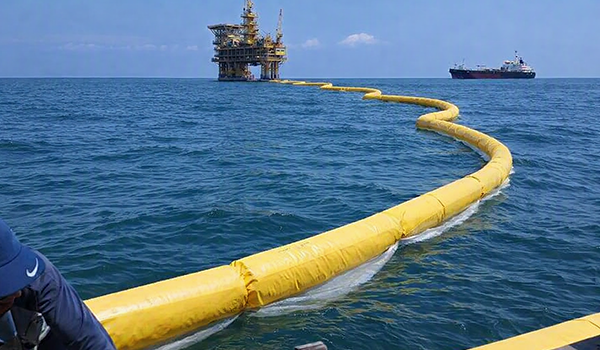
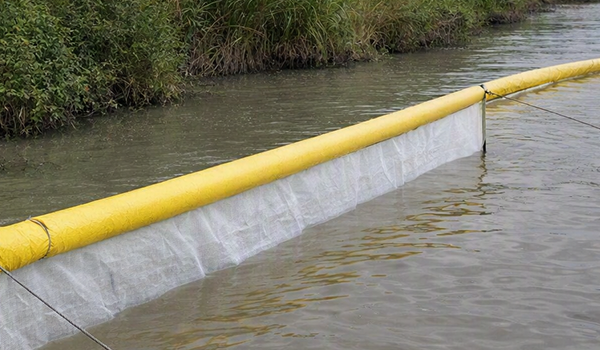
A silt protector is a sediment barrier system consisting of a geotextile or PVC curtain, floats at the top, and ballast at the bottom. The curtain is installed on the water surface to enclose the work area so that fine particles do not escape and pollute the surrounding water.
Main functions of a silt protector:
- Keeps sediment within the construction area.
- Reduces water pollution caused by mud and sand.
- Protects aquatic ecosystems from damage.
- Supports reclamation, jetty construction, and river dredging projects.
Main Components of a Silt Protector
- Float
- Made of air-filled polyethylene or PVC.
- Keeps the curtain afloat on the water surface.
- Geotextile/PVC Curtain
- Acts as the sediment barrier.
- Has a set permeability so water can still flow through.
- Ballast Chain
- Fitted along the bottom of the curtain.
- Keeps the curtain hanging vertically and prevents currents from lifting it.
- Anchor System
- An anchoring system that holds the curtain in position so it does not drift.
- Can be fixed to the seabed or riverbed or to a nearby structure.
How to Use a Silt Protector
- Preparation
- Determine the installation location based on the work area.
- Calculate the curtain length based on the size of the area to be protected.
- Make sure the water depth matches the curtain specification (generally 1–6 meters).
- Prepare the floats, curtain, ballast, and anchor system.
- Installation
- Lay out the floats on the water surface along the boundary of the work area.
- Lower the curtain to the required depth.
- Attach the ballast to the bottom so currents do not lift the curtain.
- Fix the anchors to the bed or a nearby structure to hold the position.
- Operation
- The curtain holds sediment back so it does not leave the work area.
- Water can still flow through the curtain, but fine particles are retained.
- Carry out routine inspections to make sure the curtain is not damaged or displaced.
- Maintenance
- Clean accumulated mud off the curtain.
- Check the floats and ballast chain regularly.
- Replace damaged parts so it keeps working optimally.
Field Applications
Silt protectors are used in many types of projects:
- Coastal reclamation → prevents mud from spreading into the sea.
- River/lake dredging → keeps the water clear.
- Jetty/port construction → protects the surrounding ecosystem.
- Sand or stone quarrying → reduces environmental impact.
- Bridge construction projects → contains sediment around the piles.
Advantages of a Silt Protector
- Effective at holding back sediment without stopping water flow.
- Easy to install and flexible enough to follow the shape of the shoreline.
- Environmentally friendly because it prevents pollution.
- Cost-effective compared with traditional methods such as permanent dikes.
- Modular → the curtain length can be adjusted to project needs.
Challenges of Use
Although effective, there are some challenges:
- Initial cost is relatively high compared with simple methods.
- Installation quality largely determines effectiveness.
- Material durability against UV, strong currents, and waves needs attention.
- Routine maintenance is essential to keep the curtain from being damaged.
With growing awareness of sustainable development, the use of silt protectors is expected to keep expanding. Eco-friendly material innovations such as biodegradable geotextiles are being developed to reduce the impact of polymers on ecosystems.
In addition, combining silt protectors with digital monitoring technology (water quality sensors) will be a future trend, allowing sedimentation to be controlled in real time.
Conclusion
The silt protector is a practical and eco-friendly solution for controlling sedimentation in water bodies. With a relatively simple method of use, from installing the floats, curtain, and ballast to the anchors, it maintains water quality and protects ecosystems.
Using a silt protector is essential in marine construction, reclamation, and dredging projects because it supports smooth work while ensuring environmental sustainability is maintained.
Other Articles

Types of Geosynthetics and Their Geotechnical Functions
Geosynthetics are factory-made polymer products used in structures that interact with soil, rock or other geotechnical engineering materials. The types of geosynthetics most commonly used are geotextile, geocell, geogrid, geomembrane, geocomposite, geomat, geosynthetic clay liner, geopipe and others. Geosynthetic materials come from the plastics industry: polymers, rubber, fibreglass and other materials. All geosynthetics are generally […]

Buy Affordable Non-Woven Geotextile
Non-Woven Geotextile, commonly called Filter Fabric, is a geosynthetic material with a non-woven structure resembling fabric carpet. Products sold on the market are generally made from polyester (PET) or polypropylene (PP) polymers. Non-woven geotextile works by relying on tensile strength, helping to reduce localized settlement caused by soft subgrade. Buy Non-Woven Geotextile from Ready Stock […]
