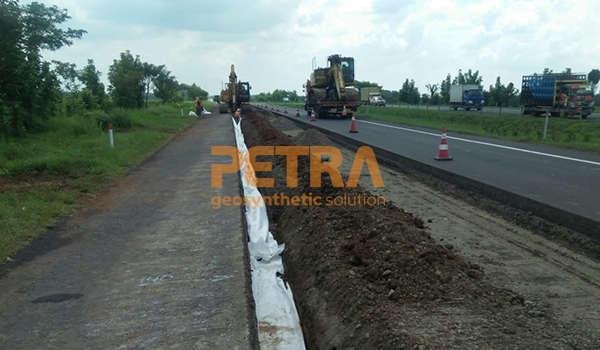
How to Install Geomembrane on a Gold Mine Heap Leach Pad

Have you ever imagined how gold is separated from towering piles of ore? In modern mining, one of the most efficient and frequently used methods is heap leaching. Yet behind this method’s success is one component that is often invisible because it is buried at the very bottom: geomembrane.
For those who work in mining or construction, understanding the benefits of geomembrane and how to install it on a heap leach pad isn’t just an ordinary technical matter. It concerns environmental safety and production efficiency. Imagine if valuable chemical solution containing pure gold seeped into the ground because the installation leaked! This article will thoroughly explain the professional installation steps.
What Is a Heap Leach Pad at a Gold Mine?
A heap leach pad is a base area where piles of ore (such as gold ore) are irrigated with a special chemical solution, usually cyanide, to dissolve the valuable metal. The solvent that has bound the gold (the pregnant solution) is then conveyed and collected in a holding pond for further processing.
Because the process uses hazardous chemicals and handles high-value liquid, the pad or base must be 100% watertight. This is where 1.5 mm to 2.0 mm High-Density Polyethylene (HDPE) or Linear Low-Density Polyethylene (LLDPE) geomembrane is usually selected as the primary protective layer.
Why Is Geomembrane Installation So Vital?
Choosing quality geomembrane is important, but the installation technique is even more crucial. On a heap leach pad project, the load from the rock pile can equal the pressure of a building dozens of stories high (the pile can reach hundreds of meters). If any sharp gravel remains beneath the material or a welded seam is imperfect, the extreme pressure from above will immediately tear the lining. The result is financial loss from lost gold and the risk of legal penalties for environmental pollution.
A Guide to Correct Geomembrane Installation

Installing geomembrane in a mining area requires high precision and must follow strict standards. Here are the important stages you must pay attention to:
1. Preparing the Subgrade Surface
The first step, which must never be underestimated, is preparing the subgrade. The soil must be leveled and compacted with heavy equipment. Its surface must be free of sharp-edged stones (stones larger than 75 mm usually have to be removed), tree roots and debris. Uneven ground creates voids that can place stress on the material when loads are piled above it.
2. Installing a GCL Layer (Optional)
On large-scale mining projects, a Geosynthetic Clay Liner (GCL) is usually installed before the geomembrane is laid. GCL provides double protection. If a microscopic leak ever occurs in the geomembrane, the bentonite layer inside the GCL expands when exposed to water and immediately seals the hole.
3. Geomembrane Deployment
The deployment process must be carried out with extreme care. Geomembrane rolls that can weigh several tons are pulled with heavy equipment fitted with a spreader bar. Workers must make sure sheets are laid in the direction of the slope so liquid can flow naturally toward the collection pipes. Installation also depends heavily on the weather; excessively strong winds can displace the material.
4. Welding the Sheets
This is the heart of the entire leak-proof lining installation process. Two main methods are used most often:
- Wedge Welding: Uses an automatic high-temperature machine that melts both sides of a geomembrane joint and presses them together. This method produces two weld tracks (a double track) with an air channel between them.
- Extrusion Welding: Used for detail areas such as patching, sheet corners or pipe areas. This method applies molten plastic directly over the sheet seam.
5. Quality Control Testing
Every centimeter of welded seam must be tested in the field. For wedge welding, technicians pump air into the empty channel between the two weld tracks (an air pressure test). If the air pressure remains stable for a specified time, the joint is sealed. For extrusion welding, testing uses a vacuum box placed over a seam coated with soapy water; bubbles indicate a fine leak that must be patched again.
6. Placing a Protective Layer
Once the geomembrane has passed its acceptance tests, coarse mine rock must not be placed directly on it. A protective layer, or overliner—usually thick non-woven geotextile (at least 500 g/m2) or a layer of fine gravel—is laid first to protect the plastic from tearing under pressure from sharp rocks (puncture resistance).
Get the Best Materials from Petra Nusa Elshada
Building a heap leach pad facility is no small investment, and you certainly don’t want to risk project failure because of inadequate material or work that doesn’t meet standards. Make sure you always work with specialists who thoroughly understand how geosynthetic materials perform in the field.
To support the smooth and safe operation of your mining project, Petra Nusa Elshada is here as a reliable partner. We provide a range of high-quality geomembrane products whose strength has been proven in extreme mining environments, supported by comprehensive technical consultation. Discuss your leak-proof lining material needs with the Petra Nusa Elshada team today!
Need a Consultation for Your Project?
Feel free to consult the Petra Nusa Elshada team. We supply a wide range of high-quality geosynthetics ready to ship throughout Indonesia. Let’s discuss your project needs now!
Check our catalog: Click here
Chat on WhatsApp Now: Click here
Remember Geosynthetics, Remember Petra!
Other Articles

Geofoam Types, Prices and Selection Guide
What Is Geofoam? Geofoam is a geosynthetic product made from polystyrene (PS) polymer. Geofoam comes in 2 kinds: Expanded Polystyrene (EPS) and Extruded Polystyrene (XPS). In this geofoam selection guide, we explain the differences between the 2 types and how to choose the right one. Before looking at each type, it helps to understand the […]

10 Tips for Choosing a Fish Pond Geomembrane
Besides acting as a protective waterproof layer, a fish pond geomembrane also offers a number of other important benefits. One of them is better water quality control. With its ability to form a solid, long-lasting waterproof layer, geomembrane brings benefits, efficiency and sustainability to fish pond operations. Using this material has many advantages. Read on […]