


Functions of Geomembrane in a WWTP Anaerobic Pond
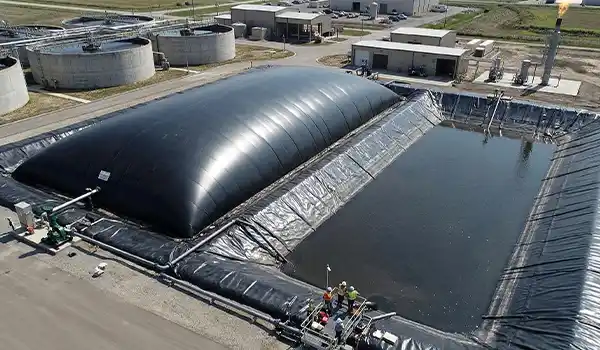
Have you ever wondered how large factories or industries manage their wastewater so it doesn’t pollute the surrounding environment, Petra friends? One of the most crucial stages in a Wastewater Treatment Plant (WWTP) is the process inside the anaerobic pond. To keep this treatment process running smoothly and safely, there is one unseen hero with a vital role: geomembrane.
If you work in industry, infrastructure contracting or environmental protection, understanding the functions of geomembrane in a WWTP anaerobic pond is essential. This article thoroughly explains why this lining material has become a mandatory standard in modern waste treatment systems, and how its application can protect the environment while safeguarding your business operations.
Getting to Know Anaerobic Ponds in a WWTP System
Before discussing the lining material, let’s first get to know the anaerobic pond. In a wastewater treatment system, this pond is specifically designed to treat organic wastewater with a high concentration (such as palm oil mill or paper mill waste). As its name suggests, decomposition in this pond takes place entirely without free oxygen.
This is where anaerobic bacteria work hard to break complex organic matter down into much simpler compounds. Unfortunately, this natural process produces by-products in the form of methane gas (biogas) and fairly aggressive chemicals. In addition, wastewater that has not been fully treated is highly toxic to soil and water sources. That is why this pond requires extra structural protection.
What Is Geomembrane Material?
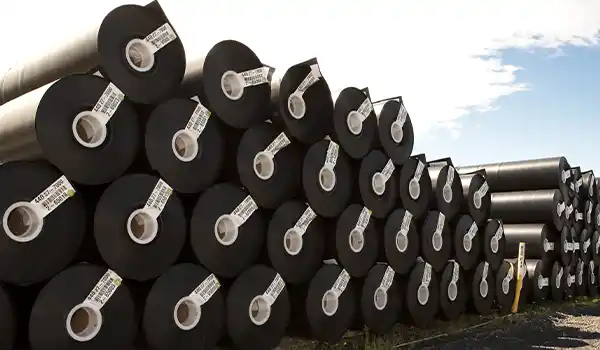
Simply put, geomembrane is a synthetic polymer sheet that is highly impermeable to water and gas. It is generally made from High-Density Polyethylene (HDPE) or Low-Density Polyethylene (LDPE). Because liquids and gases cannot pass through it, this material is often used as a liner or base lining for various containment structures, including industrial waste ponds.
5 Functions of Geomembrane in an Anaerobic Pond
So what exactly makes this material so important? Here are five main functions of geomembrane in an anaerobic waste pond system:
- Preventing Wastewater Leaks
The most crucial function of geomembrane in a WWTP anaerobic pond is to serve as a watertight isolation layer (impermeable liner). Industrial wastewater often contains hazardous compounds. If a pond relies only on ordinary soil, there is a high risk that waste will seep downward and pollute groundwater. With geomembrane, you ensure that not a single drop of toxic waste escapes into the outside environment. - Maintaining Stable Pond Temperatures
Decomposition by anaerobic bacteria is highly sensitive to temperature fluctuations. For the bacteria to work optimally, the pond temperature must remain stable. The jet-black color of HDPE geomembrane can absorb and retain heat from sunlight. This greatly helps keep the wastewater warm, allowing biological decomposition to proceed more quickly. - Containing Hazardous Gas (Biogas)
Anaerobic waste decomposition produces methane, which has a very pungent odor and is a greenhouse gas. Geomembrane is used not only as a base, but often as a pond cover (biogas cover). Its impermeability prevents methane from escaping into the open air, so the gas can be captured and processed into alternative energy for factory operations. - Preventing Pond Soil Erosion
A continuous inflow of waste can erode the walls and floor of an earthen pond. If left unchecked, this erosion can damage the structure and trigger landslides. Geomembrane provides a strong physical protective layer against mechanical abrasion, so your pond’s shape and capacity remain intact over the long term. - Resistance to Corrosive Chemicals
Industrial wastewater has an unpredictable pH and is full of corrosive chemicals. HDPE geomembrane has outstanding resistance to many types of acids, alkalis and chemical solvents. It is also resistant to ultraviolet (UV) exposure and microorganisms, making it an exceptionally durable investment.
An Integrated WWTP Solution
Building an effective waste treatment system is not simply a matter of digging a holding pond; it also means making sure every material used is of superior quality from the liner to the piping.
For the system that conveys waste to the pond, make sure you use robust piping materials suited to industrial areas. HDPE spiral pipe is a highly logical choice for withstanding heavy soil loads around factories. Although the inside of our spiral pipe is not smooth, its corrugated exterior design provides maximum structural strength (ring stiffness). This characteristic makes it a very sturdy companion for geomembrane-lined ponds, ensuring your WWTP is free from the risk of burst pipes or leaking ponds.
At PT. Petra Nusa Elshada, we are fully committed to infrastructure development and environmental sustainability. We are always ready to support the smooth progress of your installation project with a supply of premium-quality products.
Conclusion
The functions of geomembrane in a WWTP anaerobic pond make it an essential component for creating a safe, efficient and environmentally friendly waste treatment system. By preventing leaks, containing hazardous gas emissions and maintaining the stability of the anaerobic ecosystem, geomembrane gives industrial operators peace of mind. Make sure your WWTP project uses the right material specifications so your business can keep running without sacrificing the natural environment!
Need a Consultation for Your Requirements?
Feel free to consult the Petra Nusa Elshada team. We supply a wide range of high-quality geosynthetics ready to ship throughout Indonesia. Let’s discuss your project needs now!
Check our catalog: Click here
Chat on WhatsApp Now: Click here
Remember Geosynthetics, Remember Petra!
Other Articles
Roof Garden: A Cool, Attractive Urban Home Solution
Hello, Petra friends! Have you ever felt that city weather has become hotter and more oppressive lately? Green space is increasingly scarce, while concrete buildings keep multiplying. If you have a home with limited land but still want to enjoy a lush garden, a roof garden is the answer! It is not only a trend […]

Woven and Non-Woven Fabric Functions
Woven and non-woven fabrics are widely used in various industries. Both are made from the same base material, polyester, but they have different characteristics. To understand non-woven fabric functions and woven fabric applications, first consider how the two types differ. In appearance, non-woven fabric has non-interlaced fibers and is usually sold in white. This type […]

Geomembrane Seaming Methods for HDPE and PVC
Geomembrane seaming must follow the Indonesian national standard regulations (Bina Marga SKh 1.3.8). The seaming rules include: The geomembrane must be overlapped by at least 14 cm HDPE geomembrane can be joined with 2 types of seam: A. Dual Track Hot Wedge for straight seams Read Also Geomembrane Sizes and Specifications B. Extrusion Fillet Seam […]