


Geomembrane: Complete Guide to Types and Sizes
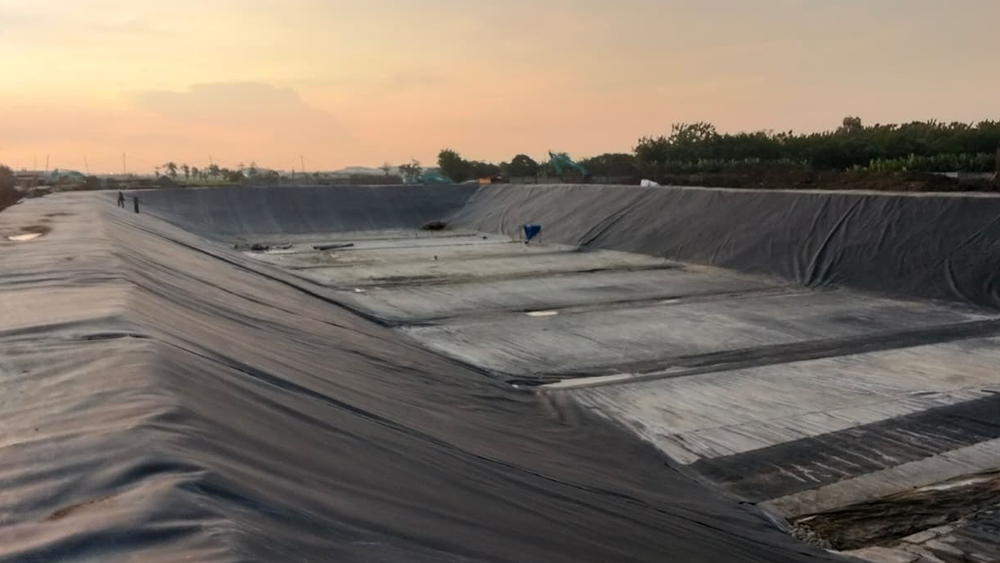
Geomembrane is an impermeable lining material with a wide range of applications in environmental, agricultural and construction industries. In this article, we take an in-depth look at geomembrane types and sizes so readers can get a complete picture of their specifications, advantages and uses.
Geomembrane types and sizes vary widely and are tailored to the needs of many industries. Understanding the characteristics and sizes of each type is important so applications perform optimally and meet standards.
Common geomembrane types and their advantages
As an essential watertight lining material, geomembrane comes in several types with different functions depending on the application. Choosing the right type of geomembrane will largely determine a project’s success in terms of durability, cost efficiency and effectiveness in retaining water and contaminants.
Several types of geomembrane are commonly used in industry and construction. Understanding the characteristics of each type helps in selecting the optimal material for the requirements, environment and budget. In addition, each type has particular advantages that make it the best choice for specific situations.
It is also important to understand that geomembrane types and sizes must match the function and environmental conditions where the material will be installed. Here is a complete explanation of the most commonly used types of geomembrane:
HDPE (High-Density Polyethylene)
HDPE is the most popular and widely used type of geomembrane because of its strength, chemical resistance and ability to withstand extreme weather. HDPE is available in various thicknesses, generally from 0.5 mm to 2.0 mm, and is known for its versatility across many applications.
HDPE also offers resistance to UV and oxidation, making it highly suitable for long-term applications such as reservoirs, landfills and retention ponds. It can withstand high water pressure and corrosive chemicals, making it ideal even for harsh environments.
Another attractive characteristic of HDPE is that it can be produced in many sizes and shapes, including large and small sheets tailored to requirements. With modern fabrication technology, HDPE durability can be enhanced by adding additives such as UV stabilizers and antioxidants, extending its service life.
LLDPE (Linear Low-Density Polyethylene)
LLDPE has a more linear molecular structure than HDPE, providing better flexibility and tear resistance. This material is often used in applications requiring high flexibility, such as geomembrane for projects involving folds or dynamic changes in shape.
The main advantages of LLDPE are its elasticity and resistance to extreme temperatures. Even in very hot or very cold conditions, it retains its strength. In addition, LLDPE is known as more environmentally friendly and relatively easier and faster to install.
In terms of chemical resistance, LLDPE also performs well, although not as robustly as HDPE. LLDPE is therefore best suited to applications such as pond lining, hydroponic projects and environmental applications that prioritize flexibility.
PVC (Polyvinyl Chloride)
PVC is a geomembrane known for its ease of fabrication and installation. It is hygienic, resistant to many chemicals and fairly flexible, although not as strong as HDPE under high pressure.
PVC is most widely used in clean water treatment, wastewater treatment and soil retention. With thicknesses ranging from 0.5 mm to 2 mm, PVC can be applied in many environmental conditions and situations that require adapting to different shapes.
Besides being easy to install, PVC also offers competitive pricing and can be precisely shaped to follow ground contours on site. However, it also has drawbacks, such as sensitivity to heat and the need for UV protection to remain durable.
EPDM (Ethylene Propylene Diene Monomer)
EPDM is a geomembrane specifically designed for extreme environments, especially in terms of heat and ozone resistance. It is known for high elasticity and resistance to cracks and tears.
EPDM is ideal for projects storing hot liquids, such as large swimming pools, and environmental applications requiring high flexibility as well as resistance to UV and oxidation. These locations require a liner that can withstand extreme temperature changes without significantly losing strength.
Another advantage of EPDM is its ability to absorb ground movement and vibration without cracking. As an elastomer, it is an excellent solution for applications requiring high flexibility and mechanical resistance.
Geomembrane Type Comparison Table
| Type | Typical Thickness (mm) | Advantages | Drawbacks | Main Applications |
| HDPE | 0.5 – 2.0 | Strong, chemical-resistant, UV-stable | Stiffer, difficult to fold | Reservoirs, landfills, drainage channels |
| LLDPE | 0.5 – 1.5 | Flexible, tear-resistant, environmentally friendly | More susceptible to oxidation | Ponds, hydroponics, environmental liners |
| PVC | 0.5 – 2.0 | Easy to install, economical | Less resistant to heat and UV | Water storage, waste, city parks |
| EPDM | 1.0 – 3.0 | Elastic, heat- and ozone-resistant | Higher cost, not as strong as HDPE | Swimming pools, garden covers, extreme applications |
Common geomembrane sizes and how to adjust them
Size is an important factor among geomembrane types and sizes when planning and executing a project. Considering the right size ensures efficient material use while reducing waste and installation time.
Finding the ideal size involves not only sheet width and length, but also fabrication tolerances and installation capabilities on site. Factors affecting size include project depth, ground contours and the functional requirements of the liner.
Here is a complete explanation of the commonly available sizes and how to match them to site requirements:
Standard sizes and variations
Geomembrane manufacturers offer standard sizes commonly used in many projects, but customization on request is also possible. Standard sizes usually range from 5 to 15 meters wide and up to 50 meters long, depending on the material and manufacturer.
Larger sizes are usually chosen to reduce the number of seams, which logically increases the liner’s strength and durability. In large projects such as reservoirs and landfills, using large sheets with minimal seams is a priority to reduce the risk of future leaks and damage.
Adjusting size to the project
Every project has unique requirements, and here the key advantage is flexibility in adjusting geomembrane size. In practice, size is matched to the depth and width of the area to be lined, as well as the capacity of heavy equipment and installation methods on site.
For example, on projects with uneven ground contours, large sheets may create installation challenges, so medium sizes are often used and joined with strong, durable seaming techniques. In contrast, large projects with extensive flat areas are more efficient with large sheets that minimize seams.
Tips for choosing the right size
Choosing the right geomembrane size requires careful thinking that considers economics, efficiency and durability. Here are some important tips:
- Account for the number of seams required and the risk of leaks.
- Evaluate ground conditions and ease of installation.
- Discuss the availability of custom sizes with the manufacturer.
- Use modern fabrication technology to obtain the right size without excessive cutting on site.
Conclusion on geomembrane sizes
Size, as part of geomembrane types and sizes, greatly affects a project’s success. Especially today, the ability to customize sizes is one of the main strengths of geomembrane manufacturers. Size selection must match technical and economic requirements, ensuring all soil and water containment needs are met efficiently and durably.
Get Geomembrane and other geosynthetic materials now, only at Petra Nusa Elshada. For more information, please click here!
Other Articles

Drainage Pipe Types and Advantages
What Is a Drainage Pipe? A drainage pipe is a perforated and corrugated pipe whose structure provides reinforcement when supporting soil fill loads. This pipe is widely used for subsurface drainage. It is available in several types: perforated (with drainage holes) or non-perforated (without drainage holes), single-wall and double-wall. Types of Drainage Pipe Single-Wall Corrugated […]

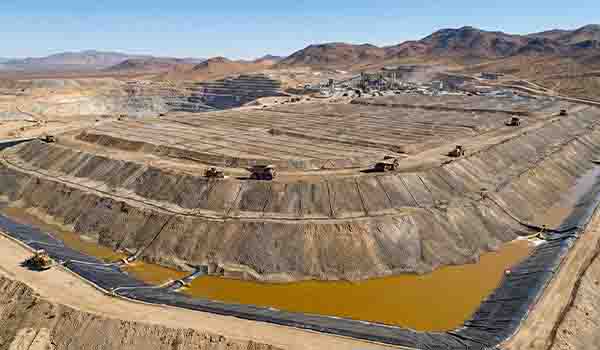
How to Install Geomembrane on a Gold Mine Heap Leach Pad
Have you ever imagined how gold is separated from towering piles of ore? In modern mining, one of the most efficient and frequently used methods is heap leaching. Yet behind this method’s success is one component that is often invisible because it is buried at the very bottom: geomembrane. For those who work in mining […]