


Shrimp Pond Geomembrane: Jeneponto Project Case Study
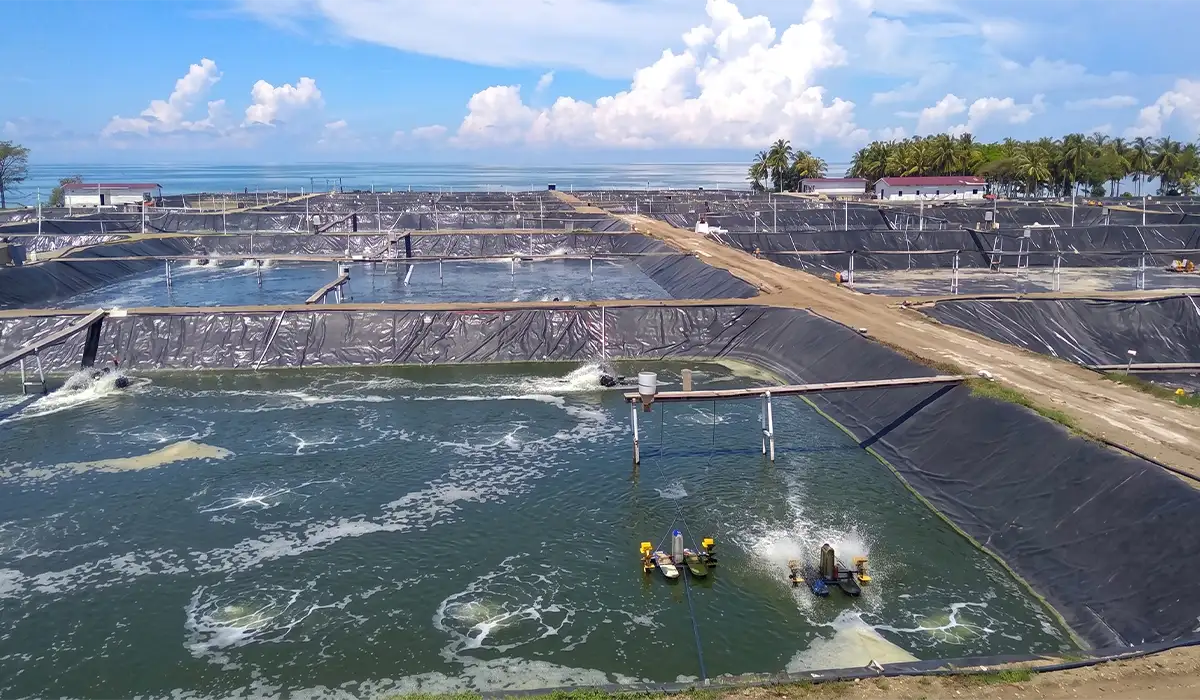
Background: Goodbye to Traditional Earthen Ponds
If you work in aquaculture, especially shrimp farming (such as Vannamei shrimp), you know how crucial water quality management is. For decades, traditional farmers in Indonesia relied on earthen ponds. But as stocking density targets have risen, earthen ponds have started to show their weaknesses.
Pond wall erosion, undetected leaks and organic waste building up on the pond bottom are nightmares that can trigger mass harvest failures. This is where the shift to modern pond technology begins. This shrimp pond geomembrane case study takes you through a large-scale project in Jeneponto, South Sulawesi, where petrane.co.id helped deliver precise, hygienic and sustainable pond infrastructure.
Challenges on Site
The Jeneponto shrimp pond project was no small undertaking. With an area of ± 101,920 m2 (more than 10 hectares), the technical challenges were complex:
- Soil Porosity (Prone to Leaks)
Coastal soils often have high porosity. With ordinary earthen ponds, water volume keeps dropping as it seeps downward, forcing farmers to waste energy constantly pumping in seawater. - Cross-Contamination
Pond water is highly vulnerable to contamination by toxic minerals (such as pyrite) and pathogens from the soil or groundwater. - Sludge Accumulation
Intensive farming produces leftover feed and shrimp faeces. In earthen ponds, this waste mixes with the bottom mud and creates anaerobic zones that release ammonia and hydrogen sulphide, which are deadly to shrimp.
Technical Solution: Shrimp Pond Geomembrane with HDPE Piping
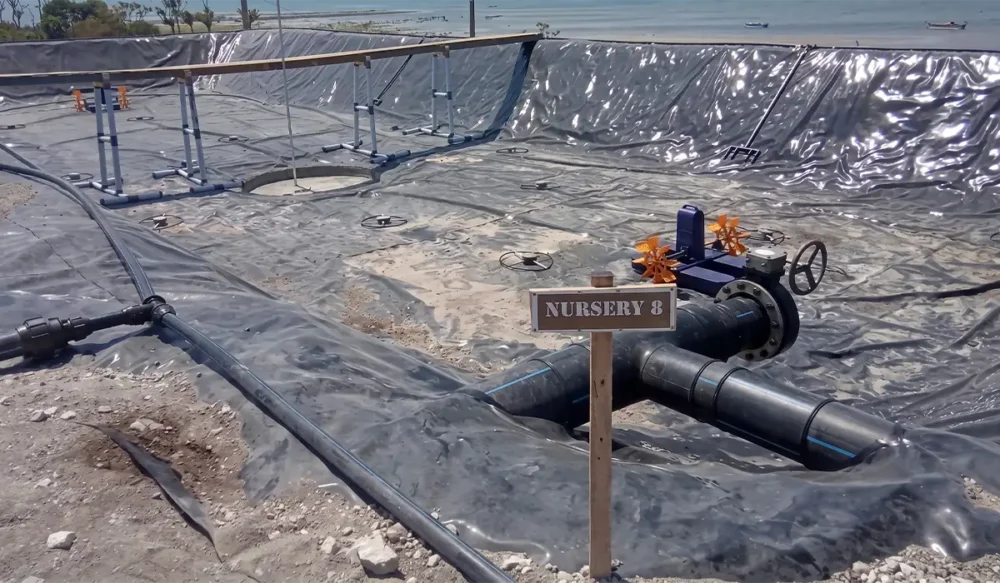
To meet challenges on this scale, a comprehensive pond bottom isolation system was applied. This is where the technical specification of the material plays a key role.
Project Profile:
- Project Type: Intensive Shrimp Ponds
- Location: Jeneponto, South Sulawesi
- Area: ± 101,920 m2
- Main Material: Geomembrane 0.75mm Viroline
- Piping System: PVC Pipe, HDPE Pipe & HDPE Accessories
We used Geomembrane 0.75mm Viroline. Why 0.75mm? This thickness is the sweet spot for shrimp ponds. It is thick enough to resist puncture from sharp objects or gravel in the subgrade, yet flexible enough to follow the pond’s design contours and the central drainage system (central drain).
Technical Breakdown: How Does the Material Work?
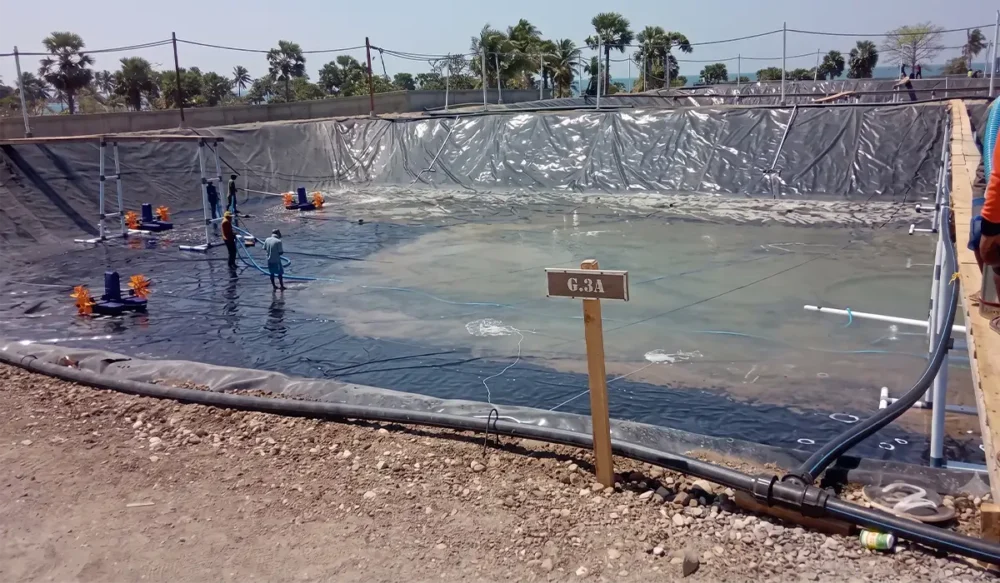
If you are curious about the technical side, here is how Viroline geomembrane and the HDPE/PVC piping system protect the shrimp harvest cycle:
1. Zero Seepage (Total Leak Prevention)
Geomembrane 0.75mm Viroline is made from High-Density Polyethylene (HDPE), which has almost zero permeability. The large sheets are joined with a hot wedge welder. The welding creates a molecular bond that is 100% watertight. The result? Water level and salinity in the pond stay very stable, because no water seeps into the ground.
2. Breaking the Chain of Soil Contamination
With a geomembrane layer, the pond water is completely isolated from the subgrade. This means sulphuric acid compounds (pyrite) from the soil below cannot rise and upset the water’s pH. In addition, diseases lingering in the soil from previous cycles cannot reach newly stocked fry (post-larvae). The water ecosystem depends only on the treatment you apply from above.
3. Efficient Sludge Management (Central Drain System)
This is the most crucial part. The smooth surface of Viroline geomembrane stops leftover feed and shrimp waste from sticking to the pond bottom. With the help of the current created by paddle wheels, the waste is easily swept along and collected at the centre of the pond.
This is where the PVC Pipe, HDPE Pipe and HDPE Accessories come in. A Central Drain is installed in the middle of the geomembrane-lined pond. HDPE pipe was chosen for its resistance to UV exposure and corrosive chemicals (including chlorine used during sterilisation). The pipes connect seamlessly to the discharge system (outlet). When waste collects in the centre, the operator simply opens the valve and the toxic sludge is flushed out without disturbing the shrimp. The pond stays free of sludge and ammonia stays at safe levels!
Final Results
Using Geomembrane 0.75mm Viroline and HDPE piping across more than 10 hectares in Jeneponto transformed the project dramatically.
Farmers now have full control over water quality. Pond preparation time between stocking cycles (the fallow period) is now very short, because the pond only needs to be sprayed and dried, with no more days of sludge removal using heavy equipment. The shrimp Survival Rate rose sharply, and the risk of harvest failure from disease outbreaks has been kept to a minimum.
Other Articles

HDPE Geomembrane Pond Liner for a Farm Reservoir in Bogor
Background: Percolation and Unpredictable Weather Bogor is known as the City of Rain. However, weather anomalies and climate shifts mean rainfall can no longer always be predicted. For farmers, going without water for just a few weeks can lead to total crop failure (puso). To deal with this, farmers need an embung (a small retention […]

0.75mm Geomembrane for a Reservoir Project in Cianjur
Project Background: The Classic Challenge of an Embung (Small Retention Reservoir) This project is located in Cianjur, West Java, an area that relies heavily on water availability for agriculture and plantations. The main need was to build an embung, or retention pond, that could hold as much rainwater and surface runoff as possible, making a […]