


Geomembrane Pipe Boot Design for Leak Resistance

There are many variations of geomembrane boots. This article focuses on the most common type of geomembrane pipe boot and describes in detail the common problems and proposed solutions for achieving leak resistance. Many other variations of geomembrane boots and structures that have been or will be built in the field are not specifically discussed here.
The most commonly used geomembrane boot consists of:

Leak-resistant geomembrane pipe boot
• Sleeve-to-pipe seal (welded, caulked-and-clamped, or gasketed-and-clamped)
• Sleeve
• Sleeve-to-skirt connection
• Skirt (sometimes also called the boot “flange”)
• Skirt to free-field geomembrane connection

Leak-resistant geomembrane pipe boot
Prefabricated geomembrane boots are preferred over field-fabricated boots. A prefabricated boot has the sleeve and skirt manufactured in one piece, eliminating the sleeve-to-skirt weld, which is often a weak point. Prefabricated polyethylene (PE) geomembrane boots are often vacuum-formed from base material that is much thicker than the project-specified geomembrane, so that when stretched into shape, the thinnest part still meets the specified thickness.
The resulting sleeve is seamless and has no lap joint, which improves its leak resistance and helps achieve uniform clamping pressure. Prefabricated boots made of other materials such as EPDM, PVC or polypropylene can be molded or preformed at the factory, and sometimes have a conical or tapered shape where the cone can be cut to the desired pipe diameter.
Other Articles

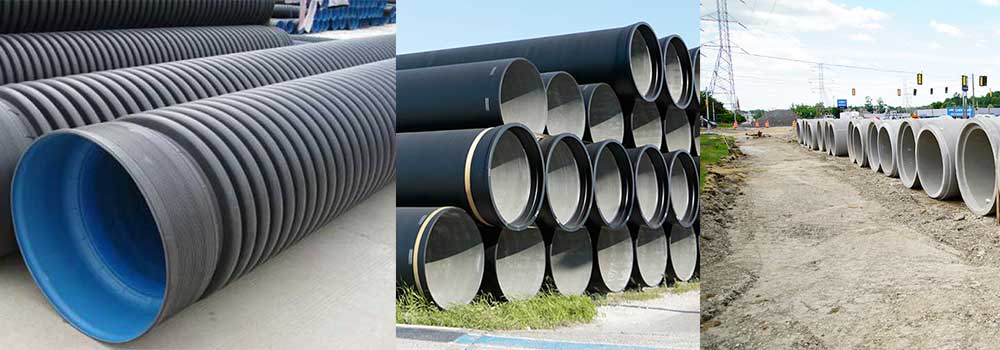
Guide to Choosing Geopipe Material
Most projects need a channel that can carry liquids such as infiltration water, wastewater, leachate and so on. Sometimes a protective layer is also needed for cables below the ground surface. These needs are usually met with pipes, which can be made from various materials such as plastic, iron and concrete. This guide to choosing […]

Geotextile Distributor and Supplier
Non-Woven Geotextile As a geotextile distributor, we supply this non-woven type, which resembles a fabric carpet and is generally sold in white. Our local product is made from high-quality 100% polyester (PET) fibers. It is produced in a continuous process, in which the fibers remain unbroken throughout manufacturing, resulting in geotextile of good quality that […]