


Landslide Prevention Strategies for Environmental Protection

Landslides are among the natural disasters that occur most frequently in hilly highland areas. They can cause extensive damage to ecosystems and infrastructure and threaten human safety. Illegal human activities in landslide-prone areas and unpredictable climate change are major factors that worsen these events. Communities and governments must therefore understand landslide prevention methods to minimize resulting losses. This article discusses strategies, techniques, and innovations for effectively preventing landslides.
Causes and Impacts of Landslides
Understanding the causes and impacts of landslides is the main foundation for preventive measures. By recognizing what can trigger a landslide, communities and governments can take targeted preventive action. This approach requires careful planning.

Landslides are usually caused by natural factors and human activities. Natural drivers include loose soil, heavy rainfall, and extremely steep topography. Other triggers include
human activities such as illegal logging, development that disregards environmental considerations, and illegal mining.
Their effects can be wide-ranging, from infrastructure damage and loss of agricultural land to human casualties. Environmental awareness therefore plays a major role in landslide prevention. A deep understanding will help all parts of society participate in maintaining environmental stability and the balance of nature.
Landslide-Causing Factors to Understand
The factors causing landslides can be categorized as natural and human. Understanding both is essential for effective preventive measures.
Natural factors include heavy rainfall that saturates the soil and makes it prone to sliding. Certain geological and topographical conditions, such as steep slopes and fragile rock, also make an area vulnerable. Landslides often cannot be avoided entirely, but their impacts can be minimized through appropriate preventive measures.
Human factors often accelerate landslides in vulnerable areas. Development that disregards environmental considerations, widespread tree cutting without reforestation, and excessive groundwater extraction can weaken soil structure. These activities destabilize the ground and make it more likely to slide during heavy rain or other ground vibrations.
Environmental Impacts of Landslides
Landslides are highly destructive and can cause extensive damage to ecosystems and community life. Displaced soil can block roads, threaten residents, and destroy homes and other public facilities.
Besides endangering people, landslides damage agricultural areas and infrastructure such as bridges and highways. Consequently, logistics distribution and health services are disrupted, causing major economic losses. On a larger scale, landslides also reduce the land’s capacity to support life and surrounding ecosystems.
Active prevention is therefore the best solution for reducing the risk and impact of these disasters. Applying appropriate strategies can minimize material losses and casualties while improving safety for communities in landslide-prone areas.
The Role of Infrastructure in Landslide Prevention
Strengthening soil structures and managing the surrounding environment through various techniques are ways to prevent landslides. Sound infrastructure and environmentally conscious development greatly influence slope stability and disaster-risk reduction. Today, increasingly advanced technologies can also provide suitable solutions.
This strategy uses modern innovations and techniques to stabilize soil, retain it against sliding, and improve vulnerable natural structures. Such engineering approaches are often used in areas at high risk of landslides as medium- and long-term solutions.
Common examples include building retaining walls, installing geomembranes, constructing terraces, and using soil-binding vegetation such as grasses and protective trees. Construction must be performed correctly and account for local environmental conditions to achieve optimal results.
Using Vegetation to Reinforce Soil Structure

Soil-binding vegetation is a highly effective, environmentally friendly natural solution for preventing landslides. Tree and grass roots reinforce soil structure and improve soil cohesion. Vegetation also stabilizes soil and absorbs water from intense rainfall.
Planting trees in landslide-prone areas provides other benefits, such as lowering ambient temperatures, improving air quality, and creating habitat for wildlife. Success depends on selecting suitable plants and managing them correctly so their roots develop optimally and stabilize the soil.
Slope-Stabilization Techniques with Retaining Walls and Terraces
Constructing retaining walls is one of the most common solutions for addressing landslide risk in hills and on slopes. Adjusting the ground to create a gentler incline can significantly improve soil stability. A properly built, robust retaining wall can prevent soil from sliding, especially during heavy rainfall.
Terracing is also highly effective for slowing water flow and reducing soil erosion. Terraces are constructed in stages following the natural ground contours so water does not flow rapidly down the slope. This approach not only improves soil stability but also restores environmental beauty and increases land productivity.
Building Terraces with Geocell

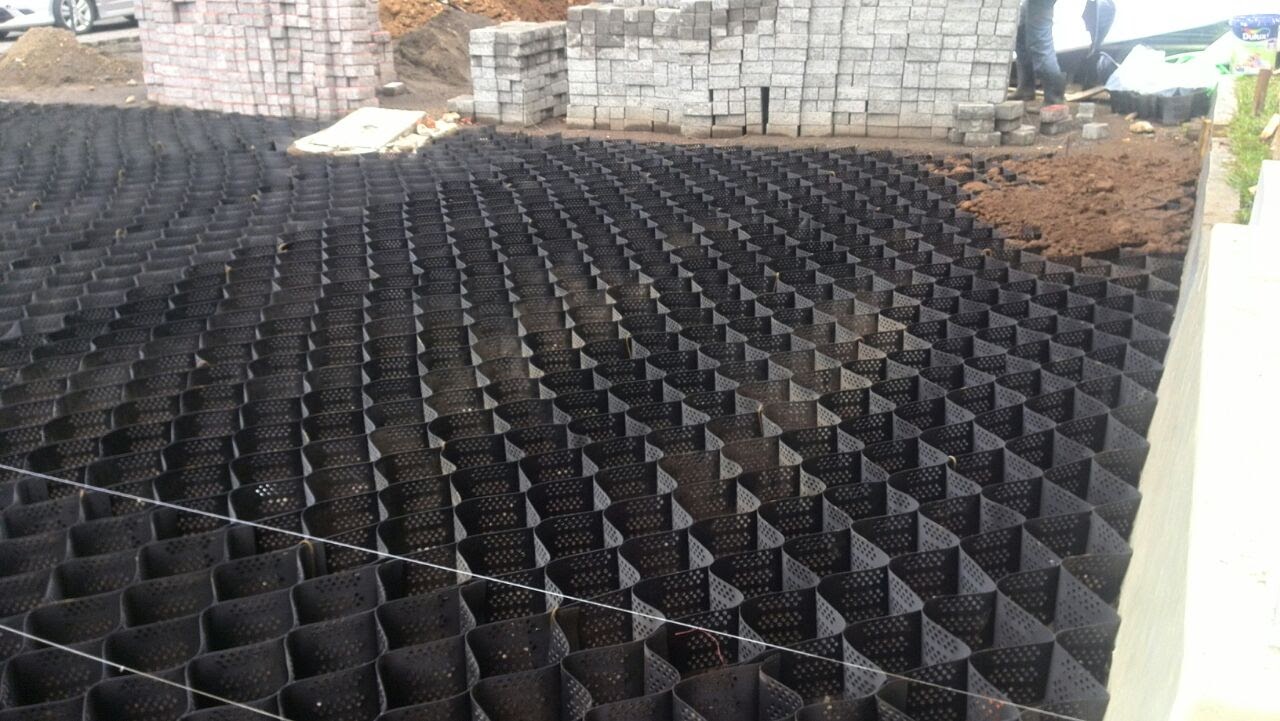
Terracing with geocell is an innovation widely used to manage landslide-prone land. This technique integrates a geocell structure that supports and confines soil, enabling terraces to remain stable and resistant to landslides. It can also minimize erosion risk, a major challenge in landslide-prone areas.
Geocell is a three-dimensional network usually made from strong polymers such as PP (Polypropylene) or PE (Polyethylene). Many users have experienced the benefits of this innovative measure because it reinforces soil structure and increases bearing capacity. Geocell simplifies terrace construction while providing two benefits: maintaining slope stability and improving resistance to extreme weather changes.
Terracing with geocell has proven effective in addressing soil and land-conservation challenges while increasing land-production capacity. Through the application of this technology,
Successful use of this technology depends on careful planning, quality materials, and proper management throughout the process. Make sure you use only high-quality geocell products from Petra Nusa Elshada so terrace construction delivers good results. Petra Nusa Elshada offers a range of high-quality geosynthetic materials at affordable prices. Contact Petra Nusa Elshada today for consultation and orders.
Public Education and Participation in Landslide Prevention
Increasing public awareness is a major element of landslide prevention. As the principal actors in the field, communities must participate actively in educational and training activities. They can then recognize landslide hazards and take preventive measures independently or with others.
Continuous education strengthens public understanding of the importance of environmental protection. This capability will become a major strength in confronting landslide threats. These activities require support from governments, educational institutions, and social organizations.
Awareness campaigns, training in simple technologies, and effective information sharing should be conducted regularly. Television, social media, and direct discussion forums can all be effective channels for distributing this important information.
Community Involvement in Environmental Management
Active community participation in environmental management is key to successful landslide prevention. Communities should receive a complete understanding of hazards and simple solutions. Landslide-prone areas must be managed collectively so the benefits can be sustained over the long term.
This management includes reforestation and cleaning drainage channels. Communities should also be empowered to independently monitor potential landslide risks around them. Such awareness will foster ownership of and responsibility for the surrounding environment.
The Role of Government and Related Institutions
Governments play a major role in advancing policies that support landslide prevention. Through regulations, environmentally responsible infrastructure development, and budget allocations for relevant programs, governments can help protect communities from disaster risk.
Cooperation among government agencies, academic institutions, and social organizations is also essential for creating an effective prevention system. This coordination will accelerate public outreach and empowerment.
FAQs About Landslide Prevention
What are the main factors causing landslides?
The main factors include heavy rainfall, unstable soil conditions, extremely steep slopes, and human activities such as deforestation and development without careful environmental planning.
How should soil-binding vegetation be planted?
Plants should suit local environmental conditions. Fast-growing species with strong roots are ideal. They should be planted systematically and maintained regularly so they reinforce the soil and prevent landslides.
Which engineering innovations are used to prevent landslides?
Innovative techniques include retaining walls, terracing, geocell, and robust earth-retaining infrastructure. The approach should match local geographic conditions and risk levels.
What role can communities play in landslide prevention?
Communities can participate actively through education, environmental conservation, and independent management of vulnerable areas. This participation is essential for prevention strategies to operate effectively and smoothly.
Why is public education important for landslide prevention?
Education strengthens public understanding of landslide hazards and solutions and encourages real, independent action. Greater awareness can minimize the risk of losses.
Conclusion
Landslide prevention is an urgent measure for safeguarding community life and environmental sustainability. Strategies involving greater understanding, infrastructure and technology development, and active public participation can substantially minimize risk.
These strategies must be supported by education, collaborative environmental management, and current technology. Such measures not only reduce losses from landslides but also build public awareness of how to live in harmony with nature.
By understanding and implementing landslide prevention effectively, we can create a safer, more sustainable environment for future generations. Collaboration among communities, government, and the private sector is the key to developing innovative solutions for increasingly complex landslide threats.
Other Articles

How to Choose Geosynthetics for Biogas Containment
Biogas from waste stabilization ponds, typically used to treat wastewater from livestock farms and industry, is a smart, sustainable and environmentally responsible choice. A key component of these systems is the geosynthetics for biogas sealing. Why is HDPE geomembrane the right choice? The value of capturing biogas is becoming clearer as the energy crisis and […]

How to Weld Geomembrane: Extrusion and Fusion
How to weld geomembrane. Geomembrane can be made from several materials, but the most common and popular types in Indonesia are High Density Polyethylene (HDPE) and Low Density Polyethylene (LDPE). They are impermeable (waterproof) and are commonly used to protect bases or slopes and to contain liquids or water. For example, geomembrane is used to […]