


Geotextile Manufacturing Process in the Factory

Non-woven and woven geotextiles are the most widely and frequently used geosynthetic products in construction. Geotextile can be used for reinforcement, filtration, stabilisation and separation. So what does the geotextile manufacturing process look like?
Polyester and polypropylene are the main raw materials used to make geotextile products; non-woven geotextile and woven geotextile basically use the same raw materials. However, non-woven products use more polyester in the mix, while woven geotextile is the other way round.
Polypropylene is essential as the raw material for woven geotextile because the resulting product is better and stronger, whereas non-woven geotextile is made from polypropylene as well as polyester. In comparison, polypropylene geotextile has better quality and strength than polyester geotextile.
Woven Geotextile
Woven geotextile looks like a polypropylene sack, formed and woven in modern factories using a cross-weaving technique. It is available in one colour: brownish black. It has better tensile strength than non-woven because it is inherently stiff.

This type of woven geotextile is very well suited for stabilisation and reinforcement in many kinds of modern construction work.
Non-Woven Geotextile
The finished non-woven geotextile product looks more like the carpet in our homes. It is produced with good, modern automated factory machines, creating non-woven geotextile with maximum density and compactness.

Geotextile manufacturing process in the factory
Its tensile strength performs reasonably well, and it is highly flexible, so it can adapt to the installation site. Non-woven geotextile is better suited as a filtration and separation material in many types of modern construction work.
Geotextile is one of the geosynthetic products sold by Petra Nusa Elshada, which works with several of the best factories. With the new machine technology these factories own, they produce high-quality products.
Other Articles

Geobag Standard Specifications
According to Bina Marga (Directorate General of Highways) regulation SKh 1.3.13.2, there are several geobag specifications you should know: Geobags must be made from polypropylene fibers (woven/non-woven). Geobags must be resistant to chemicals that could damage their properties. Geobags must be UV resistant, withstand submersion in water, and withstand the weight of the sand fill […]
Corrugated HDPE Pipe and Its Uses
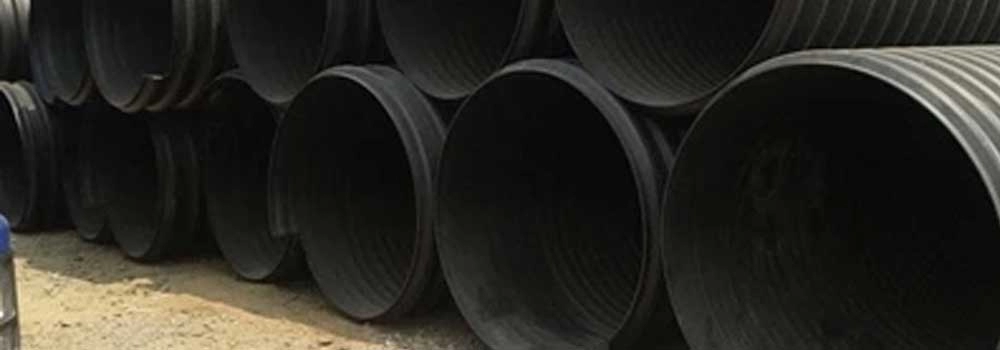
Corrugated Pipe Corrugated HDPE pipe is a type of pipe often used in building construction and other types of construction work. “Corrugated” means wavy or ridged. Corrugated HDPE pipe is made from high density (HD) polyethylene (PE) and has a ridged shape, which is why it is also known as profiled pipe; corrugated HDPE pipe […]