


Non-Woven Geotextile: Raw Materials and Functions
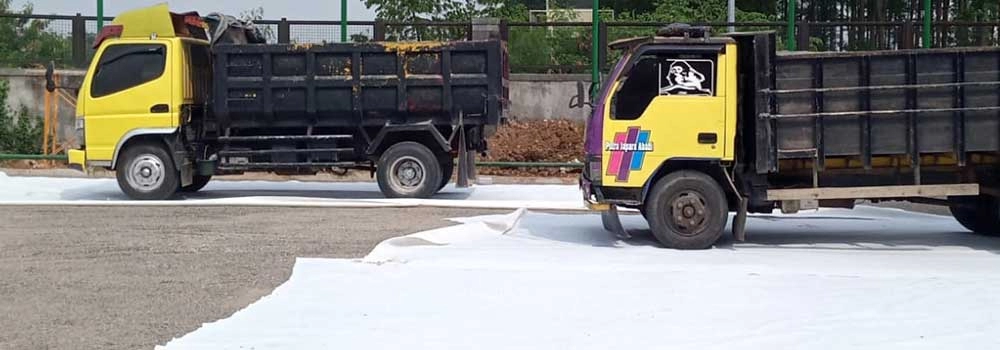
Civil engineers are certainly familiar with geotextile, a flexible, porous sheet material. There are two types of this material: non woven geotextile and woven geotextile.
What is non woven geotextile, what are the non-woven geotextile functions, and how does it work? This article explains it in more depth and detail.

What Is Non-Woven Geotextile?
Geotextile is a synthetic sheet with pores that make it permeable and flexible. It is generally used to stabilize the subgrade in civil engineering works.
The price of non woven geotextile per m2 varies depending on how it is made and what it is made of. Price depends on quality and process, because each material has a different composition.
As mentioned earlier, there are two types of geotextile: non woven and woven. Woven geotextile is produced by weaving material made from PP (Polypropylene) or PET (Polyester).
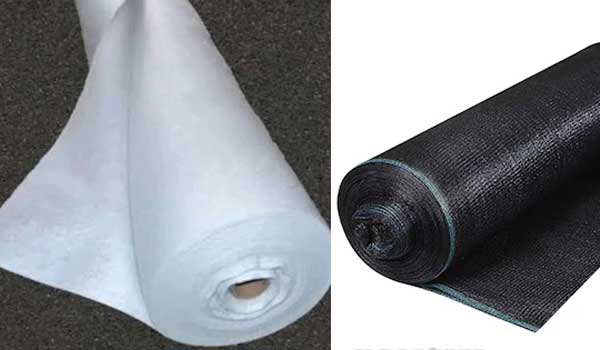
The finished product looks like a woven rice sack but is sturdier, stronger, tear-resistant and durable. Non woven geotextile, on the other hand, is a sheet that is not made by weaving but through chemical, thermal and mechanical processes.
This technical combination is produced with high-tech machinery. The base material is Polyester Fibre or Polypropylene.
Made from these materials, it physically looks more like a carpet, which is why many people call it “road carpet”.
Raw Materials of Non-Woven Geotextile
In terms of raw materials, both woven geotextile and non woven geotextile are produced from two different types of material. Each has different characteristics, with its own advantages.
Product weights vary according to need, from 200 grams to 250 grams and more. For a clearer picture of the materials used, see below.
Natural
Natural materials have been used since ancient times, especially in Ancient Egypt. Back then, natural plant fibers were used as an additional material in construction along the River Nile.
The characteristics of natural materials include:
- Natural fibers come from natural sources such as plants (leaves, bark and seeds), minerals and animal materials.
- Natural fibers have fairly good durability.
- The fibers are strong and long-lasting.
- The fibers are biodegradable, meaning they decompose naturally and leave a very small carbon footprint.
- They are environmentally friendly natural materials.
- Examples include 200-gram non woven geotextile in special sizes made from jute, coir, sisal and hemp fibers.
Today, natural materials are used less and less for geotextiles, because they are less efficient and require materials that are hard to obtain.
Synthetic
The next type of geotextile material is synthetic, made from man-made fibers. Its specifications and characteristics differ slightly from natural materials:
- These materials are known as geosynthetics. Not every material is a geosynthetic, but geotextiles are one type of geosynthetic.
- Two synthetic materials are commonly used: PP (Polypropylene) and PET (Polyester).
- Besides PP and PET, other alternatives include Polyamide and Polyethylene.
Synthetic fibers are now used far more often because they are practical and much cheaper. Some non woven products also blend natural and synthetic materials.
How Non-Woven Geotextile Is Made
Producing non woven geotextile sheets involves a fairly complex manufacturing process. There are quite a few stages to achieve the best results for market needs.
To make the manufacturing technique clearer, here is the full process.

Raw Material Preparation
The first step is preparing all the raw materials. The raw material, in the form of polymer pellets or flakes, is then brought to the extruder feed section.
Extrusion
Once collected in the extruder, it is time for extrusion. The polymer raw material is mixed with other additives such as stabilizers, resin modifiers, colorants and other additives.
When everything is ready, all the materials are melted in the extruder. The extruder must be set up correctly by experts so the process runs well. Large-scale production usually uses large extruders.
Fiber Spinning
The mixture of polymer and other substances becomes a liquid resin that is pumped through channels. The resin is heated and then moves to a distributor that leads directly to the fiber spinning machine.
The machine consists of perforated plates arranged in special rows. The resin comes out through the many small holes of the spinneret plate and begins to form filaments. Filaments are formed continuously until the polymer mixture runs out.
Attenuation
Attenuation can also be called the cooling zone. The filaments move down into the cooling section below.
As they pass through, the filaments gradually cool and solidify. Filaments that started out as liquid automatically harden into yarn that can be spun.
Filament Web Formation
The next process is forming the filament web, which is just as complex. So it is no surprise that 400-gram non woven geotextile and other grades are somewhat expensive. As the filaments solidify, they are laid down randomly, moving and forming a porous web.
Underneath, a vacuum works to form the filament web and remove air during the extrusion process.
Needle Punch
The filament web is then carried to the needle section. The needle punch process perforates the filaments and interlocks the fibers inside.
Winding
The bonded, porous yarn forms a large fabric sheet that then passes through a slitting section. Both edges of the sheet are trimmed to remove rough, untidy edges left by the manufacturing process.
Trimming produces very neat geotextile sheets, which are then wound onto larger rolls. The final process is complete, and the sheets are neatly packed in special packaging.
Once the packaging is complete and meets standards, it can be shipped quickly to distributors.
Non-Woven Geotextile Functions
There are physical differences between non woven and woven geotextile that make them easy to tell apart. Woven geotextile has coarser fibers, like a burlap sack, while non woven looks more like a carpet, especially when it is still in large sheets.
The main functions of non woven geotextile are drainage, filtration and separation. All three stem from the characteristics of non woven: porous and permeable, with a dense surface and small pores.

Its micro-pores let liquids pass through the material while preventing solids from simply slipping through. These characteristics show that, in general, non woven is used in projects involving water and gas.
In more detail, here are the functions of non woven geotextile.
Drainage
The main function of non woven in drainage projects is to act as a passive element that conveys liquids or gases. In a drainage system, non woven material can work on its own without needing any other additional substances.
However, to work at its best, a drainage core can be added. Combining a drainage core with the micro-pores of non woven material increases the water-carrying capacity of the drain.
A combination of porous non woven with a drainage core is called geocomposite drainage. Besides maximizing water flow, it keeps discharge running smoothly.
Filtration
The next function of non woven geotextile is to act as a filter, or filtration. This second function holds back fine aggregate particles. Filtration prevents fine particles from being scoured or washed out.
During filtration, the two elements, aggregate and liquid, are automatically separated. However, this separation does not damage the original structure, so it remains safe.
The history of filtration goes back to the 1960s. Geotextiles were used most heavily in the Netherlands, because 50% of the country lies below sea level.
This is why tidal flooding often enters the land directly there. To keep tidal flooding from getting worse, geotextile was added to the structure of dams along the coast.
This structure protects against tidal flooding so the land is not further eroded, let alone submerged.
Separation
The selling price of non woven geotextile is fairly substantial, but it is matched by its third function: separation. Non woven is used to separate two soil layers with different characteristics.
The way it works is quite simple: adding non woven geotextile as a separator keeps the fine soil layer from spreading everywhere. This means the fine soil cannot enter the permeable granular layer.
What is the benefit? The fine soil layer is not easily washed away by water. The fine soil stays where it was and is automatically kept from mixing with other layers of different particle sizes.
With non woven material in place, mixing of soil layers with different characteristics is effectively avoided. Separation with non woven geotextile contributes to the long-term strength and stability of the construction.
The simplest application is in foundations for highways and railway tracks. It also makes dam walls and sea dikes sturdier and longer lasting.
Advantages of Non-Woven Geotextile
Many people wonder how much non woven geotextile costs. Once again, the answer depends on the type, raw material and size. Price is linked to the quality, manufacturing technique and advantages of the geotextile product.
Non woven has many advantages, as it is highly resistant to mechanical damage and has excellent permeability. See the details below:
Permeable
Non woven material is permeable, letting water through at a fairly high flow rate.
Multi-Functional
Non woven is very well suited for drainage, filtration and separation, making construction projects sturdier and results more optimal.
UV Resistant
The base materials used make non woven resistant to ultraviolet radiation.
Economical Price
There is a price difference between non woven and woven: non woven is more economical than woven geotextile. A lower price naturally reduces the cost of procuring construction materials.
Room for Continued Development
As technology advances, non woven materials are developing rapidly too. One advantage of non woven technology is that it can be produced using nanotechnology.
Nanotechnology focuses on separation and filtration using nano clay and nano fiber. Nano fiber has a remarkable effect because it is more environmentally friendly and therefore safe to use.
In addition, non woven geotextile is generally produced in white and looks clean.
Applications of Non-Woven Geotextile
There are several size options, such as 150 gr x 4m x 100m non woven geotextile and others. Each size can be matched to the construction needs of the project.
In general, non woven is used for applications such as:
Projects That Require Permeability
As explained, non woven has fairly high permeability because it is porous. It is therefore usually used in projects that require soil separation.
Drainage Filters
In line with its main drainage and filtration functions, non woven can be used in underground drainage construction, particularly subsurface drains using aggregate with or without pipes.
Construction Separation Layer
Another application is as a separator for rock bound and rip-rap construction in reclamation, usually for river basin or marine structures.
Soil Reinforcement
Soil reinforcement is used to build steeper slopes in layers.
Non woven geotextile is very useful for many types of construction. No wonder so many people are looking for it.
To get the best quality product, you should buy from a trusted supplier at an affordable price. Do not end up buying a product that looks attractive but turns out to be of poor quality.
A Trusted, Professional Non-Woven Geotextile Supplier
Our top recommendation when looking for leading geosynthetic products is Petra Nusa Elshada, offering quality products and a professional service team. For full information, visit https://petrane.co.id/
Petra Nusa Elshada has been active in the geotextile business since 2015, serving customers from many sectors.
A complete range of products is available, including geomembrane, geocell, geotube, geobag, woven and non woven geotextile, and much more.
What are the advantages of this geosynthetics supplier?
The Best Service
Petra is committed to providing the best service to its customers. All the information customers need is communicated clearly, and every question about their requirements is answered well.
Consultation Available
Customers can also request a consultation, which will be handled by a professional team to find the best solution.
Professional Team
Petra has a professional team with more than 20 years of experience. Having served many clients from many sectors, the team is highly skilled at handling a wide range of problems.
Quality Products
Our geotextile products are high quality, with many advantages, and environmentally friendly. Quotes are very affordable and priced per m2, so they are not a burden for customers.
On-Time Delivery
Need it fast but the goods arrive late? That will not happen with Petra, because every order is shipped on schedule.
Customers can easily consult and order the goods they need, and the goods will arrive at the destination address as agreed.
Closing
Non woven geotextile is a sheet made through high-tech thermal, chemical and mechanical processes. It is generally used in civil engineering construction. For quality products, buy from a trusted, professional supplier.
Other Articles

The Cost of Using Geocell vs Conventional Pavement
Geocell is a cellular confinement system, a 3D geosynthetic for road reinforcement. Looking at the cost of using geocell, this technology can cut aggregate costs by 30%-40% compared with conventional pavement systems. An analytical calculation gives the design thickness when using geocell. You can contact us at +62 821-2383-4360 for a free consultation. Based […]

What Is Geopipe / HDPE Corrugated Pipe?
What Is Geopipe / HDPE Corrugated Pipe? HDPE Corrugated Pipe, also known as geopipe, is a pipe with a corrugated wall structure made from high-density polyethylene. This type of pipe is commonly used for drainage systems, infiltration systems and water channels. Contact us The corrugated structure makes the pipe very flexible and resistant to pressure […]
Geotextile Price 2026: Types and Benefits
Introduction: Geotextile, a Smart Solution for Modern Construction Projects Efficiency and durability are essential in construction and infrastructure. One revolutionary material that plays a major role in achieving these goals is geotextile. If you are planning a project, whether road reinforcement, slope stabilization, or a drainage system, understanding geotextile—including where to buy geotextile and the […]