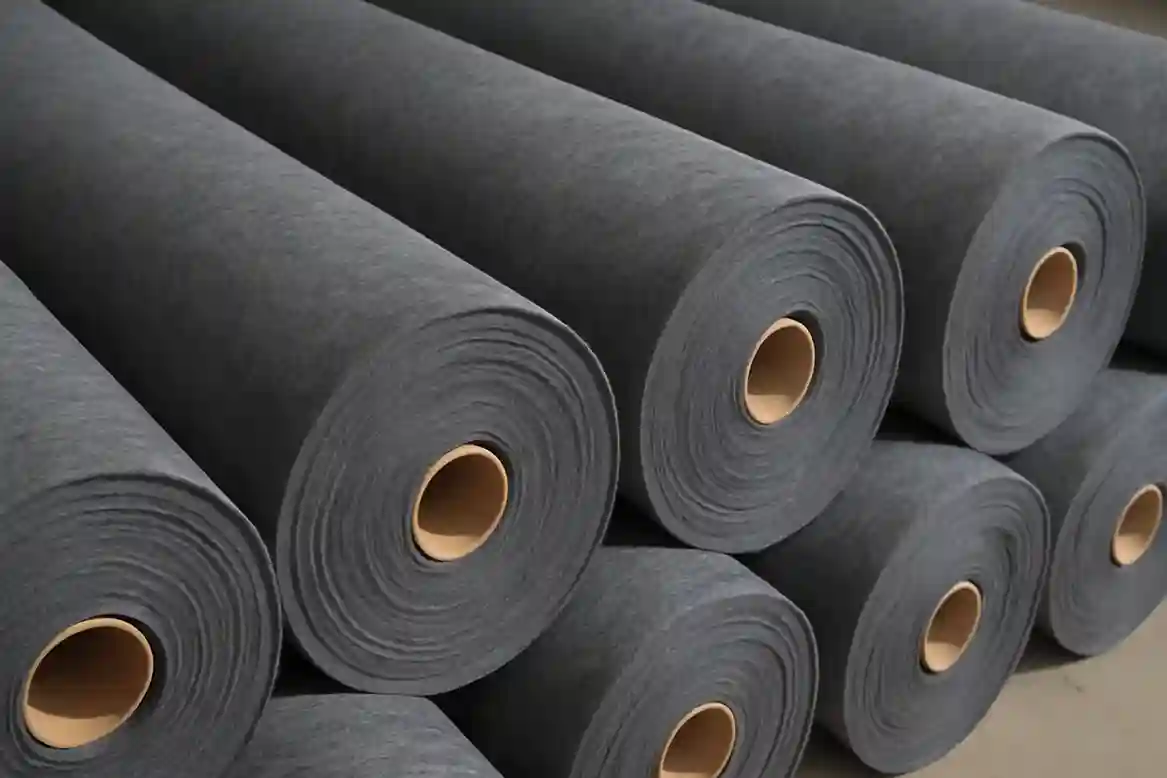
Woven and Non-Woven Fabric Functions

Woven and non-woven fabrics are widely used in various industries. Both are made from the same base material, polyester, but they have different characteristics. To understand non-woven fabric functions and woven fabric applications, first consider how the two types differ.

In appearance, non-woven fabric has non-interlaced fibers and is usually sold in white. This type resembles household carpet fabric. Woven fabric has an interlaced structure that looks similar to a plastic rice sack and is generally sold in black.

Woven and Non-Woven Fabric Functions
The functions of non-woven and woven fabrics differ even though both are made from polyester. In projects and civil engineering, non-woven fabric is widely used as a separator and filter.
This fabric can filter water as it flows into the soil and can also wrap drainage pipes. Woven fabric is commonly used to stabilize soft soil or as a separator between soil and water, thereby strengthening a project structure.
Related: Geotextile Uses for Various Functions
Woven fabric has approximately twice the tensile strength of non-woven fabric. Because of this strength, many civil engineering designs use woven fabric rather than non-woven fabric for stabilization.
Non-Woven Fabric Price
The price of non-woven fabric depends on its size and the distributor. Non-woven fabric is usually less expensive than woven fabric. Product quality also depends on the brand and manufacturing process. To obtain a quality product, choose a trusted fabric manufacturer.
Other Articles
Understanding the Modern Landfill: More Than a Garbage Pile!
Hello, Petra friends! Have you ever traveled outside the city and seen a vast area filled with mountains of waste? Your first thought may have been, “Wow, that is filthy.” But did you know that in today’s modern world, a waste-disposal site, commonly called a Landfill , is not as simple as “dump and pile”? […]

Uniaxial Geogrid: Complete Guide and Benefits
The term geogrid may sound unfamiliar to laypeople. Geogrid is a perforated, raft-like sheet used to strengthen soil structure. There are two types of geogrid: uniaxial geogrid and biaxial geogrid. Uniaxial geogrid has an elongated shape and is manufactured as an integral unit. This type of geogrid is more often installed on steep slopes that […]