HDPE Geomembrane Reservoir Pond for Palm Oil in Paser
Background
Paser has rather unusual soil characteristics. In some spots, the soil has high permeability (the ability to absorb water). In other words, if you simply dig a hole and turn it into a pond without a protective liner, the water you worked so hard to collect from rainfall or river flow will seep into the ground before it can ever be channelled to the palm oil fields. That is exactly why a geomembrane reservoir pond is the preferred solution here.
Beyond seepage, the risk of groundwater contamination from waste or fertilizer chemicals is also a serious concern for companies that uphold RSPO (Roundtable on Sustainable Palm Oil) standards. That is why conventional ponds are no longer a relevant solution. We need something that is impermeable (watertight) and tough.
The Main Problem: Leaks and High Maintenance
Before switching to HDPE Geomembrane, many plantations relied on earthen ponds or cement/concrete linings. The problems:
- Earthen ponds: Water levels drop quickly due to infiltration. The soil also erodes easily, which causes the pond to silt up.
- Concrete/cement: Installation costs are very high in remote areas such as Paser (shipping cement there is expensive), and concrete is prone to cracking from ground movement (land subsidence), which is common in Kalimantan.
The Solution: Why HDPE Geomembrane for a Geomembrane Reservoir Pond?
For this project in Paser, we recommended HDPE (High-Density Polyethylene) Geomembrane. Why? Because this material offers three key technical advantages:
- Chemical resistance: Resistant to acids and fertilizers that may be present in the plantation’s water circulation.
- Durability: Outstanding resistance to UV rays (crucial, because the Kalimantan sun is fierce, as you know).
- Flexibility: Unlike rigid concrete, HDPE geomembrane is elastic. If there is minor ground movement, the liner will not tear or crack.
Technical Breakdown: The Installation Process on Site
Now for the part you have been waiting for: how is the work actually done? On the Paser project, we followed international standard procedures to get the best possible result.
1. Subgrade Preparation (Pond Base)
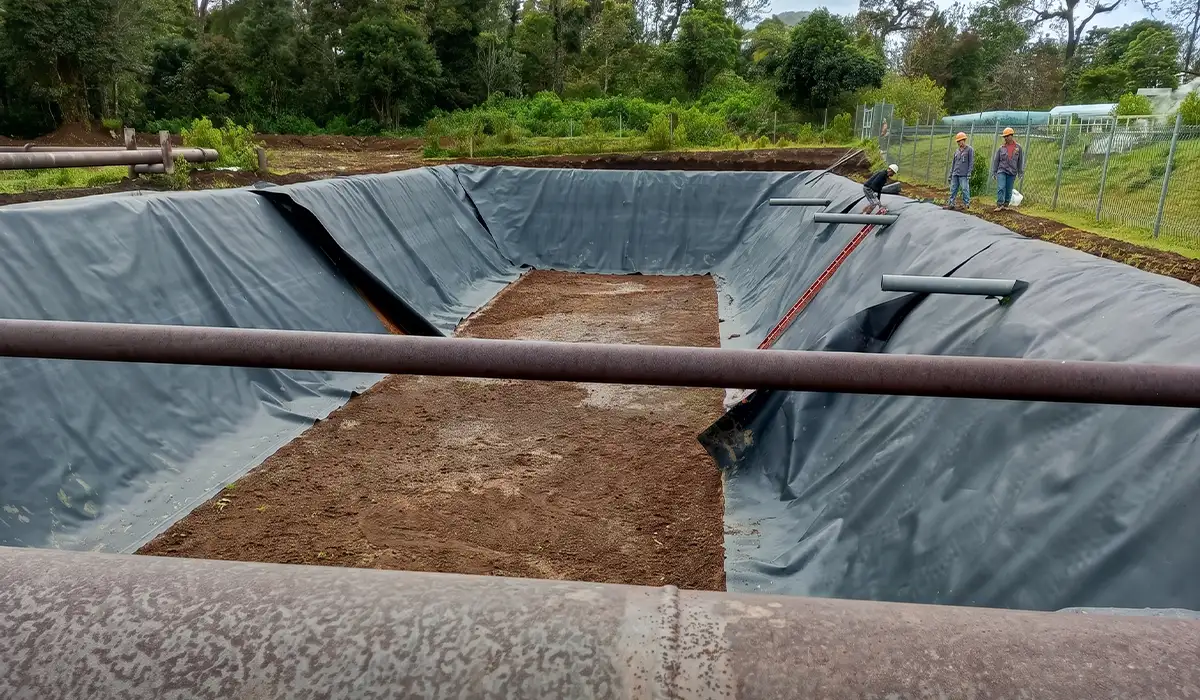
This is the most critical step. The ground surface must be cleared of sharp objects such as stones, tree roots or leftover palm trunks. You must make sure the surface is truly level and compacted. If the soil is too rough, we usually add a layer of Non-Woven Geotextile as a cushion so the geomembrane cannot be punctured from below.
2. Digging the Anchor Trench
Around the rim of the pond, we dig a small trench measuring about 50 x 50 cm. What is it for? To “lock” the edges of the geomembrane so they do not slide into the pond when it is completely full or when strong winds blow.
3. Deployment
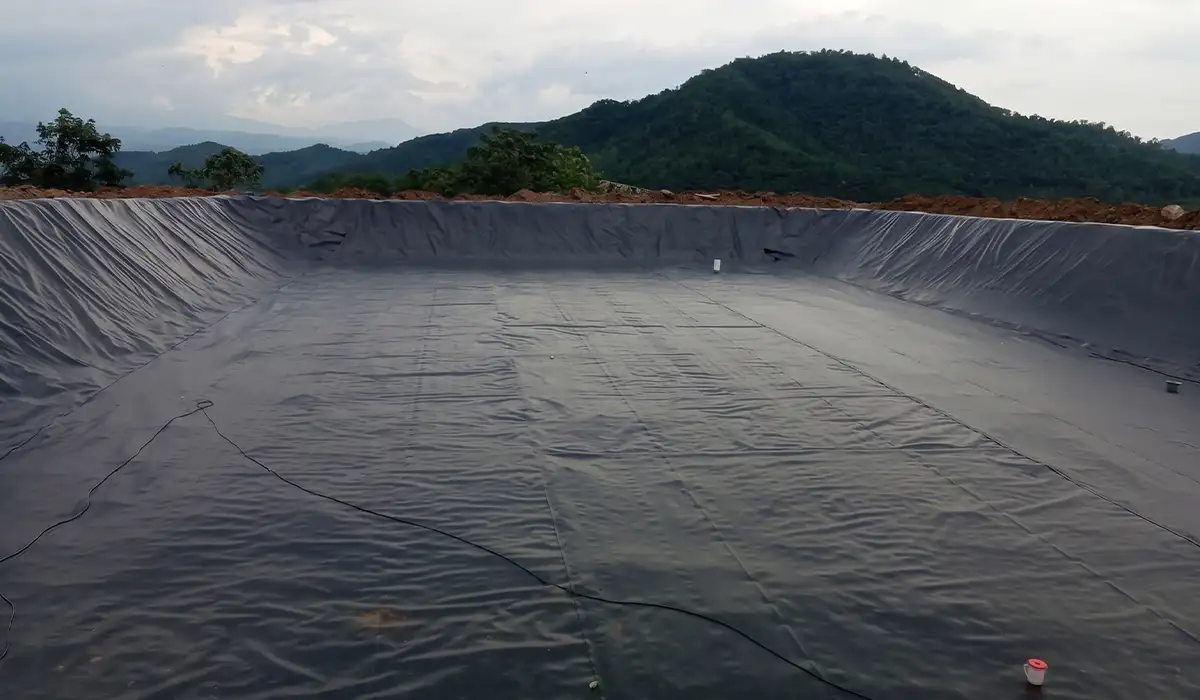
The geomembrane rolls, which can weigh several hundred kilograms, are unrolled with care. We have to account for wind direction and the overlap between sheets. We usually allow an overlap of around 10-15 cm for the seam area.
4. Seaming
This is the heart of any lining job. On the Paser project, we used two welding methods:
- Wedge Welding (Double Track): An automatic heated machine clamps two layers and melts them together. This method produces two weld tracks with an air channel between them for testing.
- Extrusion Welding: For areas the automatic machine cannot reach, such as pond corners or pipe joints (penetrations), we use an extrusion gun that lays down a bead of molten HDPE.
5. Quality Control (Leak Testing)
Once everything is joined, we do not fill the pond straight away. We carry out an Air Pressure Test. Air is pumped into the channel between the two wedge welding tracks. If the pressure holds steady for a set period, the seam is 100% watertight. For extrusion welds, we use a Vacuum Test. You have to make sure there is not a single leaking spot!
Results and Impact for the Plantation
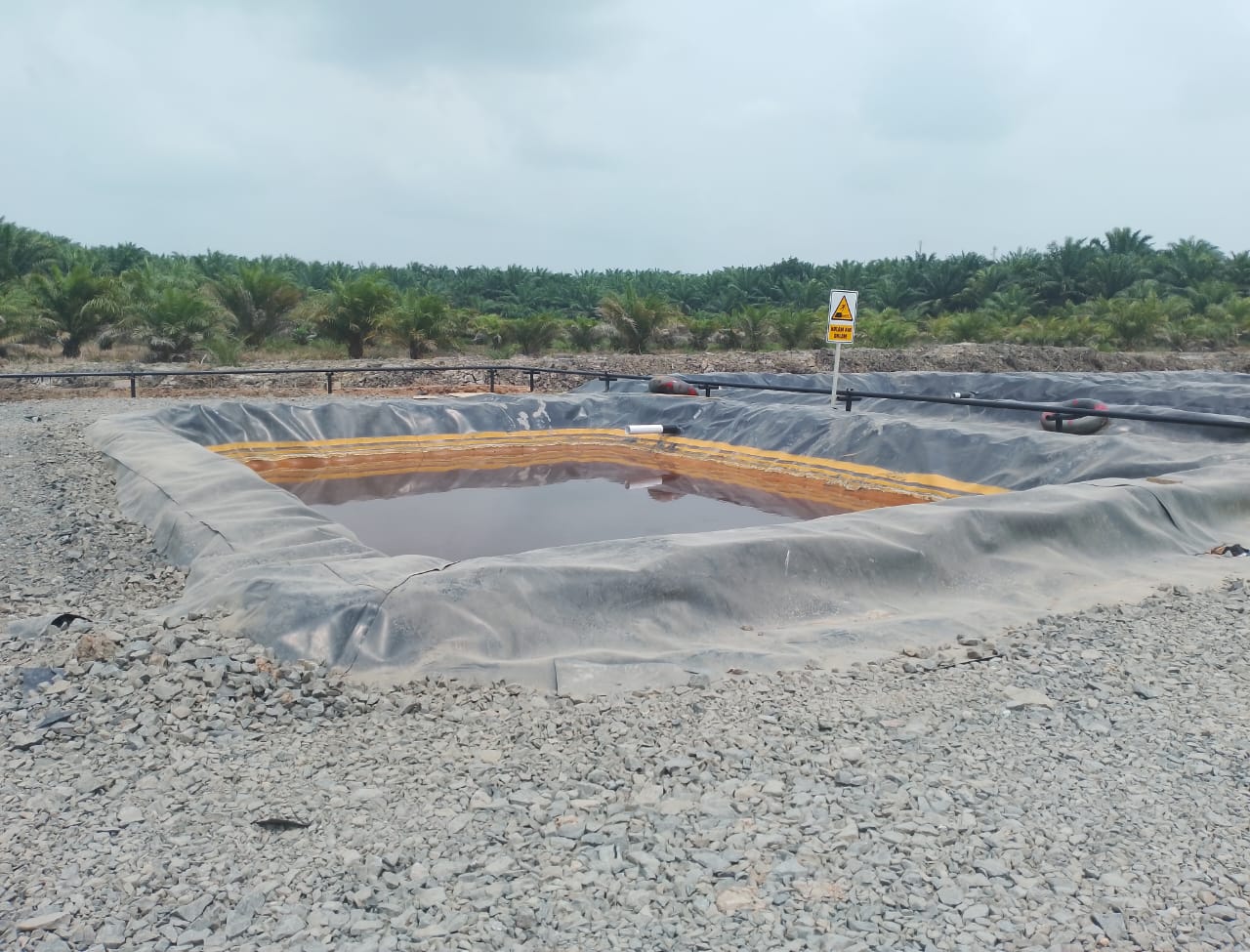
Once the reservoir pond in Paser was finished, the results were felt immediately. The company now has a stable water reserve all year round. No more mysterious water loss from seepage into the ground.
Operationally, HDPE Geomembrane is far cheaper than concrete in the long run. Maintenance is minimal, and its service life can exceed 20 years with proper care. It also helps the company meet its environmental sustainability criteria, because it prevents water from contaminating deeper soil layers.
Conclusion
This Paser project proves that geosynthetic technology is no longer a luxury but a basic necessity for efficient modern plantations. So if you manage a plantation and keep struggling with leaking ponds or unstable reservoir levels, HDPE Geomembrane from Petra Nusa Elshada is the most technically sound answer.