


What Is Channel Lining and Its Role in Drainage?

Understanding what channel lining is is important not only for engineers and urban planners but also for anyone who cares about sustainable, efficient water-resource management. This article provides a complete overview of the definition, functions, types, and benefits of channel lining as an innovative solution for problems in urban and rural drainage systems.
What is channel lining? Simply put, it refers to lining or relining the interior of drainage channels to improve the quality, service life, and functionality of a drainage system. The technology is increasingly used in many countries as a more efficient, environmentally friendly alternative to re-excavation or conventional structural repair.
Definition and Fundamentals of Channel Lining

In civil engineering and water-resource management, channel lining is known as a technique for coating the interior surfaces of drainage channels. In general, it aims to improve channels that are aging, damaged, or performing poorly because of corrosion, sedimentation, and erosion. Through this process, a new layer is applied to serve as the primary protection for the channel’s base material.
Channel lining not only addresses physical damage but also increases a channel’s capacity to carry water flows. The technology can also reduce leakage and prevent unwanted groundwater infiltration into the drainage system. This is especially important in regions with extreme climates, where soil conditions and temperature extremes can accelerate structural deterioration.
Drainage lining can be performed using various methods and materials according to requirements and geographic conditions. Put simply, channel lining is a protective layer that strengthens the physical structure while optimizing channel performance within the overall water-management system. A thorough understanding of this technique is therefore key to successful sustainable infrastructure development.
Types of Channel Lining and the Technologies Used
This section discusses the various types of channel lining used in the field, including their advantages and challenges.
Each lining type has unique characteristics suited to environmental conditions and the specific requirements of the drainage channel. Several key technologies are commonly used worldwide, including conventional and innovative methods.
Reinforced Concrete Lining

Reinforced concrete is a leading choice because of its high strength and ability to withstand pressure and deformation. It is usually applied in large channels that require additional structural strength.
The concrete is cast directly inside the existing channel and reinforced with steel to ensure resistance to loads and pressure from water flow. Reinforced concrete is popular because of its high strength and long service life.
However, reinforced concrete also presents challenges, including relatively long installation times and higher costs. Extreme temperatures and concrete maturity must also be monitored so the lining does not crack after curing.
Polymer and Resin Lining Technologies
Polymers and resins are increasingly popular because they are lightweight, elastic, and resistant to chemicals and corrosion. These technologies are usually applied by spraying or membrane transfer.
Polymer coatings can be applied directly to existing channel surfaces, avoiding major excavation and minimizing environmental damage. A significant advantage is that their thickness can be adapted to specific requirements and they offer strong adhesion.
Polymers and resins also resist acidic environments and other chemicals commonly found in urban and industrial settings. They can significantly extend channel life and reduce long-term maintenance costs.
Inflatable-Forming Lining Technique
This method uses a large balloon that is inflated inside the channel and then coated with a special material such as polyurethane. Once the material hardens, the balloon is removed, leaving a strong, smooth protective lining.
The technology is ideal for channels with complex shapes or hard-to-reach sections. The process is fast and causes minimal disruption to flow within the channel. A notable advantage is its ability to adapt to different shapes and sizes without the very high precision required by conventional construction methods.
The main challenge of inflatable forming is keeping the coating material stable while it hardens and adapting to pressure and ambient temperature during the process.
Comparison of Lining Methods
The table below summarizes the main characteristics of the lining types discussed:
| Lining Type | Strength | Flexibility | Cost | Installation Time | Common Applications |
| Reinforced concrete | High | Rigid | High | Long | Large channels and main drainage |
| Polymer and resin | Medium to high | Elastic | Medium | Short | Small and medium channels |
| Inflatable forming | Medium | Elastic | Medium | Very fast | Complex channels and retrofits |
Geomembrane Lining

Geomembrane channel lining is an innovative solution widely used in water and wastewater channel management. The technology offers major advantages in preventing leakage and environmental contamination while improving channel-system effectiveness.
This section discusses important aspects of geomembrane channel lining, including materials, installation, benefits, and challenges. Through this detailed explanation and analysis, readers can understand the crucial role of this technology in sustainable infrastructure development.
Definition and Uses of Geomembrane Channel Lining
Protection systems for water and wastewater channels are extremely important, especially for maintaining environmental quality and public health. This is where geomembrane channel lining plays a role as an effective liner that prevents leakage and reduces the negative effects of the waste flowing through the channel.
Geomembranes are made from high-quality plastic that can withstand pressure, chemicals, and many extreme environmental factors. Using a geomembrane not only improves channel durability but also prevents waste or water from seeping out, keeping surrounding areas safe and protected.
The main uses of geomembrane channel lining include industrial wastewater handling, irrigation-channel management, and flood-control projects. In each application, the geomembrane is an integral part of a sustainability- and efficiency-oriented solution. Selecting the right material and performing routine inspections are key to successful long-term application.
Types of Geomembranes for Channels
Selecting the right geomembrane type is important so it suits the practical requirements and environmental conditions of the channel. Various geomembranes are specially designed for optimal performance in different conditions and applications.
HDPE (High-Density Polyethylene)
HDPE geomembrane is one of the most common materials for channel lining because of its exceptional strength and durability. Its thickness varies, usually from 0.5 to 2 millimeters, depending on application requirements.
HDPE offers major advantages in mechanical strength and chemical resistance. It is therefore ideal for channels carrying industrial wastewater or water containing aggressive chemicals. Using HDPE for geomembrane channel lining provides long-term protection capable of withstanding harsh environments.
Another advantage of HDPE is relatively easy, fast installation thanks to its lightweight yet strong properties. The main challenge is sensitivity to extreme temperatures, which can cause deformation or damage if not handled correctly. Substrate selection and installation methods must therefore be adapted accordingly.
LDPE (Low-Density Polyethylene)
LDPE geomembrane offers greater flexibility and better resistance to deformation than HDPE. Usually thinner, this material is suitable for applications requiring high movement tolerance and adaptability.
LDPE is highly recommended for irrigation channels and small channels where flexibility is the main priority. The material conforms to soil contours and construction materials while providing optimal protection against damage from ground movement.
Another advantage of LDPE geomembrane channel lining is its resistance to extreme weather and UV radiation, making it suitable for exposed areas without additional protection. However, its lower strength compared with HDPE must be considered during design and installation to prevent future leaks.
PVC and EPDM Liners
Besides HDPE and LDPE, PVC (Polyvinyl Chloride) and EPDM (Ethylene Propylene Diene Monomer) liners are also widely used for channel lining. PVC is known for its flexibility and resistance to many chemicals and is easy to install and shape to the channel.
EPDM offers excellent resistance to extreme temperatures and ozone, making it suitable for channels exposed to large temperature fluctuations. Both materials are often used in specialized applications depending on environmental characteristics and specific project requirements.
The choice between PVC and EPDM liners must be based on a thorough analysis of the material properties required for the channel. Although both offer durability, routine maintenance and expanded inspections are needed to ensure optimal performance throughout their service life.
Geomembrane Channel-Lining Installation
Installing geomembrane channel lining requires expertise, careful planning, and the right equipment. Successful installation depends heavily on subgrade preparation, material handling, and correct installation techniques.
Before installation, the channel must be cleared of debris, soil, or other materials that could interfere with the work. The surface must then be leveled and checked for roughness and slope so the geomembrane can be installed properly without gaps or wrinkles.
During installation, geomembrane seams are usually welded to ensure watertightness and structural strength. This work must be performed by experienced specialists using appropriate welding techniques and temperature control to prevent material damage. Proper installation not only ensures durability but also minimizes leakage risk.
After installation, leak testing and a thorough visual inspection are performed. Pressure gauges and pneumatic testing are often used to confirm watertightness. This must be followed by routine maintenance and periodic monitoring so the lining system remains optimal over time.
Advantages and Challenges of Geomembrane Channel Lining
The advantages of geomembrane channel lining are especially clear in addressing problems related to leakage and contamination. The technology provides strong environmental protection, operational efficiency, and lower long-term maintenance costs.
Main Advantages
A major advantage of geomembranes is their high resistance to chemicals and extreme environmental conditions. Because they can withstand pressure loads and are not easily damaged, geomembranes provide long-term protection for the lined channel.
Geomembrane installation is also relatively fast compared with traditional lining methods that use soil or concrete. This time efficiency directly increases project productivity, accelerates commissioning, and reduces labor costs. With a waterproof layer that blocks contaminants, the risk of environmental pollution is significantly reduced.
Geomembranes also help reduce construction impacts on the surrounding environment. Without the need for major excavation or excessive ground hardening, the process is more environmentally friendly and sustainable.
Challenges
Despite its many advantages, geomembrane channel lining also presents challenges. One is the risk of damage from improper installation. Installation errors, such as folds or wrinkles, can cause leaks with serious consequences for system sustainability.
The sensitivity of polymer materials to high temperatures and ultraviolet radiation must also be considered so geomembrane service life is not shortened. Extreme environmental effects should be controlled through additional protection, such as UV-protective layers or temporary covers during installation.
Other constraints include relatively high initial costs and the need for routine inspection and maintenance. Although these costs are justified by the benefits, economic challenges remain an important factor in project decisions. Quality materials and skilled personnel are key to overcoming these challenges.
Benefits and Positive Effects of Channel Lining
Channel lining has highly positive effects on water-resource management and urban infrastructure development. Economically, the technology can save long-term costs by extending channel life and reducing routine maintenance and repair expenses.
Beyond economic benefits, sustainability and environmental conservation are also important. With a protective layer resistant to corrosion and sedimentation, soil and water contamination around the channel can be minimized. This is especially important in pollution-prone areas that need clean, safe water-management systems.
Another positive effect is an efficient increase in channel capacity. With an optimal protective layer, a channel can carry larger water volumes without physically expanding the structure. This helps address the floods and standing water that frequently occur in urban areas.
Overall, channel lining is an innovation that not only meets technical requirements but also supports sustainable, effective water management across many geographic and environmental conditions.
FAQs About Channel Lining
What are the main benefits of channel lining?
Channel lining increases channel life and strength, reduces maintenance costs, and improves water-carrying capacity effectively and efficiently.
Which materials are commonly used for channel lining?
Common materials include reinforced concrete, resins and polymers, and inflatable-formed materials such as polyurethane. Each offers advantages depending on requirements and site conditions.
Does channel lining require major excavation?
Not always. Some methods, such as polymer spraying and inflatable forming, can be performed without major excavation and cause minimal environmental disruption.
How long does channel lining usually last?
Service life depends heavily on the materials and methods used, ranging from 10 to 50 years with proper maintenance.
Is channel lining suitable for every geographic condition?
Mostly yes, but the technology and materials must be adapted to local conditions such as temperature, soil type, and corrosion levels.
Conclusion
Channel lining and its role in strengthening drainage systems should not be underestimated. The technology is not only a practical solution for structural damage but also part of a strategy to improve the efficiency and sustainability of water-resource management. With many technologies and materials available, channel-lining selection should be based on specific requirements, environmental conditions, and intended use. Innovation in this field will continue to strengthen water infrastructure so it can better withstand future challenges and support sustainable development.
This concludes the explanation of channel lining. Make sure you use only high-quality geomembranes from Petra Nusa Elshada for channel lining so your lining lasts and achieves the best quality.
Petra Nusa Elshada offers a range of high-quality geomembrane materials at affordable prices. Contact Petra Nusa Elshada today for consultation and orders.
Other Articles

2 mm HDPE Geomembrane Applications in Civil Construction
In civil construction, one material that is getting more and more attention is 2 mm HDPE geomembrane. It is known for withstanding extreme conditions and providing optimal protection for infrastructure. This article reviews the key aspects of 2 mm HDPE geomembrane. You will learn about the material’s characteristics and its benefits in modern construction projects. […]
Geocell: Benefits, Functions and Installation
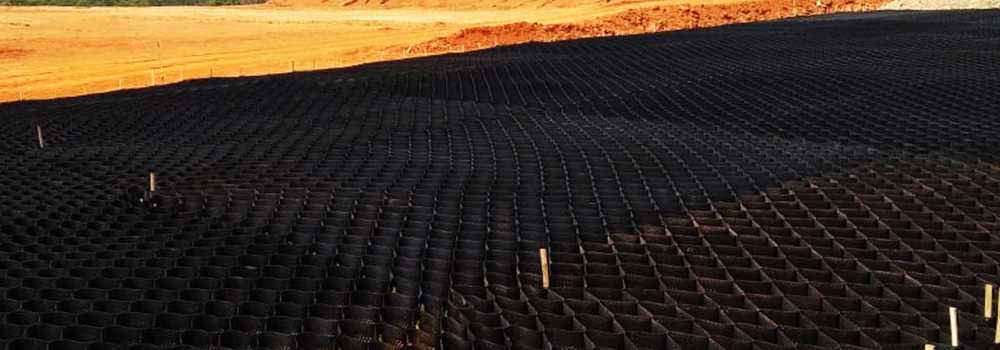
Geocell is a sheet made from high-density polyethylene (HDPE) formed into a honeycomb shape and joined together into a strong structure. The benefits of geocell are especially valuable in construction, including preventing the erosion that often occurs on slopes and reinforcing soft soil, typically in road building. Contact us Geocell Installation Geocell is installed at […]

Geotextile Selection: Key Factors to Consider
Geotextile selection requires several important considerations. Reviewing these key factors helps you make the right decision for a project. Consider the following factors: Function Determine the geotextile’s primary purpose: filtration, separation, reinforcement, drainage or erosion control. Ensuring that the selected geotextile matches the intended function is essential for optimal performance. Related: HDPE Geomembrane: Specifications and […]