


Soil Structure, Texture, and Solutions to Common Problems

Infrastructure development usually involves teams visiting a site to observe its current conditions. These visits assess road access, water sources, soil structure, soil type and texture, and potential problems associated with ground conditions.
In practice, soil is often weak and vulnerable to landslides or settlement. It may remain saturated and form wetlands, or construction may take place near a body of water. How can these problems be resolved? Which materials can improve inadequate ground conditions during construction? Let us discuss them.
What Is Soil Structure?

Experts provide several definitions of soil structure. Some describe it as the arrangement of soil particles, including sand, silt, and clay, bound together into aggregates or clumps. Others describe it as the arrangement of soil clumps into particular forms.
Based on these definitions, soil structure can be understood as a series of soil aggregates joined into a particular pattern through natural processes and human activity.
Before construction begins, the soil structure should be investigated to identify problems that might arise during the work. The effects of infrastructure development on the soil and surrounding environment must also be studied. This is important because many buildings and infrastructure projects occupy environmentally significant areas, such as water-catchment zones or buffer zones surrounding particular natural features.
Development planned in these areas can have major effects on the environment and nearby communities. A comprehensive investigation is needed to determine whether construction is feasible and to assess the effects after the infrastructure is built.
Benefits of Understanding Soil Structure
What should happen before construction starts? A soil-structure investigation. Its first benefit is identifying which activities are suitable for the site. For example, gravelly ground with a clay structure may be unsuitable for property construction without foundation adjustments.
Why is an investigation essential? Weak soil can trigger landslides and may not support property development. This type of ground is commonly found in mountains and hills. Its water content can leave it unable to resist strong gravitational loads. Even a single moderate rainfall event may trigger a landslide within a short time.

An introduction to soil structure, texture, and solutions to common problems
Building on such ground may require excavation followed by replacement with stronger fill. However, because the soil contains abundant water, it may be well suited to irrigation or agriculture. This is one reason plantations and farms producing various commodities are common in mountainous areas.
Anyone planning to purchase land for farming or plantations should examine its soil structure. Soil containing abundant organisms such as earthworms can be highly beneficial. These organisms naturally loosen the soil and produce nutrients needed by plants. What should be done when studying climate change in an area? Soil-structure research. This can help prevent natural disasters that may affect nearby communities and other living things.
What Factors Affect Soil Structure?
Several factors can influence soil-structure conditions, including the following:
Soil Organisms

The number of living organisms strongly influences soil structure. Many microorganisms produce acids and alter soil composition, affecting soil formation. Microbes and animals break down organic matter and return decomposition products, including animal and insect waste, adding organic material that supports soil fertility. However, underground animals such as worms or rodents can also alter the soil’s physical form and structure.
Climate
Climate and weather also affect soil structure. These factors influence nearby organisms and the formation of new soil. In areas with frequent rain, the ground tends to become soft and muddy because of abundant water. High-intensity rainfall can also flood the soil, creating habitat for various organisms.
Nevertheless, the cool climate and nutrient-rich soils of mountainous areas are suitable for cultivation, which is why tall trees are common there. By contrast, environments with very low nutrient and water content do not readily support living organisms, and the ground tends to be arid and cracked.
Soil Parent Material
Every soil has unique characteristics determined by its parent material, including color, texture, composition, and structure. Soil derived from red rock, for example, may retain the same red color, while soil rich in sand and rock generally appears lighter.
Topography
The topography of an area can also affect soil structure. Surface shape, slope, and position all influence soil formation. Soil in mountains or highlands often drains efficiently because steep or sloping terrain accelerates water flow.
What Are the Types of Soil Structure?
Soil structure has several types based on its characteristics and formation processes. Each is explained below.
Platy Soil

This soil structure forms plate-like layers stacked horizontally. It is generally found in compacted surface soil (topsoil) affected by mechanical pressure. It can also occur in heavy clay with high moisture content.
Granular Soil

This soil consists of coarse particles, such as sand and gravel, that are not strongly bonded. It differs from dense, sticky clay. Its large pores (macropores) allow air and water to move easily. Drainage is excellent, and the soil dries quickly after rain.
Columnar Soil

An introduction to soil structure, texture, and solutions to common problems
Columnar soil, also called a columnar soil structure, is a type in which soil particles form vertical pillars resembling columns. This structure usually develops in soil containing abundant sodium (Na), such as sodic or alkaline soil.
Crumb Soil

An introduction to soil structure, texture, and solutions to common problems
Crumb soil, also called a granular or crumb structure, is among the best structures for plant growth because it provides a strong balance of air, water, and root space.
Blocky Soil

An introduction to soil structure, texture, and solutions to common problems
This structure consists of rounded soil clumps resembling other block-like aggregates, but its outer edges are visible and sharper.
Prismatic Soil

An introduction to soil structure, texture, and solutions to common problems
Prismatic soil is a type with a long vertical prism or pillar structure, similar to a column but with a flat rather than rounded top. It is usually found in clay-rich soils with poor drainage.
What Is Soil Texture Like?
During a survey, the work team must consider both soil structure and texture. Soil texture varies according to its parent material and can be classified as follows:
Fine Soil
Fine-textured soil contains 37.5 percent clay, giving it small pores and a heavy, dense appearance. If a substantial amount of sand is added, however, the pores become larger.
Coarse Sandy Soil
Soil with high sand content occurs in areas with little rainfall, such as deserts, and generally has a coarse texture.
Medium-Textured Soil
In general, medium-textured soil has substantial sand content. Its sand texture varies according to climate and other variables. Drier environments usually produce more sand.
Geosynthetics as Solutions to Soil Problems
A site survey may reveal soil problems, but this does not necessarily mean construction is impossible. Geosynthetics provide solutions to many of these issues.
Geosynthetics are a relatively recent advance in infrastructure. Their use helps resolve problems that arise during project construction and can reduce workloads during implementation.
Because their properties are more uniform than those of natural materials and many variants are available, geosynthetics are widely used in infrastructure development. They are also generally lightweight, making them easy to transport and install and especially useful on difficult construction terrain.
Geosynthetic Types and Functions
Geosynthetics are divided into several types according to how they address ground problems. Materials used in various earth-construction works include the following:
Geocell

An introduction to soil structure, texture, and solutions to common problems
Many construction projects use geocell to support foundations because it strengthens the underlying soil and reduces settlement. Geocell is commonly used for infrastructure on hillsides or in mountainous areas.
Smooth and textured geocells perform different functions in construction. The smooth type has flexible, plain walls and is often used in bridge or toll-road construction to support vehicle loads.
Textured geocell, however, is used to strengthen foundations in areas with unstable soil. Its perforated surface forms a honeycomb-like system that confines fill material.
Geomembrane

An introduction to soil structure, texture, and solutions to common problems
Geomembrane is one of the geosynthetics most commonly used in Indonesia. Because it is impermeable, the material is often installed in waste-disposal facilities to prevent liquids and environmentally hazardous substances from seeping out.
Geonet

An introduction to soil structure, texture, and solutions to common problems
Geonet serves as a planar drainage material that reduces excess water in a given area. It is a geosynthetic formed from strands arranged with relatively open spacing.
Geomat

An introduction to soil structure, texture, and solutions to common problems
Geomat is widely used in construction projects on steep terrain. It is a rigid, carpet-like material made from wire that reinforces soil against landslides, particularly when structures are built above it.
This article explains soil structure. Make sure you use only high-quality geocell from Petra Nusa Elshada so soil-structure problems can be resolved with the best-quality materials.
Geotextile
Geotextile is a geosynthetic commonly used in infrastructure projects and is available in two forms: non-woven and woven geotextile. These materials consist of networks of fibers with complex three-dimensional structures.
Besides supporting subsurface drainage, geotextiles are highly useful for stabilizing slopes and roads. Non-woven geotextile is therefore often used when building new roads or railway lines through highlands or coastal reclamation areas. Its ability to support heavy loads is a principal reason for this use.

An introduction to soil structure, texture, and solutions to common problems
Woven geotextile is also made from complex fibers, but they are woven into a more regular structure. It is often used to stabilize soil beneath roads or pavements when opening routes through forests or undeveloped land, where ground conditions are frequently unstable and saturated.

An introduction to soil structure, texture, and solutions to common problems
This article explains soil structure. Make sure you use only high-quality geosynthetic products from Petra Nusa Elshada so your infrastructure achieves the best quality.
Petra Nusa Elshada offers a range of high-quality geosynthetic materials at affordable prices. Contact Petra Nusa Elshada today for consultation and orders.
Other Articles
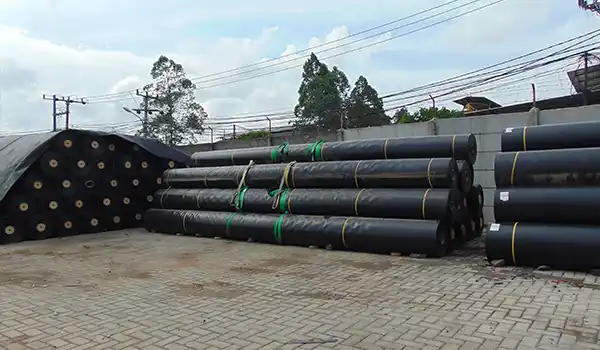
Trusted Shrimp Pond Geomembrane Distributor
Hello, Petra friends! How is your shrimp farm doing today? We hope its growth chart keeps trending upward. When we talk about the shrimp farming business, we are not only talking about quality fry or feed. There is one “silent hero” that very often determines the success of your harvests in the long run: Geomembrane. […]
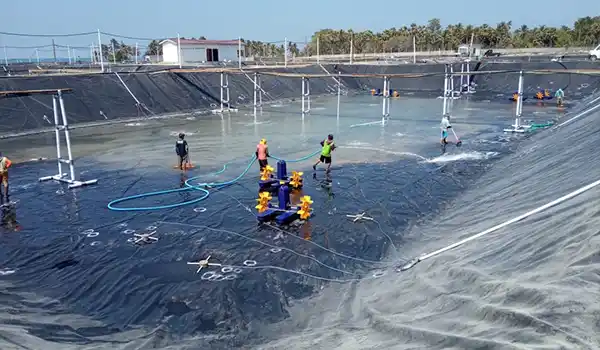
Choosing Geomembrane Thickness for Shrimp Ponds
Have you ever felt confused when choosing geomembrane thickness for a shrimp pond? As a modern pond farmer, you surely know that using geomembrane, especially one made from High-Density Polyethylene (HDPE), has become a mandatory standard for intensive and super-intensive shrimp farming. The goals are very clear: prevent leaks, maintain stable water quality and minimize […]

Soft Soil Improvement Methods
Soft soil improvement means increasing the bearing capacity of the soil itself so that it is good enough to carry the loads of the structures built on it. Several factors need to be considered when improving soil, including time efficiency, cost savings and other supporting factors. Several methods can be used to improve soft soil […]