The Role of Reservoirs in Development and Sustainability

Reservoirs are among the most important infrastructure innovations for human life. They are particularly suitable for an archipelagic country that needs efficient water-resource management. A reservoir not only stores water but also plays a strategic role in supporting agricultural irrigation, clean-water supply, hydroelectric power, and flood control. This article discusses the many functions, development history, challenges, and benefits of reservoirs.
Reservoirs are a core component of water-resource management systems. Given Indonesia’s large territory and climatic diversity, reservoirs are essential for ensuring sufficient water supplies throughout the year, especially in drought-prone areas or during long dry seasons. They also serve as centers for ecosystem management and support the livelihoods of surrounding communities.
The Importance of Reservoirs in Daily Life
Reservoirs within a region are truly multifunctional. They offer solutions to many development challenges, including clean-water shortages, food security, and electricity supply. Reservoirs also play an important role in reducing the impacts of natural disasters, particularly the floods and droughts that frequently affect many regions.
In general, reservoirs have a major effect on community life and regional economies. When reservoirs are managed successfully, sectors such as agriculture, industry, and energy can operate optimally. This is the main reason reservoir development continues to be promoted amid climate change and growing resource demands.
The Role of Reservoirs in Irrigation & Food Security

Agriculture is a major sector that depends heavily on reservoirs. Reservoirs provide a stable water source for irrigating rice fields and farmland, particularly in areas with long dry seasons. With optimal reservoir irrigation, production of rice and other agricultural commodities can increase significantly while reducing dependence on seasonal rainfall.
Besides increasing productivity, reservoirs can help reduce food-price volatility in local markets. With proper management, reservoir water reserves can be used during shortages so food-supply stability is maintained.
Renewable Energy from Reservoirs

As part of efforts to use renewable energy, reservoirs can become a primary source for hydroelectric power plants. Many reservoirs are equipped with turbines to generate electricity, helping meet regional power needs. Building hydropower plants at reservoirs can address electricity shortages, especially in remote and rural areas.
Beyond supplying energy, reservoir hydropower is an environmentally friendly alternative to fossil-fuel power plants. Its advantages include sustainable electricity generation and low carbon emissions, making reservoirs part of development strategies toward clean, sustainable energy.
History of Reservoir Development in Indonesia
Reservoir development in Indonesia has a long history, spanning the Dutch colonial period, independence, and the modern era. During the colonial period, several reservoirs were built to meet infrastructure needs and manage limited water resources.
After independence, reservoir development intensified as part of national development programs. Major projects such as the Jatiluhur, Saguling, and Gajah Mungkur reservoirs were developed to meet irrigation and electricity needs. These projects became a national effort to address water and energy shortages while improving community economies.
Jatiluhur Reservoir: A Symbol of Infrastructure Development
Jatiluhur Reservoir, located in West Java, is one of Indonesia’s oldest and largest reservoirs. Inaugurated in 1967, it became a symbol of Indonesia’s post-independence infrastructure achievements. Besides flood control and irrigation, Jatiluhur serves as a power-generation base supplying the national grid.
The history of Jatiluhur demonstrates the importance of international and domestic collaboration in creating world-class infrastructure. Its success offers valuable lessons in sustainable water-resource management and has inspired other reservoir developments in Indonesia.
Modern Reservoir Development
Over time, reservoir development has become more complex because of population growth, urbanization, and climate change. Modern reservoir projects must consider not only technical aspects but also social impacts.
In addition to strengthening infrastructure, reservoir development must protect the sustainability and well-being of surrounding communities. Modern technology and innovation in reservoir design and management are essential for meeting global challenges and long-term human needs.
Challenges and Impacts of Reservoir Management
Reservoir management faces many challenges that require innovative, collaborative solutions. One is sedimentation, which can significantly reduce storage capacity. Climate change also makes rainfall patterns unpredictable, affecting the stability of reservoir water supplies.
The impacts of reservoir construction must not be ignored. For example, a reservoir’s location may require community relocation or reduce natural habitats. Reservoir management must therefore consider both nature and the well-being of nearby communities.
Climate Change and Reservoir Water Availability

Climate change causes rainfall anomalies that directly affect reservoir water availability. Supplies become unstable and, even over short periods, unexpected droughts or floods may occur.
To address this, accurate water-management systems and appropriate technology can provide the best solutions.
Social and Environmental Impacts of Reservoirs

Reservoir construction often causes adverse social impacts, including relocation of villages within operational areas, loss of natural habitats, and changes to local ecosystems. These create social and environmental challenges.
Involving nearby communities in planning and construction is essential for maintaining social and economic sustainability. Sound environmental management is also needed so surrounding ecosystems remain balanced and communities can enjoy the reservoir’s benefits.
Reservoir Erosion

Sediment deposition on the reservoir bed is a major problem that reduces water-storage capacity. This sediment originates from erosion in upstream river catchments and surrounding areas. If a reservoir is not managed properly, sedimentation can cause it to lose its primary functions as water storage and flood control.
Sediment control involves erosion-control techniques that address soil erosion. This management is essential so the reservoir continues to perform optimally over the long term.
Reservoir Sediment Control

Dewatering technology for reservoir sediment is an increasingly common innovation for managing solid material deposited in reservoirs and dams. It offers an effective solution for reducing waste volumes, improving reservoir-management efficiency, and minimizing environmental damage.
Effective sediment management is an important challenge for water-resource managers and surrounding environments. Using geotextile tubes and reservoir dewatering techniques can make this process more precise and efficient.
Dewatering with Geotextile Tubes
Dewatering is a method of separating solids from water using large geotextile tubes that act as natural filters. These geotextile tubes are made from synthetic polymers with high resistance to pressure and extreme environmental conditions. The principle is to collect wet sediment inside the tube and dry it to produce solid material that is easy to transport or dispose of.

It is important to understand the basic process of dewatering with a Geotextile Tube . Sediment carried by reservoir water usually consists of mud, sand, and other very fine materials. When it is directed or pumped into a geotextile tube with a special pump, water gradually drains out through the tube’s pores while solids are retained.
As the process continues, sediment settles and forms a solid mass that fills the tube. This approach is more cost-effective and environmentally friendly.
Advantages of Geotextile Tubes for Dewatering
Geotextile tubes offer several advantages for reservoir sediment management, making them a popular choice in many regions. Besides efficiency, they are easy to apply and can be adapted to environmental conditions and sediment volumes. Their main advantages are as follows:
- High cost efficiency through reduced wet-waste volume,
- Environmentally friendly operation that minimizes liquid and solid pollution,
- Easy operation with controlled monitoring,
- Stable output that is ready for reuse or disposal.
Successful use of this technology depends on careful planning, quality materials, and proper management throughout the process. Make sure you use only high-quality geotextile tubes from Petra Nusa Elshada for effective dewatering results. Petra Nusa Elshada offers a range of high-quality geosynthetic materials at affordable prices. Contact Petra Nusa Elshada today for consultation and orders.
FAQs About Reservoirs and Their Management
What is the main function of a reservoir?
A reservoir’s main function is storing and managing water resources for irrigation, power generation, clean-water supply, and flood control.
How are reservoirs maintained?
Reservoirs are maintained through sound management, including sediment control, routine supervision and maintenance, and involvement of local communities in management.
What are the negative impacts of reservoir construction?
Negative impacts include community relocation, habitat loss, ecosystem changes, excessive sedimentation, and environmental damage when development is poorly regulated.
How does modern technology help reservoir management?
Modern technologies such as automated monitoring, GIS, and weather-forecasting models make reservoir management more optimal, efficient, and adaptive to climate change.
Can reservoirs cope with climate change?
Reservoirs can cope with climate change when they are managed innovatively, including through well-designed water-management systems.
Conclusion
A reservoir is an artificial lake created by impounding a river to store large volumes of water. Its main function is holding water reserves for the dry season and for purposes such as irrigation, drinking-water supply, flood control, and hydroelectric power. Reservoirs can also serve as tourist destinations, fish-farming sites, or conservation areas.
Other Articles
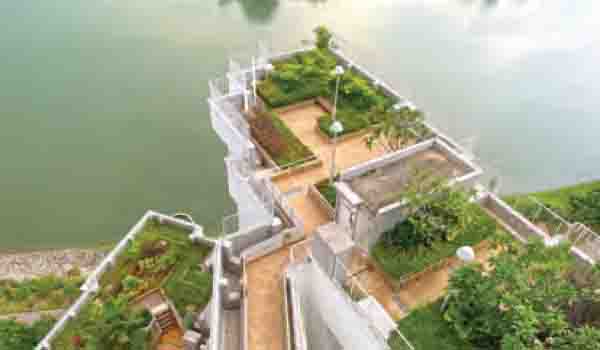
Roof Garden: A Cool, Attractive Urban Home Solution
Hello, Petra friends! Have you ever felt that city weather has become hotter and more oppressive lately? Green space is increasingly scarce, while concrete buildings keep multiplying. If you have a home with limited land but still want to enjoy a lush garden, a roof garden is the answer! It is not only a trend […]