


HDPE Spiral Pipe vs Concrete Culvert: Which Should You Choose?
Hello, civil engineers, contractors, and project owners struggling with drainage systems. “Water channels” are often treated as trivial, yet choosing the wrong material can drain your budget in the future through endless maintenance costs.
For years, we have been accustomed to Concrete Culverts (RCP – Reinforced Concrete Pipe). They feel like a mandatory item in every infrastructure project in Indonesia. But times change, and technology keeps advancing. A strong challenger has now emerged: HDPE Spiral Pipe (High Density Polyethylene).
The question is whether this newcomer merely looks good or truly delivers performance that can beat concrete. Let us break down the comparison thoroughly so you make the right choice!
Getting Acquainted: The Classic vs the Modern
Before comparing them, we need to understand the characteristics of both materials.
Concrete Culvert
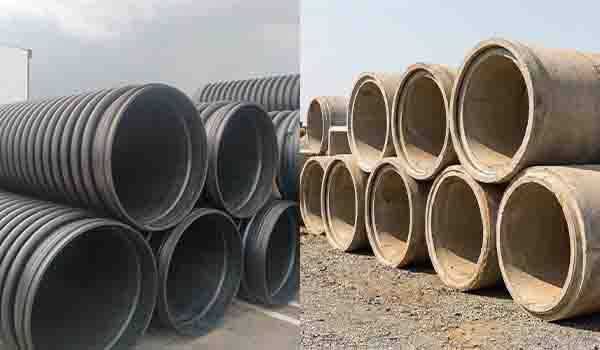
Made from a mixture of cement, sand, gravel, and steel reinforcement. Concrete is known for being hard, rigid, and heavy. Its image is “strong and tough.” Almost every building-supply store or local batching plant can supply it.
HDPE Spiral Pipe
Do not picture the ordinary white PVC pipe in your bathroom. This is on a different level. The pipe is made from High Density Polyethylene with a structured wall profile, usually spiral or corrugated on the outside but smooth on the inside. This spiral structure is ingenious: it provides highring stiffnessto withstand soil loads while keeping the pipe lightweight and flexible.
Comparison 1: Weight and Installation (Which Is Easier?)
If you have ever been on site during concrete culvert installation, you know how cumbersomethe process is.
- Concrete: Very heavy, and for large diameters you must rent a crane or a large excavator. Mobilizing this heavy equipment is costly and requires wide road access. There is also the risk of workplace accidents if handling goes even slightly wrong. A small knock can cause cracks.
- HDPE Spiral Pipe: This is where it becomes a game changer. HDPE pipe weighs only about 1/10 to 1/20 of a concrete pipe with the same diameter. Medium sizes can sometimes be lifted manually or with light lifting equipment.
- Pipe Length: Concrete is usually cast in 1-meter or 2.5-meter sections. The result? Many joints! HDPE pipe can be produced in 6-meter lengths or longer.
- Conclusion: HDPE Spiral Pipe Wins Decisively. Fewer joints, swift and efficient installation, and minimal heavy equipment.
Comparison 2: Flexibility vs Rigidity (Earthquake-Resistant?)
As we know, Indonesia is prone to natural disasters, especially earthquakes and ground movement.
- Concrete: Concrete isrigid. If the soil beneath it moves through settlement or an earthquake, concrete has no tolerance. The result? Cracking, breakage, or joint separation. Once it leaks, water can seep out and erode the surrounding soil (piping erosion), causing the road above to collapse.
- HDPE Spiral Pipe: It is flexible. The pipe can follow ground movement without breaking. In engineering, this is called “soil-structure interaction.” HDPE pipe works together with the surrounding soil to carry loads. If the soil settles slightly, the pipe moves with it without breaking.
- Conclusion: For unstable soil or earthquake-prone areas, HDPE Spiral Pipe is the clear leader.
Comparison 3: Abrasion Resistance (Which Is Tougher?)
Do not assume drainage water is as clear as bottled drinking water. Channel water is “harsh.” It contains sand, small gravel, mud, and other debris. During heavy rain, water flows rapidly and these solids act like “moving sandpaper” that continuously scrapes the inner pipe wall. This is called abrasion.
- Concrete: Concrete is hard, but it “loses” under constant sanding. Over time, the cement layer on the inner surface is eroded by sand flow. Once erosion runs deep, the steel reinforcement can be exposed to water, rust, and eventually weaken the pipe structure. This is a common problem in old culverts.
- HDPE Spiral Pipe: This is a unique advantage of Polyethylene. Its tough, slightly “elastic” plastic properties make it highly resistant to friction from abrasive materials such as sand and gravel. As proof, in the demanding mining industry, HDPE pipe, not concrete, is chosen to convey mine slurry full of small stones.
- What Does This Mean for You? You do not need to worry that your drainage pipe will thin out or develop holes at the bottom after a decade or more of use because of erosion from sandy water flow.
- Conclusion: HDPE Spiral Pipe Wins Decisively. It is far more durable against the natural “sandpaper” inside water channels.
Comparison 4: Chemical & Corrosion Resistance (Service Life)
How long can HDPE spiral pipe last? 5 years? 10 years? You surely want it to last a lifetime.
- Concrete: Its main enemies are acidic environments and aggressive wastewater. If used in peat soil areas with high acidity or industrial zones, concrete can corrode. The steel reinforcement rusts and the concrete becomes porous.
- HDPE Spiral Pipe: HDPE plastic is inert. It resists chemicals. Whether exposed to acidic water, seawater, or factory waste, it will not rust or rot. International standards state that the design life of HDPE can reach 50 or even 100 years.
- Conclusion: HDPE Spiral Pipe Wins. Install it once and enjoy a long service life.
Comparison 5: Price (The Ultimate Question)
This is the most sensitive part and the one many people misunderstand: “But isn’t an HDPE spiral pipe much more expensive per length than concrete?” True, if you only look at the material purchase receipt. In civil projects, however, we talk about Total Installed Cost. Let us recalculate:
- Concrete Cost: Cheap material + Expensive crane rental + Expensive labor (because installation takes longer) + Expensive time (project delays) + Risk of cracking during installation (buying replacements).
- HDPE Spiral Pipe Cost: More expensive material + Low or no crane rental (a small excavator or manual handling is enough) + Low labor costs (very fast installation) + Faster project completion.
- Conclusion: Many contractors eventually realize that although the material costs more, their profit margin remains safe or even grows with HDPE Spiral Pipe because of time and equipment efficiency. For long-term investment projects, HDPE Spiral Pipe can be more economical.
Final Conclusion: Leave the Past Behind, It Is Time to Switch to HDPE Spiral Pipe
After reviewing the five comparisons above, the result is very clear: This is a decisive victory for HDPE Spiral Pipe. Admittedly, concrete culverts are a legend that helped build our infrastructure for decades. However, in a modern era demanding speed, efficiency, and long-term durability, concrete is starting to feel “old” and inconvenient.
Think about it again: why choose a material that is heavy, requires expensive heavy equipment, cracks easily when soil moves, and can corrode in acidic water? That is the same as “saving up problems” for the future.
Choosing HDPE Spiral Pipe is not just a material change; it is a mindset upgrade.
You choose to:
- Work Smarter: Installation takes hours or days, not weeks.
- Invest for the Long Term: Install once and stay worry-free for 50 to 100 years without concerns about rust or leaks.
- Be Ready for Natural Challenges: A flexible material follows ground movement and earthquakes instead of resisting them and breaking.
- Achieve Total Efficiency: Smoother water flow, clog resistance, and a total project cost that is often lower thanks to time and equipment efficiency.
So, stop being trapped in the comfort zone of outdated methods. The construction world has moved forward. Do not let your project fall behind simply because you hesitate to try a proven, superior technology.
Need a Consultation or Geosynthetic Supply?
Do not hesitate to ask. Our expert team is ready to recommend the material type best suited to your soil conditions and budget!
Check our geosynthetics catalog: Catalog
Chat on WhatsApp Now: WhatsApp
Remember Geosynthetics, Remember Petra!
Other Articles
Pond Liner: Types and Installation Guide
A pond liner is one of the most important elements in building and maintaining a pond, whether for commercial use or as a hobby. Using a tarpaulin liner as the base of a pond offers many advantages, from easy installation to lower costs than traditional building materials such as cement or fibreglass. In this article, […]

Prevent Slope Erosion with Geocell
A slope is a natural ground surface that stands out because of a difference in height between two points (an incline). Slopes often suffer landslides caused by rainwater runoff, geological structure, weather and external forces such as vehicle vibration or blasting. There are many ways to prevent slope erosion and landslides, and one of them […]