


What Are Geosynthetic Cementitious Composite Mats (GCCM)?
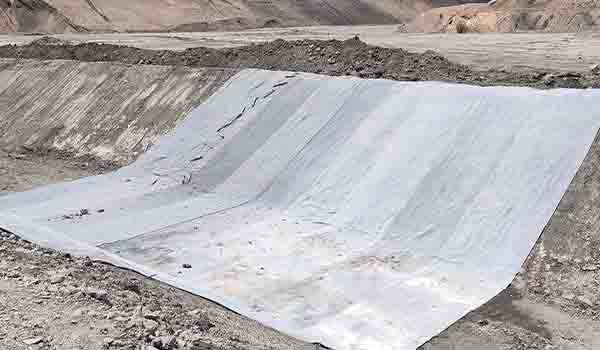
When we talk about concrete or concrete, we picture large mixer trucks, airborne cement dust, complicated formwork , and drying times that take days.
But construction continues to evolve, and “instant concrete” technology is now available as a flexible fabric. In civil engineering worldwide, this material is known as Geosynthetic Cementitious Composite Mats (GCCM), or cementitious geocomposite.
This article explains why you should start considering this advanced material for your infrastructure project. Let us discuss it point by point!
What Is a Cementitious Geocomposite?

Imagine a thick fabric or carpet prefilled with a specially formulated dry concrete mixture. While dry, this Cementitious Geocomposite is highly flexible; it can be bent, rolled, and cut.
After water is added for hydration, however, the flexible fabric hardens into a thin concrete layer that is exceptionally strong, fire-resistant, and waterproof.
In other words, GCCM is a hybrid solution combining the flexibility of geosynthetic materials with the strength of conventional concrete.
Inside the Technology: What Does It Contain?
You might ask, “How can the dry cement inside the fabric avoid spilling out or collecting on one side when rolled?” The answer lies in its technology.
GCCM is not simply “sackcloth filled with cement.” Its structure consists of a three-dimensional fiber matrix. Imagine a highly intricate woven-fiber structure that binds the dry concrete mixture inside it. These fibers serve to:
- Lock in the Cement Mixture: Keep the concrete powder evenly distributed across the surface, even when the material is rolled, transported vertically, or suspended.
- Reinforcement: When the concrete hardens, these fibers act like steel reinforcement in reinforced concrete. This prevents cracks from spreading (crack propagation).
- PVC/Membrane Backing: The underside usually has a waterproof PVC layer that prevents water from seeping into the ground while ensuring proper concrete curing because the water cannot escape into the dry soil below.
Classic Problems with Conventional Concrete
Before discussing its advantages, recall the difficulties you often encounter with conventional cast concrete or shotcrete, especially at challenging project sites:
- Logistics: Transporting mixer trucks to remote areas, hillsides, or mining sites is extremely difficult, especially when access roads are severely damaged.
- Hairline Cracking: Conventional concrete often develops hairline cracks if curingis inadequate or the underlying soil moves.
- Wasted Time: Installing formwork and steel reinforcement and waiting for concrete to cure can take weeks.
- Material Waste: Leftover cement mixtures are commonly discarded, contaminating the surrounding project environment.
If you want to avoid or have experienced the problems above, it is time for your project to switch to GCCM.
Why Choose a Cementitious Geocomposite?

1. Extremely Fast Installation
Using GCCM can be 10 times faster than casting conventional concrete. Simply unroll it, secure it with anchors, and add water. Soon afterward, the concrete is fully hardened and ready for use. Imagine how much labor cost you can save.
2. Much Lighter Logistics
Because it comes as compact, thin rolls of dry material, it can be transported in a regular pickup truck to places inaccessible to large trucks. This is an excellent solution for projects in remote areas.
3. Design Flexibility
Because it behaves like fabric before hydration, cementitious geocomposite conforms perfectly to ground contours. Whether the project involves a V-shaped ditch, U-shaped ditch, or uneven slope, the material fits neatly without cumbersome formwork .
4. High Durability & Erosion Resistance
It offers outstanding resistance to chemicals, extreme weather, and UV radiation. The geosynthetic fibers inside act as reinforcement, like steel in reinforced concrete, preventing cracks from spreading. This makes it ideal for long-term erosion control.
5. Environmentally Friendly
This technology uses up to 95% less material than thick cast concrete for the same application. Its carbon footprint is much lower because transport volume is drastically reduced.
Applications: Where Can You Use This Material?

Is this material suitable for your project? The answer is almost certainly YES. Popular applications of cementitious geocomposite include:
- Drainage Channels (Ditch Lining)
This is the most common use. It prevents water from seeping into soil and causing landslides while enabling unobstructed flow without weed growth.
- Slope Protection
Prevents surface erosion on toll-road slopes, mine sites, or river embankments.
- Bund Wall Lining
Used around oil or waste tanks in the oil and gas industry to prevent hazardous spills from infiltrating the soil.
- Remediation of Old Concrete
Have an old concrete channel full of cracks? Placing cementitious geocomposite over it renews the channel without removing the old concrete.
- Outfall & Culvert
Lines culvert outlets to prevent scour from rapid water flow.
Installation: A Simpler Process
- Site Preparation: Level the ground and remove sharp stones or wild vegetation. Excavate an anchor trench at the top of the slope when needed.
- Unroll & Secure: Unroll the cementitious geocomposite along the alignment. Provide overlap at every joint. Secure it with steel stakes or screws, depending on the substrate.
- Hydration: Apply fresh water or seawater evenly. Make sure enough water is used. After hydration, avoid walking on the material for several hours.
- Final Result: Within 24 hours, the material becomes rock-hard and ready to protect your infrastructure assets for decades.
Comparison: Conventional Concrete vs Cementitious Geocomposite
Let us compare head-to-head the old conventional-concrete method and the modern cementitious geocomposite solution:
| Feature | Conventional Concrete | Cementitious Geocomposite |
| Speed | Slow (Requires Formwork & Long Curing) | Very Fast (Unroll & Hydrate) |
| Heavy Equipment | Requires Mixer Truck / Shotcrete Pump | Only Cutting Tools & Watering Equipment |
| Site Access | Must Accommodate Large Trucks | Can Be Carried Manually |
| Quality Control | Depends on On-Site Mixing (Risk of Inconsistency) | Factory-Controlled (Precise Mixture) |
| Waste | High (Shotcrete Rebound / Leftover Concrete) | Almost Zero |
| Crack Resistance | Prone to Hairline Cracks | Fiber-Reinforced Crack Resistance |
Conclusion: A Smart Investment for the Future
Efficiency is essential in modern construction. Retaining outdated methods that waste time and labor will only inflate your project budget .
Cementitious Geocomposite from Petra Nusa Elshada is more than an alternative; it is a technological upgrade . By switching to this material, you accelerate project completion and obtain a neater, stronger, and more durable result.
Do not let logistical constraints and weather delay your project. It is time to switch to a smarter solution.
Interested in Trying It or Need a Sample?
Our expert team at Petra Nusa Elshada is ready to discuss your project’s specific needs, from volume calculations to technical installation guidance in the field.
Contact us to learn how cementitious geocomposite can transform the way you build your best projects!
View Our Cementitious Geocomposite Catalog: Catalog
Chat on WhatsApp Now: WhatsApp
Remember Geosynthetics, Remember Petra!
Other Articles
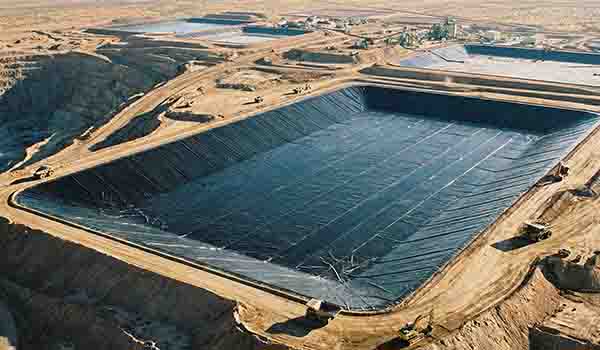
Mining Geomembrane: Benefits for the Mining Industry
Hello, Petra friends! If you work in mining, or perhaps you are handling a mine infrastructure project, you know very well how crucial environmental management is. The mining industry is always associated with large-scale operations that move millions of tons of earth material. Behind the massive economic gains lies an equally large environmental responsibility. One […]
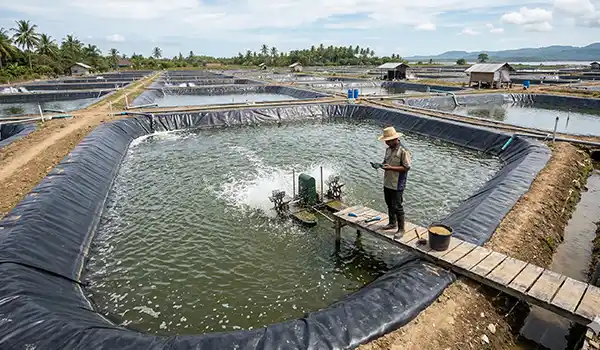
Bigger Profits: Advantages of an HDPE Pond for Aquaculture
Hello, Petra friends! If you work in aquaculture or are planning to start a fish or shrimp farming business, you have surely heard a lot about HDPE geomembrane. It is more than a passing trend; this material is gaining popularity because its performance far exceeds that of conventional cement ponds or ordinary tarpaulins. Why are […]
