


Mining Geomembrane: Benefits for the Mining Industry
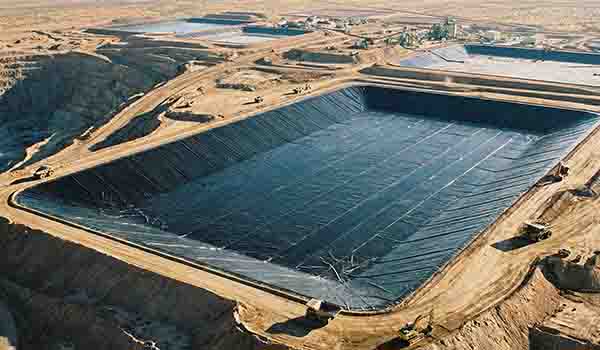
Hello, Petra friends! If you work in mining, or perhaps you are handling a mine infrastructure project, you know very well how crucial environmental management is. The mining industry is always associated with large-scale operations that move millions of tons of earth material. Behind the massive economic gains lies an equally large environmental responsibility.
One of the biggest challenges that always haunts mine operators is how to manage extraction residues and hazardous chemicals so they don’t damage the surrounding ecosystem. This is where one innovative material that may look simple plays the role of an unsung hero: Geomembrane.
For those who may not be familiar with it, geomembrane is a synthetic polymer sheet designed specifically to be watertight and gastight. Over the last decade, the use of this geosynthetic material has revolutionized the way the mining industry operates. It doesn’t only help comply with increasingly strict government regulations; it also brings remarkable efficiency to the production cycle.
So what exactly are the benefits of geomembrane for the mining industry? Why has its use become something of a mandatory standard in every modern mining project? Let’s examine them one by one in depth!
Why Does the Mining Industry Need Geomembrane?
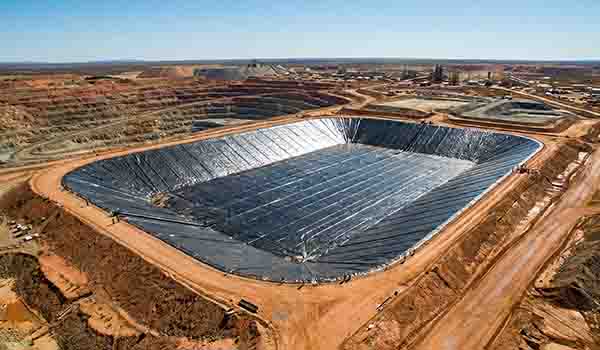
Modern mining operations use a variety of reactive chemicals to separate valuable minerals from raw rock (ore). This extraction process often leaves behind highly toxic wastewater and waste rock that can react with air. Without a solid lining system (liner), these toxic liquids can easily seep into the ground.
In the past, many mining companies relied only on a natural clay layer to hold back these liquids. However, clay can crack when it dries, and its ability to withstand harsh chemicals is very limited. Geomembrane has arrived as a modern technological solution. The material acts as an absolute watertight shield, ensuring not a single drop of hazardous liquid escapes to pollute the earth.
1. Preventing Groundwater Pollution
The most important and fundamental benefit of geomembrane for mining is protecting groundwater. Mine sites are often located not far from water sources used by local communities or that feed forest and river ecosystems.
Substances such as cyanide (in gold mines), sulfuric acid (in copper mines) and various other heavy metals are deadly if they reach aquifers or groundwater reserves. By installing a geomembrane lining at processing facilities and waste holding ponds, you are essentially installing a leak-proof vault. Geomembrane permeability (the rate at which water passes through) is extremely low, almost zero, so chemical seepage into the ground can be completely prevented.
2. Safe Tailings Management
If you work in a mine, the word “tailings” is surely part of your daily vocabulary. Tailings are the slurry left over from ore processing, containing a mixture of fine rock, water and residual extraction chemicals. Because their volume is enormous, tailings are usually stored in a large area called a Tailings Storage Facility (TSF), or tailings dam.
Tailings dam failure is one of the worst environmental disasters that can occur. Besides a dam structure that must be strong, the dam base must be lined so toxic liquid from the tailings slurry doesn’t seep downward. Geomembrane provides a high level of containment for the base and walls of a tailings dam. The material ensures that the area beneath the storage facility remains free of heavy-metal contamination for decades to come, even after the mine stops operating.
3. Preventing Acid Mine Drainage (AMD)
Acid Mine Drainage (AMD) is the arch-enemy of environmental engineers in the mining sector. It occurs when rock containing sulfide minerals (usually dug from deep underground) is exposed to oxygen and rainwater. The resulting chemical reaction produces highly corrosive sulfuric acid. This acidic water then dissolves other heavy metals around it and flows out to pollute rivers.
How does geomembrane deal with this? Instead of being used as a base liner, here geomembrane is used as a cover, or capping. Waste rock dumps with the potential to generate AMD are tightly covered with geomembrane. Because the material is impermeable to water and air, rainwater cannot get in and oxygen cannot interact with the sulfide rock. Without water and oxygen, the acid-forming reaction never occurs. A smart and highly effective solution, isn’t it?
4. Maximizing the Heap Leaching Process
Let’s look at it from the standpoint of production profitability. In copper and gold mining, there is an extraction method called Heap Leaching. Low-grade ore is stacked into large heaps, and a solvent solution (such as cyanide or acid) is sprayed from above. The liquid seeps downward, dissolving the gold or copper, and is then collected in a holding pond (pregnant solution pond).
Now imagine if the base of that heap leaked! You wouldn’t only be polluting the environment; you would literally be pouring dissolved gold and copper into the ground. That is an enormous financial loss. Geomembrane acts as the primary liner in the heap leaching pad area. This liner ensures 100% of the valuable leach solution flows perfectly into the holding pond to be processed into pure metal. At this point, geomembrane is not just an environmental protection tool, but an instrument for securing the mining company’s profit.
5. Preserving Water Reserves in Operational Areas
Mining requires a great deal of water, whether for mineral processing, cooling machinery or daily operational needs. That is why many mines build clean water holding ponds or operational reservoirs (raw water ponds).
In dry areas or areas with highly porous soil, the water in a pond can quickly be lost through seepage into the ground. By applying geomembrane to water holding ponds, you can keep the water volume stable, save the cost of pumping water from other sources, and ensure water remains available during a long dry season.
6. Cost Efficiency and Freedom from Penalties
Some may think, “Wow, the investment to lay hectares of geomembrane must be really expensive!” It’s true that there is an upfront cost (Capital Expenditure/CapEx). But try calculating the long-term cost of risk.
The cost of restoring polluted soil and water (environmental remediation) is many times higher than the cost of buying and installing geomembrane. Not to mention the risk of administrative sanctions, billions of rupiah in government fines, the threat of operational shutdown and damage to the company’s image in the eyes of global investors. Using quality geomembrane from day one of operations is the cheapest and most rational form of insurance mine management can take.
Why Choose HDPE Geomembrane?
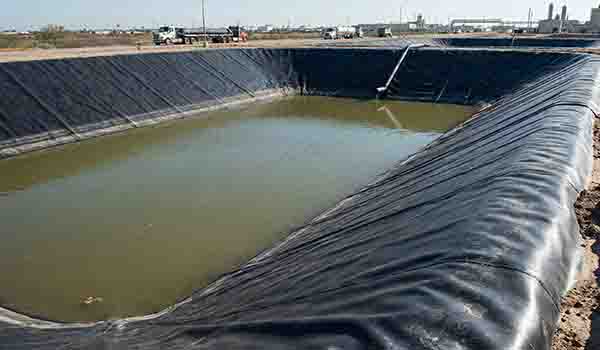
Of all the types of geosynthetic materials, HDPE (High-Density Polyethylene) geomembrane is the favorite and the gold standard for the mining industry. Why is that?
First, HDPE has outstanding chemical resistance. The material will not break down, melt or degrade even when immersed in concentrated acid or strong alkaline solutions for years. Second, carbon black (carbon black) is added to the material, making it resistant to the sun’s UV rays. This means that even when exposed in the middle of a scorching open-pit mine, the material will not become brittle or crack.
Third, HDPE’s resistance to punctures and tears (puncture resistance) is very high. In mine areas full of sharp rocks and heavy equipment activity, a physically strong protective layer is non-negotiable.
Installation Processes You Must Pay Attention To
The benefits of geomembrane for mining can only be fully realized if installation is done correctly. Buying the best material alone is not enough. During installation, geomembrane sheets must be joined using highly precise thermal welding, usually with the wedge welding or extrusion welding method.
Every seam must be rigorously tested (such as with an air pressure test or vacuum spark test) to make sure there isn’t a leak even as small as a pinhole. That’s why a smooth subgrade, free of large sharp rocks, must also be prepared before the sheets are rolled out.
The Right Choice for Your Mining Project
The modern mining industry cannot be separated from strict environmental responsibility and high production efficiency. Geomembrane bridges both needs perfectly. From securing tailings and preventing acid mine drainage to maximizing the recovery of valuable minerals in leaching ponds.
Choosing geosynthetic materials for a large-scale mining project is not something you can do carelessly. You need proven materials and a supply partner who truly understands technical field specifications.
If you are planning a lining system for a mining or waste management project, make sure you get quality geosynthetic products from PT. Petra Nusa Elshada. We are ready to help you with international-standard geomembrane that is durable, safe and, of course, efficient.
Need a Consultation for Your Project?
Feel free to consult the Petra Nusa Elshada team. We supply a wide range of high-quality geosynthetics ready to ship throughout Indonesia. Let’s discuss your project needs now!
Check our catalog: Click here
Chat on WhatsApp Now: Click here
Remember Geosynthetics, Remember Petra!
Other Articles

Geotextile as a Drainage Filter
Drainage is an important part of any construction project, and a geotextile drainage filter keeps it working. Drainage systems can be built in many ways; common types use perforated pipes and filter drains. A general weakness of drainage systems is that soil particles can enter along with the water. Aggregate can be used to deal […]

Rooftop Garden Drainage with Drainage Cell
Besides protecting the roof of a house, a rooftop can also be used as a multifunctional area, for example as a garden, usually called a rooftop garden. A rooftop garden needs plants that must be watered every day or are watered by rain. So good drainage is essential to carry water away and prevent pooling, […]

Expansive Soil Treatment Methods
Expansive soil treatment is needed because expansive soil has a high potential to swell and shrink. This behavior generally results from changes in water content that alter the soil volume. Infrastructure built on expansive soil often suffers damage from ground movement. This movement occurs when changes in soil water content during the dry and rainy […]