


Cocomesh Slope Protection: Strong, Attractive Slopes
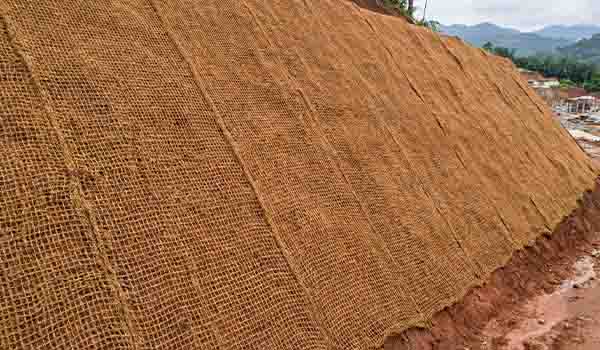
Hello, Petra friends! Have you ever seen a slope beside a toll road or residential area suddenly collapse during the rainy season? Or are you wondering how to secure sloping ground on your construction project from rainwater erosion?
If so, you have found the right article.
Soil stability, or slope stability, is an everyday issue in Indonesian construction. With heavy tropical rainfall, our soil is highly susceptible to erosion. In the past, the main solution may have been covering the entire slope with concrete (shotcrete) or building a massive masonry retaining wall. These methods are strong but expensive and visually unappealing because they eliminate the natural greenery.
A much smarter, more economical, and environmentally friendly solution is now available: Slope Protection with Cocomesh.
In this article, the Petra Nusa Elshada team will explain Cocomeshin detail, why this material has become a new favorite in civil engineering, and how it protects your land assets. Grab a coffee and let us begin!
What Is Cocomesh? Meet the “Rescue Net”
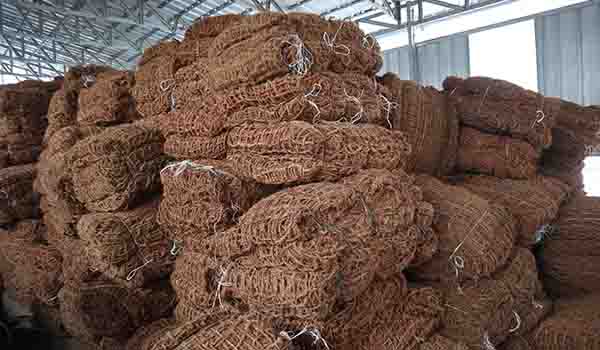
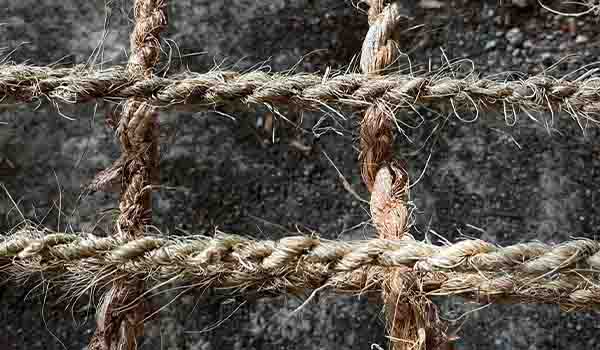
Simply put, Cocomesh (Coconut Coir Mesh) is netting made from spun coconut husk fibers. The fibers are twisted into strong ropes and then woven into a net with openings of a specified size.
You may ask, “Why coconut husk? Why not plastic or wire?”
The answer lies in the natural properties of coconut husk. Coconut fiber has a very high lignin content. This substance makes it resist decomposition, fungi, and soil bacteria much longer than other natural fibers. At the same time, it remains biodegradable. This means that after it has finished reinforcing the soil and plants have grown, it decomposes into natural fertilizer.
In civil engineering, Cocomesh belongs to the category of Bionatural Geotextile or Biomat. Its specific function is to serve as a protective blanket shielding the soil surface from raindrop impact and surface runoff.
Why Does Your Project Need Cocomesh-Based Slope Protection?
You may still wonder, “Can a coconut-fiber net really hold soil?”
Do not underestimate it. Cocomesh does not work alone; it is part of a Vegetative Slope Protectionsystem. Consider these reasons to use the material on your project:
1. Controls Erosion from Day One
When rain falls, droplets strike the soil surface with substantial kinetic energy. This impact breaks apart soil aggregates, which are then carried away by flowing water as erosion. Cocomesh acts as a “shield,” dissipating raindrop energy and retaining soil particles so they are not washed away.
2. Plant-Growth Medium (Revegetation)
This is Cocomesh’s decisive advantage over concrete. Cocomesh has excellent water-retention capacity. Seeds and grasses benefit greatly from these moist conditions.
Cocomesh installation is usually combined with seed spraying (Hydroseeding) or planting Legume Cover Crop (LCC). Cocomesh prevents seeds from being carried away by water or wind and retains soil moisture so they germinate quickly.
3. Long-Term Solution: Plant Roots Take Over
Remember the biodegradable concept? Cocomesh lasts approximately 3-5 years. During this period, plants growing between the mesh openings become established. Their roots eventually grip the soil permanently.
Cocomesh therefore serves as a temporary “mentor” until plants can do the work independently. This is asustainablesystem.
4. Aesthetics and the Environment
Who would not prefer a lush green slope? Compared with a hot gray concrete wall, a slope protected by Cocomesh and vegetation produces oxygen, reduces the urban heat islandeffect, and looks much more attractive.
5. Cost Efficiency (Cost-Effective)
Compared with building a concrete retaining wall or stone masonry, Cocomesh costs much less. You can save a substantial portion of the project budget without compromising safety, especially on slopes that are not extremely steep.
Cocomesh Specifications You Should Know
Before buying this material, understand that Cocomesh comes in several variations, usually distinguished by:
- Rope Dimensions: Coconut-coir rope diameter, usually 3mm – 5mm.
- Mesh Size (Opening): The spacing between strands. Common sizes are 2×2 cm, 3×3 cm, and 4×4 cm. A tighter, smaller opening controls erosion better, although the price may differ slightly.
- Tensile Strength: Depends on the quality of spinning and weaving.
Make sure you consult the Petra Nusa Elshada team to determine the specification best suited to your slope conditions.
Installation Guide: How Is It Installed?
Installing Cocomesh may look easy, but proper technique prevents failure. Careless installation can cause the net to slide or allow the soil beneath it to erode. Follow these best practices :
Stage 1: Slope Preparation
First, clear the slope of waste, unstable large stones, and weeds. Trim, grade, and compact the soil surface so Cocomesh contacts it perfectly. Remember, Cocomesh must touch the soil; no air pockets may remain beneath it.
Stage 2: Building the Anchor Trench
At the top of the slope, excavate a small trench 20-30 cm deep. Place the upper end of the Cocomesh in this trench, then backfill and compact it. This serves as the “primary lock,” preventing the entire net from sliding downhill under gravity.
Stage 3: Deploying Cocomesh
Unroll Cocomesh from top to bottom along the slope direction. Make sure each roll lies neatly without ripples.
- Important: When joining net sections because a roll is too short or narrow, provide an overlap of at least 10-15 cm. Do not butt the edges together because water can enter through the gap.
Stage 4: Staking
Use bamboo stakes or U-shaped steel pins to hold Cocomesh in position. Drive the stakes at specified intervals, such as one per square meter. Add more stakes atoverlapsand in the center to ensure the net remains tight against the soil.
Stage 5: Planting (Vegetation)
Once the Cocomesh is neatly installed, it is time to plant! You can use:
- Manual Planting: Plant vetiver grass or LCC seedlings through the mesh openings.
Hydroseeding: Spray a mixture of water, seed, fertilizer, and mulch over the Cocomesh surface. This is the fastest and most effective method for large areas.
Cocomesh vs Concrete (Shotcrete): Which Wins?
For greater confidence, let us compare Cocomesh with the conventional method.
| Feature | Cocomesh (Vegetative) | Concrete / Shotcrete |
|---|---|---|
| Cost | Low – Medium | High |
| Environment | Environmentally Friendly (Eco-friendly) | Not Environmentally Friendly (Cement) |
| Ambient Temperature | Absorbs Heat, Keeps Area Cool | Reflects Heat |
| Aesthetics | Natural Greenery | Rigid, Gray |
| Flexibility | Follows Ground Contours | Rigid, Prone to Cracking When Soil Moves |
| Drainage Function | Water Can Infiltrate (Permeable) | Water Is Blocked (Requires Weep Holes) |
The table clearly shows that for slope protection prioritizing ecosystem sustainability and efficiency, Cocomesh is the winner. An extremely steep slope, approaching 90 degrees, may instead require a combination of hard structures and Cocomesh.
Common Mistakes
As an experienced geosynthetic-material provider, we often see field failures caused not by poor products but by incorrect installation. Avoid the following:
- Uneven Soil: Large voids remain beneath the net. Water flows under it and causes subsurface erosion (undermining).
- Too Few Stakes: Skimping on stakes invites failure. Wind can lift the net, or rainwater loads can make it slide.
Wrong Direction: Unrolling netting horizontally across the slope instead of vertically from top to bottom for maximum strength, except under specific conditions requiring specialized techniques.
Conclusion: It Is Time to Choose a Green Solution
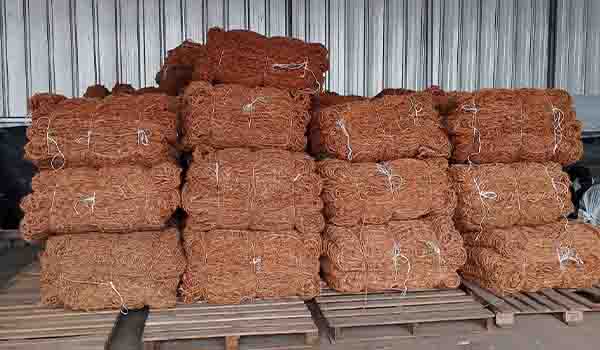
Maintaining slope stability concerns not only today’s project safety but also investment in our environmental future. Using Cocomesh for Slope Protection proves that construction technology can work alongside nature conservation.
You gain soil-structure safety, cost savings, and visual appeal in one solution.
Are you managing a road project, mine-site reclamation, or residential development on hilly terrain? Do not risk leaving the ground exposed and unprotected.
Need a Consultation for Your Project?
The Petra Nusa Elshada team is ready to supply high-quality Cocomesh in the correct specification for your project. We can also discuss the most efficient installation techniques.
Feel free to consult the Petra Nusa Elshadateam. We supply a wide range of high-quality geosynthetics ready for delivery throughout Indonesia. Let us discuss your project needs today!
View Our Catalog: Catalog
Chat on WhatsApp Now: WhatsApp
Remember Geosynthetics, Remember Petra!
Other Articles

Geobag Applications for Flood Protection
Damage to dikes and dams is very common when the structure experiences water seepage, erosion, slope failure and natural disasters. These are the main problems that can lead to flooding (figure 1.1), which is why geobag flood protection is often needed. Special measures are needed to prevent flooding and provide protection when existing dikes or […]

Geotube for Coastal Protection and Erosion Control
Have you ever seen a large fabric tube along the shore? That is called a geotube, and it is a proven method of geotube erosion control. In general, a geotube is a geosynthetic product made of geotextile and shaped like a large tube or cylinder. One function of a geotube is to act as an […]

Using 2 mm HDPE Geomembrane for Mine Tailings
As one of the key stages in today’s mining activities, tailings management has drawn great attention to environmental protection issues. In this context, a 2 mm HDPE geomembrane liner not only plays an important role as an anti-seepage and anti-leak layer but also provides a reliable solution for the sustainable development of tailings projects. Advantages […]