


The Best Durable Pond Waterproofing Solution
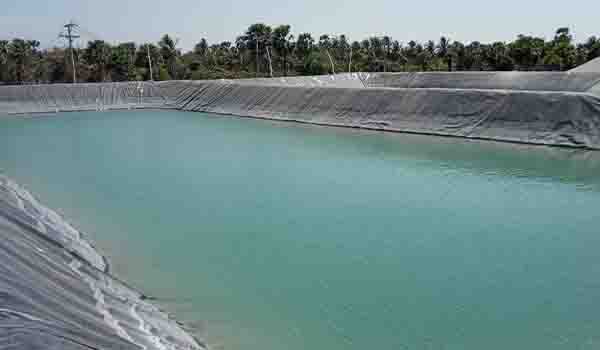
Hello, Petra friends! Have you ever felt frustrated because the water in your fishpond or aquaculture pond kept dropping even outside the dry season? Or perhaps you are planning a water-storage pond but worry that the soil absorbs too much water? This problem is very common, and the answer always points to one technical element: Pond Waterproofing.
Building a pond is not merely about excavating soil and filling it with water. Soil has pores that allow water to seep away through infiltration. Without the right liner, half the water you add today could be gone by tomorrow morning. This wastes not only water but also operating costs, especially if you use an electric water pump.
In this article, we will thoroughly examine modern waterproofing technology. We will discuss a more practical, durable, and efficient long-term solution. Read on!
Why Can Your Pond Leak?
Before discussing the solution, you need to understand why leakage occurs. In general, ponds lose water for two main reasons:
- Evaporation: This is a natural process caused by sunlight. We cannot eliminate it completely, but shade can reduce it.
- Infiltration (Seepage): This is the main problem. Water seeps into the soil through pores or cracks in the pond walls.
If your pond is made of concrete, even small hairline cracks can cause water volume to drop drastically. If it is merely a clay-lined pond, high soil permeability causes rapid water loss. You therefore need a liner or protective layer.
Evolution of Waterproofing: Then vs Now
In the past, people relied on compacted clay to retain water. Although inexpensive, it is not completely impermeable and depends heavily on local soil type. People then switched to concrete. Concrete is strong, but it is very expensive and prone to cracking when the ground shifts (settlement).
Next came Plastic Tarpaulin. This is an inexpensive solution, but ordinary tarpaulin unfortunately cannot withstand the sun’s UV rays. Within months, it becomes brittle, tears, and breaks down into microplastics that contaminate your pond.
What is the modern solution? The answer is Geomembrane.
Understanding Geomembrane as the Primary Solution
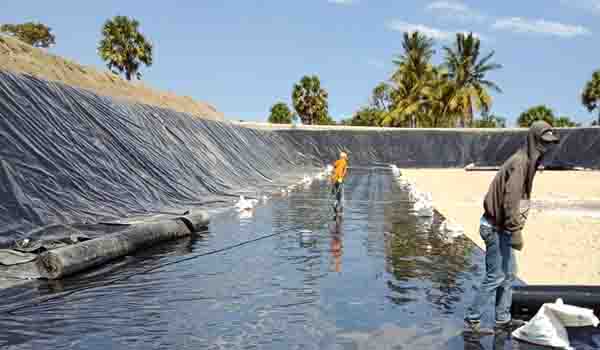
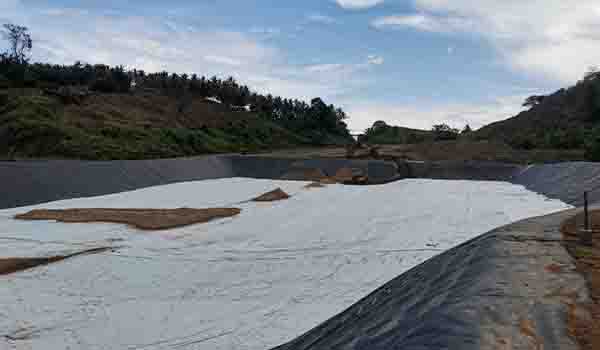
In civil and environmental engineering, Geomembrane is the leading waterproofing material. It is a synthetic sheet with extremely low permeability, nearly zero, meaning water cannot penetrate it.
Geomembrane is generally made from High-Density Polyethylene (HDPE) or Low-Density Polyethylene (LDPE). For pond applications exposed to direct sunlight, however, HDPE Geomembrane is the most popular and recommended option.
Geomembrane vs Concrete or Ordinary Tarpaulin
Why should you start considering geomembrane instead of concrete or ordinary tarpaulin?
- Resistance to UV Radiation and Weather
One of the greatest enemies of polymer materials is sunlight. Ordinary tarpaulin deteriorates under continuous exposure. HDPE Geomembrane, however, contains Carbon Black , making it highly resistant to UV radiation. In a tropical climate such as Indonesia’s, this material can last for years without significant degradation. - High Flexibility
The soil beneath a pond is active and can move, shrink, or expand. If you use concrete, this movement causes cracking. Geomembrane has high elongation , or flexibility. This means that if the underlying soil moves, the liner stretches with it rather than tearing. - Chemical Resistance
This point is important if you have a wastewater pond or an intensive aquaculture pond that frequently uses water-treatment chemicals. HDPE has exceptional chemical resistance. It will not react with acids, alkalis, or hazardous waste. This is why geomembrane is mandatory for landfills and industrial wastewater ponds. - Fast and Easy Installation
Building a concrete pond requires weeks of curing . With geomembrane, you only need to excavate, level the soil, deploy the liner, and weld the seams (welding). Even a huge pond can be lined in only a few days.
Pond Types That Should Use Geomembrane
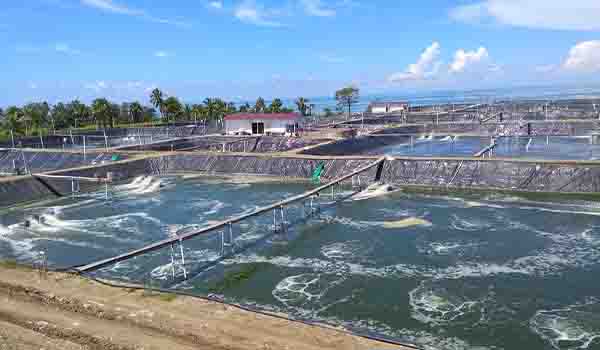
You may ask, “Is this material suitable for my pond?” Almost every pond type benefits from this waterproofing, including:
- Shrimp & Fish Ponds:
Maintains water quality and prevents soil-borne diseases from spreading into the pond water. Harvests are also cleaner because shrimp do not mix with mud. - Wastewater Treatment Ponds:
Prevent toxic wastewater from seeping into the ground and contaminating nearby groundwater. This is a mandatory environmental-impact requirement. - Water-Storage Ponds / Rainwater Reservoirs:
In water-scarce regions, a geomembrane-lined reservoir can store rainwater throughout the year for agricultural use. - Artificial Lakes & Golf Courses:
Maintains stable water levels for a consistently attractive landscape. - Koi Ponds:
Black geomembrane can make Koi colors appear more vivid while serving its main function of preventing leakage.
Tips for Selecting Geomembrane Thickness
Various geomembrane thicknesses are available on the market and, of course, from Petra Nusa Elshada. Selecting the right thickness is crucial for budget efficiency and maximum performance.
- 0.3 mm – 0.5 mm: Suitable for small fishponds, salt ponds, or temporary applications without heavy loads.
- 0.75 mm – 1.0 mm: Standard for intensive shrimp ponds and medium-scale water-storage ponds. This is the most popular thickness range because it balances price and strength.
- 1.5 mm – 2.0 mm: Required for hazardous-waste ponds, landfills, or areas with highly rocky and rough subgrades.
Installation Steps to Prevent Leaks
Excellent material is useless if installed carelessly. Here is a brief overview of proper pond-waterproofing installation:
- Site Preparation:
Make sure the subgrade is compacted and level. Remove sharp objects such as pointed stones, tree roots, or glass. These objects are major threats that can puncture the liner from below. - Geotextile Installation (Recommended):
For additional protection, you can lay Non-Woven Geotextile over the soil before placing geomembrane. Geotextile functions as acushionthat protects geomembrane from gravel punctures. - Deployment:
Unroll the geomembrane to match the pond’s shape. Leave some slack; do not pull it too tightly. This accommodates expansion in heat and contraction in cold weather. - Seaming:
This is the most crucial stage. Seams between geomembrane sheets must be joined using a specialized welding machine (hot wedge welder). Do not use ordinary adhesive! Heat melts both plastic surfaces and permanently bonds them. - Anchor Trench:
The upper perimeter of the geomembrane must be secured by burying it in an excavated trench around the pond edge and then backfilling the trench. This prevents the liner from sliding downward.
Waterproofing Maintenance
Geomembrane requires very little maintenance. You do not need to repaint it or patch cracks as you would with concrete. Still, several points require attention:
- Avoid Sharp Objects: Do not throw metal tools or sharp objects into the pond.
- Check the Water Level: Try to keep the pond filled. Although geomembrane resists UV radiation, constant heat exposure without water may shorten its lifespan slightly compared with continuous submersion.
- Cleaning: During harvesting or draining, use blunt cleaning tools such as plastic brushes. Do not use sharp metal shovels.
Conclusion
Water is a valuable asset, whether for cultivation, clean-water reserves, or waste management. Do not let that asset disappear through soil seepage. Using HDPE Geomembrane as pond waterproofing is a smart decision combining durability, cost efficiency, and environmental safety.
Choosing pond waterproofing is a long-term investment. You certainly do not want to rebuild the pond because you purchased inferior material, do you?
Petra Nusa Elshada is your trusted partner for high-quality geosynthetic materials. We do not merely sell products; we provide solutions.
Need a Consultation for Your Requirements?
We understand that every project, whether a private aquaculture pond or a large civil-engineering project, has unique challenges. Our expert team is ready to discuss the most cost-effective material type and thickness for you.
Feel free to consult us about your geosynthetic-material requirements. We supply a wide range of high-quality geosynthetics ready for delivery throughout Indonesia. Let us discuss your project needs today!
View Our Catalog: Click here to view the product catalog link
Chat on WhatsApp Now: Click here for a direct WhatsApp chat link
Remember Geosynthetics, Remember Petra!
Other Articles
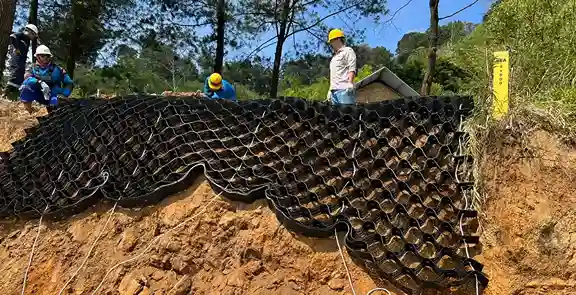
What Is Geocell and How Is It Used?
What is geocell? Geocell is a geosynthetic material made by joining strips into a cellular structure, designed to be filled with soil. Geocell is also known for its good durability and environmental friendliness, making it well suited to infrastructure and other civil engineering projects. Geocell relies on the confinement provided by each of its cells, […]
Understanding the Modern Landfill: More Than a Garbage Pile!
Hello, Petra friends! Have you ever traveled outside the city and seen a vast area filled with mountains of waste? Your first thought may have been, “Wow, that is filthy.” But did you know that in today’s modern world, a waste-disposal site, commonly called a Landfill , is not as simple as “dump and pile”? […]

History of Geocell
The history of geocell (Cellular Confinement System), commonly known as geocell, covers a material used for erosion control, soil stabilization, channel protection and retaining walls. A typical cellular confinement system used today consists of HDPE geosynthetic sheets that form a honeycomb structure and are filled with sand, soil, stone or concrete. Some people may not know the […]