


Biogas Energy: Turning Waste into Future Power
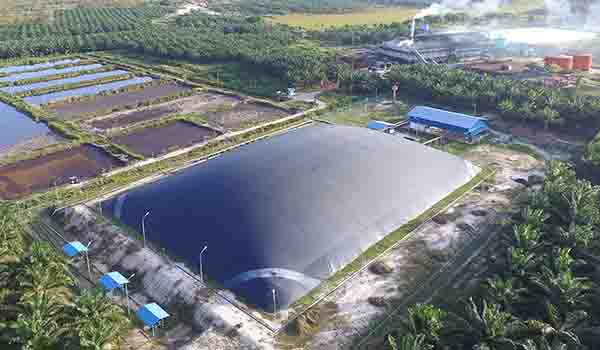
Petra Friends, have you ever imagined that the piles of organic waste around you are actually hidden “treasure”? In this modern era, energy and environmental issues are increasingly hot topics. We all know that fossil fuels are dwindling, while waste volumes keep growing. At the intersection of these two major problems, the biogas concept has emerged as an environmental hero that is underrated yet extremely powerful.
If you care about sustainability or work in an industry struggling with waste management, understanding biogas is not merely knowledge. It is an opportunity. In this article, we will thoroughly examine what biogas is, how it works, and why this technology depends so heavily on proper construction, including the selection of advanced lining materials. Read through to the end!
What Exactly Is Biogas?
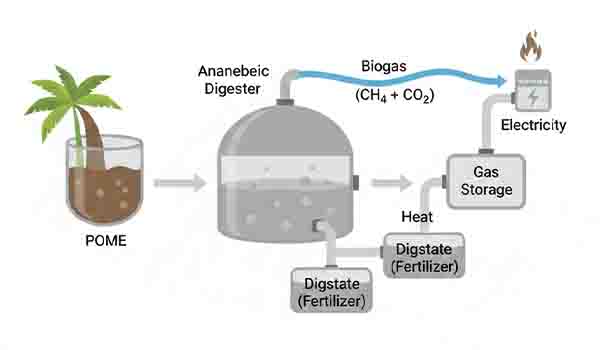
Simply put, biogas is gas produced through biological activity or the decomposition of organic materials without oxygen (anaerobic conditions). This gas does not appear by itself; it results from the hard work of millions of microorganisms, or bacteria, consuming organic waste.
The main components of biogas are methane (CH4) and carbon dioxide (CO2). Methane is the star because it is flammable. What does that mean? You can use this gas as an energy source for cooking, lighting, and even driving power-plant turbines.
Imagine that livestock manure, restaurant food waste, tofu-factory waste, and even palm oil mill effluent (POME), which normally pollute rivers, can be converted into a clean blue flame. That is the essence of the biogas concept: Waste to Energy.
The Chemical Process Behind Biogas Formation
You may wonder, “How can waste become gas?” The process is not as simple as lighting a fire. Inside a closed reactor (digester), anaerobic fermentation occurs through four fairly complex biochemical reaction stages. For a better understanding, let us discuss them one by one:
- Hydrolysis (Initial Breakdown)
This is the first step, in which bacteria break down complex organic materials, such as carbohydrates, proteins, and fats, into simpler molecules such as sugars, amino acids, and fatty acids. Without this stage, bacteria in the next stage could not feed. - Acidogenesis (Acidification)
Acidogenic bacteria then process these simpler molecules further. The products are volatile fatty acids, ammonia, carbon dioxide, and hydrogen sulfide. During this phase, the characteristic pungent odor of decomposition begins to form. - Acetogenesis (Acetate Formation)
Next, acetogenic bacteria convert the products of acidogenesis into acetic acid, hydrogen, and carbon dioxide. This is “ready-to-eat food” for methane-forming bacteria. - Methanogenesis (Methane Formation)
This is the final and most crucial stage. Methanogenic bacteria, which are highly sensitive to oxygen, convert acetic acid and hydrogen into methane and carbon dioxide. This is where the energy is born. Even a slight air or oxygen leak at this stage can cause gas production to fail completely.
Vital Components of a Biogas Installation
To run the process above, you cannot simply pile up waste. You need an installation system called a Biogas Digester. This is where civil engineering and modern materials play an important role. A durable, efficient biogas installation usually consists of several main parts:
- Inlet (Mixing Tank)
Where feedstock, such as livestock manure or waste, is mixed with water to form aslurry. The mixing ratio must be correct so bacteria can move freely. - Digester (Main Reactor)
This is the artificial “stomach” where fermentation occurs. Because the process must be anaerobic and watertight, digester construction quality is key. There are many digester types, from Fixed Dome (concrete dome) and Floating Drumto the most modern and efficient type for industrial scale: Covered Lagoon.
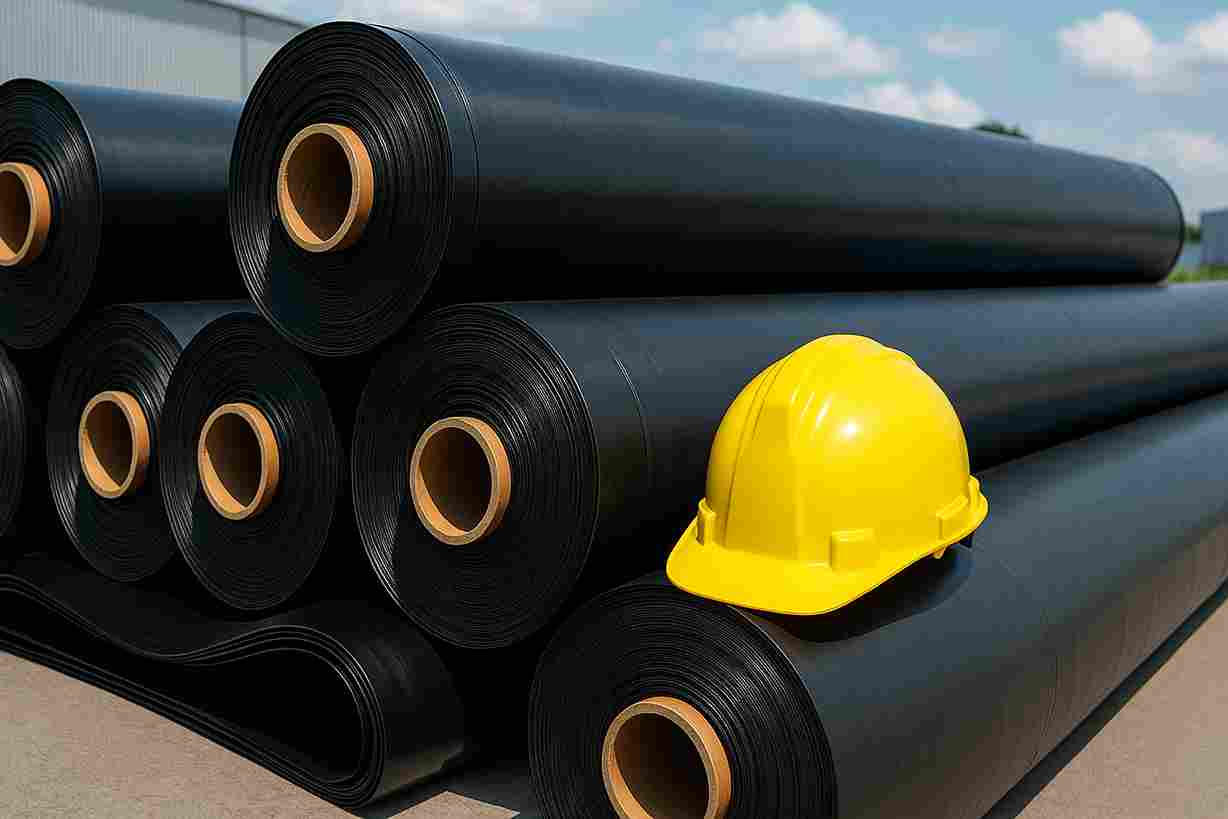
In a Covered Lagoon , or covered pond, geosynthetic materials play a dominant role. This digester type uses HDPE Geomembrane as a base layer (liner) to prevent waste from seeping into groundwater and as acoveron top to capture gas.
- Gas Holder
The gas produced must be stored before distribution. In conventional systems, this holder may be a concrete dome. In modern geomembrane systems, however, the cover itself inflates like a giant balloon as it fills with gas. - Outlet & Slurry Storage
Waste from which gas has been extracted exits through the outlet. Make no mistake: biogas residue (bio-slurry) is not waste! It is a nutrient-rich liquid organic fertilizer.
Why Are Construction Materials Crucial?
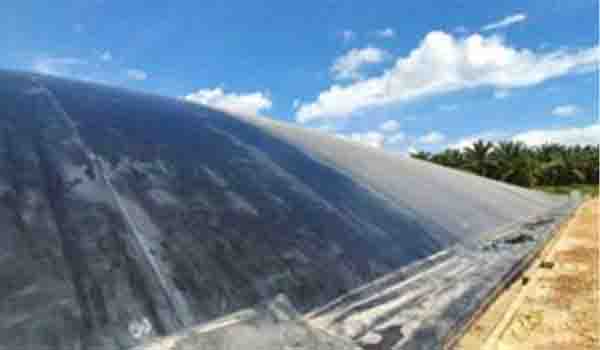
People often fail to build biogas installations not because of the wrong waste recipe but because of leakage. Remember, methane molecules are small and pressure can vary. If you build a concrete digester with even a slight crack, gas will escape (fugitive emission).
This is where modern technology such as HDPE (High Density Polyethylene) Geomembrane becomes a game changer. This material offers advantages that ordinary concrete lacks:
- Absolutely Impermeable: Ensures that no gas leaks into the air and no liquid waste contaminates the soil.
- Chemical Corrosion Resistance: Organic waste is acidic and corrosive. Concrete can erode over time, but HDPE is designed to withstand the extreme chemical reactions inside a digester.
- Flexible: Ground can move or crack, damaging concrete structures. Geomembrane has highelongation, making it safe from ground movement.
If you plan to build a biogas system, whether for a private livestock farm or the palm-oil industry, do not skimp on the quality of its liner!
Dual Benefits: Economic and Environmental
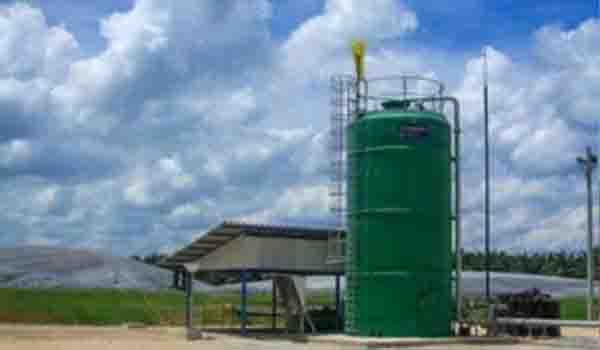
Why are many people, and perhaps you as well, starting to consider biogas? The answer lies in its profitability and environmental friendliness.
- Energy Cost Savings
For industry, electricity or boiler fuel is often the largest cost . With biogas, you can produce your own energy. At household scale, manure from only two cows can produce enough gas to cook for one family every day. Say goodbye to LPG cylinders! - Reducing the Greenhouse Effect
Did you know that methane is 21 times more harmful to the ozone layer than CO2 when released directly into the air? By capturing methane in a digester and burning it for energy, you effectively reduce global-warming impacts. This is a tangible step toward Go Green. - Free High-Quality Fertilizer
Biogas residue (slurry) contains nitrogen, phosphorus, and potassium in forms plants absorb more easily than chemical fertilizers. For farmers, this is black gold that can enrich soil without damaging its structure. - Better Environmental Sanitation
Exposed organic waste attracts flies and produces foul odors. Placing it in a closed digester eliminates odors, reduces flies, and makes the environment much healthier.
Challenges and the Future of Biogas in Indonesia
Indonesia has enormous biogas potential. We have millions of hectares of oil-palm plantations and millions of livestock. So why is not everyone using it? The challenges often lie in initial investment costs (CAPEX) and limited technical knowledge for maintenance.
Many biogas projects stall because they are built carelessly without considering material durability. In fact, when built to proper standards using the right liner and a safepiping system, a digester can last more than 10 years.
The Indonesian government is also actively promoting the transition to new and renewable energy. Incentives for industries converting liquid waste into energy, such as biogas power plants, are increasingly available. The momentum is now.
Conclusion: Take Your First Step
The biogas concept teaches us that nothing in this world is truly wasted. There are only resources not yet in the right place. Converting waste into energy reflects our responsibility as inhabitants of the Earth and is a smart strategy for economic efficiency.
Are you interested in processing the waste around you? Or perhaps your company is seeking a more advancedwaste-management solution? Remember, the key to a successful biogas system lies in careful planning and robust construction materials.
Need a Consultation for Your Requirements?
Feel free to consult us about your geosynthetic-material requirements. We supply a wide range of high-quality geosynthetics ready for delivery throughout Indonesia. Let us discuss your project needs today!
View Our Catalog: Click here
Chat on WhatsApp Now: Click here
Remember Geosynthetics, Remember Petra!
Other Articles

HDPE Geomembrane: Specifications and Advantages
The term HDPE plastic may be more familiar to the general public than HDPE geomembrane. In general, geomembrane is a civil engineering construction material closely associated with water containment. This article looks at HDPE geomembrane specifications, functions and advantages. To learn more about geomembrane in general and HDPE in particular, the following article covers its […]

DWC Pipe Joining with a Join Tracker
DWC pipe joining using a Join Tracker is a common method for creating a strong, secure connection between double-wall corrugated (DWC) pipes. The following are the general steps for joining DWC pipes with a Join Tracker: 1. Preparing Tools and Materials: DWC pipes to be joined. Join Tracker (pipe extraction tool). Joint rubber (gasket/rubber ring). […]