


Best Geomembrane Type for a Waste Control Tank
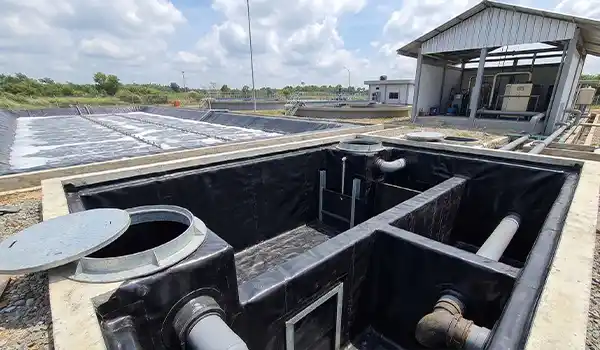
Have you ever thought about what would happen if the waste control tank at your industrial facility leaked? The danger goes beyond warnings or fines from the government; it also includes severe environmental damage, especially groundwater pollution. To prevent this nightmare, you need an exceptionally tough lining system. This is where geomembrane plays a crucial role.
But did you know that not all geomembranes are the same? Choosing the wrong type could cost you twice over—through expensive repairs and a high risk of pollution. In this petrane.co.id article, we take a thorough look at the types of geomembrane available on the market and which material best suits your waste control tank.
The Dangers of Unlined Waste Tanks
Before discussing material types, you need to understand why tank liners are so important. Industrial wastewater usually contains harsh chemicals, heavy metals and other toxic substances. If a holding tank relies only on soil or ordinary concrete, these liquids can easily seep through.
Concrete can crack over time, especially when continuously exposed to corrosive chemicals. Soil? It is certainly not a good water barrier. Waste seeping into groundwater will damage the surrounding ecosystem and threaten public health. That is why you need a synthetic lining material that is watertight and chemically resistant: geomembrane.
Types of Geomembrane on the Market
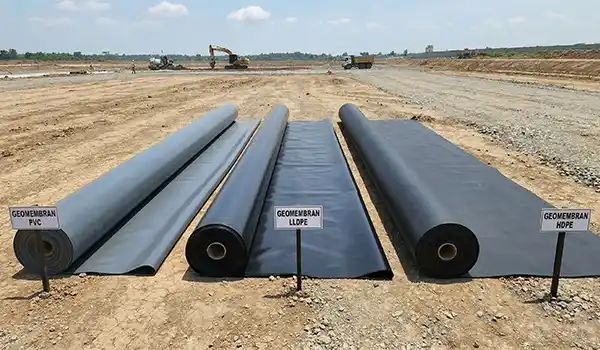
In the construction materials market, you will find several types of geomembrane. To avoid choosing the wrong one, let’s first get to know the most commonly used materials:
- PVC (Polyvinyl Chloride) Geomembrane
PVC is pliable and flexible, making it very easy to install, even on surfaces that are not particularly level. Unfortunately, PVC has a major weakness when used for waste. It is prone to damage and degradation after prolonged exposure to harsh chemicals. PVC is also not particularly resistant to direct UV exposure from sunlight. - LLDPE (Linear Low-Density Polyethylene) Geomembrane
If you need a more elastic geomembrane, LLDPE is often an alternative. Its elasticity means it does not tear easily during extreme ground movement. However, LLDPE falls far behind in terms of chemical resistance and long-term tensile strength. - HDPE (High-Density Polyethylene) Geomembrane
Here is the star of the show! HDPE is the type of geomembrane most widely recommended by engineers for large-scale applications, including waste control tanks. Its extremely dense structure makes it exceptionally strong and almost impenetrable to liquids and gases.
Why Is HDPE the Best Choice?
Out of all these options, why does petrane.co.id strongly recommend HDPE geomembrane for waste applications? The answer lies in the fundamental characteristics of this material, which is designed for extreme conditions.
- Resistance to Harsh Chemicals
A waste control tank collects a wide range of aggressive chemical compounds. HDPE geomembrane has outstanding chemical resistance. It does not easily melt, degrade or react when it comes into contact with strong acids, alkalis or organic solvents. This makes HDPE far tougher than PVC or LLDPE. - Maximum UV Protection
Waste control tanks are usually located in open areas and constantly exposed to the sun’s heat. Ordinary geomembrane quickly becomes brittle and cracks under ultraviolet radiation. However, HDPE geomembrane is specially formulated with added carbon black for UV protection. It can last for years under intense sunlight without losing its strength. - Strong, Durable and Long-Lasting
The high molecular density of HDPE gives this product excellent tensile strength. It withstands heavy liquid pressure, punctures from sharp objects and tearing. When installed using the correct welding method, HDPE geomembrane can last for decades! You won’t need to worry about removal, reinstallation or repair costs anytime soon. - Completely Impermeable to Water and Gas
The main purpose of using a liner is to prevent leaks, right? HDPE has extremely low permeability. This means that however heavy the liquid waste or toxic gases produced by decomposition, they cannot penetrate the material. The soil ecosystem below will remain pure and safe.
A Smart Choice for Your Waste Project
Choosing a liner for a waste control tank is not something to experiment with. The financial, regulatory and environmental risks are too great. Other materials may seem slightly more flexible during initial installation under certain conditions, but for long-term investment and maximum safety, HDPE is the clear winner.
With superior chemical resistance, outstanding physical strength and an exceptionally long service life, HDPE provides peace of mind that other liner types cannot match. You can focus on running your business or project without constantly worrying about your waste tank leaking.
Get HDPE Geomembrane
If you are planning to build a waste control tank and need top-quality HDPE geomembrane, you have come to the right website.
As a trusted infrastructure materials supplier, we are ready to meet your project needs with the highest quality standards. Feel free to consult our expert team directly about the most suitable specifications.
Would you like our team to contact you to discuss the volume and price of HDPE geomembrane for your project?
Need a Consultation for Your Requirements?
Feel free to consult the Petra Nusa Elshada team. We supply a wide range of high-quality geosynthetics ready to ship throughout Indonesia. Let’s discuss your project needs now!
Check our catalog: Click here
Chat on WhatsApp Now: Click here
Remember Geosynthetics, Remember Petra!
Other Articles

Woven and Non-Woven Geobag Price List 2026
Coastal abrasion and river erosion are environmental problems that need the right solution, because the scouring they cause can lead to significant losses. Both can be anticipated with geobags. But what is the current geobag price? Geobags are considered a practical and economical solution to soil erosion and coastal abrasion. With quality geobag products, river […]
Geobag Functions and Benefits for Erosion Control
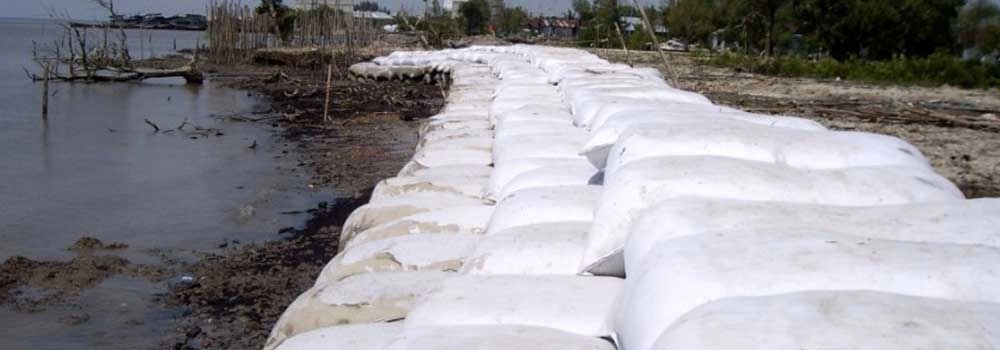
Have you seen large bags neatly arranged along a riverbank or coastline? This geosynthetic product is known as a geobag. Today, geobag is one of the most popular and efficient solutions in civil engineering construction and environmental management, particularly for controlling riverbank erosion and preventing coastal erosion.

Affordable HDPE Geomembrane Supplier
Demand for Geomembrane is growing among shrimp and fish pond operators. An HDPE geomembrane is a sheet material made with an HDPE layer and used as a waterproof barrier between soil and other materials. As an HDPE geomembrane supplier, we sell HDPE geomembrane, offering quality products at competitive prices per square meter (m2) from well-known […]