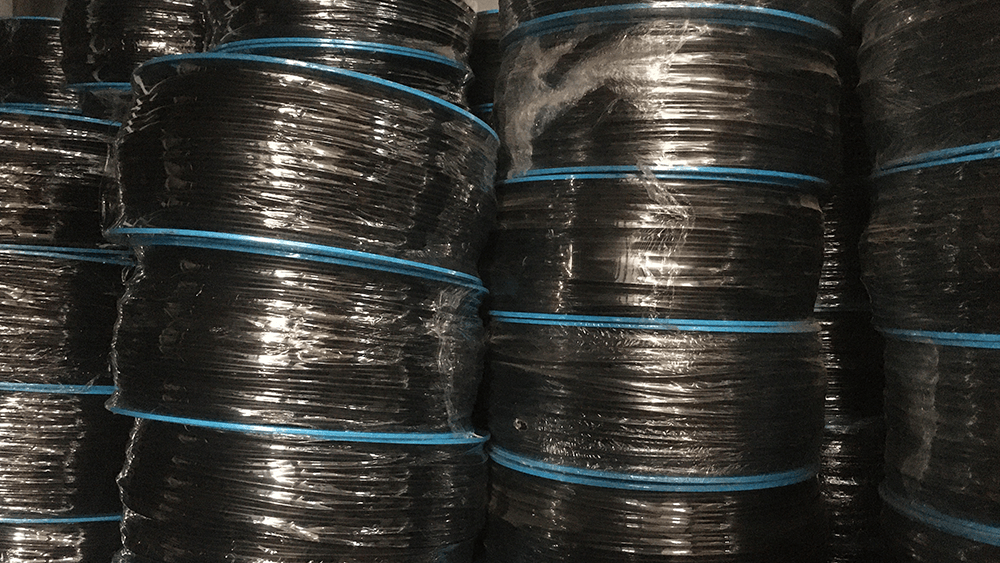
Mirafi Polyfelt: Quality Geotextile for Better Infrastructure

Mirafi Polyfelt, a quality geotextile for better infrastructure, is an important solution increasingly chosen to strengthen soil stability, control erosion and improve the performance of many infrastructure projects. Whenever I discuss field requirements, from roads and embankments to slope reinforcement, I always return to one idea: the right geotextile is not merely an “additional material,” but an investment in long-term performance. This is where Mirafi Polyfelt plays its role as a geotextile option known for reliably supporting more durable infrastructure.
Why geotextiles such as Mirafi Polyfelt are key to infrastructure project success
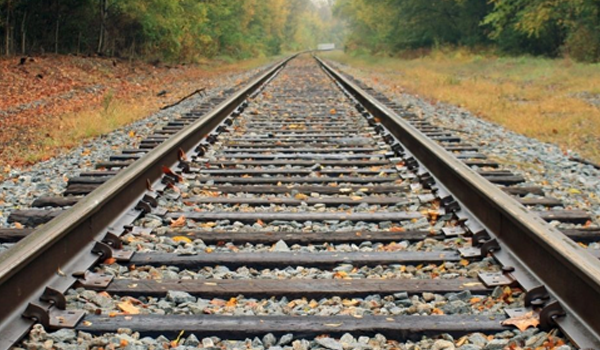
In many construction projects, people often focus on “big numbers” such as concrete thickness, aggregate volume or bridge span length. Yet infrastructure performance is often determined by a more hidden layer: the intermediate layer between soil, aggregate and the drainage system. Mirafi Polyfelt, a quality geotextile for better infrastructure, stands out because in field practice its main functions can make the difference between a structure that quickly develops problems and one that remains stable and long-lasting. A well-designed geotextile helps soil maintain its behavior, reduces the potential mixing of materials that should remain separate and conveys water in a controlled manner.
I have personally seen cases where developers or contractors saved time by changing the work sequence: aggregate was placed directly without considering subgrade conditions, or water control was not handled through a system-based approach. The impact was not always visible in the first week, but appeared after the next rain cycle. This is where geotextile, including Mirafi Polyfelt, feels like “technical insurance.” Not because the material is “magic,” but because its design responds to soil mechanisms and water flow.
The direct relationship between soil stability and geotextile selection
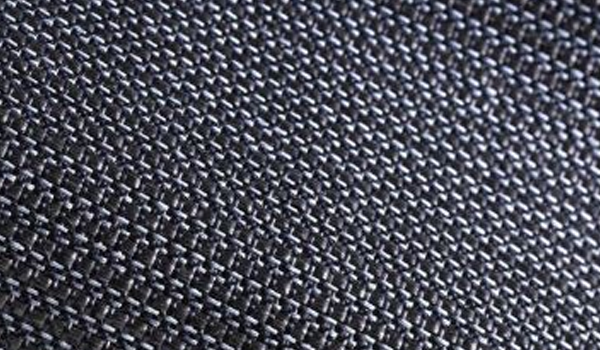
In geotechnical engineering, soil is not static. It moves, swells and shrinks, and degrades when exposed to water. When the subgrade has problems, the embankment and pavement layers above it end up carrying loads they should not have to bear. Geotextile acts as a connecting layer that governs the interaction between materials: soil can “stay in place” without easily mixing with aggregate. In this scenario, Mirafi Polyfelt, a quality geotextile for better infrastructure, helps protect the structure during compaction, increasing traffic loads and changing environmental conditions.
I usually remind field colleagues that stability is not only about compressive strength. Stability is also about “consistent behavior” over time. The right geotextile helps minimize unwanted deformation. This means that when loads increase or water enters through the pores, the system’s response remains more predictable. With that predictability, the design can perform according to its original assumptions.
Furthermore, geotextile selection cannot be separated from local soil characteristics: soil type, moisture content, swelling potential and organic content. If the geotextile design is unsuitable, two extremes can occur: it may “restrict” flow too much and trap water, or it may be too “open” so aggregate and soil mix easily. Mirafi Polyfelt is an option designed to meet specific functional requirements, making the selection process more focused rather than simply “installing whatever is available.”
Mirafi Polyfelt’s role in controlling erosion and water flow
Water is the most frequent cause of long-term soil structure failure. On slopes, rainwater can wash away fine particles and increase instability. In embankments or road earthworks, uncontrolled water can cause soil to lose bearing capacity. Geotextile helps reduce both problems at once: it controls the movement of fine particles and directs water flow in a more controlled way. When this concept is applied correctly, the infrastructure built can be more stable.
In my experience, teams that understand geotextile do not simply place a “sheet” between layers; they also consider the drainage chain, from where water enters and where it exits to preventing particles from being carried away. Mirafi Polyfelt, a quality geotextile for better infrastructure, can work optimally when placed according to its required function—separation, filtration or drainage—within the design context.
One interesting point I often reflect on is that many people focus on geotextile’s “mechanical resistance,” even though long-term performance is strongly influenced by its interaction with water. A good-quality geotextile is usually more consistent in maintaining its properties. That consistency helps the system keep working through wet-dry cycles. Erosion therefore becomes more difficult to develop, and damage caused by seepage can be reduced.
The impact of geotextile quality on infrastructure service life
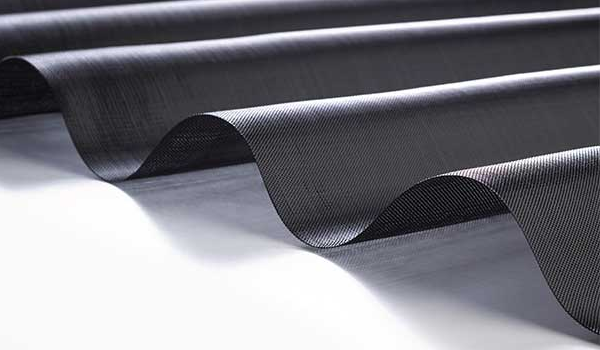
Ultimately, choosing a geotextile is a choice about service life. When a geotextile is designed for long-term stability, the structure above it is more likely to last without “emergency repairs.” I often think about life-cycle cost. Geotextile does add a cost component at the start of a project, but if it prevents premature damage, maintenance and repair costs can be reduced.
Technically, the right geotextile helps prevent material mixing that can degrade pavement layers. That degradation can eventually lead to cracking, deformation or reduced bearing capacity. With Mirafi Polyfelt, known as a quality geotextile material, the likelihood of failures triggered by soil-water interaction can be reduced.
However, I also want to emphasize that geotextile quality is not the only variable. Installation, overlap, conformity to the surface and control during backfilling also determine the final result. Mirafi Polyfelt can be the “answer” to a design requirement, but success still requires disciplined field execution. Only when quality and execution come together does infrastructure have a strong chance of achieving its planned service life.
Understanding Mirafi Polyfelt types and characteristics for more accurate installation
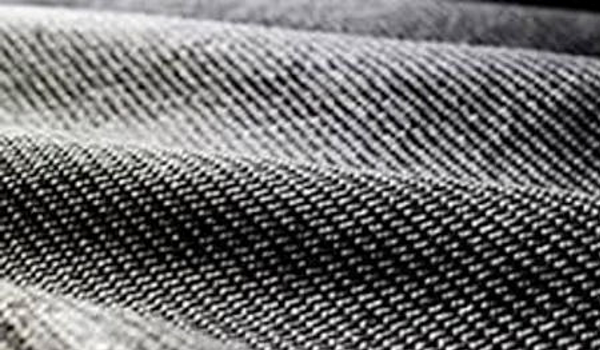
After understanding why geotextile is important, the next step is understanding the types and characteristics a project requires. Mirafi Polyfelt, a quality geotextile for better infrastructure, cannot be judged only by its “brand” or “general category.” We need to discuss the main function to be achieved—such as filtration, separation or drainage control—and match it to soil conditions and loading scenarios. I have seen many projects fail not because the material was poor, but because the selected material did not truly fit the specific problem.
Understanding geotextile types means understanding how its microscopic structure works: how fibers form pores, how water passes through the material and how likely particles are to be carried away. At this point, the discussion becomes more technical, but I will try to explain it from a more “field-friendly” perspective. Ultimately, what is needed is the right installation decision—one that can be justified on site and is consistent with the design documents.
Different functions: separation, filtration and drainage
In many earthworks, the main problem is often mixing between fine soil and aggregate. This mixing can reduce pavement-layer quality because the gradation changes. This is where the separation function becomes important: geotextile keeps layers “separate” so the aggregate retains its quality. In projects such as embankments or subbase work, a separation approach can greatly determine long-term performance.
Filtration, meanwhile, emphasizes geotextile’s ability to let water pass while retaining fine soil particles. This is important in drainage systems because if the geotextile cannot behave as a filter, water can carry fine soil away and create voids or instability. Mirafi Polyfelt, a quality geotextile for better infrastructure, is generally chosen for its more controlled filtration characteristics, preserving water paths without destroying the surrounding soil structure.
Drainage relates more to water paths that must be managed—both to reduce pore-water pressure and to prevent water accumulating inside an embankment. In some cases, passive filtration alone does not meet drainage needs. Because water must be directed efficiently, the design may involve a more complex system. Although not every project requires a specific drainage solution, an initial assessment must still be carried out because field conditions are decisive.
Selection considerations based on soil and load conditions
A common mistake is choosing geotextile based on preference or general assumptions without testing soil characteristics. In reality, soil conditions determine mechanical and hydraulic requirements. For example, fine-grained soil with high seepage potential will require a geotextile focused on filtration. Conversely, relatively stable soil that needs aggregate mixing prevention is better suited to a separation approach.
Loads must also be considered. Not every geotextile faces the same load conditions—especially in areas experiencing settlement or lateral pressure. Mirafi Polyfelt, a quality geotextile for better infrastructure, is generally relied upon for its consistent quality specifications, but selection must still be based on requirements: tensile strength, resistance to installation damage and long-term durability. I often recommend that design and supervision teams agree on criteria from the outset to prevent a “mismatch” during construction.
The construction process itself is also a factor. Is the subgrade surface asphalt or gravel? Are there sharp stones? How difficult is the terrain, and how likely is the geotextile to tear when material is placed on it? These installation challenges affect the geotextile’s required puncture resistance or resistance to local tearing. Understanding the field context makes selection more realistic.
Installation practice: small details that determine major results
Geotextile installation is often viewed as an “in-between stage,” yet from a technical perspective this stage determines whether the geotextile will function as designed. I often see site teams rush to finish laying sheets while neglecting overlap, securing and the geotextile’s position relative to water flow. If the geotextile shifts or the overlap is too small, water can find a shortcut and carry fine particles, making the filtration design ineffective.
Mirafi Polyfelt, a quality geotextile for better infrastructure, delivers maximum benefits when installed correctly. This means placing the material at the correct elevation, clearing the surface of sharp objects that could damage it and overlapping sheets according to design guidelines. In some cases, the direction of laying and backfilling must be considered to avoid excessive strain.
I also recommend a disciplined “visual quality control” approach. Although geotextile looks simple, signs of trouble such as small tears, excessive folds or areas pulled too tight can develop into major problems after backfilling. Periodic inspection during laying and before backfilling reduces the potential for failure. This is where field experience meets theory: the right geotextile plus careful installation produces consistent results.
Key data to bring the concepts together (the only list-format data in this article):
- Geotextile’s main functions are separation to prevent material mixing, filtration to let water through while retaining fine particles, and drainage control to reduce pore-water pressure and erosion.
- Successful application depends heavily on choosing the right function, soil characteristics, load conditions and installation quality (overlap, protection and geotextile position).
Mirafi Polyfelt case studies in real projects: from roads to slope reinforcement
Discussing Mirafi Polyfelt conceptually is important, but it is not enough without seeing how it is applied in project scenarios. Mirafi Polyfelt, a quality geotextile for better infrastructure, can be found in many contexts, including road works (subgrade and subbase), soil embankments, drainage projects and slope reinforcement. Yet every location has its own “story”: soil type, rainfall pattern and the construction strategy chosen by the team. In this section, I invite you to look at its application from a more narrative perspective, similar to a technical discussion in a meeting room or a field briefing.
I will outline several case studies as a “reconstruction of field logic”—not to replace official project documents, but to show the thinking typically used when selecting and installing geotextile. With this approach, you can adapt the lessons to your own project needs.
Application in road works: restraining deformation and maintaining layer quality
In road projects, geotextile is often used to protect the subgrade and maintain pavement-layer quality. When the subgrade has variable moisture content or a soil texture that shifts easily, the aggregate layer can lose its characteristics through mixing. As a result, effective bearing capacity decreases and the road tends to crack or develop undulations. I have seen these problems often appear after heavy rainfall—meaning water is the main trigger.
Mirafi Polyfelt, a quality geotextile for better infrastructure, can help prevent mixing and reduce the risk of internal erosion. When geotextile functions as a separator or filter, the aggregate remains “clean” and does not mix with fine soil. The pavement system can therefore receive and distribute loads more consistently. In practice, this also helps compaction because correctly installed geotextile keeps layers in position during staged backfilling.
Interestingly, in discussions with field teams, I often find that road project success is influenced not only by the geotextile material, but also by the construction “workflow.” For example, if there is a long pause in work and the subgrade surface is left waterlogged, the geotextile may perform less optimally. But when geotextile is installed and construction follows the correct sequence, the impact is visible in surface quality, stability during compaction and performance after the road is in use.
Slope reinforcement and erosion control: catching problems before they grow
Slopes are areas that often face combined stresses: rainwater, gravity and potential surface erosion. Geotextile in slope reinforcement is usually intended to inhibit erosion, retain fine particles and support a controlled drainage system. Without proper treatment, water can scour soil and trigger small landslides that later grow. From supervision experience, I see that slope damage almost always begins with a small “leak”: uncontrolled seepage or a flow point not mapped from the start.
Mirafi Polyfelt, a quality geotextile for better infrastructure, is relevant because its function can support reinforcement layers and help reduce internal erosion. When the filter works well, water can flow out without carrying away the fine soil that “fuels” erosion. Geotextile can also protect important layers behind it from losing material during extreme rain.
In practice, however, one thing is often forgotten: slope design is not only about geotextile, but also surface drainage, inclination and surface protection. I always recommend viewing a slope as a system. Geotextile supports that system, but if drainage channels are not planned or the surface is not adequately protected, water will find the easiest path. The quality of Mirafi Polyfelt will therefore deliver maximum benefits when combined with a comprehensive water-control strategy.
Drainage systems and embankments: reducing pore-water pressure and failure risk
In embankments, water can become trapped inside the structure or seep in from certain sides. Increased pore-water pressure can reduce soil bearing capacity. This phenomenon is often more noticeable in work involving clay or soil with uneven permeability. At this point, geotextile is not merely a passive element—it is part of the water management mechanism. I view Mirafi Polyfelt as a component that helps “organize” water behavior within an embankment.
In a drainage-system approach, geotextile can help convey water to a safe outlet while preventing fine particles from being carried away. Voids and local instability can therefore be reduced. Mirafi Polyfelt, a quality geotextile for better infrastructure, can be the choice that makes a drainage design more stable in terms of consequences. This means that whenever it rains or moisture conditions change, the system is better prepared for the impact of water.
During construction, compaction and the backfilling sequence also affect how water moves. If water ponds at certain points, additional control is still needed even with geotextile installed, so the water does not create unexpected pressure. This is where work-method planning plays a major role. I recommend that project teams link the construction schedule to drainage objectives: when the geotextile is installed, when aggregate is placed and when the outlet channels begin working effectively.
Choosing Mirafi Polyfelt and managing the project: strategies for achieving real results
Choosing the right geotextile, including Mirafi Polyfelt, is the beginning of the journey. The main challenges usually arise after selection: ensuring the material is actually used according to specification, managing installation risks and connecting technical decisions with field dynamics. Many projects fail not because of material quality, but because of the gap between design documents and actual conditions. Project management strategy therefore becomes the “bridge” from plan to result.
In this section, I discuss a practical framework I often apply: how to define selection criteria, align coordination between parties and build a quality-control culture in the field. From this perspective, Mirafi Polyfelt, a quality geotextile for better infrastructure, is not just a slogan, but a real implementation.
The selection process: from functional requirements to technical specifications
The first step I recommend is to start from the problem, not the product. The problem may be soil-aggregate mixing, seepage, erosion or the need to stabilize a soft area. Only after identifying the problem should the appropriate geotextile function be selected—separation, filtration or another more relevant requirement. With this approach, choosing Mirafi Polyfelt becomes more rational because field needs are linked to design objectives.
Once the function is understood, check the technical specifications, which usually cover mechanical resistance and filtration/hydraulic characteristics. I emphasize that specifications are not merely numbers placed in a document, but parameters that define the material’s “working limits.” If the specifications are unsuitable, the material may look fine when installed, but its performance can decline under field conditions: punctured by stones, exposed to sunlight for long periods or excessively strained during backfilling.
At this point, discussion with the material supplier and design team becomes crucial. Mirafi Polyfelt, a quality geotextile for better infrastructure, should be selected with adequate technical information so project decisions are more data-driven. If information is unclear, the project risks proceeding on untested assumptions. I recommend reviewing technical documents and specification compliance before procurement.
Project coordination: design, procurement and supervision must be aligned
Coordination is often invisible when people assess project quality. In the field, however, alignment between parties determines whether geotextile is actually installed correctly. The designer may have chosen the right geotextile type, but if procurement is inconsistent—for example, with the wrong type, thickness or function—the final result can differ. Likewise, even with correct procurement, if supervision does not enforce overlap control or protection against damage, the geotextile’s function will be compromised.
I usually recommend a technical briefing before work begins, including an explanation of the geotextile’s function and “what to watch for.” The execution team must understand why geotextile must not be allowed to shift, why the surface must be cleaned and why the work sequence must follow the plan. Once this understanding takes hold, the work culture becomes more careful.
Mirafi Polyfelt, a quality geotextile for better infrastructure, delivers maximum benefits when coordination runs smoothly. Coordination also helps when field conditions change—for example, when the subgrade turns out to be softer than expected. With good communication, the design can be revised without waiting for damage to occur. This is where a project becomes adaptive while maintaining quality.
Field quality control: preventing mistakes before they become major costs
Quality control is not only about checking material on arrival. Effective quality control starts at the beginning: checking geotextile rolls, storing them so they are not damaged and inspecting before and after installation. I believe many small failures that initially seem “not a problem” can become major failures when fill material is placed on geotextile that already has local damage.
With geotextile, details such as folds, small tears or laying direction can matter. If supervision does not record and correct them, those weak points can become water paths and trigger internal erosion. Disciplined quality control therefore spares the project remediation costs that are often more expensive than prevention.
I therefore recommend a layered inspection method: control upon material receipt, control during laying and control before backfilling. The team must understand the indicators of problems and the repair procedures. Mirafi Polyfelt, a quality geotextile for better infrastructure, will not perform at its best if it is installed hastily or left unprotected from sharp stones. But when quality control is in place, the geotextile’s benefits will be evident in structural stability and minimal signs of premature damage.
Conclusion
Choosing Mirafi Polyfelt, a quality geotextile for better infrastructure, means choosing a system-based approach to the project: addressing soil, water and load problems in a more planned way. Geotextile is no longer just a sheet between layers, but a key component that helps preserve structural function throughout the service life of road works, embankments and slope reinforcement.
Success depends on three complementary factors: choosing the geotextile type based on the right function, disciplined installation according to design details, and project management that aligns design, procurement and supervision. When all three come together, Mirafi Polyfelt can be an important element that improves stability, reduces the risk of erosion and deformation, and helps infrastructure last longer with more controlled maintenance costs.