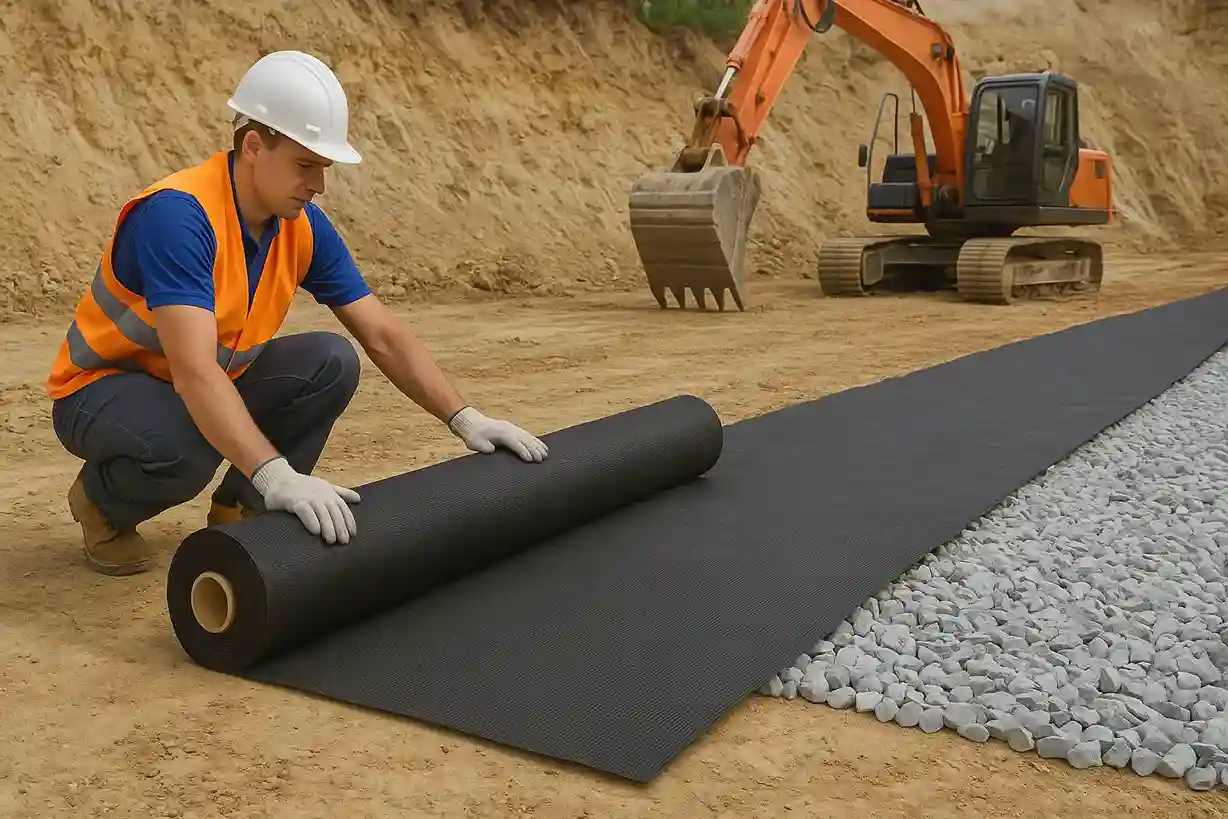
How to Calculate Geomembrane Quantity for a Pond

Geomembrane is a plastic liner, often called HDPE tarpaulin, commonly used to line aquaculture ponds, water storage ponds, artificial lakes, landfill projects, biogas covers and more. Before you calculate geomembrane quantity, note that it comes in several thicknesses: 0.3 mm, 0.5 mm, 0.75 mm, 1 mm, 1.5 mm and 2 mm. Let’s take a shrimp pond as an example. Shrimp ponds generally use 0.5 mm geomembrane.
In a shrimp pond, geomembrane maintains water quality by keeping it from mixing with soil, mud, grass and similar material from the pond bottom, and prevents erosion on the pond slopes. This is a great help in keeping water quality stable throughout the farming cycle.

Most pond farmers do not yet know how to calculate how much geomembrane their pond needs. Here we explain how to work out the geomembrane quantity for your pond.
- First, find the area of your pond. If your pond measures 50 m x 70 m, its area is 3,500 m². With a depth of 1.5 metres, add 30% to the pond area, giving 4,550 m².
The 30% compensates for the pond walls, because the walls must also be lined with geomembrane.
- Second, find the area of geomembrane per roll by multiplying its length by its width. A 0.5 mm geomembrane roll is 5.8 m wide and 50 m long, so the area of one 0.5 mm roll is 290 m².
To find the number of rolls your pond needs, divide the pond area + 30% by the geomembrane area per roll.

So the geomembrane needed for a 3,500 m² pond (50 m x 70 m) that is 1.5 m deep is 15.68 rolls, rounded up to 16 rolls.
Other Articles
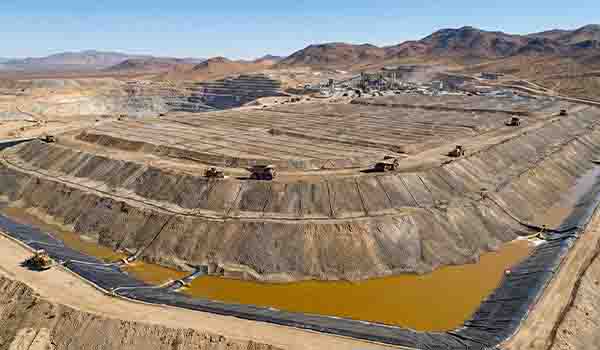
How to Install Geomembrane on a Gold Mine Heap Leach Pad
Have you ever imagined how gold is separated from towering piles of ore? In modern mining, one of the most efficient and frequently used methods is heap leaching. Yet behind this method’s success is one component that is often invisible because it is buried at the very bottom: geomembrane. For those who work in mining […]

Geogrid Road Installation: Functions and Benefits
Geogrid is a sheet with fairly large openings that functions as reinforcement. Unlike geotextile, another sheet-type geosynthetic used for filtration and separation, geogrid is a soil improvement method that increases bearing capacity. There are several kinds of geogrid used in different applications, but for geogrid road installation, biaxial geogrid and polyester geogrid are generally used. […]