


Coastal Erosion: Dangers and How to Prevent It
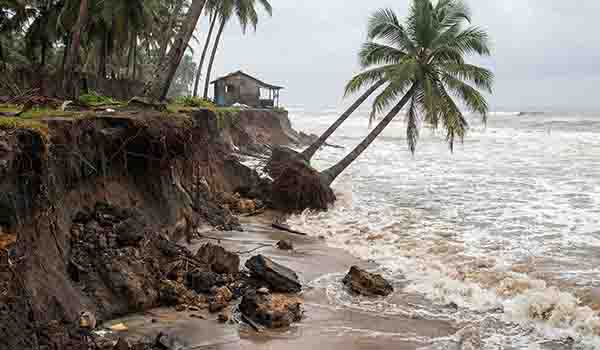
Hello, Petra friends! Have you ever noticed the shoreline in your area retreating day by day? Or perhaps you have seen seaside buildings that used to be far from the water’s edge now being eaten away by waves? This phenomenon is not just an ordinary sight, but a real sign of coastal erosion. For those of us living in an archipelagic country like Indonesia, this threat is very real and can have fatal consequences if not addressed promptly.
This environmental issue is not only about lost land, but also a threat to infrastructure, tourism and residential areas. The good news is that modern civil engineering technology offers solutions that are far more efficient, environmentally friendly and cost-effective than conventional concrete methods. These solutions use geosynthetic materials such as Geobag and Geotextile Tube.
In this article, we will take a thorough look at what coastal erosion is, why old methods are being abandoned, and how geosynthetic technology can save our shorelines. Read on to the end!
What Is Coastal Erosion and Why Should We Care?
Simply put, coastal erosion is the process of land being worn away in coastal areas by sea waves, tidal currents and strong winds. If left unchecked, erosion causes the shoreline to retreat inland.
You might ask, “Isn’t that just a natural process?”
It’s true that erosion can occur naturally. However, human activity accelerates this process many times over. Clearing mangrove forests for aquaculture ponds, illegal sand mining and infrastructure built out into the sea without an environmental impact assessment are the main triggers. Add to that global warming, which causes sea levels to rise, and erosion becomes a “time bomb” for coastal areas.
The impact is serious. Productive land is lost, groundwater is contaminated by seawater intrusion, and beach tourism potential can be destroyed in an instant. That is why tackling erosion is no longer an option, but a necessity.
Weaknesses of Conventional Methods (Concrete & Rock)
For decades, the main solution for holding back erosion has been hard structures. You have surely seen giant concrete walls (seawalls) or piles of quarry stone (rip-rap) along the beach. Although these methods have proven strong, they have several fatal weaknesses that are causing them to be abandoned:
- Very Expensive: Building a concrete seawall requires cement, steel and high logistics costs, especially if the beach is hard for heavy equipment to reach.
- Spoils the View: Rigid concrete walls often ruin the aesthetics of tourist beaches. Tourists come to see the sea, not cement walls.
- Wave Reflection: Hard structures tend to reflect wave energy back to the sea, which can actually wash away the sand at the base of the seawall foundation itself (scouring). As a result, the wall can collapse suddenly.
- Hard to Repair: If the concrete cracks or is destroyed by a storm, repair costs are almost as high as building a new one.
This is why modern civil engineers are switching to soft structure solutions using geosynthetic materials.
1. The Geobag Solution
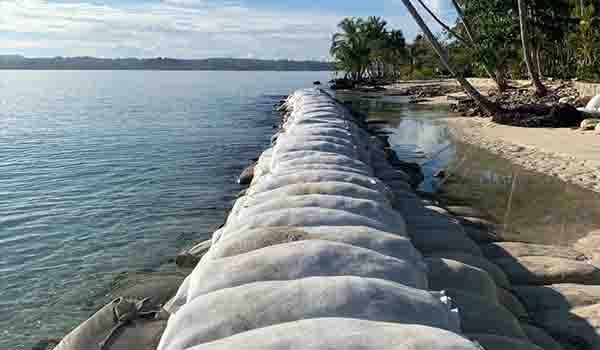
One powerful weapon against erosion is the Geobag. As the name suggests, it is a bag made of Non-Woven or Woven Geotextile, filled with local material, usually beach sand.
How Does It Work?
Imagine thousands of sand pillows neatly arranged along the shoreline. Geobags work by absorbing wave energy rather than fighting it. Because they are flexible, Geobags follow the ground contour and don’t break easily like concrete.
Advantages of Using Geobags
- Easy & Fast Installation: You don’t need to bring quarry stone from far away. Simply use the sand around the beach to fill the geobags. This drastically cuts material transport costs.
- Flexible: Geobags can be arranged to form dikes, revetments (shore slope protection) or even groin breakwaters.
- Environmentally Friendly: Over time, Geobags can be covered by moss or natural sand, blending into the coastal ecosystem. Mangroves can even grow between them.
- Strong Material: Geobags from Petra Nusa Elshada use high-quality geotextile that is resistant to UV rays and salt water, so they don’t deteriorate easily even after years of exposure to scorching heat.
Geobags are well suited for medium-scale erosion control, temporary protection during construction projects, or as toe protection for dikes.
2. The Geotextile Tube Solution
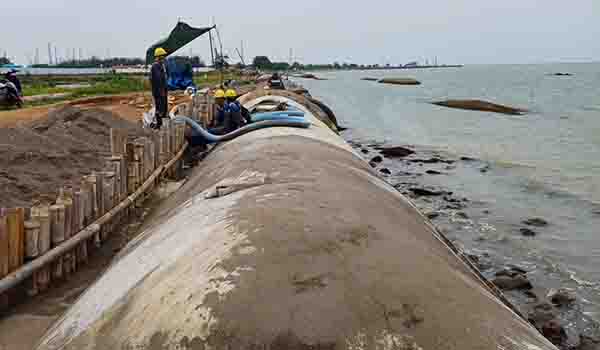
If a Geobag is like a sand pillow, the Geotextile Tube is a “giant bolster”. It is a large tube made of high-tensile-strength Woven Geotextile. Sizes vary from 1 meter to several meters in diameter, with lengths of tens of meters.
A Unique Installation Process
Unlike Geobags, which are filled manually or with small equipment, Geotubes are filled using a hydraulic pumping system. A mixture of sand and water (slurry) is pumped into the tube.
- Pumping: Wet sand is pumped in.
- Dewatering: Water drains out through the pores of the geotextile fabric, while the sand is retained inside.
- Compaction: The end result is a sand tube that is very dense, heavy and solid like igneous rock, yet still flexible.
When Should You Use a Geotextile Tube?
Geotubes are a heavy duty solution. They are highly recommended for:
- Breakwaters: Placed offshore to break waves before they hit the shoreline.
- Beach Reclamation: Helping to form new land or restore a lost shoreline.
- Protecting Vital Assets: Protecting coastal highways, seaside airports or luxury resort areas.
In Indonesia, case studies of Geotube use (such as at Tanjung Kait Beach, Tangerang) have shown positive results, with the shoreline becoming more stable and sand sedimentation building up again behind the Geotube structure. This proves that the technology can “heal” damaged beaches.
Conclusion: Time to Switch to Modern Coastal Erosion Methods
Dealing with coastal erosion doesn’t have to mean “fighting” nature with rigid concrete. By using geosynthetics such as Geobags and Geotextile Tubes, you apply an approach that is more in harmony with nature (working with nature).
This method not only saves land from erosion, but also significantly saves project budgets compared to conventional methods. Faster installation means protection can be in place before the damage gets worse.
If you are planning a coastal protection project, river embankment repair or reclamation, don’t hesitate to consult the experts. Don’t let your valuable assets be washed away by the waves.
Need a Consultation for Your Project?
Protect Our Coastlines Now! Do you need a geotextile requirements analysis or the best quote for your project?
Feel free to consult us about your geosynthetic material needs. We supply a wide range of high-quality geosynthetics ready to ship throughout Indonesia. Let’s discuss your project needs now!
Check our catalog: Click here
Chat on WhatsApp Now: Click here
Remember Geosynthetics, Remember Petra!
Other Articles
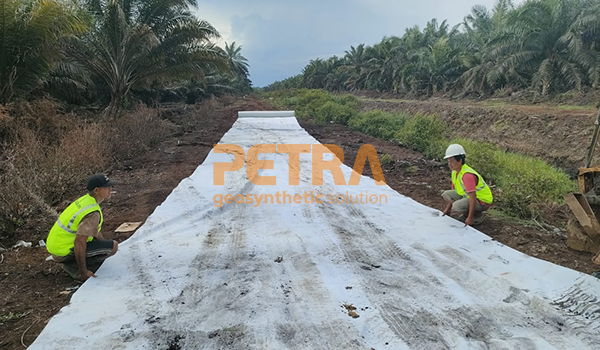
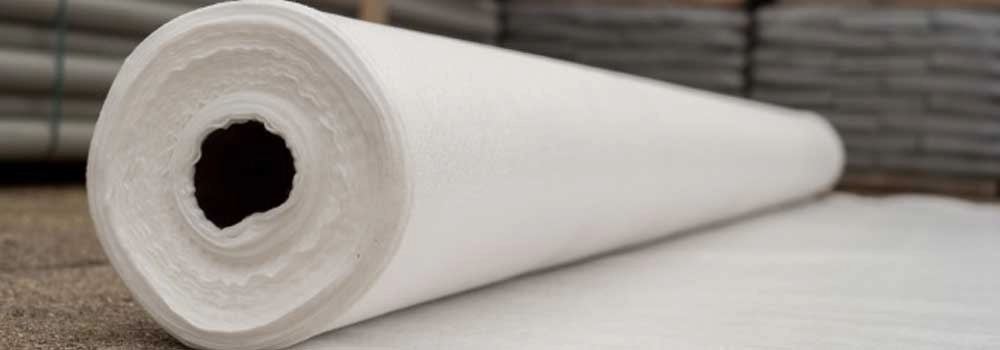
Non-Woven Geotextile Price 2023, Functions and Benefits
If you work in construction, you are surely familiar with Non Woven Geotextile. This material is one of the things construction projects need. Many people are curious about the non-woven geotextile price in 2023. Is this material expensive? You can find information about the price of non woven geotextile in this article. You should also […]
