


Geoprotec: Preventing Pond Water Loss with a Liner
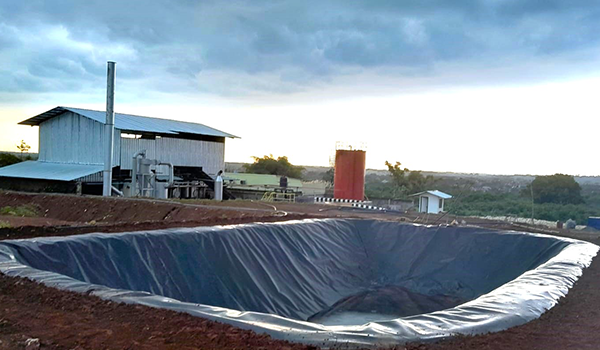
Water is a source of life. In many regions, especially those that often experience long dry seasons, communities rely on storage ponds as water reserves. However, a common problem is rapidly decreasing pond water. This can be caused by evaporation from the sun’s heat or seepage into the soil. If not addressed promptly, a storage pond becomes less effective and cannot meet long-term water needs.

A modern solution now widely used is an impermeable HDPE geomembrane liner. This article provides a comprehensive explanation of how Geoprotec-brand geomembrane works, its advantages over other materials, its installation and its long-term benefits.
Why Does Pond Water Decrease Quickly?
- Evaporation
When a pond is exposed to direct sunlight, water evaporates into the air. The wider the pond’s surface and the hotter the weather, the greater the amount of water lost. During the dry season, evaporation can reach several liters per day.
- Infiltration (Seepage)
Soil has pores that allow water to seep downward. Even cement-lined ponds can crack over time, so the water still leaks. This is the leading cause of pond water being depleted quickly.
What Is Geoprotec?
Geoprotec is a brand of geomembrane liner made from HDPE (High-Density Polyethylene) and specially designed to stop water from seeping into the soil. This material comes in thick plastic sheets installed on the bottom and walls of a pond.

HDPE geomembrane has been widely used in major projects, including shrimp ponds, artificial reservoirs, industrial waste containment areas and village water storage ponds. Its advantage is complete impermeability, ensuring the water is fully retained.
Advantages of Geomembrane over Other Materials
Using geomembrane from the well-known Geoprotec brand offers many advantages over traditional methods such as clay, cement or plastic tarpaulin:
- Perfectly impermeable: virtually no seepage.
- UV-resistant: does not deteriorate easily even when exposed to direct sunlight.
- Long service life: can last 10–20 years.
- More economical in the long term: moderate initial cost but much more durable than tarpaulin, which lasts less than a year.
- Better-preserved water: water quality remains stable because it does not mix with soil or other materials.
How to Install Geomembrane
Geomembrane installation requires precision for optimal results:
- Prepare the pond base: level and compact the soil so there are no sharp areas that could damage the liner.
- Unroll the geomembrane: size it to fit the pond and make sure it covers the entire surface.
- Heat-weld the seams: every joint between sheets must be welded so no gaps can leak.
- Add protective geotextile: place this special fabric layer under the geomembrane to prevent punctures from stones or roots.
- Perform regular maintenance: keep sharp objects out of the pond and inspect the seams routinely.
Comparison of Pond Lining Materials
| Material | Cost | Durability | Leak Risk | Service Life |
| Geomembrane | Moderate | Very high | Very low | 10–20 years |
| Concrete/Cement | High | Good but can crack | Moderate | 5–10 years |
| Compacted clay | Low | Depends on soil type | High | 1–3 years |
| Plastic tarpaulin | Low | Easily torn & embrittled | High | <1 year |
Additional Tips to Retain Pond Water Longer
Besides using geomembrane, several additional measures can be taken:
- Reduce evaporation with shade: use shade netting or plant trees around the pond.
- Use the right geomembrane thickness: large ponds generally require thicker geomembrane (≥1 mm).
- Ensure professional installation: poorly finished seams can cause leaks.
- Check conditions regularly: although durable, the liner still needs routine inspection so minor damage is not left unattended.
Long-Term Benefits
By using an impermeable Geomembrane liner, especially Geoprotec, communities can enjoy significant benefits:
- Water remains available throughout the dry season.
- Lower maintenance costs. No need to replace tarpaulin frequently or repair cracks in concrete.
- Better water quality. The water does not mix with soil, so it remains clearer and safer for daily needs.
- Long-term investment. Although the initial cost is higher than tarpaulin, its long service life makes it far more economical.
Case Study: Village Storage Pond
Imagine a village in Banten that experiences drought every year. Previously, residents used a clay pond to collect rainwater. However, whenever the dry season arrived, the water quickly ran out because it seeped into the soil.
After switching to Geoprotec-brand geomembrane, their pond was able to retain water for months. As a result, residents no longer had difficulty obtaining clean water. The initial cost was indeed higher, but the long-term benefits were much greater.
Conclusion
Water is an essential need, and preserving its availability in storage ponds is very important. Major problems such as evaporation and seepage can be addressed with modern technology in the form of an impermeable HDPE geomembrane liner. With its impermeability, durability and cost efficiency, Geoprotec is the best solution for communities that want their ponds to remain full throughout the year.
Compared with concrete, clay or plastic tarpaulin, geomembrane is clearly superior in durability, service life and effectiveness. With proper installation and simple maintenance, a water storage pond can last for decades without leakage problems.
Therefore, if you want a pond to stay full despite a long dry season, Geoprotec-brand geomembrane is the wisest and most economical long-term choice.
View Our Catalog: Click here
Chat on WhatsApp Now: Click here
Other Articles

Geocell: Benefits, Functions and Installation
Geocell is a sheet made from high-density polyethylene (HDPE) formed into a honeycomb shape and joined together into a strong structure. The benefits of geocell are especially valuable in construction, including preventing the erosion that often occurs on slopes and reinforcing soft soil, typically in road building. Contact us Geocell Installation Geocell is installed at […]

HDPE Pipe: Prices and Sizes
HDPE pipe, also commonly called PE-100 pipe, is a product designed to carry pressurized clean water, and it meets food-grade standards. Available in a wide range of HDPE pipe sizes, most well-known brands on the Indonesian market already manufacture this product in accordance with the SNI (Indonesian National Standard). HDPE pipe is a newer technology […]