


Geosynthetics for Football Field Construction

Hello, Petra friends! Have you ever seen a football match stopped halfway through because the field suddenly flooded with rainwater? Or perhaps you have played on an uneven, hard pitch that quickly tired your legs and increased the risk of injury? Classic problems like these are a nightmare for sports facility managers and players alike.
However, with rapid advances in construction and infrastructure technology, waterlogging and settlement now have a reliable solution. Modern standards for building international-class pitches require one crucial technology hidden beneath the green grass: geosynthetics for football field construction.
If you work in construction or landscape architecture, or are simply a football fan curious about the technology behind magnificent stadiums, you may have heard the term geosynthetic materials. But exactly how do these advanced sheets work unseen beneath the ground? Why does this seemingly simple material play such an important role in determining a field’s durability and quality?
In this exclusive petrane.co.id article, we will examine the use of this advanced material in detail, from common problems and its main functions to the product types used and their field installation stages. Get your notes ready and let’s learn together!
What Are Geosynthetic Materials?
Before going further, it helps to understand what these materials actually are. Put simply, geosynthetics are man-made (synthetic) products made from advanced polymers or plastics such as Polypropylene (PP), Polyester (PET) or High-Density Polyethylene (HDPE). They are specifically designed for use with soil, rock or other geotechnical materials.
In modern civil engineering, geosynthetics were created to solve various soil problems that once required expensive and time-consuming traditional methods. These materials have outstanding resistance to extreme weather, chemicals in the soil and ultraviolet (UV) exposure. Because they are tough, durable and versatile, it is no surprise that their use extends across many infrastructure sectors, including the construction and reinforcement of land for sports facilities such as football fields.
Main Problems on Football Fields
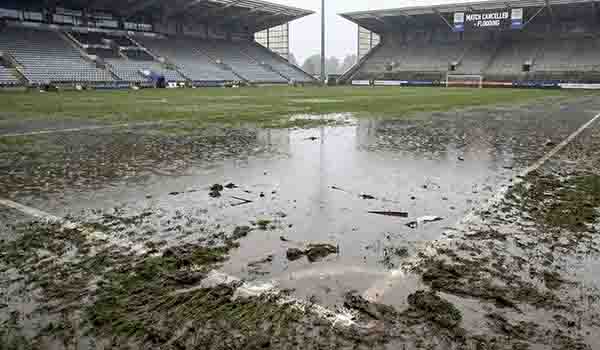
Building an ideal football field is not simply a matter of leveling the ground and planting grass on top. Advanced engineering must be applied. If you build a field without careful planning of the underground structure, be prepared to face the following serious problems:
- Waterlogging:
This is the number-one enemy. Heavy rain can quickly turn a football field into a mud pit if the water cannot immediately infiltrate the ground. - Uneven Surface:
Soft subgrade gradually settles under players’ footsteps and heavy mowing equipment, making the field uneven. - Damaged Grass Roots:
Constantly wet and waterlogged soil causes grass roots to rot from lack of oxygen, killing the grass and leaving the field bare. - Soaring Maintenance Costs:
Repeatedly fixing waterlogging and patching dead grass consumes a huge maintenance budget.
This is where geosynthetic materials for fields provide the support needed to solve the problems above.
Functions of Geosynthetics on Football Fields
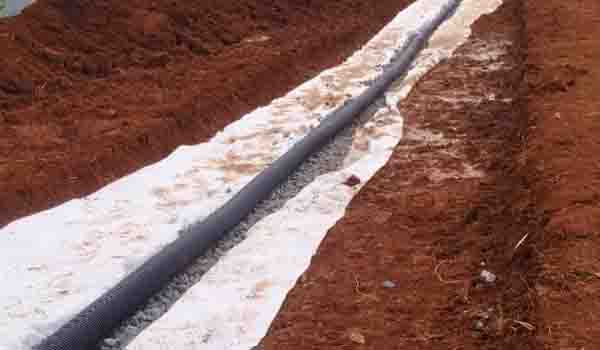
Applying this technology is not just a trend, but a structural necessity. Here are several main reasons why modern football fields rely so heavily on these materials:
- Super-Fast Drainage System
The most noticeable result of these materials is a highly efficient underground field drainage system (subsurface drainage). Geosynthetics provide a dedicated path for rainwater to quickly move down into lower layers and drain out of the field, keeping the grass surface dry even during heavy rain. - Maintaining Subgrade Stability
A field consists of several layers, from the native subgrade and crushed stone base course to sand and growing medium. This material acts as a separator, ensuring that the stone layer does not sink into the muddy subgrade. This stability is essential to prevent an uneven field. - Preventing Surface Settlement
Besides separating layers, this material distributes surface loads evenly over a wider area. When dozens of players run across the grass, the pressure from their footsteps is not concentrated at a single point, but spread out, preventing localized surface settlement.
Types of Geosynthetics for Football Fields
Not all geosynthetics are the same. Various product types have specific forms and functions in field construction. The materials most commonly combined are:
1. Non-Woven Geotextile
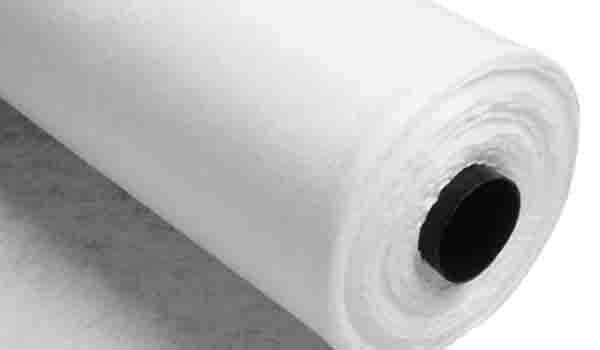
This type of geotextile is a favorite in field construction. It resembles a thick fabric carpet made from bonded, non-woven fibers. Non-woven geotextile for fields has two vital functions: separation and filtration. As a filter, its pores let water pass through very quickly toward the drainage pipe while intelligently retaining soil particles so they do not flow with the water and clog the pipe.
2. Geopipe
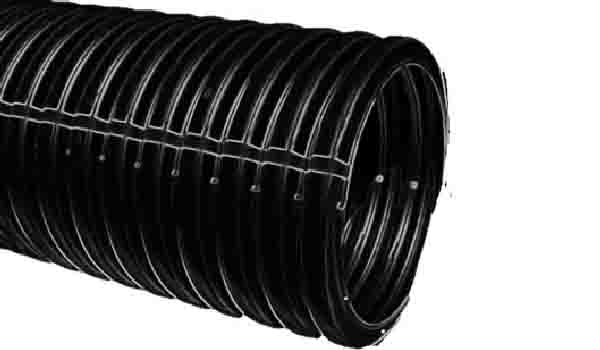
This is the main component in the drainage piping system. Geopipe, often called HDPE Corrugated Pipe, is a corrugated plastic pipe with small perforations along its surface. It is buried beneath the field to collect water filtered by the geotextile, then quickly convey it to the final outlet outside the stadium.
3. Drainage Cell

A drainage cell is a lightweight HDPE plastic panel that looks somewhat like an egg tray. This material is often placed beneath the growing medium for synthetic or natural grass. The voids inside the panel temporarily store water and let it flow horizontally with very little resistance, completely preventing water from pooling on the grass surface.
4. Geomembrane
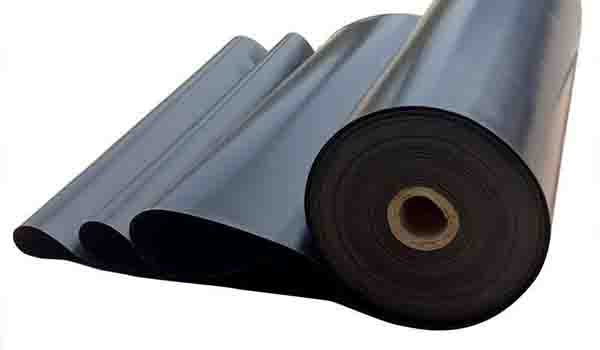
Although not always used on every field, geomembrane is sometimes applied to indoor fields or pitches built over concrete structures (such as rooftops). It resembles a waterproof black plastic sheet and protects the main building structure by preventing water from the field from seeping down.
Field Installation Stages
Installing these materials requires care and standard procedures for optimal, long-lasting results. Here is a brief overview of how they are installed on site:
- Site Preparation and Excavation
The first step is to strip the topsoil and excavate small trenches in a herringbone pattern across the field. These trenches will house the underground drainage system. The ground slope elevation must also be measured with a theodolite so water can flow naturally under gravity. - Installing the Geotextile Separator
After excavation, the trenches are lined with Non-Woven Geotextile. This carpet must be laid neatly, pulled taut without wrinkles and given sufficient overlap at the joints so there are no gaps for soil to pass through. - Installing the Drainage Pipe System
A thin layer of gravel is spread as a bed over the geotextile lining the trench. The Geopipe is then carefully placed along the slope. Once the pipe is in position, the trench is filled with gravel (aggregate), then covered and tightly wrapped with the remaining sides of the geotextile. This ensures the pipe is 100% protected from mud intrusion. - Placing Aggregate and Sand
After the pipe system is complete, a layer of silica sand or special growing medium with high porosity (air gaps) is placed over it. This final layer is where the roots above the grass field geotextile grow well, or it becomes a soft base for synthetic turf.
Applying a French Drain System
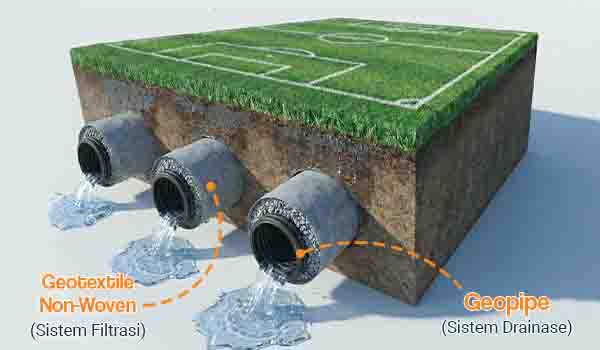
A French drain system on a football field is essential infrastructure for preventing standing water and keeping the playing surface usable, especially during heavy rainfall. This underground drainage system collects and carries away excess surface water through long trenches filled with gravel aggregate and fitted with a perforated pipe at the bottom. To stop soil and mud particles from entering and clogging the pipe, the entire installation is generally wrapped tightly in geotextile fabric. With this fast, efficient absorption system, a French drain not only allows matches to continue safely without mud, but also protects grass roots from rotting and extends the field’s professional-standard service life.
Benefits of Using Geosynthetics

Investing part of the budget in geosynthetics delivers various long-term benefits. First, the quality and consistency of ball roll and bounce improve greatly, which is crucial for meeting certification requirements from football federations such as FIFA.
Second, excellent drainage significantly extends the field’s service life, allowing repeated use even during extreme rainy seasons without a long wait for drying. Finally, it is about financial efficiency: the substantial upfront cost of geosynthetic materials drastically reduces field rehabilitation and repair costs for decades to come.
Conclusion: A Long-Term Investment
Building a field without this technology is like throwing money away. Using geosynthetics for football field construction is not merely an addition, but the most important structural foundation determining whether a field stays in optimal condition or quickly deteriorates in the weather.
The combination of Non-Woven Geotextile, Geopipe and Drainage Cell creates an underground ecosystem that actively keeps the field dry, level, safe for players and, of course, visually attractive.
Need a Consultation for Your Project?
If you are planning a sports facility construction project, make sure high-quality geosynthetic materials are high on your priority list!
Feel free to consult us about your geosynthetic material needs. We supply a wide range of high-quality geosynthetics ready to ship throughout Indonesia. Let’s discuss your project needs now!
Check our catalog: Click here
Chat on WhatsApp Now: Click here
Remember Geosynthetics, Remember Petra!
Other Articles

Non-Woven Geotextile for Steel Pipe Protection
Steel transmission pipelines installed in mountainous areas often face significant risks during construction and throughout their service life. One of the biggest challenges is geotextile pipe protection: shielding the pipe and its outer coating from scratches, impacts and other mechanical damage. Today, the pipeline industry uses various additional mechanical protection systems, including non-woven geotextile made […]


The Environmental Impact of Geosynthetics
What Are Geosynthetics? Geosynthetics are products made from various polymers, such as Polyethylene (PE), Polypropylene (PP), Polyester (PET), Polystyrene (PS) and others. To understand the environmental impact of geosynthetics, it helps to know that these polymers also vary in their physical parameters and processing methods. For example: Polyethylene is divided into several types based on […]