


What Is Hydroseeding? A Fast Green Fix for Erosion
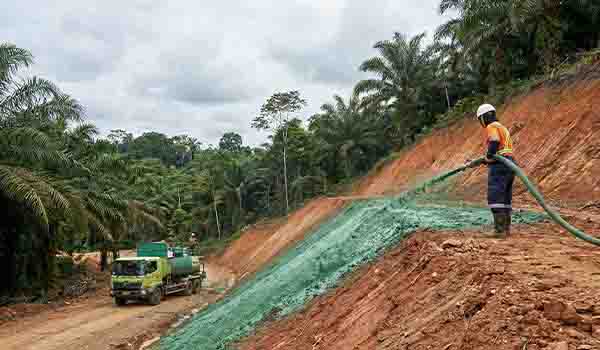
Hello, Petra friends! Have you ever seen a hillside or highway embankment that was once barren suddenly turn into a neat carpet of green grass in a short time? Most likely, that wasn’t the result of planting grass one by one or manually laying sod (turf). It was the result of a technology called Hydroseeding.
In modern construction, especially in erosion control and land reclamation, this method is becoming increasingly popular. But what is hydroseeding, really? Why is it considered more effective than conventional methods? Let’s break it down in this article so you better understand the technology behind effective land revegetation.
What Is Hydroseeding?
Simply put, Hydroseeding, often called hydraulic mulch seeding, is a planting method that sprays a seed mixture onto the ground surface. Don’t picture a farmer scattering seeds by hand. Instead, we use advanced machinery and high water pressure.
The sprayed mixture is called slurry. This slurry contains a vital combination of plant seeds (usually grasses or legumes), water, fertilizer, mulch (wood or paper fiber) and tackifier (a natural binding agent).
When sprayed, the slurry sticks firmly to the soil. The green color you often see on freshly hydroseeded areas is actually a dye in the mulch, which acts as a marker so the machine operator knows which areas have been sprayed and which haven’t.
Why Is Hydroseeding Important for Your Project?
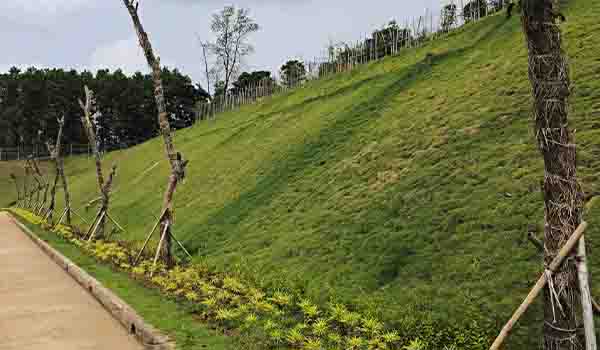
If you work in civil engineering, mining or environmental management, you surely know that the biggest challenge after land clearing is erosion. Exposed soil is highly vulnerable to being washed away by rain.
This is where Hydroseeding acts as a safeguard. The method isn’t just about planting grass, it is about building a soil defense system. The fast-growing roots from this method grip the soil, while the mulch on the surface protects the soil from the direct impact of rainfall.
Main Components of Hydroseeding
For the best results, the slurry mix can’t be made carelessly. Here are its key components:
- Plant Seeds
The seed type is chosen based on site conditions. For tropical areas like Indonesia, Centrosema pubescens (CP), Pueraria javanica (PJ) or Vetiver grass are often used, as they have deep roots that hold strongly against landslides. - Mulch
This is the “blanket” for the seeds. Mulch is usually made of wood fiber or recycled paper. It keeps the soil moist so the seeds don’t dry out and protects them from birds and wind. - Fertilizer
Instant nutrition to boost early growth. Fertilizers with a high phosphorus content are usually used to stimulate root growth. - Tackifier
This is an organic “glue” that ensures seeds and mulch stick firmly even on steep slopes. Without tackifier, seeds can be washed away by rain before they have a chance to grow. - Water
The main carrier that allows all the ingredients to mix evenly and be sprayed at high pressure.
How the Hydroseeding Process Works
- Site Preparation
Before the machine arrives, the ground surface must be prepared. If the soil is too compacted, it needs to be loosened a little so roots can penetrate. Rubbish and large stones should be removed. At this stage, supporting geosynthetics such as Cocomesh or Geomat are often installed. - Mixing
All ingredients are put into the Hydroseeder tank. This machine has a mechanical agitator that keeps rotating to ensure the slurry stays homogeneous and doesn’t clump. - Application
The operator sprays the slurry onto the target area using a high-pressure hose. The spraying must be even, usually done from two different directions (cross-hatching) to make sure there are no “shadows” or missed spots, especially on uneven ground. - Germination
Within 5 to 7 days (depending on the weather and seed type), you will start to see green shoots appear. The mulch slowly decomposes into humus, providing extra nutrients for the soil.
Advantages of Hydroseeding over Other Methods
Why should you choose Hydroseeding over manual planting or sodding (laying turf slabs)?
- Cost Efficiency
Compared with sodding, which requires a lot of labor and expensive material, Hydroseeding costs far less per square meter, especially for very large areas (more than 1000 m²). - Speed of Work
Imagine planting a 1-hectare slope by hand. How many days would it take? With Hydroseeding, an area that size can be finished in just hours. - Uniform Ground Cover
Because it is sprayed, the seed is spread evenly. There are no bald or overly dense patches. This creates a much more attractive appearance. - Ideal for Difficult Areas
Steep slopes, high cliffs or unstable areas are very dangerous to work on manually. Hydroseeding can reach these areas from a distance using a spray cannon. - Erosion Controlled from Day One
When the slurry dries, it forms a protective crust on the soil that immediately helps resist surface erosion, even before the grass grows.
Combining Hydroseeding with Geosynthetics
This is the most relevant part for regular visitors of petrane.co.id. Hydroseeding often doesn’t work alone, especially on very steep slopes or highly unstable soil.
It is often combined with Geosynthetics or Biomats, such as:
Cocomesh
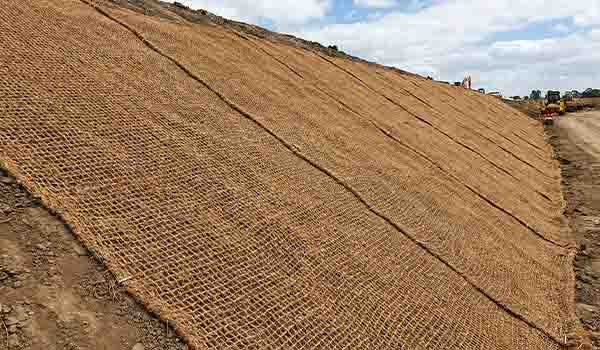
Before Hydroseeding is sprayed, the slope is covered with Cocomesh. Cocomesh acts as a temporary “skeleton” that holds the soil, while Hydroseeding fills the gaps with vegetation. This combination is very effective for reclaiming former mine sites.
Geomat
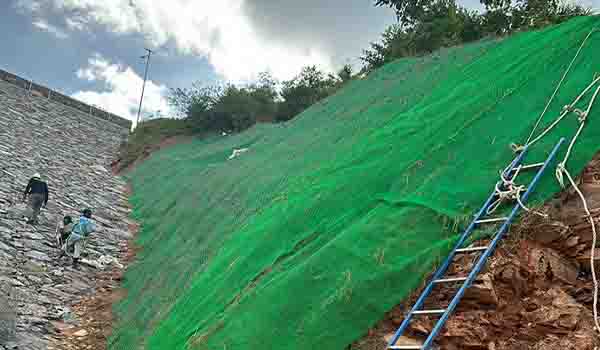
For permanent protection of waterways or extreme slopes, a synthetic Geomat is installed first. The plant roots from Hydroseeding wrap around the Geomat structure, creating a composite layer that strongly resists scouring by water.
Hydroseeding Applications in Various Sectors
- Toll Road Slopes: Preventing landslides that can endanger road users.
- Former Mine Sites: Speeding up the revegetation of barren, degraded land (reclamation).
- Golf Courses and City Parks: Creating large expanses of grass quickly and neatly.
- River Embankments: Preventing erosion caused by water flow.
Post-Hydroseeding Care Tips
Advanced as it is, Hydroseeding isn’t magic that can simply be left alone. There is a critical period in the first 2-4 weeks. What should you pay attention to?
- Watering
This is the key! Newly germinated seeds are very likely to die from drought. The soil must be kept moist (but not soggy). Water lightly 2-3 times a day in hot weather. - Avoid Foot Traffic
Don’t let people or heavy equipment cross the freshly sprayed area until the grass has grown strong (about 1 month). - Follow-Up Fertilizing
Once the grass is 5-10 cm tall, apply a follow-up fertilizer to strengthen the roots and leaves.
Conclusion
Hydroseeding is a modern solution that balances cost efficiency, speed and the best environmental results. If you are handling a construction project that needs a fast and attractive erosion control solution, this method deserves to be your first choice. Combined with the right geosynthetic materials, your project site’s stability will be secured for the long term.
Need a Consultation for Your Project?
Feel free to consult us about your geosynthetic material needs. We supply a wide range of high-quality geosynthetics ready to ship throughout Indonesia. Let’s discuss your project needs now!
Check our catalog: Click here
Chat on WhatsApp Now: Click here
Remember Geosynthetics, Remember Petra!
Other Articles
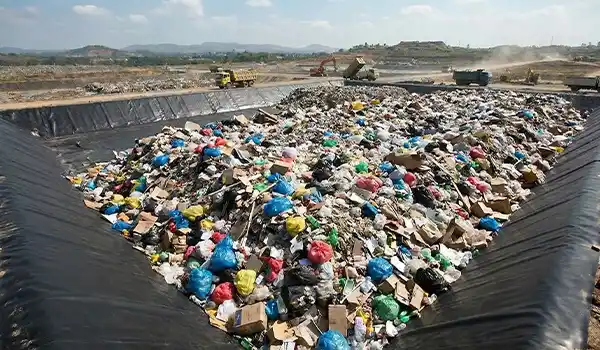
Advantages of HDPE Landfill Geomembrane
Have you ever imagined what happens to the hundreds of tons of waste that accumulate at a landfill every day? When rain falls on the site, water seeping into the waste pile reacts and produces a highly toxic, foul-smelling liquid called leachate. If this dirty liquid seeps freely into the ground, the groundwater we consume […]

Geogrid Installation: A Step-by-Step Guide
Geogrid installation consists of 5 stages: installation preparation, geogrid preparation, laying the geogrid, joining, and spreading and compacting the embankment fill. Installation Preparation Site Preparation The geogrid installation site must be clean and at the design elevation. Uneven cover areas need to be stripped and grass needs to be cut. If the geogrid is damaged […]