


Non-Woven Geotextile Fabric for Sale in Indonesia
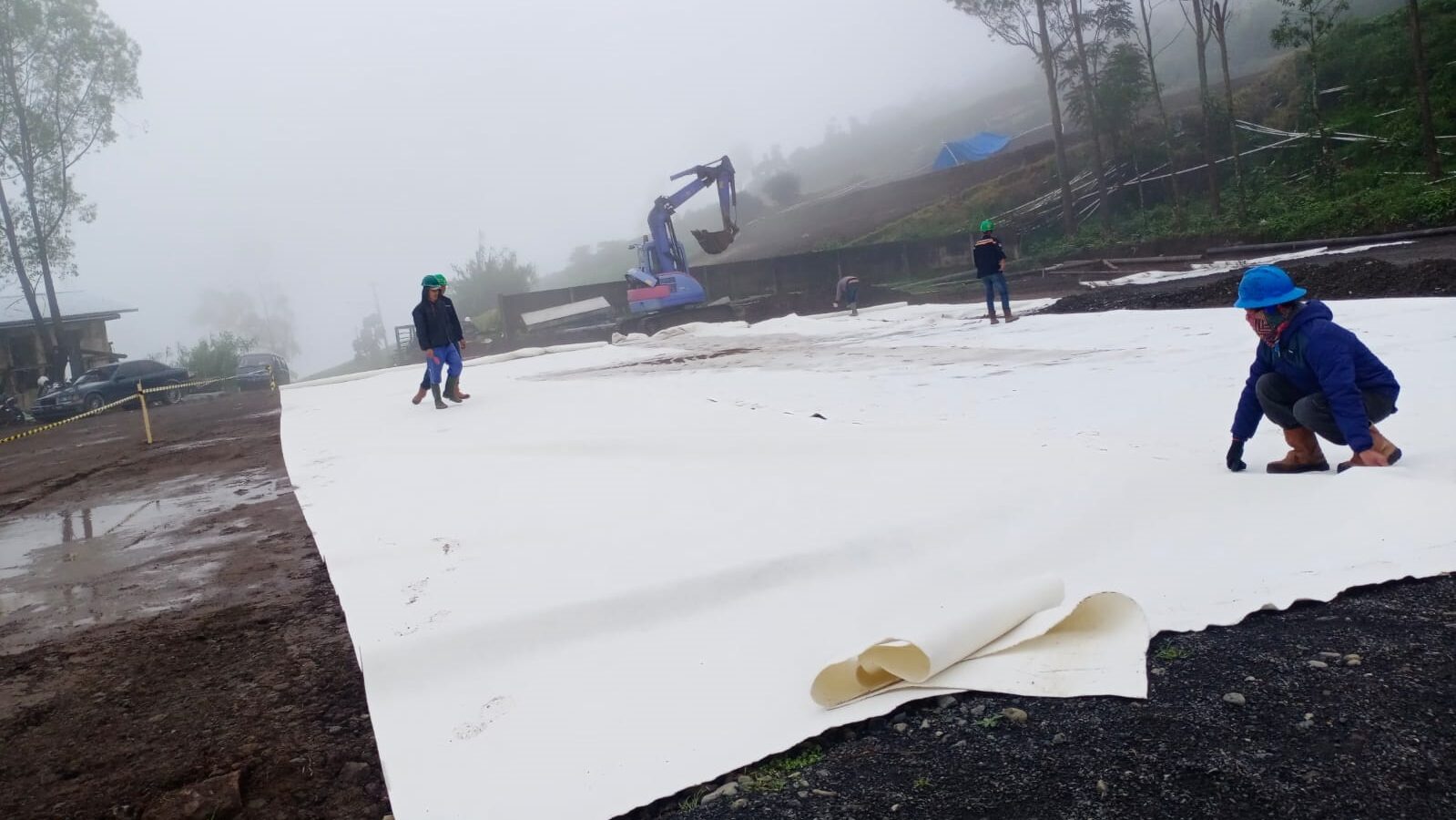
Non-Woven Geotextile Fabric – In modern construction, the challenges of soil stability, erosion control, and drainage efficiency are becoming increasingly complex. This applies not only to large projects such as toll roads, railways, or dams, but also to smaller civil works such as sports fields, channels, and yards. One geosynthetic material that is key to solving these challenges is non-woven geotextile fabric. If you want to buy non-woven geotextile fabric of superior quality with professional service, Petrane is your best partner throughout Indonesia.
Non-woven geotextile is often called a “technical carpet” because it resembles a carpet, has a smooth texture, and delivers high technical performance in filtration, separation, and protection. It has been used for decades in geotechnical projects thanks to its ability to retain soil particles, let water flow freely, and improve the durability of subsurface structures.
Non-Woven Geotextile Fabric for Sale: A Modern Solution for Soil Stability and Efficient Drainage
Non-woven geotextile is a geosynthetic material made from synthetic fibres such as polyester (PET) or polypropylene (PP) that are not woven but bonded mechanically (needle punched) or thermally. It is characterised by its fabric- or carpet-like sheet form, predominantly white or light grey in colour, and its permeable nature, allowing water to pass through.
Many users ask: what are the advantages of non-woven geotextile fabric over traditional materials such as stone or sand layers? The answer lies in its multifunctionality: it not only filters and drains water but also prevents soil layers from mixing, withstands pressure, and extends the service life of roads and embankments. In a single material, non-woven geotextile works as a filter, separator, and protector at the same time.
It is very commonly used beneath roads to prevent premature damage caused by aggregate mixing with soft soil. In drainage systems, this geotextile serves as a protective layer that filters soil without restricting water flow. In landfill or wastewater pond projects, non-woven geotextile also protects the geomembrane from damage caused by sharp stones.
Properties and Durability of Non-Woven Geotextile Fabric
One reason non-woven geotextile is so popular is its durability in extreme environmental conditions. The product resists temperature changes, UV rays, soil microorganisms, and even aggressive chemicals. This makes it suitable for many climate zones, from wet, humid areas such as swamps to dry regions exposed to direct sunlight.
Non-woven geotextile fabric also has a long technical service life. Even when fully buried and under heavy compressive loads, it retains its tensile strength and its function as a separator or filter. With relatively high elongation, non-woven geotextile can follow the contours of the ground without tearing easily, an important quality in long-term infrastructure applications.
Many users also ask how easy the material is to install. Because it comes in rolls and is relatively lightweight, the geotextile can be spread on site without heavy equipment. This speeds up project execution and reduces the need for additional labour.
Types of Non-Woven Geotextile by Material and Production Technique
To meet diverse project needs, Petrane supplies three main types of non-woven geotextile, each with specific characteristics suited to particular applications.
Non-Woven Geotextile PP – Staple Fiber uses short polypropylene fibres (staple fibre) bonded through a needle-punching process. This type is known for its flexibility and high chemical resistance, making it well suited to filtration in wastewater drainage areas or aggressive environments.
Non-Woven Geotextile PET – Staple Fiber uses short polyester fibres and offers high resistance to temperature and pressure. It is suitable for projects with heavy structural loads such as main roads, industrial estates, or railways.
Non-Woven Geotextile CF – Continuous Filament is a premium type made from long (continuous filament) fibres bonded using thermal and mechanical technology. It offers the highest tensile strength, better puncture resistance, and superior long-term performance. It is ideal as a protective layer for geomembranes, embankments, or areas with high dynamic loads.
Each type has its own advantages, so choosing the right one is essential for an efficient project. Petrane is ready to provide technical consultation to determine the most suitable product for your site conditions and application.
Field Applications of Non-Woven Geotextile Fabric
Non-woven geotextile can be applied across many construction and environmental sectors. In transportation, it is used as a separation layer between the subgrade and the aggregate layer of roads, preventing layer contamination and extending road life. In drainage projects, the geotextile filters water and keeps channels from being clogged by soil.
On slopes or embankments, the geotextile fabric helps stabilise the surface and prevent erosion. In landfill projects, it protects the geomembrane from physical damage and prevents soil particles from migrating into the drainage system. Even in garden and landscape projects, geotextile is used beneath soil and turf layers to control weeds and regulate natural drainage.
Petrane has served many sectors with diverse needs. Whether you are a national road contractor, a reclamation contractor, or a residential developer, we are ready to provide the best solution and non-woven geotextile products that meet technical and environmental standards.
Latest Non-Woven Geotextile Fabric Prices for 2026
The most frequently asked question concerns price. The price of non-woven geotextile fabric depends heavily on factors such as weight (gsm), fibre type, roll size, and order quantity. Petrane is committed to offering competitive prices without compromising product quality or service.
The latest non-woven geotextile prices for 2026 range from IDR 7,500 to IDR 22,000 per square metre, depending on specifications and purchase volume. High-gsm and continuous filament products are generally at the upper end of the range, while low-gsm staple fibre types are more affordable and suitable for medium-scale projects.
We strongly recommend consulting our team directly. We will help calculate your material requirements based on site size, application type, and soil conditions, so you get a solution that is both fit for purpose and budget-efficient.
Why Choose Petrane for Your Non-Woven Geotextile?
Petrane is not just a supplier of non-woven geotextile fabric but also a strategic partner in every construction project. With extensive experience in geosynthetics, we provide high-quality products, full technical support, and fast delivery throughout Indonesia.
We understand that your project has strict deadlines and quality targets. That is why we provide technical consultation support, complete product documentation, and, where needed, on-site installation assistance. All of these services are designed to ensure you get the most out of every sheet of geotextile you use.
In addition, all Petrane products have undergone laboratory testing, carry quality certificates, and are made by manufacturers that meet national and international standards. You are not just buying material; you are also getting assurance of performance and safety.
Ordering Non-Woven Geotextile Fabric
Are you designing a road, drainage, slope conservation, or geomembrane lining project? Don’t hesitate to use non-woven geotextile fabric from Petrane as your smart construction solution. With a wide choice of specifications and types, we are ready to meet your project needs with the best materials and professional service.
For more information, product orders, or technical consultation, please contact our team directly via WhatsApp at +62 821 2383 4360. We will provide the best quote for your needs, complete with a product catalogue, volume estimate, and technical recommendations.
Also visit our official website at https://petrane.co.id to see all our other geosynthetic products and read technical articles on field applications. With Petrane, build your project on a strong foundation that is environmentally friendly and cost- and time-efficient.
Other Articles

Choosing the Right Pipe Types for Clean Water
The clean water we use every day usually flows through a piping installation, so choosing a good pipe to carry it is very important. When choosing a suitable pipe, you will naturally look for one that lasts, is durable and does not leak easily. There are several factors to consider when choosing the right pipe […]


What Is a Geotube? Functions and Definition
As a Breakwater Large waves and currents are one of the causes of erosion or abrasion of riverbanks, and they damage structures along the river. One of the large wave currents commonly found is the Bono tidal bore. The Kampar River has a “V”-shaped estuary: when the mass of water enters through the wide mouth […]