


Non-Woven Geotextile for Strong, Efficient Road Construction

In modern civil engineering, Non-Woven Geotextile has become a standard geosynthetic material that must be used. It has a major influence on road strength, stability and durability. Engineers and contractors rely on this material to address various subgrade problems, from water filtration and aggregate separation to comprehensive soil reinforcement.
What Is Non-Woven Geotextile?
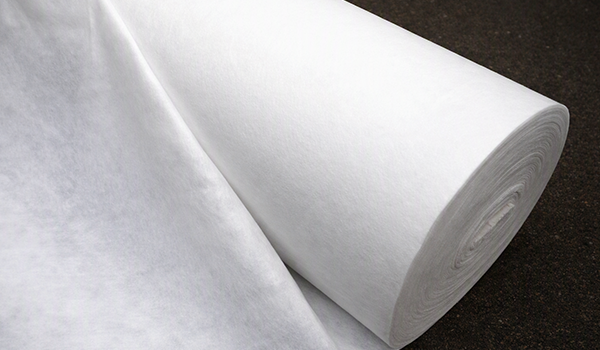
Non-Woven Geotextile is a porous synthetic fabric made from polymer fibers without weaving. The fibers are randomly bonded using a mechanical method (needle punching) or a heat method (thermal bonding).
The main raw materials commonly used include Polyester (PET) or Polypropylene (PP), known for their high resistance to soil chemicals and extreme environments.
Material Composition and Manufacturing Process
-
Needle Punching: A mechanical bonding process that uses thousands of barbed needles to lock synthetic fibers together into a thick, flexible fabric structure.
-
Thermal Bonding: Bonding at high temperatures to melt the fiber surfaces, producing a denser fabric sheet with consistent filtration capacity.
Key Characteristics of Non-Woven Geotextile
-
High Tensile Strength: Withstands heavy traffic loads, both static and dynamic.
-
Chemical & Moisture Resistance: Does not weather or degrade easily when submerged in water or exposed to soil acids or alkalis.
-
Flexible & Adaptable: Easy to lay over uneven ground contours.
-
Optimal Permeability & Filtration: Allows water to flow smoothly without carrying soil particles with it.
The Role and Benefits of Non-Woven Geotextile in Road Construction
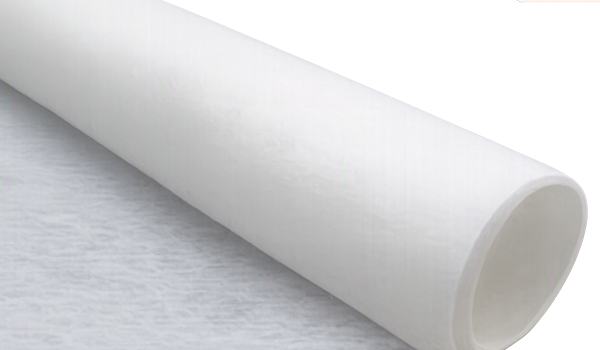
Applying Non-Woven Geotextile has a direct impact on the long-term quality of road structures:
1. Filtration and Erosion-Prevention Functions
This material acts as a natural filter, allowing water to pass through its pores while retaining fine soil particles. This prevents internal erosion (piping), which often creates voids beneath asphalt or concrete layers.
2. Separation Function (Layer Separation)
Prevents soft subgrade from mixing with foundation aggregate (stone base). Without a separation layer, aggregate stones will sink into the soil under vehicle loads, eventually causing cracks or settlement in the road surface.
3. Economic and Operational Benefits
-
Improves Foundation Stability: Reduces lateral movement in the subgrade.
-
Saves Maintenance Costs: Extends road service life, reducing the budget required for periodic repairs.
-
Improves Work Efficiency: Quick and easy to install directly in the field.
Material Specifications and Quality Standards
| Specification Variable | Minimum Standard Value | Main Role in Construction |
| UV Resistance | At least 6,000 hours | Prevents fabric damage from solar radiation during installation. |
| Tensile Strength | Minimum 8 kN/m | Supports even distribution of vehicle loads. |
| Thickness | 0.5 mm–2.0 mm | Determines resistance to abrasion and penetration by sharp objects. |
| Length Tolerance | ± 3% | Ensures dimensional accuracy when cutting in the field. |
Steps for Installing Non-Woven Geotextile in the Field
Proper, precise installation determines the road structure’s final performance.
Get Quality Non-Woven Geotextile Now
Make sure your road construction project uses high-standard geosynthetic materials for sturdy, durable results. Get trusted Non-Woven Geotextile products and other geosynthetic materials only from Petra Nusa Elshada.
Get Non-Woven Geotextile and other geosynthetic materials now, only at Petra Nusa Elshada. For more information, please click here!
Other Articles

What Is Multifilament Woven Geotextile?
Woven Geotextile Multifilament Yarn / Woven Polyester, or multifilament geotextile, is a woven geotextile with a uniaxial or biaxial pattern, used specifically for extra reinforcement, especially where the material must have high tenacity and adequate water absorption. The benefits of this material include very high strength of up to 200 kN/m, corrosion resistance, water permeability, […]


Woven Geotextile: Definition and Functions
First, let’s look at the word geosynthetics, which combines two words: Geo (earth) and Synthetic (man-made). Geosynthetics are man-made materials widely used in construction. They come in several forms, one of which is geotextile. A geotextile is a thin, flexible, porous sheet, and geotextiles are divided into two types, woven geotextile & non-woven geotextile. In this article we explain […]