


Handling POME Waste: Smart Geosynthetic & Biogas Solutions
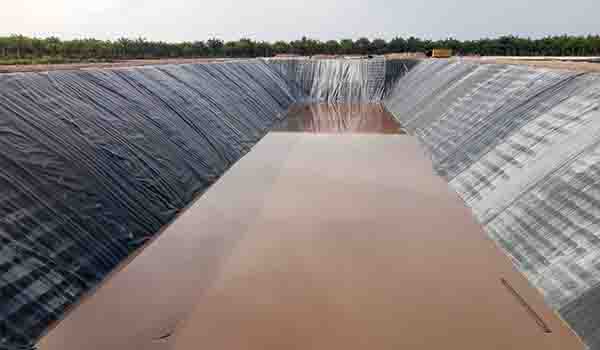
Did you know, Petra friends, that the palm oil industry is one of the largest pillars of Indonesia’s economy? But behind this green gold lies one big challenge that often gives mill managers a headache: Palm Oil Mill Effluent, commonly known as POME.
If you work in the palm oil industry, you know very well how “nasty” this liquid waste is when it isn’t managed properly. Its pungent smell, dark color and potential greenhouse gas emissions can become serious problems for the environment and, of course, for your company’s regulatory compliance (such as PROPER and ISPO).
In the past, conventional waste ponds may have been enough. But in this modern era, the way POME waste is handled has evolved. We are no longer just talking about “disposing” of it, but about “turning” this waste into renewable energy while keeping the soil safe with geosynthetic technology.
Curious how a smelly waste pond can be transformed into a profitable energy source? Let’s break down the solution here.
What Is POME and Why Must You Take It Seriously?
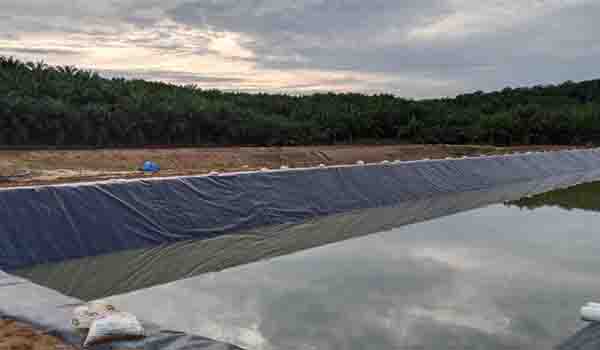
Before getting into the technical solution, let’s first get on the same page. POME is wastewater generated by palm oil mill processing, mainly from sterilizer condensate, clarification water and hydrocyclone discharge.
In terms of characteristics, POME is both unique and hazardous:
- High Temperature: It leaves the mill at around 60-80°C.
- Acidic: It has a low pH (around 3.5 – 4.5).
- High Organic Load: It has very high COD (Chemical Oxygen Demand) and BOD (Biological Oxygen Demand) values.
If you let this waste flow straight into rivers or seep into the ground without a strong liner, the impact is fatal. Groundwater around the plantation can be polluted, and river ecosystems can die from lack of oxygen.
Then there is methane gas. Did you know that POME releases methane (CH4) into the atmosphere? This gas is 21 times more harmful to the ozone layer than carbon dioxide. So handling POME is not only about government rules, but about our responsibility to care for the planet.
Weaknesses of Conventional Open Pond Systems
Your mill may still be using a traditional open pond system. This system is cheap at first, but it has many “hidden costs” later on.
The main problem with ordinary earthen ponds without a geosynthetic liner is seepage (leaching). Leachate from POME can seep into the ground and pollute clean water aquifers. Open ponds also let methane escape freely into the air, which means you are throwing away potential electricity for nothing while contributing to global warming.
This is where modern technology comes in. The use of geosynthetic materials has changed industry standards for how POME waste is handled.
The Vital Role of Geosynthetics in Modern Waste Treatment
Now let’s talk solutions. How can POME waste be handled safely and profitably? The answer lies in integrating Geomembrane and Geotextile systems.
1. Pond Lining with HDPE Geomembrane
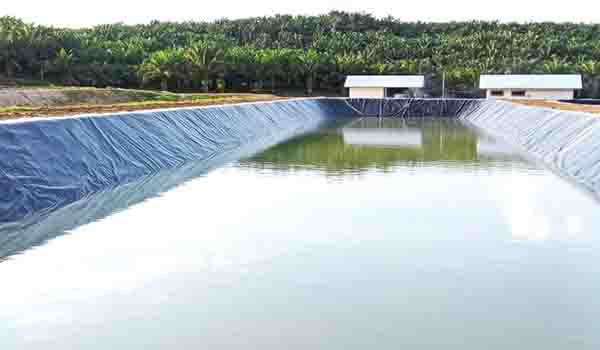
The first and most important step is making sure your waste “container” doesn’t leak. This is where HDPE (High Density Polyethylene) Geomembrane serves as the pond’s liner or base lining.
Unlike concrete ponds that can crack or earthen ponds that absorb water, HDPE Geomembrane is highly impermeable (watertight). The material also resists chemicals, the acidity of POME and the intense UV exposure in plantation areas.
By lining the pond base with geomembrane, you gain these benefits:
- Zero Leakage: Prevents POME from seeping out and polluting groundwater.
- Easy Maintenance: The smooth surface makes mixing and sludge removal easier.
- Durability: High-quality geomembrane can last for decades.
2. Using Geotube for Dewatering (Solids Separation)
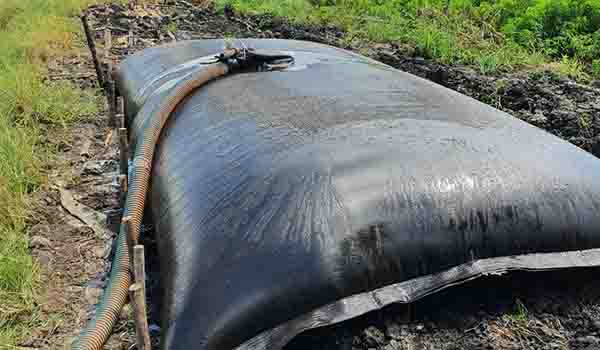
Before entering the main pond, POME often still contains a high level of solids or sludge. To reduce the load on the pond, you can use Geotube technology.
A geotube is a giant tube-shaped container made from high-strength geotextile. The method is simple: POME sludge is pumped into the geotube. The porous geotextile fabric retains the solids inside the tube, while clear water (filtrate) flows out through the fabric’s pores.
The solids retained in the geotube can later be used as high-quality compost for your oil palm plantation. Efficient, isn’t it?
Energy Transformation: The Covered Lagoon Bio-Digester System
This is the most interesting part of modern POME waste handling. If your pond is already lined with geomembrane at the bottom, why not cover the top as well?
This system is called a Covered Lagoon, or closed pond.
How Does It Work?
You use HDPE geomembrane sheets to cover the entire surface of the waste pond. In this sealed, oxygen-free (anaerobic) condition, bacteria break down the organic matter in POME. This decomposition produces biogas, consisting mostly of methane (CH4) and carbon dioxide (CO2).
Because the pond is tightly sealed by geomembrane, the gas cannot escape into the air. It is trapped beneath the geomembrane, making the cover inflate like a giant balloon.
Harvesting Electricity from Waste
The trapped gas is then piped to a gas scrubber to be cleaned (removing corrosive H2S). Once clean, the methane can be burned in a gas engine to drive an electricity generator.
Imagine the potential:
- Free Electricity: The electricity generated can power mill operations, drastically cutting diesel or PLN (state electricity) costs.
- Carbon Credit: By capturing methane, your company helps reduce carbon emissions, which can now be traded under carbon trading schemes.
Technical Steps for Installing Geomembrane in a POME Pond
If you are planning to upgrade your waste pond, here is an overview of the installation process for the best results:
- Site Preparation (Earthwork): Make sure the pond subgrade is compacted, level and free of sharp objects such as stones or tree roots that could puncture the geomembrane.
- Geotextile Installation: Before the geomembrane, line the soil with Non-Woven Geotextile. It acts as a protective cushion so the geomembrane is safe from abrasion by rough soil.
- Geomembrane Installation: Roll out the HDPE geomembrane sheets. Sheets are joined using precise thermal welding (hot welding) to make sure there is not even the smallest gap.
- Quality Control (QC): This is a crucial stage. Welded seams must be tested with air pressure or vacuum testing equipment to guarantee 100% watertightness.
- Gas Pipe Installation (For Covered Lagoons): If you apply a biogas system, gas collection pipes are installed beneath the cover.
Why Switch to the Modern Method Now?
You might think, “The old system still works, why bother changing?”
First, Regulations Are Getting Stricter. The Indonesian government continues to tighten environmental rules. A poor waste management system is a major business risk. A geosynthetic lining system provides long-term safety assurance.
Second, Operating Cost Efficiency. Although the initial investment in geomembrane and biogas installation looks large, the Return on Investment (ROI) is very attractive. Savings from self-generated electricity can pay back the investment within just a few years. After that? You enjoy free electricity.
Third, Company Reputation. In the global market, CPO (Crude Palm Oil) produced with attention to sustainability has better selling value and market acceptance.
Conclusion: A Smart Investment for the Future of Palm Oil
Handling POME waste should no longer be seen as a mere cost burden, but as an investment opportunity. By adopting geosynthetic technologies such as HDPE Geomembrane and Geotube, you turn an environmental problem into an energy solution.
A waste pond that was once smelly and hazardous can now be transformed into a clean, profitable biogas reactor. This is a real step toward a sustainable palm oil industry (sustainable palm oil).
So, is your mill ready to level up with a modern waste management system? Make sure you choose quality geosynthetic materials and experienced experts so your investment isn’t wasted.
Need a Consultation for Your Project?
Feel free to consult us about your needs. We supply a wide range of high-quality geosynthetics ready to ship throughout Indonesia. Let’s discuss your project needs now!
Check our catalog: Click here
Chat on WhatsApp Now: Click here
Remember Geosynthetics, Remember Petra!
Other Articles

Tarpaulin: Uses, Types and Materials
Tarpaulin is not just a cover for trucks or containers; its uses and types support many kinds of business, from agriculture to construction and beyond. Under Indonesia’s Road Traffic and Transportation Law (Law No. 22 of 2009), every vehicle carrying materials, including cement, must be covered with a tarpaulin. Besides helping to comply with that […]

Geomembrane Tips for Small Reservoirs (Embung)
Geomembrane is a geosynthetic product that is impermeable. Geomembrane is generally used to line storage facilities so that liquids do not seep into embankment fill and the like, which makes geomembrane for small reservoirs (embung) a common application. In general, geomembrane for storage facilities such as an embung (small retention reservoir) should be ≥ 1 […]
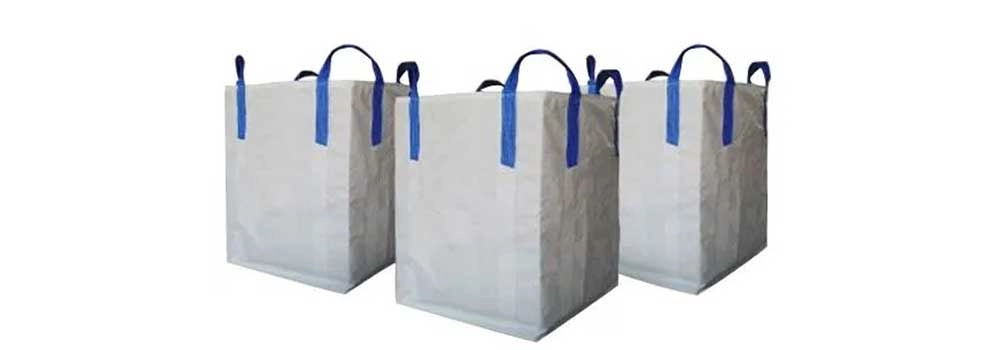
Jumbo Bag Types and Benefits for Shipping Goods
Jumbo Bag A Jumbo Bag is a large bag that can hold a load of 1 ton (1000 kg) to 2 tons (2000 kg). It is usually used to carry goods for plantation, mining and industrial companies. Jumbo bags are also widely used for shipping goods, both domestically and abroad, packed into containers. On the […]