


How to Prevent Landslides with an MSE Wall and Geosynthetics
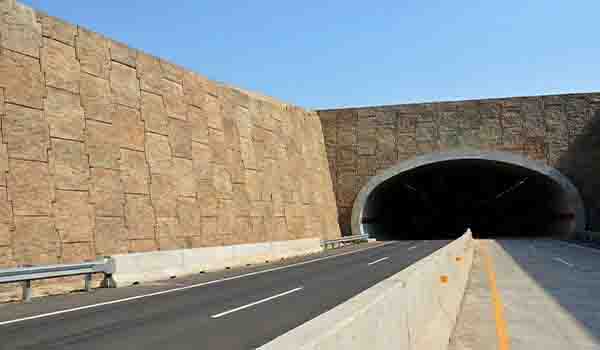
Landslides cause severe losses involving not only property but also human lives. Until now, you may have relied on the classic solution of building a retaining wall from masonry or reinforced cantilever concrete.
But have you ever found that solution over budget, slow to construct, or cracked after several years because the ground moved?
Welcome to the modern era! A much smarter, more flexible, and cost-effective solution is the Mechanically Stabilized Earth Wall , commonly called an MSE Wall. Its strength comes from an advanced collaboration with geosynthetics (geogrid & geotextile).
Let us examine how this system can become an anti-landslide “fortress” for your project!
What Is an MSE Wall? (Not Just an Ordinary Wall)
A simple analogy is a sandwich . A tall pile of sand will eventually collapse, right? But if you stack the sand with reinforcement sheets between the layers, like fillings in a sandwich, the pile can stand vertically, even at a considerable height.
That is the basic concept of an MSE Wall.
Instead of resisting earth pressure only through the wall’s weight, as a masonry wall does, an MSE Wall reinforces the soil itself. The backfill behind the wall is “bound” into one solid mass.
The result? A wall that carries heavy loads, flexes during earthquakes, and can be built much higher than a conventional concrete wall.
The Secret to Its Strength: Geosynthetics (Geogrid & Geotextile)
This is where geosynthetic materials play a vital role. An MSE Wall is incomplete without these two geosynthetics. Let us get to know them:
Geogrid
This is the main component. Geogrid serves as reinforcement .
- How It Works: Geogrid is installed in layers between compacted soil fills. The apertures in the geogrid lock soil or aggregate particles in place through aninterlocking mechanism.
- The Effect: Soil that would otherwise fall is restrained by the geogrid’s tensile strength. Imagine the geogrid as giant tree roots gripping the ground to keep it from collapsing.
Geotextile
Water is a slope’s main enemy. If water becomes trapped behind a wall, hydrostatic pressure rises and can trigger a landslide. This is where Non-Woven Geotextile plays a role.
- How It Works: Installed behind wall panels or around drainage pipes, geotextile serves as a separator and filter. It lets water pass for effective drainage while retaining soil particles so they are not washed away.
- The Effect: The wall stays dry, the soil does not erode throughpiping erosion, and the structure remains stable.
MSE Wall Facing Options: Not Just Plain Concrete!
One reason architects and developers often use MSE Walls is their design flexibility. You can select a facing type to suit your budget and preferences:
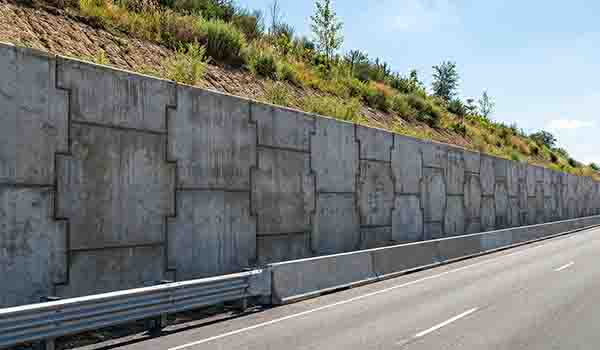
A. Precast Concrete Panel
This is the most common type seen along toll roads or flyovers. Panels may be square or hexagonal.
- Advantages: A very neat finish, exceptionally fast puzzle-like assembly, and excellent durability.
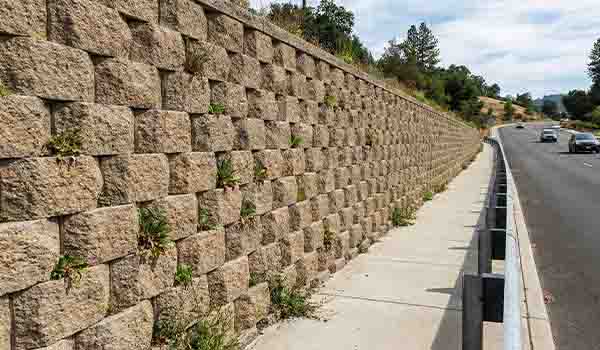
B. Modular Block (Keystone/Interlocking Block)
Similar to masonry blocks but fitted with special interlocks. These are often used in residential developments, gardens, or river walls.
- Advantages: Can be installed manually without heavy equipment, offers a more natural stone-like appearance, and can form curves.
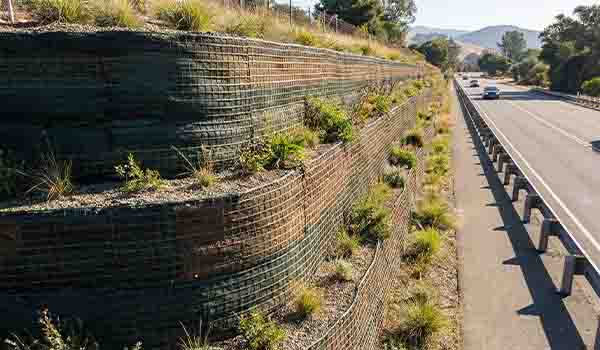
C. Wrap-Around (Vegetated Facing)
This is a favorite among environmental enthusiasts and a low-budgetsolution. The front uses no concrete; instead, geotextile or bags are folded back in awrap-aroundconfiguration and planted with grass.
Advantages: The least expensive, environmentally friendly as a green wall, and highly flexible.
Why Switch to an MSE Wall?
If you are still uncertain, consider these benefits of an MSE Wall:
- Resistant to Earthquakes & Unstable Ground
Indonesia experiences frequent earthquakes, and stiff concrete walls (rigid) often break when the ground shakes. An MSE Wall, however, is flexible. During shaking or groundsettlement, the system can adjust without suddenly collapsing. - Can Be Built Very High
Masonry walls generally have an effective height limit of 4-5 meters. Building higher requires much larger dimensions and becomes very expensive. An MSE Wall, by contrast, can safely stand more than 20 meters high when combined with a properly engineered geogrid design. - Attractive Appearance
The front facade of an MSE Wall can use patterned precast concrete panels or even a green facade with vegetation. Your project looks modern and neat instead of resembling a pile of rocks. - Saves Time & Cost Installation is faster. There is no need to wait for cast concrete to cure. Place fill, compact it, install geogrid, and complete the project sooner!
Step-by-Step Landslide Prevention with an MSE Wall
What does the field process look like? Here is a simple overview:
- Prepare the Site: Excavate the foundation soil and make sure it is strong enough to support the fill load.
- Install the Leveling Pad: This small foundation supports the first concrete panel.
- Install Panels & Drainage: Arrange the lowest concrete panels. Remember to install drainage pipes and wrap them with geotextile to prevent clogging.
- Place & Compact the Soil: Add backfill behind the panels, then compact it layer by layer.
- Lay the Geogrid: Spread the geogrid over the compacted soil and connect it to the concrete panels. Make sure the geogrid is installed correctly.
- Repeat to the Top: Repeat the filling, compacting, and geogrid-laying process until reaching the desired height.
Common Mistakes That Cause MSE Wall Failure
Although an MSE Wall is advanced, careless construction can make it fail. Avoid these mistakes:
- Inadequate Compaction: Soil behind the wall must be compacted layer by layer to a density above 95%. Loose soil will cause the wall to slump forward.
- Geogrid Too Short: The required geogrid embedment length must be calculated, typically 0.7 times the wall height. If it is too short, the wall can overturn.
- Wrong Material Selection: Using ordinary plastic sacks instead of geotextile, or counterfeit geogrid with no tensile-strength data.
- Neglecting Drainage: This is the classic mistake. Water collects behind the wall, the soil turns to mud, and the wall fails.
Conclusion: Do Not Wait for a Landslide Before Acting!
Landslide prevention is no place for experimentation or misguided cost-cutting. Choosing an MSE Wall reinforced with geogrid and geotextile is a long-term safety investment. You gain a stronger, more attractive, earthquake-resistant structure and greater peace of mind through rainy seasons and storms.
But remember one thing: A great system requires great materials.
Your engineering design may be correct and your workers skilled, but if the geogrid breaks easily or the geotextile tears easily, your project remains at risk. You need quality materials backed by clear, accountable technical data sheets.
This is where Petra Nusa Elshada serves as your strategic partner. We are not merely a seller but a technical discussion partner. We supply premium geotextile (woven & non-woven), geogrid (uniaxial & biaxial), and drainage accessories to keep your project standing securely for longer.
Need a Consultation or Geosynthetic Supply?
Feel free to ask first. Our expert team is ready to recommend the material type best suited to your soil conditions and budget!
View Our Product Catalog: Catalog
Chat on WhatsApp Now: WhatsApp
Remember Geosynthetics, Remember Petra!
Other Articles
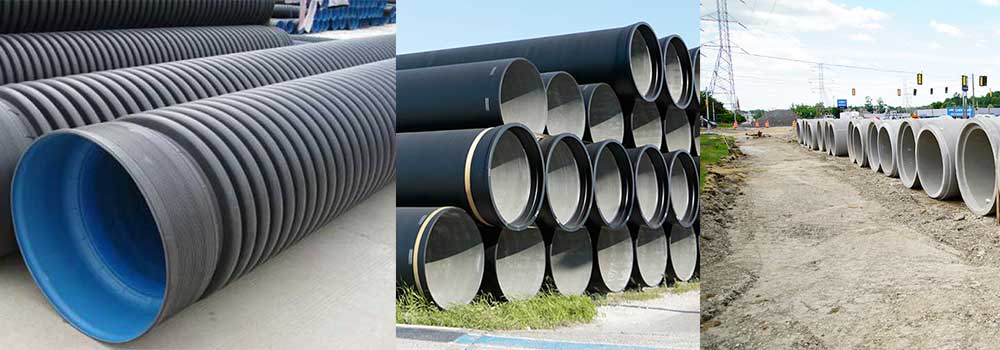
Guide to Choosing Geopipe Material
Most projects need a channel that can carry liquids such as infiltration water, wastewater, leachate and so on. Sometimes a protective layer is also needed for cables below the ground surface. These needs are usually met with pipes, which can be made from various materials such as plastic, iron and concrete. This guide to choosing […]

HDPE Butt Fusion Machine: Functions and How It Works
An HDPE butt fusion machine, also called an HDPE pipe welding machine, is a machine for joining pipes made of HDPE (High Density Polyethylene). It fuses two pipes into one with a reliable result. This HDPE pipe machine works by melting the pipe ends with adjustable heat. It can be used not only to join […]

Geogrid Uses in Pavement Systems
Geogrid used in pavement systems can perform two functions: separation and reinforcement, and these define the main geogrid uses. Because of the large aperture size of most geogrid products, the ability of a geogrid to separate two materials depends on the material gradation and is generally outside the specifications of typical pavement materials. However, geogrid […]