


Railway Track Construction with Geosynthetics
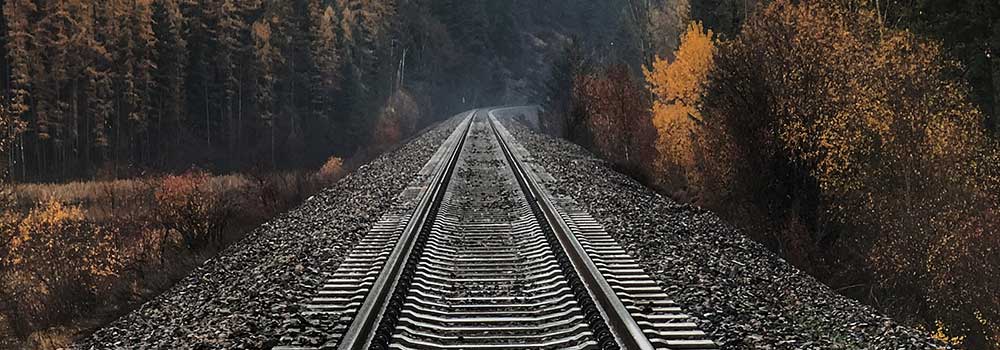
A railway track is the track structure that provides the route for trains or electric trains. Building or preparing a railway requires solutions, innovation and the latest technology to support the reinforcement and fitness of the track structure, and railway construction geosynthetics provide exactly that.
Geosynthetics can be the solution and innovation, using materials such as Non-Woven Geotextile, Geogrid, Geocell and Geobag. These materials can be used in railway construction. Each supporting material has interrelated functions, including separation, filtration, reinforcement and protection.
Non-Woven Geotextile

Non-woven geotextile is used for separation, filtration and drainage in railway construction. It is very effective at separating two material layers and also supports the subgrade.
Geogrid

In railway or electric railway construction, geogrid reinforces the ballast and reduces pressure loads and settlement of the ballast material.
Geocell

Geocell is also used as a supporting material for railway works, reinforcing the subgrade layer and locking material in place to prevent slips.
Geobag

Geobag is another supporting material in railway or electric railway construction. Its main function is to retain and protect slopes or embankments so that the track does not subside.
The supporting material layers in the track bed must be prepared before building a railway or electric railway so that they can function properly as a foundation. The track bed is made up of layers of soil and rock materials.
Other Articles

How to Connect a Geomembrane to a Pipe
Question: How do you connect a geomembrane to a pipe?Answer: ASTM D6478 provides guidance on how to connect geomembrane to pipe. “Pipe boots are fabricated from geomembrane, and the pipe boots are then joined to the geomembrane by extrusion welding.” The geomembrane is then connected to the pipe using a clamp and rubber gasket. Below […]

Geopipe Types and Functions
Geopipe is a pipe made from HDPE (High Density Polyethylene). It is round, ribbed (corrugated) and perforated. This article covers the main geopipe types and functions. The holes in the pipe wall allow water from outside the pipe to enter and be collected, then flow on to the outlet. Geopipe is commonly used for infiltration, […]

Types of Geogrid: Uniaxial, Biaxial and Triaxial
Here are the types of geogrid and their functions. Several types of geogrid are available on the market, but four are commonly used: uniaxial geogrid, biaxial geogrid, triaxial geogrid and polyester geogrid. Types of Geogrid Uniaxial Geogrid Uniaxial geogrid has long, elongated apertures and is manufactured as an integral structure. It can be made from […]